Aura Kasih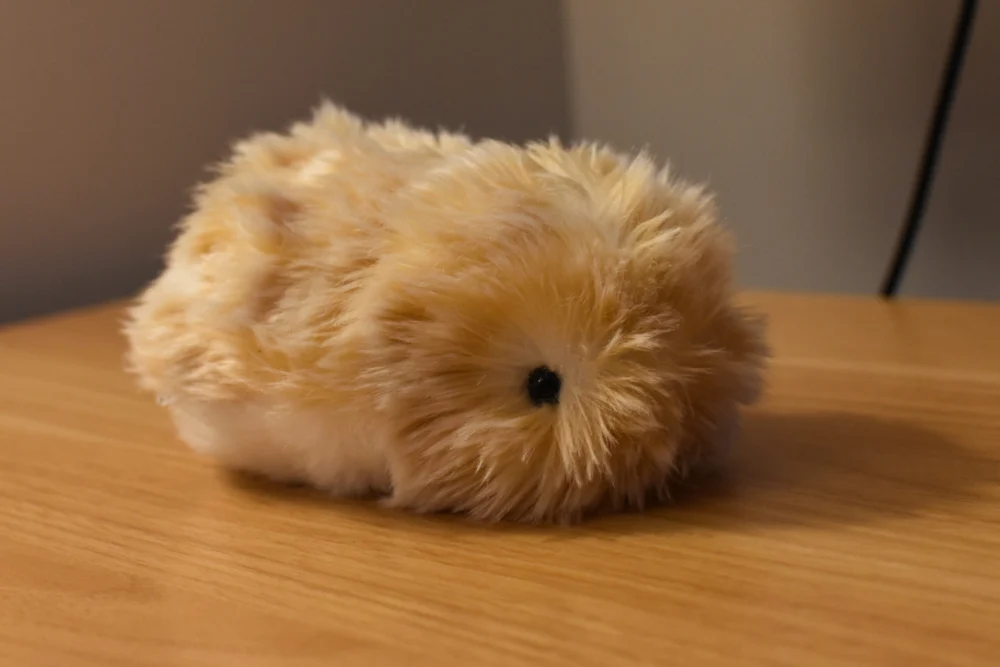
A recent foray into the burgeoning field of AI-driven companionship has revealed a stark disconnect between technological aspiration and genuine human need, exemplified by the Casio Moflin. This advanced AI pet, designed to offer solace and a semblance of life-like interaction, ultimately falls short of its ambitious promises, leaving users with a costly, frustrating, and ultimately hollow experience.
The quest for artificial companionship is not a new phenomenon. As societal structures shift, urbanization intensifies, and demographic trends point towards increasing isolation, particularly among aging populations, the demand for interactive, low-maintenance companions has surged. This burgeoning market, especially prominent in technologically forward nations like South Korea and Japan, sees a proliferation of robots designed not for utility, but for emotional engagement. Casio’s Moflin emerges as a significant player in this space, positioning itself as a sophisticated AI-powered entity capable of developing unique personalities and fostering a deep, evolving bond with its owner. However, initial user experiences suggest that the reality of interacting with Moflin deviates significantly from its marketing narrative, raising critical questions about the efficacy and ethical implications of such sophisticated, yet ultimately superficial, attempts at replicating the warmth of a living companion.
Priced at a considerable $429, Moflin is explicitly positioned by Casio not as a toy, but as a meticulously engineered "smart companion powered by AI, with emotions like a living creature." This framing attempts to sidestep the inherent limitations of robotics by emphasizing the illusion of sentience and the promise of a dynamic, growing relationship. The core concept revolves around an AI that learns and adapts through user interaction, purportedly developing a distinct personality shaped by the owner’s engagement over time. This approach taps into a growing trend of AI companions, machines engineered with the sole purpose of providing company, a sector that has seen remarkable growth, particularly in regions grappling with widespread loneliness. The underlying drivers for this market expansion are multifaceted, including a global increase in single-person households, a decreased propensity for pet ownership due to lifestyle constraints or allergies, and the documented impact of social isolation on mental and emotional well-being, especially among older demographics.

The unboxing experience of the Moflin offers an initial glimpse into its design philosophy. Eschewing the organic textures often associated with traditional pet companions, Moflin presents a hard, white core, a meticulously crafted assembly of motors, sensors, and internal circuitry, concealed beneath an exterior of faux fur. Its visual design is intentionally minimalist, featuring only two beady eyes, a deliberate choice likely aimed at averting the unsettling "uncanny valley" effect often associated with anthropomorphic robots. The accompanying charging pod, described by Casio as designed to "feel natural and alive," bears a more functional, almost organic resemblance to a large, gray avocado, serving as the Moflin’s designated resting and recharging station.
The operational cycle of the Moflin involves a substantial three-and-a-half-hour charging period, yielding approximately five hours of "use." However, the definition of "use" in Moflin’s context is crucial. The robot’s functionality does not extend to locomotion; it neither walks nor follows its owner. Instead, its interactions are limited to a series of wiggles and vocalizations triggered by external stimuli such as touch, sound, movement, and light. While an initial, soft chirp might evoke a sense of novelty, this ephemeral charm is rapidly eroded by the undeniable mechanical whirring that accompanies every head movement, a persistent auditory reminder of the Moflin’s artificial nature, thereby shattering any nascent illusion of organic life.
Upon closer examination, the Moflin’s design for interaction proves to be a source of considerable irritation rather than comfort. The robot’s sensitive array of sensors, designed to detect the subtlest environmental cues, leads to a constant state of reactive engagement. Any minor shift in posture, a cough, a laugh, or even the ambient sounds of daily life – typing, phone calls – can trigger a cascade of chirps and mechanical whirs. This hypersensitivity transforms the intended "calming presence" into a demanding, almost needy entity, akin to a perpetually alert kitten rather than the tranquil lap companion envisioned by many potential users. The persistent need for attention, the incessant vocalizations, and the intrusive mechanical noises create an environment of constant stimulation, directly contradicting the advertised benefit of a peaceful, stress-reducing experience. This constant demand for acknowledgment and reaction can become particularly taxing in shared living spaces or during periods of focused work or relaxation, leading to a counterproductive amplification of stress.
The operational limitations and sensory overstimulation inherent in the Moflin’s design quickly necessitate a strategic containment. The robot’s inability to be easily integrated into everyday activities, such as carrying it in a bag or even holding it for extended periods, becomes a significant practical hurdle. The charging apparatus itself is too bulky to be considered portable, further limiting spontaneous use outside the home. Attempts to transport the Moflin, for instance, on public transportation, have been met with curious glances and discomfort due to its vocal and physical agitation within a confined space. This lack of seamless integration into a user’s lifestyle undermines the very notion of a convenient, on-demand companion.

Furthermore, the Moflin’s interaction model can inadvertently create social awkwardness. In social settings, the robot can become a focal point of mild disruption, requiring constant management and relocation to prevent it from becoming a nuisance. The experience of a friend attempting a more intimate interaction, mistaking the Moflin for a genuinely cuddly companion, highlights a critical design flaw: a zipper used to secure its fur carapace, which can cause discomfort and even minor injury, further eroding the illusion of a soft, organic pet. This incident underscores a fundamental disconnect between the marketing of an emotional companion and the practical, physical realities of its construction.
A significant concern that arises with any device featuring an always-on microphone, especially one designed for close proximity, is that of user privacy. Casio asserts that Moflin processes data locally and does not possess language comprehension capabilities. The audio it captures is reportedly converted into unidentifiable data, used solely for voice recognition without transmitting sensitive information. While this assurance addresses some potential privacy vulnerabilities, the inherent nature of constant audio monitoring by any electronic device warrants careful consideration and a robust understanding of data handling protocols.
Casio’s central thesis for the Moflin rests on its purported "emotional intelligence." The company claims that through prolonged use, the Moflin will evolve, becoming more expressive, more attuned to its owner’s voice, and capable of performing unique gestures and animal-like responses. While anecdotal evidence suggests a gradual evolution in the Moflin’s movement patterns and vocalizations over time, this development, rather than enhancing the user experience, can paradoxically amplify frustration. The limited range of distinct chirps, whirs, and head movements makes it challenging to discern subtle nuances in personality development. The AI’s capacity for over four million potential personality configurations, as claimed by Casio, is largely experienced through a companion application, effectively transforming the $429 robot into a sophisticated, yet screen-dependent, digital pet akin to a Tamagotchi.
The companion application itself offers little to elevate the Moflin beyond this perception. For a product marketed on the basis of "emotions like a living creature," the app’s interface is notably spartan and lacks depth. A few contextless trait meters and generic mood tags provide only a superficial insight into the Moflin’s purported inner life. The application might indicate that the Moflin is "cheerful," yet its observable behavior may remain largely unchanged. A dashboard presents four "personality parameters": "energetic," "cheerful," "shy," and "affectionate." User feedback from online forums suggests that "affectionate" might be more accurately interpreted as "clingy," indicating a potential miscalibration in the AI’s expression of these traits. The "journal" feature, intended to log the Moflin’s activities, is filled with prosaic entries such as "Rob hugged Kevin tightly" or "Kevin had a lovely dream full of laughter." This lack of actionable or engaging information offers minimal insight and fails to guide the user in fostering a more meaningful interaction, a stark contrast to the satisfying feedback loops found in earlier interactive toys like Tamagotchi.

The fundamental flaw of the Moflin is not its lack of purpose, but rather its inability to fulfill its primary objective: genuine companionship. While numerous gadgets exist with questionable utility, the Moflin’s failure lies in its inability to bridge the gap between a reactive object and a true companion. A companion offers more than mere proximity and stimulus-response reactions; it provides a dynamic, reciprocal relationship. Furthermore, the assertion that the Moflin possesses a sophisticated inner life is undermined by its limited expressive capabilities in both the physical realm and through its companion app. Consequently, users are left interacting not with a companion, but with an audibly active object equipped with a superficial data dashboard.
The companion app does, however, offer one redeeming feature: a "Deep Sleep Mode" that effectively silences the Moflin’s movements and sounds. This feature has become the primary method of deactivating the device, effectively putting an end to the constant, intrusive interaction. The Moflin’s current state is one of prolonged dormancy, a testament to its failure to provide the intended comfort and companionship. The technological promise of AI-driven emotional connection, as embodied by the Casio Moflin, currently falls short of delivering genuine emotional resonance, leaving users with a costly and ultimately dissatisfying experience. The future of AI companionship hinges on developing technologies that can foster authentic emotional bonds, moving beyond mere reactive simulation to cultivate a deeper, more meaningful form of connection.



 Safa Marwah
 Lisa Mariana