Aura Kasih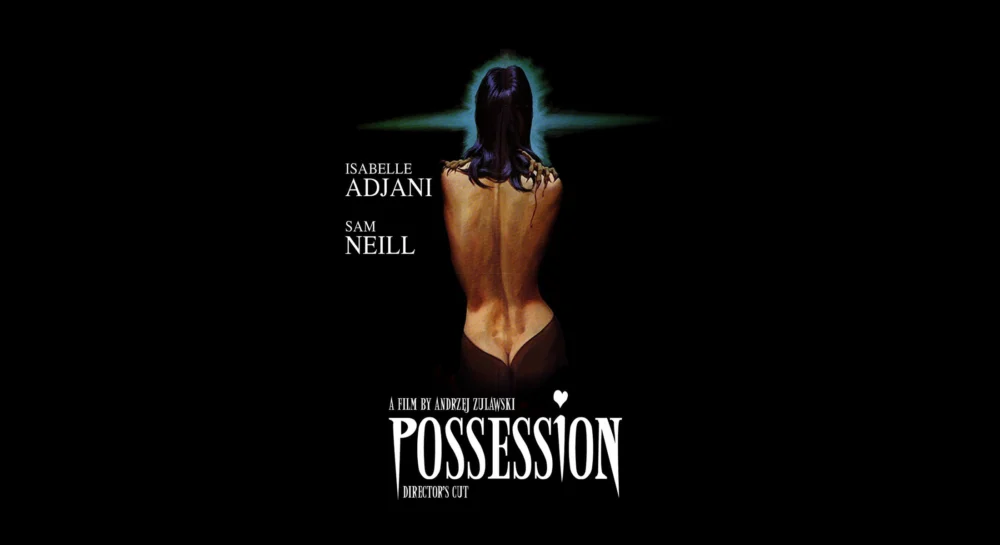
This comprehensive analysis delves into Andrzej Żuławski’s enigmatic 1981 masterpiece, "Possession," a film that defies conventional genre classification and continues to provoke intense discussion and interpretation due to its visceral exploration of marital breakdown, existential dread, and the monstrous manifestations of repressed desire.
Andrzej Żuławski’s "Possession" stands as a monumental achievement in surrealist cinema, a film that transcends mere storytelling to become a visceral, psychological, and often terrifying experience. Released in 1981, amidst the palpable tension of a divided Berlin, the film operates as a raw, unflinching examination of a disintegrating marriage, a descent into madness that utilizes the backdrop of Cold War anxieties and personal trauma to forge a unique cinematic language. Its enduring power lies not in providing easy answers, but in its audacious commitment to depicting the unfathomable, the primal, and the deeply unsettling aspects of human connection and its disintegration. "Possession" is a film that demands engagement, rewarding audiences with its disturbing beauty and profound, albeit often terrifying, insights into the human psyche.
The narrative of "Possession" is intentionally disorienting, plunging viewers into the fractured world of Anna (Isabelle Adjani) and Mark (Sam Neill), a couple whose relationship has devolved into a battlefield of suspicion, accusation, and profound alienation. Set against the stark, oppressive atmosphere of Cold War-era West Berlin, the film initially presents itself as a stark depiction of marital discord. Mark, returning from a protracted assignment, finds his wife increasingly distant and secretive. His attempts to understand Anna’s behavior are met with evasion and escalating emotional volatility, laying the groundwork for a psychological spiral that quickly escalates beyond the confines of a typical domestic drama. The looming presence of the Berlin Wall, a potent symbol of division and containment, serves as an ever-present metaphor for the chasm that has opened between Anna and Mark, a tangible representation of their irreconcilable differences and the suffocating atmosphere of their existence.
Isabelle Adjani’s performance as Anna is nothing short of a tour de force, a performance so potent and unnerving that it has become legendary. Adjani navigates the character’s descent into madness with breathtaking, almost terrifying, precision. She shifts between moments of chilling detachment and visceral, high-octane delirium with a speed and fluidity that leaves the audience reeling. Her portrayal is not merely acting; it is a complete embodiment of psychological fragmentation, a raw and exposed nerve that captures the agony of a soul in distress. The sheer intensity of Adjani’s performance is so profound that it is widely reported to have left her with significant psychological trauma, a testament to the profound emotional toll the role exacted. This commitment to the character’s unraveling is central to the film’s impact, making Anna’s internal turmoil a palpable external force.
Complementing Adjani’s seismic performance is Sam Neill’s portrayal of Mark. Neill masterfully conveys the growing desperation, confusion, and eventual rage of a man grappling with the inexplicable erosion of his marriage. His character’s journey is one of increasing bewilderment as he attempts to reconcile the woman he thought he knew with the increasingly erratic and alien figure Anna becomes. Neill’s ability to convey Mark’s mounting distress, from quiet desperation to explosive outbursts, anchors the film’s more abstract and nightmarish elements. His presence provides a crucial point of audience identification, even as Mark himself is increasingly swept away by the surreal currents of the narrative.
A third pivotal performance comes from Heinz Bennent as Heinrich, the enigmatic figure Mark suspects is the object of Anna’s affections. Bennent imbues Heinrich with a peculiar, almost theatrical intensity. His movements are often erratic, his delivery laced with a distinctive cadence that, while bordering on the absurd in a more conventional film, finds a perfect, albeit disturbing, home within the surreal landscape of "Possession." There is a mesmerizing quality to Bennent’s portrayal, a sense of unhinged elegance that makes Heinrich a figure of both fascination and dread. His interactions with Mark are charged with an unsettling energy, oscillating between veiled threats and bizarre overtures, contributing to the film’s pervasive sense of unease.

Director Andrzej Żuławski demonstrates an extraordinary command of visual storytelling, crafting sequences that are as artistically arresting as they are psychologically disturbing. The film’s visual language is rich and often operatic, with compositions that are frequently breathtaking. Scenes, such as the one where Mark and Anna sit at opposite ends of a cafe table, their backs to each other, engaged in a stilted, painful discussion about their separation, are framed with a stark, almost painterly quality. The ensuing eruption of Mark’s rage, a violent tableau of overturned furniture and shattered crockery, is a visceral release that underscores the destructive forces at play. Żuławski employs dynamic camerawork, expertly tracking the characters through their emotional turmoil, creating a sense of perpetual motion and escalating chaos. The film’s aesthetic is a crucial component of its power, transforming domestic spaces into arenas of psychological warfare and mundane settings into stages for existential horror.
However, the film’s artistic beauty takes a sharp and terrifying turn in its latter half. What begins as an intense, acid-trip-like exploration of a failing marriage morphs into a profoundly disturbing and nauseating foray into body horror. The revelation that Anna’s departure from Mark is not for Heinrich, but for something far more primal and monstrous, shatters any lingering sense of conventional narrative. Anna has become involved with what has been described as a "Lovecraftian fuck monster," a creature of unfathomable biological and existential horror.
This creature, a product of the renowned special effects artist Carlo Rambaldi (known for his groundbreaking work on "Alien" and "E.T."), is a grotesque manifestation of Anna’s deepest desires and repressed traumas. It is a being of tentacles, unsettling orifices, and uncanny, almost human, features. Anna perceives this entity not as a monster, but as a divine being, a vehicle through which she can explore aspects of herself that have been suppressed or lost within her relationship with Mark. The creature is a perversion of intimacy, a terrifying embodiment of a desire for connection that has become corrupted and monstrous. It feeds not only on flesh but also on the very essence of its partners, a parasitic entity that reflects the destructive nature of Anna’s emotional state. The creature’s eventual transformation into a doppleganger of Mark adds another layer of psychological complexity, suggesting that the ultimate horror lies not just in the external monstrous, but in the terrifying reflection of oneself and one’s perceived aggressors.
The infamous subway scene remains one of the most iconic and viscerally impactful moments in cinematic history, and it is often the primary reason many audiences first encounter "Possession." In this sequence, Adjani unleashes a primal scream that seems to emanate from the very depths of her being, her body contorting in a convulsive, blood-soaked frenzy. The sheer intensity of this scene, a three-minute onslaught of raw emotion and physical degradation, is overwhelming. It is a testament to Adjani’s fearless commitment and Żuławski’s audacious directorial vision. The scene’s visceral impact is so profound that it lingers long after the credits roll, serving as a potent distillation of the film’s exploration of pain, obsession, and the breakdown of the physical and psychological self.
"Possession" deliberately resists easy interpretation, inviting a multitude of readings and debates among its viewers. The film’s ambiguous conclusion leaves many questions unanswered, fueling ongoing critical analysis and audience speculation. Did their son, Bob, commit suicide, or is his fate tied to the supernatural elements of the narrative? Is Mark’s doppleganger a demonic entity, an Antichrist figure? Is Helen, another character in the film, also a doppleganger, hinting at a broader existential crisis? The cryptic references to Heinrich’s mother and the titular "possession" itself open up further avenues of inquiry. Is the possession literal, a supernatural infestation, or is it a metaphorical possession, a commentary on the ways in which individuals can be consumed and controlled by their relationships, their desires, and the societal pressures they face? The film masterfully blurs the lines between psychological breakdown, supernatural horror, and socio-political allegory, creating a dense tapestry of meaning that continues to be unraveled.
The enduring legacy of "Possession" lies in its unyielding commitment to exploring the darkest corners of human experience. It is a film that refuses to compromise, offering a raw, unvarnished, and often terrifying vision of love, loss, and the monstrous potential that lies dormant within the human psyche. Its influence can be seen in subsequent works of psychological horror and surreal cinema, its audacious approach to subject matter and visual style leaving an indelible mark on the genre. "Possession" remains a challenging but ultimately rewarding cinematic experience, a testament to the power of art to confront the sublime and the terrifying in equal measure. Its continued relevance underscores its status as a cult classic and a significant achievement in the history of avant-garde filmmaking, a film that continues to provoke, disturb, and fascinate audiences decades after its initial release. The film’s exploration of themes such as female rage, the anxieties of modern relationships, and the existential dread of a world in flux resonate with contemporary audiences, ensuring its place as a vital and provocative work of art.



 Safa Marwah
 Lisa Mariana