Lisa Mariana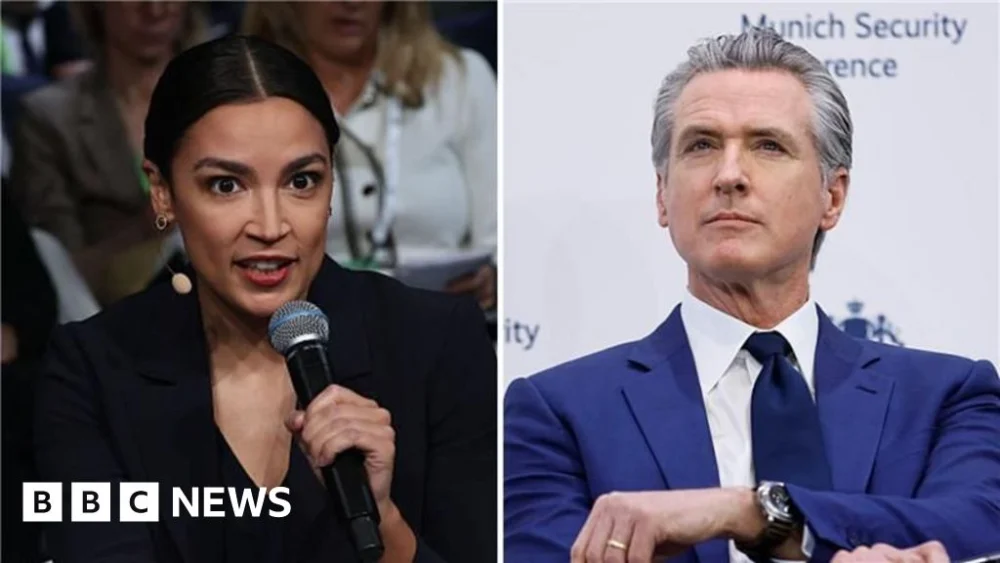
Amidst persistent European anxieties regarding the future trajectory of American foreign policy, a contingent of prominent Democratic leaders convened at the Munich Security Summit to offer robust assurances of the United States’ unwavering dedication to its transatlantic partnerships, directly addressing the apprehension fostered by the current administration’s "America First" doctrine. The diplomatic offensive aimed to project a vision of continuity and reliability, countering the perception of a volatile and unpredictable Washington and reinforcing the foundational pillars of global stability.
The annual Munich Security Summit stands as a critical barometer for transatlantic relations, bringing together heads of state, policymakers, and security experts from across the globe. This year, the forum was particularly charged with an undercurrent of palpable concern among European delegates, who observed the evolving landscape of American political discourse with a blend of apprehension and strategic recalculation. The cumulative effect of recent policy shifts, confrontational rhetoric, and challenges to established international norms has cast a long shadow over the future of multilateral cooperation, making Washington’s message at this summit more scrutinized than ever.
The official American delegation, led by Secretary of State Marco Rubio, navigated a delicate balance. While his Saturday address was perceived by many as an effort to stabilize the frayed edges of trans-Atlantic diplomacy, it did not entirely dispel the underlying European concerns. His remarks, while avoiding the sharper criticisms that characterized previous administrations’ engagements, were interpreted as an attempt to project an image of steadfastness without entirely disavowing the incumbent president’s broader foreign policy tenets. The nuanced reception underscored the depth of the credibility challenge facing the United States in its traditional alliances.
However, the Secretary of State was not the sole voice representing American political thought in Munich. A diverse array of American political figures, predominantly from the Democratic Party, engaged in a concerted effort to articulate an alternative, more reassuring narrative. Their presence signaled a strategic deployment of soft power, with numerous governors, senators, and representatives undertaking informal diplomatic engagements designed to mollify European fears. These politicians, many of whom are prospective contenders for future presidential nominations, adopted a theme reminiscent of ancient Persian wisdom, quietly conveying that the current tumultuous phase in American foreign policy is transient.
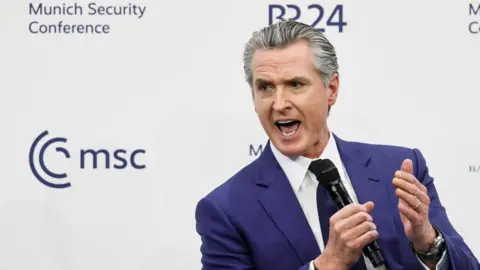
California Governor Gavin Newsom, a prominent figure among the Democratic cohort, encapsulated this sentiment with directness. Addressing a conference event, he stated, "If there’s nothing else I can communicate today, Donald Trump is temporary. He’ll be gone in three years." This declaration, made openly on the international stage, was a deliberate attempt to decouple the long-term strategic commitments of the United States from the idiosyncratic policies and rhetoric of a particular administration. It served as a calculated reassurance that, despite current deviations, the underlying institutional and democratic foundations of American foreign policy remain robust and ultimately tethered to traditional alliances.
The sheer volume of American legislators and governors in attendance—a diverse group including many Democrats eyeing the 2028 presidential cycle—underscored the breadth of this diplomatic counter-offensive. Their collective message consistently emphasized the enduring nature of the US-European partnership, offering a more unequivocal commitment than the federal executive. These reassurances were often delivered without the caveats or criticisms of European cultural trends that occasionally peppered the Secretary of State’s discourse, thus resonating more directly with their European counterparts. Senator Jeanne Shaheen of New Hampshire articulated this plainly, stating, "The reason we’re here is to provide reassurance that we understand how important our European allies are." This sentiment reflected a broader Democratic consensus that strong alliances are not merely beneficial but indispensable to American national security and global stability.
Even some Republicans present echoed the call for transatlantic solidarity, albeit with a different emphasis. Senator Thom Tillis, for instance, cautioned allies against becoming overly entangled in the "rhetoric of American politics," stressing that the United States and Europe were not engaged in a "civil war" despite internal political disagreements. This perspective from a Republican lawmaker suggested an acknowledgement of the disruptive impact of current political discourse on international perceptions, while simultaneously attempting to frame it as an internal American phenomenon that should not fundamentally alter alliance structures. Such statements, however, often struggle to bridge the chasm created by the administration’s actions and pronouncements, which have frequently translated rhetoric into tangible policy shifts.
The challenges posed by the current administration’s foreign policy have been manifold and far-reaching. The imposition of steep tariffs on key trading partners, a profound skepticism towards multilateral institutions, and an overt desire to fundamentally reshape the international order have generated significant global instability. The administration’s declared intent to refocus American foreign policy primarily on the Western Hemisphere has been particularly unsettling for European allies, raising questions about the future of security guarantees and shared strategic objectives. The proposed acquisition of Greenland, publicly reiterated by the president prior to his departure for Florida, stood out as a particularly jarring example of unconventional diplomacy, highlighting a willingness to push boundaries and test the limits of international norms in ways that confound traditional allies.
Beyond foreign policy, several Democratic figures in Munich also addressed pressing domestic concerns within the United States, recognizing that internal stability and democratic health are inextricably linked to America’s standing on the world stage. Virginia Senator Mark Warner voiced grave warnings regarding the integrity of upcoming midterm congressional elections in 2026. He expressed profound dismay at the president’s discussions about nationalizing elections and implementing stringent identity requirements for voting via executive order, stating, "I never thought I would say that in 2026 America." Such concerns about the erosion of democratic processes within the US resonate deeply with European partners, who view American democratic resilience as a cornerstone of the liberal international order. The administration’s defense of these efforts, including the proposed SAVE Act for a national voter identification requirement, as popular and necessary to prevent voter impersonation, has done little to assuage these fears internationally.
Further illustrating the internal pressures on American institutions, Senators Mark Kelly and Elissa Slotkin, who had recently been targeted by an unsuccessful indictment attempt from the Department of Justice following their public video urging US soldiers to disregard "illegal" orders, also spoke at the conference. Senator Slotkin soberly remarked that America was "going through something profound," yet optimistically added, "We’ll get through it." Their statements, delivered in an international forum, highlighted the intense domestic political battles and the strain on the rule of law within the United States, providing a stark reminder to allies of the internal challenges confronting the nation.
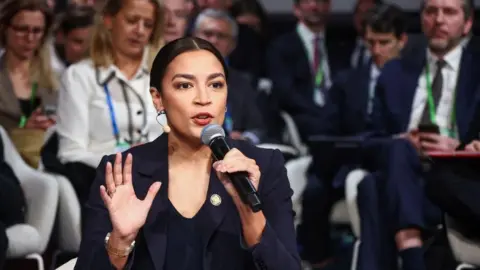
Congresswoman Alexandria Ocasio-Cortez emerged as one of the most significant attractions at the conference, drawing considerable attention beyond the official delegation. Her discourse linked the rise of authoritarian governments globally to growing wealth inequality—a central tenet of her domestic policy agenda since her breakthrough victory in 2018. She emphasized, "It is of the utmost urgency that we get our economic houses in order and deliver material gains for the working class. Otherwise, we will fall into a more isolated world governed by authoritarians who also do not deliver to working people." This progressive viewpoint, which connects internal socio-economic health to international democratic resilience, resonates with many European political currents. While her appearance served to bolster her foreign policy credentials, it also highlighted the learning curve for emerging political figures on the international stage, notably when she reportedly struggled to articulate a clear stance on whether the US should defend Taiwan in the event of a Chinese invasion.
Ocasio-Cortez’s broader thesis about the imperative for Western democracies to offer compelling alternatives to authoritarian models echoed themes articulated by former President Joe Biden during his term. This stands in sharp contrast to the current administration’s "America First" foreign policy, with its emphasis on national sovereignty, transactional alliances, and a preservationist view of "Western culture." The electoral outcome of 2024, which saw the incumbent president return to the White House, ushered in a tumultuous period, with Vice-President JD Vance’s confrontational Munich speech from the previous year serving as a prelude to heightened tensions.
While Secretary Rubio has since sought to temper some of the administration’s more abrasive edges, the collective endeavor by the Democratic contingent in Munich represented a distinct and deliberate counterpoint. Their mission was not merely to mitigate immediate damage but to reaffirm a deeper, more enduring commitment to multilateralism and shared democratic values. As Arizona Senator Ruben Gallego succinctly put it, "Right now, Europe just wants us to be better… Sometimes you have to remind them that this is not all Trump… We’re still here." This underscores the complex diplomatic landscape where sub-national actors and opposition party figures increasingly play a vital role in sustaining international relations, offering a long-term perspective beyond the immediate political cycle.
The implications of this diplomatic strategy are multifaceted. For European nations, the presence and messaging of these Democratic leaders offer a degree of reassurance that a significant segment of American political leadership remains committed to traditional alliances, regardless of the current administration’s stance. This allows for strategic planning that considers potential shifts in US foreign policy after the current term. For the Democratic Party, such international engagements serve to build foreign policy expertise, project future leadership, and demonstrate a readiness to restore and strengthen alliances should they regain control of the executive branch. This strategic engagement, therefore, is not merely about managing present anxieties but also about laying the groundwork for a future geopolitical reorientation, aiming to bridge the trust deficit that has emerged and reaffirm America’s enduring role as a reliable global partner. The "this too shall pass" sentiment, while perhaps a wish, represents a strategic imperative for those committed to the long-term health of the transatlantic bond.



 Aura Kasih
 Safa Marwah
 Ayu Aulia