Aura Kasih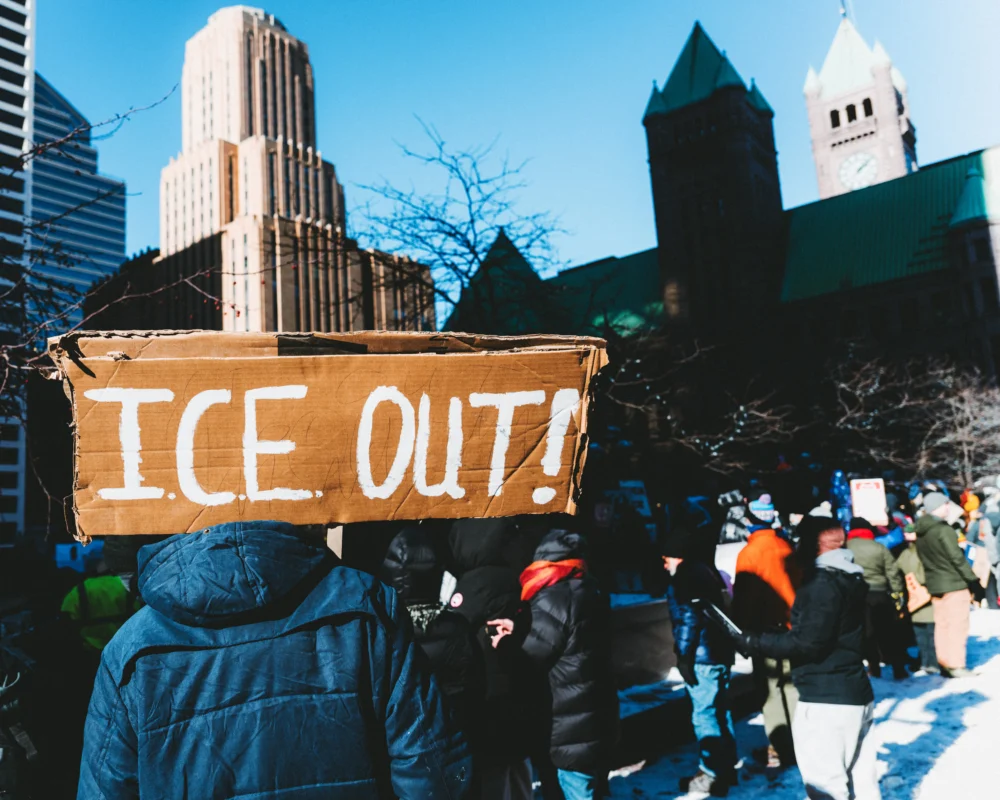
In a stark demonstration of power dynamics and the evolving landscape of public discourse, a recent incident involving Alex Pretti and federal agents has illuminated a potent, yet often overlooked, instrument of resistance readily available to ordinary citizens: the mobile phone. This ubiquitous device, far from being merely a communication tool, has emerged as a critical nexus for information dissemination, accountability, and the challenging of official narratives, particularly in contexts of governmental overreach or disputed use of force. The events surrounding Pretti’s death, captured and disseminated through the very technology he held, underscore a profound truth: in an era saturated with information, the ability to record, share, and analyze events in real-time has become an indispensable component of citizen empowerment and a significant challenge to unchecked authority.
The controversy surrounding Pretti’s final moments, as meticulously dissected by investigative journalists, hinges on conflicting accounts of his actions and the agents’ responses. While official statements from the Trump administration asserted that Pretti’s legally carried firearm necessitated the agents’ lethal force, a more nuanced examination of the available visual evidence suggests a different interpretation. The video footage, painstakingly analyzed, places a mobile phone prominently in Pretti’s hand during the critical seconds preceding the fatal encounter. This detail is not incidental; it signifies the broader trend of individuals utilizing their personal devices as recording instruments, effectively transforming them into on-the-ground news bureaus. The subsequent sharing of this footage, amplified through digital networks, has allowed for independent scrutiny of events that might otherwise remain obscured by official pronouncements.
The proliferation of smartphones has fundamentally altered the power balance between citizens and institutions, particularly in areas where federal enforcement activities are conducted. For communities and individuals at the forefront of opposition to certain governmental policies, especially concerning immigration enforcement, the mobile phone serves as an indispensable tool. It facilitates the rapid dissemination of intelligence regarding the presence of law enforcement agencies, enabling swift mobilization for organized actions, the coordination of mutual aid efforts, and the provision of critical support to those in vulnerable situations. Crucially, these devices empower individuals to bear witness, transmitting unfiltered visual evidence to a global audience, thereby circumventing traditional media gatekeepers and forcing a reckoning with on-the-ground realities. This capability represents a persistent and undeniable challenge to governmental attempts to control public perception and manage information flows.
The strategic utilization of information technology by the Trump administration itself further highlights the dual-edged nature of this digital power. The administration consistently leveraged official communication channels and social media platforms to propagate its agenda, frequently disseminating content that aligned with right-wing, authoritarian, and even white supremacist viewpoints. Cabinet secretaries and President Trump himself were adept at employing platforms such as X (formerly Twitter) and Truth Social to frame narratives and counter unfavorable press. Prior to Pretti’s death, a similar strategy was employed in response to the killing of Renee Good by a federal agent in Minneapolis. President Trump, in a Truth Social post, characterized Good’s actions as a deliberate attack on an ICE officer, selectively presenting a grainy, distant video clip to suggest the agent’s peril. However, subsequent independent analyses of multiple video angles, including those offering a closer perspective, revealed that the agent was not in the path of Good’s vehicle when the shots were fired, indicating a potential manipulation of evidence to shape public opinion.
The practice of governments actively engaging in information warfare via digital platforms is not unique to any single administration. Historically, officials across administrations have sought to manage public perception by pushing back against negative press and downplaying inconvenient truths. The Biden administration, for instance, engaged with social media companies to curb the spread of medical misinformation during the COVID-19 pandemic, demonstrating an understanding of the immense power wielded by these platforms in shaping public understanding. However, the Trump administration distinguished itself through a particular willingness to disregard factual accuracy and a sophisticated approach to leveraging technology for narrative control. This included cultivating relationships with influencers who could amplify messages with remarkable speed and reach, the adept use of internet vernacular and meme culture to address policy issues, and the formation of alliances with or the creation of platforms designed to facilitate the unimpeded flow of favored information.
A pivotal learning experience for Donald Trump emerged from his first term regarding the critical importance of controlling the digital channels through which narratives are disseminated. The bystander video of George Floyd’s murder by Derek Chauvin in 2020 ignited widespread protests and, for a period, spurred tangible societal changes. While Trump publicly condemned Floyd’s death, he also attributed the ensuing unrest to "antifa" and "professional anarchists," signaling an intent to deploy federal law enforcement to quell demonstrations. This period also marked a significant personal setback for Trump: in 2021, he was deplatformed from major social media sites like Facebook, Twitter, and YouTube due to concerns about his potential to incite further violence following the January 6th Capitol insurrection. In response, he launched his own social media platform, Truth Social, a year later. By the time of his potential second term, X was under the ownership of Elon Musk, a prominent Trump supporter who had previously held a brief advisory role in the administration. Furthermore, Trump’s approach to the potential ban of TikTok, rather than mandating its sale as legislated, involved extending deadlines until an agreement was reached with entities closely aligned with his interests, suggesting a strategic prioritization of access to influential platforms.
The legislative push to compel the sale of TikTok by a bipartisan majority in the House of Representatives was largely predicated on the apprehension that an adversarial foreign government could exert undue influence over the information accessible to American users. Critics had already attributed the app’s role in shaping generational perspectives on the Israeli-Palestinian conflict to its algorithmic influence. In an era where technology platforms largely self-regulate content moderation, policymakers’ concerns about the messages that penetrate public consciousness are understandable, as is their recognition of the strategic advantage of controlling these communication conduits. Prior to his acquisition of Twitter, Elon Musk espoused a philosophy of "free speech absolutism." However, his subsequent actions, including the deplatforming of journalists who reported on his private jet’s movements, underscore the reality that privately held digital platforms, despite their pervasive influence on public discourse, do not function as true public squares. They retain the power to shape what information informs our collective understanding of reality.
In light of these dynamics, the administration has actively sought to counter and, at times, suppress narratives disseminated online by its perceived opponents. Following the death of right-wing activist Charlie Kirk in a university shooting in Utah, some conservative lawmakers and activists pressured employers and platforms to take action against individuals who posted critical commentary. Attorney General Pam Bondi initially pledged to pursue individuals using "hate speech," later clarifying that threats of violence, not mere criticism, fall outside First Amendment protections. Investigations by Reuters revealed that hundreds of individuals faced professional repercussions for their online comments related to Kirk’s demise, ranging from celebratory remarks to simple critiques of his political stances or republications of his own words.
In several instances, federal officials have directly targeted platforms that amplify oppositional viewpoints. FCC Chair Brendan Carr warned broadcasters against airing programming that included jokes about conservative reactions to Kirk’s death. More recently, amidst growing opposition to ICE operations in liberal urban centers, FBI Director Kash Patel announced investigations into Signal groups used for sharing information about immigration agents’ movements. Following criticism from the administration, both Apple and Google removed applications designed to report sightings of ICE agents in public spaces.
As private entities, tech platforms are not legally obligated to maintain the availability of such applications or user-generated content. However, both the First Amendment and Section 230 of the Communications Decency Act provide legal frameworks that protect their discretion in moderating third-party content. While Section 230 has become a frequent target of criticism, proponents argue that its repeal could incentivize platforms to restrict a wider range of speech deemed potentially risky, thereby inviting legal liability and ultimately curtailing expression.
The Trump administration’s initial term also recognized the potency of technology. The president himself was a prolific user of what was then known as Twitter. However, that administration featured a greater number of officials willing to challenge norm-breaking actions, and the president faced more institutional checks on his authority. The current political climate, with Republicans controlling both chambers of Congress and many lawmakers aligning closely with Trump, has fostered an environment where threats to free expression carry a more significant chilling effect.
Despite these challenges, the contemporary social media ecosystem still allows for events, such as the death of Alex Pretti, to resonate across the internet, prompting engagement from even the most unlikely online communities. The swift dissemination of video footage following Pretti’s shooting meant that when Department of Homeland Security Secretary Kristi Noem claimed Pretti was "brandishing" a weapon with intent to cause "maximum damage," many individuals had already witnessed the footage themselves. Their reliance on their own visual evidence over official pronouncements represents a critical shift in information consumption and trust.
The immediate aftermath of Pretti’s death saw individuals actively seeking out additional video perspectives. Protesters on the frigid Minneapolis streets, armed with their mobile phones and a commitment to documenting events, played a crucial role. Equipped with the protections of the First Amendment and the powerful functionality of their devices, they became instrumental in providing a more comprehensive and unvarnished account of the incident.
Ultimately, Pretti’s phone, though unable to shield him from harm on the day of his death, empowered those who captured his final moments. Their efforts enabled the world to witness the events unfolding in Minneapolis, fostering a level of awareness that made it more difficult for the public to disengage. For an administration dedicated to meticulously controlling its public image and the flow of information, this unfettered dissemination of truth, facilitated by the ordinary citizen’s smartphone, constitutes a formidable and persistent threat.



 Safa Marwah
 Lisa Mariana