Ridwan Kamil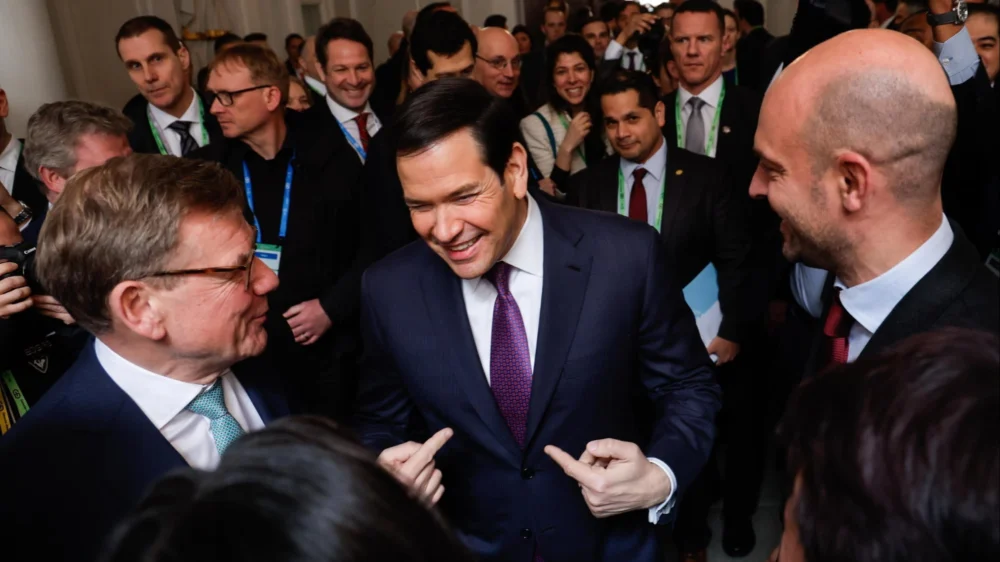
Despite a fervent appeal for solidarity from a prominent American senator at the Munich Security Conference, European leaders and commentators have largely remained unconvinced, revealing a palpable disconnect in strategic priorities and a lingering skepticism regarding Washington’s commitment to shared security frameworks. Senator Marco Rubio’s impassioned plea for a united front against global challenges, framed as "the best we can hope for," underscored a recurring theme of American anxiety over wavering European resolve, yet failed to elicit the enthusiastic endorsement he sought, instead serving to illuminate the intricate and often divergent pathways the United States and its European allies are navigating.
The Munich Security Conference, a cornerstone of global diplomatic discourse, has for decades served as a crucial barometer for international relations, a forum where leaders convene to dissect emerging threats and chart a collective course. This year, however, the conference was underscored by a discernible tension, a quiet recalibration of expectations and a tacit acknowledgment of evolving geopolitical realities. While the stated objective of such gatherings is invariably to foster consensus and strengthen alliances, the interventions and subsequent analyses suggest that the bridge between American calls for a return to traditional solidarity and European perceptions of a shifting global order remains, at best, under construction.
Senator Rubio’s address, delivered with the characteristic urgency of a legislator deeply concerned with perceived threats to American influence, aimed to rally European nations around a shared agenda. His emphasis on collective defense, the imperative of confronting authoritarian regimes, and the necessity of burden-sharing resonated with long-standing American foreign policy tenets. He articulated a vision where transatlantic partners, united by common values and strategic interests, could effectively counter the complex array of challenges, from Russian aggression to the rise of China. The senator’s rhetoric, while intended to inspire, seemed to encounter a more nuanced and perhaps weary European reception. This divergence in tone and emphasis did not go unnoticed by observers, signaling that while the rhetoric of unity persists, the underlying assumptions and operational priorities may be diverging.
The underlying sentiment in many European capitals, as evidenced by the reactions and analyses following Rubio’s address, is one of pragmatic caution. While there is no widespread rejection of the concept of transatlantic cooperation, the emphasis has shifted towards a more independent and self-reliant European security architecture. This evolution is not a repudiation of NATO or the broader alliance, but rather a recognition that Europe must possess the capacity to act decisively and autonomously when its interests are directly threatened, or when the United States’ strategic calculus leads to a different set of priorities. The lingering questions about the long-term reliability of American security guarantees, amplified by shifts in U.S. administrations and a growing focus on domestic concerns within the United States, have compelled European nations to invest more heavily in their own defense capabilities and strategic autonomy.
This burgeoning European self-reliance is not a nascent phenomenon. For years, policy analysts and defense officials have been advocating for increased European defense spending and the development of independent operational capabilities. The ongoing war in Ukraine, while galvanizing a renewed sense of purpose within NATO, has also served as a stark reminder of the continent’s direct exposure to security crises on its eastern flank. This proximity, coupled with a perceived unevenness in the American response to certain European security concerns in the past, has fostered a conviction that Europe must be a more robust and self-sufficient security actor. The concept of "strategic autonomy," once a niche academic pursuit, has gained significant traction, reflecting a desire to possess the tools and the will to shape Europe’s own security destiny.
Senator Rubio’s call for a united front, therefore, arrived at a moment when Europe is actively engaged in redefining its role and responsibilities within the global security landscape. The emphasis on a "united front" often implies a unified strategy and a willingness to subordinate national interests to a collective objective. However, European nations, with their diverse histories, economic structures, and regional security challenges, often find it difficult to align on such monolithic strategies. The internal debates within the European Union and among its member states regarding defense procurement, operational doctrines, and the extent of their commitment to specific geopolitical theaters are complex and ongoing. This internal dynamism, while a testament to the democratic nature of European decision-making, can sometimes appear as fragmentation or hesitation from an external perspective.
Furthermore, the nature of the threats perceived by European nations can differ significantly from those prioritized by the United States. While Russia remains a clear and present danger to many in Eastern Europe, other European capitals may be more acutely focused on the stability of their southern neighborhoods, the challenges of migration, or the economic implications of global power competition. The rise of China, for instance, presents a multifaceted challenge for Europe, encompassing economic interdependence, technological competition, and human rights concerns. While the U.S. often frames this challenge primarily through a security and geopolitical lens, European responses are frequently more nuanced, seeking to balance economic engagement with the protection of democratic values and strategic interests. This divergence in threat perception and prioritization naturally leads to differing strategic imperatives, making a truly "united front" a more aspirational goal than an immediate reality.
The implicit critique in Senator Rubio’s appeal, suggesting a potential lack of European commitment or resolve, overlooks the substantial investments and strategic shifts already underway. European nations have significantly increased their defense budgets in recent years, with many exceeding the NATO target of 2 percent of GDP. There is a growing emphasis on joint procurement, interoperability, and the development of rapid deployment forces. The European Union itself has been bolstering its own defense initiatives, such as PESCO (Permanent Structured Cooperation) and the European Peace Facility, aimed at enhancing collective defense capabilities. These initiatives, while perhaps not as high-profile as American-led military operations, represent a profound commitment to strengthening European security from within.
The sentiment that "the best we can hope for" is a unified front also carries an undertone of resignation, perhaps suggesting that a more ambitious or integrated approach is unattainable. This perspective, however, may underestimate the transformative potential of current geopolitical pressures. The war in Ukraine has undeniably accelerated the European security dialogue and fostered a sense of shared vulnerability that transcends traditional divides. It has demonstrated that when core European security interests are directly threatened, the continent can mobilize with remarkable speed and determination. The challenge lies in sustaining this momentum and translating it into enduring, integrated capabilities that can address a broader spectrum of threats.
From an analytical standpoint, the gap between Rubio’s call and the European reception can be understood as a reflection of distinct national and continental strategic cultures. The United States, with its global reach and historical role as a security guarantor, often operates with a more interventionist and proactive foreign policy. European nations, with their emphasis on multilateralism, diplomacy, and the gradual integration of capabilities, tend to adopt a more measured and consensus-driven approach. Bridging this gap requires not just rhetorical appeals for unity but a deeper understanding and appreciation of these differing strategic cultures and a commitment to finding common ground that respects these nuances.
The future outlook for transatlantic security cooperation hinges on the ability of both sides to adapt to evolving realities. For the United States, this means recognizing and supporting Europe’s growing capacity for self-reliance and its desire to play a more autonomous role in its own security. It requires understanding that European strategic autonomy is not a zero-sum game that diminishes American influence, but rather a complementary force that can enhance overall collective security. For Europe, it means continuing to invest in its defense capabilities, fostering greater coherence in its foreign and security policy, and demonstrating a clear and consistent commitment to shared security objectives.
The Munich Security Conference, therefore, served not as a moment of unequivocal agreement, but as a valuable diagnostic tool. It illuminated the enduring desire for strong transatlantic ties while simultaneously highlighting the ongoing evolution of European security thinking. Senator Rubio’s appeal, while well-intentioned, perhaps reflected a desire for a return to a simpler, more predictable era of alliance management. However, the current geopolitical landscape demands a more sophisticated and adaptive approach, one that acknowledges the complexities of shared security in a multipolar world and respects the growing agency of European nations in shaping their own destinies. The "best we can hope for" may not be a perfectly synchronized march in lockstep, but rather a robust and adaptable partnership, built on mutual respect, shared responsibility, and a clear-eyed understanding of each other’s strategic imperatives. The conversations and debates at Munich, while not producing a unified chorus, have undoubtedly laid the groundwork for a more mature and realistic engagement between Europe and the United States in the years to come.



 Lisa Mariana
 Aura Kasih
 Safa Marwah
 Ayu Aulia