Aura Kasih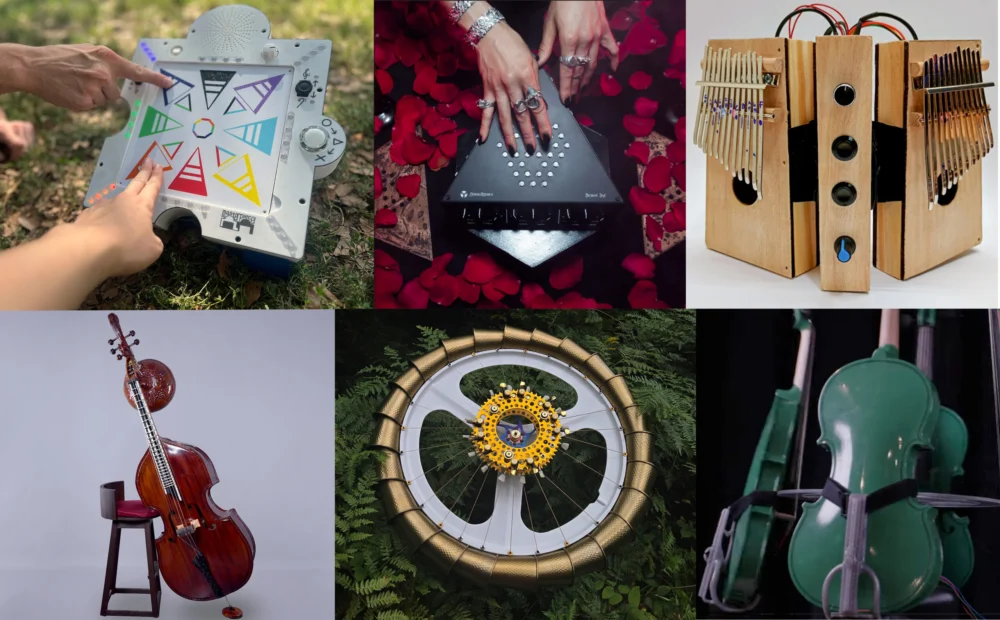
Atlanta, GA – The hallowed halls of Georgia Tech are once again buzzing with innovation as the institution reveals the distinguished cohort of finalists vying for top honors in its esteemed Guthman Musical Instrument Competition. Now in its 28th iteration, this globally recognized event serves as a crucial incubator for sonic pioneers, drawing inventors from every corner of the earth to present their groundbreaking creations for a share of $10,000 in prize money. The competition’s legacy is etched in the success of its alumni, with previous participants including the foundational architects behind influential companies such as Teenage Engineering, Artiphon, and Roli, underscoring the Guthman’s role in shaping the future of musical technology. Last year’s triumph was claimed by KOMA Elektronik for their revolutionary Chromaplane, a testament to the competition’s commitment to fostering truly novel approaches to sound creation.
This year’s selection represents a particularly audacious leap into uncharted sonic territories, showcasing a remarkable diversity of conceptualization and execution. Among the ten finalists, the Amphibian Modules stand out for their radical reimagining of modular synthesis, replacing traditional patch cables with a conductive saltwater medium, promising an entirely new paradigm for signal routing and interaction. The Gajveena presents a compelling fusion of disparate musical traditions, ingeniously marrying the resonant depth of the double bass with the intricate melodic capabilities of the traditional Indian veena, a harmonious dialogue between Western and Eastern musical philosophies. Perhaps most visually arresting is Fiddle Henge, a sculptural marvel that transforms a collection of violins into an architectural installation. Four emerald-hued violins are meticulously mounted onto a bass drum and activated by a rotating disk, creating a unique kinetic and sonic sculpture that challenges conventional notions of performance and instrument design.
Further pushing the boundaries of auditory exploration is the aptly named Demon Box, a device that transmutes the invisible spectrum of electromagnetic radiation into tangible sound. This instrument operates on a principle that verges on the alchemical, converting ambient electromagnetic fields into audible frequencies. Intriguingly, the Demon Box is not merely a conceptual prototype; it is already available as a commercial product from Eternal Research, priced at $999. Its capabilities extend beyond mere sonic generation, offering a sophisticated control interface by translating the electromagnetic emanations from common electronic devices, such as mobile phones and television remote controls, into MIDI and Control Voltage (CV) signals. This allows the Demon Box to actively influence and manipulate other synthesizers, establishing a direct, albeit unconventional, link between the user’s environment and their musical output. This feature positions the Demon Box not just as an instrument, but as an environmental sonic transducer and a powerful controller within complex electronic music setups.
The breadth of ingenuity on display is further exemplified by the Lethelium, an instrument that elegantly bridges the gap between percussive and melodic timbres. Constructed from a repurposed bicycle wheel, it draws inspiration from both the ethereal resonance of steel drums and the intricate polyphony of a harp, offering a fresh textural palette for musicians. Equally significant is The Masterpiece, an open-source synthesizer designed with inclusivity at its core. This innovative instrument leverages RFID technology and is specifically engineered to be accessible for players with disabilities, embodying the spirit of universal design in musical technology. This focus on accessibility highlights a growing trend within the instrument design community to democratize music creation and performance, ensuring that the joy and creative potential of music are available to a wider audience.
A comprehensive visual and auditory preview of all ten finalists is available through a dedicated video presentation, offering brief demonstrations and in-depth explanations of each instrument’s unique design and sonic characteristics. This visual documentation is crucial for understanding the often-abstract concepts behind these new instruments, allowing viewers to appreciate the interplay of form, function, and sonic potential. The ultimate determination of the competition’s laureates will occur following a live performance showcase on Saturday, March 14th, where the inventors will have the opportunity to present their creations in action, allowing judges and the public alike to experience their full expressive capabilities.
The Guthman Musical Instrument Competition’s enduring relevance lies in its consistent ability to identify and celebrate instruments that transcend traditional classifications, often blurring the lines between musical apparatus, sculptural art, and technological innovation. The competition’s rigorous selection process, which spans initial submissions, detailed technical reviews, and ultimately, live demonstrations, ensures that only the most compelling and forward-thinking designs reach the finalist stage. This meticulous vetting process has cultivated a reputation for the Guthman as a critical barometer for emerging trends in musical instrument development. The emphasis on originality, functionality, and artistic merit ensures that the winning instruments not only possess a unique sonic identity but also offer genuine potential for musical expression and performance.

The historical success of companies that have emerged from the Guthman competition speaks volumes about its impact on the broader music industry. Teenage Engineering, for instance, has become synonymous with compact, innovative, and user-friendly electronic musical instruments, often characterized by their distinctive aesthetic and playful approach to sound design. Artiphon, another notable alumnus, has pioneered instruments that adapt to a wide range of playing styles and musical genres, often leveraging digital technology to create versatile and intuitive interfaces. Roli, with its innovative Seaboard keyboard, has redefined tactile musical interfaces, offering a new dimension of expressive control through its continuous surface technology. The presence of these established entities as former participants highlights the Guthman’s role as a launchpad for entrepreneurial ventures and a breeding ground for disruptive ideas within the music technology landscape.
The $10,000 prize purse, while significant, is secondary to the prestige and exposure that the Guthman competition affords its finalists. The opportunity to present their work to a panel of esteemed judges, which typically comprises industry professionals, renowned musicians, and leading academics in music technology, provides invaluable feedback and networking opportunities. Furthermore, the media attention generated by the competition offers a platform for inventors to reach a global audience, potentially leading to collaborations, endorsements, and increased demand for their creations. This combination of critical validation and public exposure is instrumental in propelling nascent instrument designs from the workshop to the wider world.
The conceptual diversity of the current finalists suggests a vibrant and multifaceted future for musical instrument design. The exploration of unconventional materials and mediums, such as the saltwater conductivity in Amphibian Modules, indicates a willingness to embrace principles from disciplines outside of traditional acoustics and electronics. The fusion of disparate musical traditions, as seen in the Gajveena, points towards a growing appreciation for global musical heritage and the potential for creating instruments that facilitate cross-cultural musical dialogue. The architectural and sculptural integration of instruments, exemplified by Fiddle Henge, challenges the notion of instruments as purely functional objects, elevating them to the status of artistic installations that engage audiences on multiple sensory levels.
Moreover, the increasing emphasis on accessibility, as demonstrated by The Masterpiece, reflects a broader societal shift towards inclusivity and a recognition of the fundamental human right to creative expression. By designing instruments that cater to individuals with diverse physical needs, the Guthman finalists are contributing to a more equitable and representative musical landscape. The open-source nature of some of these projects further democratizes innovation, allowing other creators to build upon, adapt, and improve upon existing designs, fostering a collaborative ecosystem for instrument development.
The Demon Box’s commercial availability and its sophisticated EMF-to-MIDI conversion capabilities also signal a fascinating intersection of art, science, and everyday technology. As our environments become increasingly saturated with electromagnetic fields, instruments that can harness and interpret these invisible forces offer a unique way to engage with the ubiquitous nature of modern technology. This approach moves beyond the traditional paradigm of an instrument as a self-contained entity, positioning it as an active participant in its surrounding environment, capable of generating sound and control signals from the very fabric of our technologically mediated lives.
The Guthman competition, through its unwavering commitment to pushing the boundaries of sonic exploration, continues to be an indispensable force in shaping the future of music creation. By providing a platform for audacious ideas and fostering a community of forward-thinking inventors, Georgia Tech is not only supporting individual creators but also contributing to the evolution of musical expression for generations to come. The 2026 cohort of finalists represents a compelling testament to this mission, offering a glimpse into a future where the very definition of a musical instrument is continuously being reimagined and expanded. The anticipation for the March 14th concert and subsequent announcement of the winners is palpable, as the world awaits the emergence of the next groundbreaking sonic innovation.



 Safa Marwah
 Lisa Mariana