Lisa Mariana
A detailed forensic analysis has led the United Kingdom and several European allies to conclude that Russian opposition figure Alexei Navalny was deliberately killed using epibatidine, a potent neurotoxin derived from the secretions of certain South American dart frogs, with the Kremlin squarely held responsible for his death.
Two years after the sudden demise of Russia’s most prominent dissident within the confines of an Arctic penal colony, a coalition of Western nations has presented findings from material samples recovered from Navalny’s body, indicating the presence of a substance for which they assert there is no plausible innocent explanation. This coordinated accusation marks a significant escalation in the international condemnation of Russia’s treatment of political opponents and its alleged use of prohibited chemical agents.
The revelation came during the high-profile Munich Security Conference, where UK Foreign Secretary Yvette Cooper delivered a stark indictment. Speaking to a global audience, Cooper declared, "Only the Russian government possessed the requisite means, the compelling motive, and the distinct opportunity to deploy this lethal toxin against Alexei Navalny during his incarceration on Russian soil." This statement was reinforced by a joint declaration from the United Kingdom, Sweden, France, Germany, and the Netherlands, underscoring a unified diplomatic front. The timing and venue of the announcement, a critical forum for global security dialogue, amplified its gravity, positioning Navalny’s death not merely as a domestic Russian affair but as a profound breach of international conduct.
The Foreign Secretary also held a meeting with Yulia Navalnaya, Alexei Navalny’s widow, at the conference, a gesture of solidarity and recognition of her unwavering advocacy. Cooper reiterated the belief that "Russia perceived Navalny as an existential threat," adding that "the deployment of this specific form of poison by the Russian state unequivocally demonstrates the heinous instruments at its disposal and the profound apprehension it harbors towards legitimate political opposition."
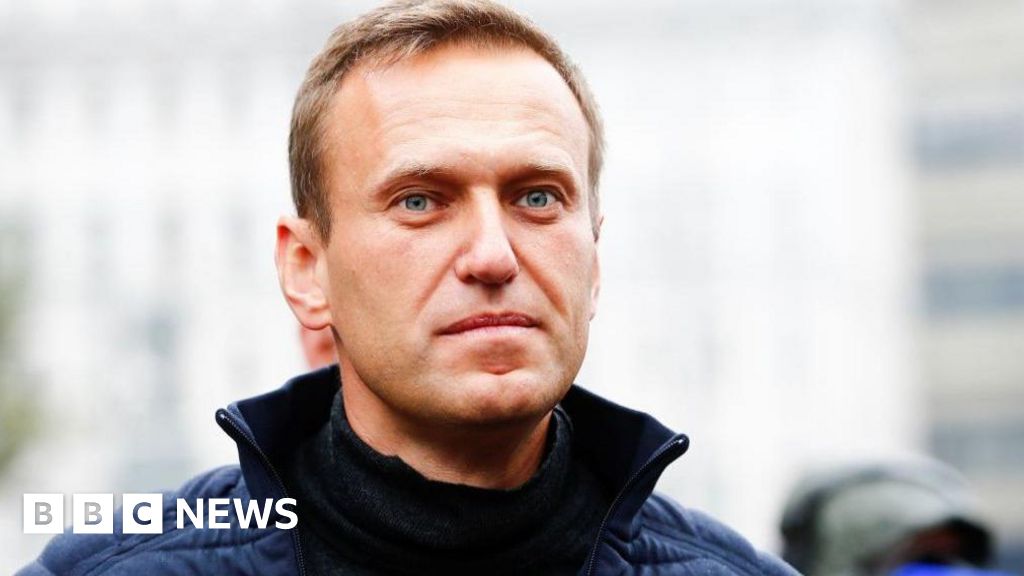
The joint allied statement elaborated on the specific nature of the toxin: "Epibatidine naturally occurs in certain species of dart frogs found exclusively in the wild ecosystems of South America. Crucially, dart frogs maintained in captivity do not produce this toxin, nor is it indigenous to Russia. The detection of epibatidine in samples from Navalny’s body therefore permits no innocent interpretation." This specific detail about the toxin’s origin highlights the sophisticated and deliberate nature of its alleged deployment, suggesting a state-level capacity for synthesizing or acquiring such an exotic and potent compound.
Delving into the toxicology, Jill Johnson, an expert in the field, speaking to BBC Russian, characterized epibatidine as "approximately 200 times more potent than morphine." She detailed its devastating physiological effects: "By interacting with specific receptors within the central nervous system, it can induce severe muscle twitching, progressive paralysis, seizures, a dangerously slowed heart rate, culminating in respiratory failure and ultimately, death." Johnson further underscored the extreme rarity of this neurotoxin, noting its presence in minute quantities in only one wild frog species, and then only under very specific dietary conditions. She described its use as a method of poisoning as an "incredibly unusual and sophisticated approach."
The implications of this finding extend beyond the immediate accusation. The UK Foreign Office has formally notified the Organisation for the Prohibition of Chemical Weapons (OPCW) regarding Russia’s alleged violation of the Chemical Weapons Convention (CWC). While epibatidine itself may not be explicitly listed as a Schedule 1 chemical, its use as a weaponized toxic chemical would unequivocally constitute a breach of the CWC, which prohibits the development, production, acquisition, stockpiling, retention, transfer, or use of chemical weapons. This formal notification initiates a process that could lead to further international investigations, potentially involving the OPCW’s Executive Council and even the UN Security Council, although Russia’s permanent seat and veto power on the latter present significant diplomatic hurdles.
Global leaders swiftly offered their reactions. UK Prime Minister Sir Keir Starmer lauded Navalny’s "immense courage" and asserted that "his unwavering commitment to uncovering the truth has bequeathed an enduring legacy." He further pledged, "I am committed to employing all necessary measures to safeguard our populace, our fundamental values, and our way of life from the pervasive threat posed by Russia and the murderous intentions of its leadership." Similarly, French Foreign Minister Jean-Noël Barrot conveyed his nation’s "tribute" to Navalny, positing that he was "murdered for his relentless struggle in pursuit of a free and democratic Russia."
Alexei Navalny, a figure synonymous with anti-corruption activism and fierce opposition to the Kremlin, died at the age of 47 on February 16, 2024. His death occurred under highly suspicious circumstances, following years of relentless persecution by Russian authorities. His political career was marked by numerous investigations exposing high-level corruption within the Russian government and state-owned corporations, which garnered him a significant following, particularly among younger generations. This activism, however, also made him a prime target for the state.
This newly alleged poisoning with epibatidine is not the first time Navalny was targeted with a sophisticated chemical agent. In August 2020, he fell critically ill during a flight within Russia and was subsequently airlifted to Germany for treatment. International laboratories confirmed he had been poisoned with Novichok, a military-grade nerve agent developed by the Soviet Union, unequivocally linking the attack to the Russian state. Despite this life-threatening assault, Navalny made the courageous decision to return to Russia in January 2021, where he was immediately arrested at the airport and subsequently imprisoned on charges widely condemned as politically motivated. He remained incarcerated until his death, serving a lengthy sentence in an increasingly harsh penal environment, culminating in his transfer to an isolated Arctic Circle colony known for its severe conditions.
Prior to Saturday’s momentous announcement, Yulia Navalnaya had consistently maintained that her husband was murdered by poisoning while imprisoned. Her steadfast accusations, often made in the face of official Russian obfuscation, have now found significant backing from international allies. Reacting to the confirmed findings, Navalnaya stated, "From the very first day, I was convinced that my husband had been poisoned, and now, irrefutable proof has emerged. I extend my profound gratitude to the European nations for their meticulous investigative efforts over the past two years and for bringing this truth to light." Her earlier challenges to laboratories to publicly release their findings underscored her determination to secure transparency and accountability, a call that has now been partially answered by this joint announcement.
The Kremlin’s official response to these grave allegations has, predictably, been one of silence. Historically, the Russian government has consistently denied any involvement in Navalny’s various ailments and death, often dismissing such claims as Western-orchestrated disinformation campaigns. Russian President Vladimir Putin, who meticulously avoided uttering Navalny’s name during his lifetime, offered only a fleeting comment a month after his death, referring to the passing of "a person" as "always a sad event," a remark widely seen as dismissive and lacking any genuine acknowledgment of Navalny’s significance.
According to the official Russian narrative provided at the time of his death, the 47-year-old Navalny took a brief stroll at his Siberian penal colony, subsequently reported feeling unwell, collapsed, and never regained consciousness. This account has been met with widespread skepticism internationally, especially given the history of alleged state-sponsored assassinations and poisonings of Russian dissidents, both within Russia and abroad. The cases of Alexander Litvinenko, poisoned with polonium-210 in London, and Sergei Skripal, targeted with Novichok in Salisbury, UK, serve as grim precedents that lend weight to the current accusations regarding Navalny.
The implications of this latest finding are far-reaching. It further solidifies the perception of Russia as a state willing to employ extreme measures, including prohibited chemical weapons, to suppress dissent and eliminate perceived threats. For the international community, it presents a renewed challenge to uphold the principles of international law and human rights, demanding a robust and coordinated response. The OPCW’s role will be crucial in navigating the technical and political complexities of investigating such a sophisticated act. Domestically, within Russia, the news may further galvanize the fragmented opposition, even as the Kremlin continues its crackdown on all forms of dissent, potentially fueling a deeper sense of mistrust and resentment among the populace. The legacy of Alexei Navalny, as a symbol of resistance and a victim of alleged state-sponsored violence, will undoubtedly continue to cast a long shadow over Russia’s political landscape for years to come.



 Aura Kasih
 Safa Marwah
 Ayu Aulia