Lisa Mariana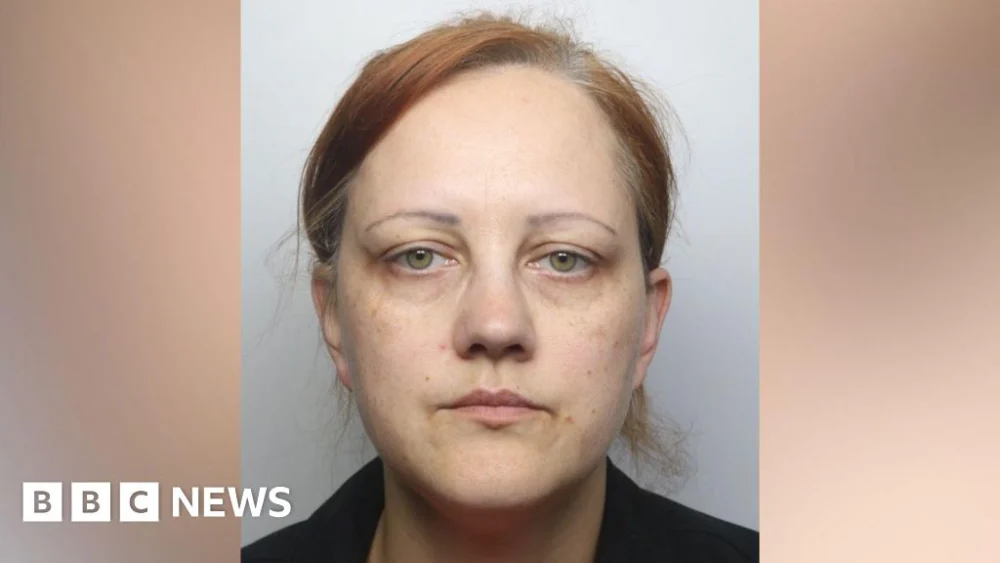
After an arduous fifteen-year concealment, a woman responsible for the brutal killing and dismemberment of her partner, whose remains were subsequently interred beneath a concrete slab in a residential garden, has finally faced the full force of the law, receiving a life imprisonment term from a Derby Crown Court. This landmark sentencing brings a chilling conclusion to a prolonged mystery that haunted the victim’s family for over a decade and a half, underscoring the relentless pursuit of justice even when evidence lies hidden for years.
Anna Podedworna, the convicted perpetrator, was handed a life sentence with a stipulated minimum term of 21 years for the murder of Izabela Zablocka. The verdict, delivered by a jury earlier this week, confirmed Podedworna’s culpability in a crime of shocking brutality and calculated deception. The macabre details, including the severing of the victim’s body and its clandestine burial, emerged following Podedworna’s belated and self-serving disclosure to authorities, sparking an intensive investigation that finally unearthed the truth.
The grim discovery unfolded last year when Podedworna contacted Derbyshire Police, providing information that led officers to a property on Princes Street in Derby. It was there, in the seemingly innocuous back garden, that the long-lost remains of Izabela Zablocka were exhumed, bringing to light a crime committed in late summer 2010. For nearly fifteen years, the ground had silently held its dark secret, while Zablocka’s family endured an agonizing period of uncertainty, desperately searching for answers regarding her sudden disappearance.
During the deeply unsettling proceedings at Derby Crown Court, the Honourable Mrs. Justice Williams KC presided over the sentencing, delivering a poignant address that highlighted the profound suffering inflicted upon the victim’s loved ones. "It is unequivocally clear from the evidence presented throughout this trial that Izabela was a cherished family member," the judge stated, emphasizing her deep connections with her mother, grandmother, and particularly her daughter, Kasia. The court heard how Izabela maintained consistent communication with her relatives in Poland, a pattern that abruptly ceased, causing immediate concern.
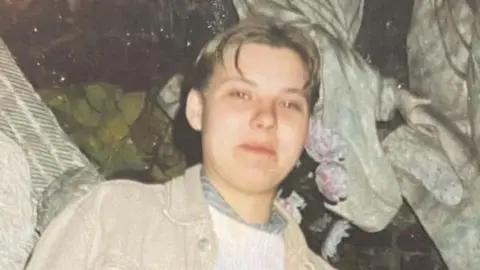
A particularly heart-wrenching detail emerged concerning Izabela’s daughter. Kasia, who anticipated a customary call from her beloved mother on her 10th birthday, September 4, 2010, was left without contact. This unexplained silence marked the beginning of her prolonged torment, a void created by Podedworna’s heinous actions. Mrs. Justice Williams KC articulated the devastating impact: "As a direct consequence of your violent, manipulative, and cruel actions, Kasia was robbed of the opportunity to grow up with any knowledge of her adored mother’s fate, who vanished from her life without any rational explanation." The judge’s words painted a vivid picture of the enduring trauma and injustice endured by the family.
The judicial pronouncement further underscored the critical role of the victim’s family in ultimately bringing the truth to light. "Had it not been for the unwavering tenacity and persistence of the family, who steadfastly refused to abandon their hope of uncovering what transpired, it is highly probable that your egregious crimes would have remained undiscovered," Mrs. Justice Williams KC asserted. This commendation highlighted the immense emotional and practical burden placed upon relatives who, against all odds, continued their quest for answers in the face of a prolonged and baffling disappearance.
A striking element of the sentencing concerned Podedworna’s apparent lack of contrition. The judge critically noted, "You have demonstrated absolutely no remorse for your actions. Furthermore, you do not merit any credit for belatedly contacting the police in May 2025 – a communication that was, in reality, merely an attempt to present a fabricated narrative regarding Izabela’s demise." This judicial assessment exposed the manipulative nature of Podedworna’s delayed confession, suggesting it was a calculated maneuver rather than an expression of genuine guilt or a desire for redemption.
The prosecution, led by Gordon Aspden KC, laid out the disturbing sequence of events for the jury. Both women, originally from Poland, had migrated to the United Kingdom seeking employment opportunities, establishing their residence in the Normanton district of Derby. The last confirmed communication from Izabela Zablocka was a telephone call to her mother in Poland on August 28, 2010. Shortly after this final conversation, the prosecution contended, Zablocka was brutally murdered by Anna Podedworna.
The method of concealment was particularly grim. Prosecutor Aspden KC detailed how Podedworna "dismembered Izabela’s body by cutting it in half with a large knife." This gruesome act was not random or unskilled. Investigations revealed that the defendant had prior employment as a "skilled butcher," a profession that involved the precise tasks of "deboning and portioning out turkey carcasses using a large knife." This detail provided a chilling insight into the perpetrator’s capacity for such a horrific act, suggesting a proficiency that facilitated the dismemberment and subsequent concealment.
Following the dismemberment, the victim’s body was covertly buried in the garden of the Princes Street residence. To further obscure the crime, a layer of concrete hardstanding was meticulously laid over the burial site, creating a permanent, seemingly innocuous barrier that concealed the atrocity for years. This deliberate act of camouflage speaks volumes about the premeditation and chilling resolve with which Podedworna sought to erase all traces of her crime, demonstrating a profound level of cold calculation.
The case serves as a stark reminder of the challenges inherent in cold case investigations, particularly those where a body is initially absent. For years, Izabela Zablocka was simply a missing person, her fate unknown to all but her killer. Without a body, forensic evidence is scarce, and the timeline of events becomes difficult to reconstruct. The initial reports of her disappearance likely faced significant hurdles, leaving police with few immediate leads to pursue. The passage of time often erodes memories, disperses witnesses, and degrades potential evidence, making such investigations extraordinarily difficult.
However, modern forensic science, combined with persistent police work, has increasingly allowed for breakthroughs in long-unsolved cases. While the exact forensic methods employed in this specific recovery were not detailed, it is likely that after Podedworna’s disclosure, specialist archaeological and forensic teams meticulously excavated the site, employing techniques to identify human remains after prolonged burial and to link them definitively to Izabela Zablocka. The identification process, even after 15 years, would have been critical in establishing the victim’s identity and confirming the cause of death where possible.
The psychological dimension of this case is equally compelling. For 15 years, Anna Podedworna lived with the knowledge of her crime, interacting with society, potentially even with those who knew Izabela, all while harboring this dark secret. Her ability to maintain such a facade for so long, coupled with the judge’s observation of her "manipulative" actions and lack of remorse, suggests a profound psychological detachment. The motive behind her belated contact with the police—described as an attempt to offer a "false account"—raises questions about whether she sought to control the narrative even at that late stage, or perhaps mitigate her sentence by appearing to cooperate.
This tragic saga also casts a spotlight on the hidden aspects of domestic violence and interpersonal conflict that can escalate to extreme levels. While the specific nature of the relationship between Podedworna and Zablocka beyond being "partners" was not fully elaborated, the brutal outcome underscores the potential for profound violence within intimate relationships, often concealed from public view. The concealment of the body, particularly for such an extended period, speaks to a desire to control the aftermath of the crime and evade accountability.
The resolution of Izabela Zablocka’s disappearance brings a semblance of closure, albeit a painful one, to her grieving family. Her daughter, Kasia, now an adult, finally knows the truth about her mother’s fate. The steadfast dedication of Izabela’s family, who refused to let her case fade into obscurity, serves as a powerful testament to the enduring bonds of love and the unyielding human desire for justice. Their persistence ultimately pierced through a decade and a half of deception, bringing a calculated killer to account.
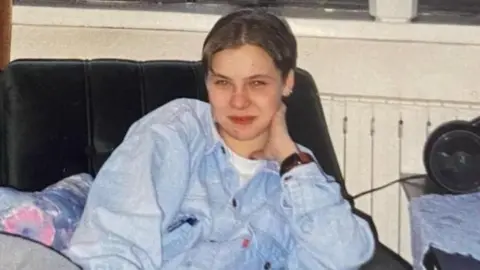
The sentencing of Anna Podedworna marks the end of a long and harrowing chapter for all involved, particularly for Izabela Zablocka’s family. While no judicial outcome can ever truly compensate for the profound loss and trauma they have endured, the life sentence ensures that the perpetrator will be held accountable for her horrific actions. This case stands as a stark reminder that some secrets, no matter how deeply buried or meticulously concealed, are ultimately destined to be uncovered, and justice, though sometimes delayed, can ultimately prevail.



 Aura Kasih
 Safa Marwah
 Ayu Aulia