Lisa Mariana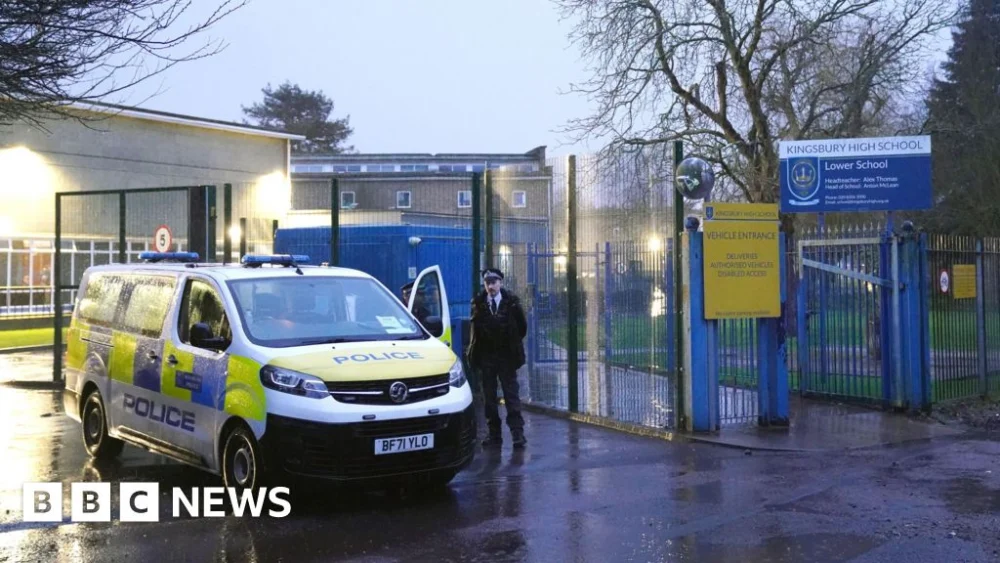
A grave incident of adolescent violence has cast a shadow over Kingsbury High School in North-West London, prompting an intensive investigation led by the Metropolitan Police’s Counter Terrorism Command following the stabbing of two male students. Authorities confirmed a 13-year-old boy has been apprehended on suspicion of attempted murder as inquiries deepen into the motivations behind the disturbing midday assault that left two classmates, aged 12 and 13, with serious injuries. The unusual involvement of counter-terrorism specialists underscores the gravity and complex nature of the circumstances surrounding this deeply unsettling event within an educational setting.
The tranquil routine of Kingsbury High School was shattered at approximately 12:40 GMT on Tuesday when emergency services were summoned to reports of a violent incident. Responding officers discovered two young pupils suffering from stab wounds. The swift arrival of police and paramedics initiated a critical incident response, ensuring the immediate care of the injured boys and the securing of the school premises. The Metropolitan Police subsequently confirmed that both victims were in serious but stable conditions, receiving medical attention for their injuries. The immediacy of the response, including the rapid identification and apprehension of a suspect, highlights the coordinated efforts of law enforcement in confronting such unexpected acts of violence in public institutions.
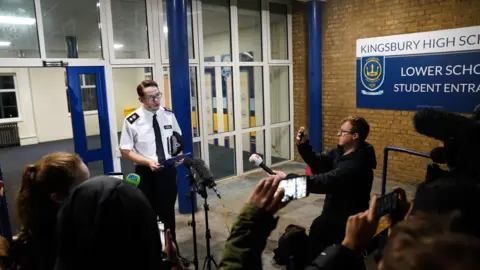
The subsequent hours saw a significant police presence at the school, with officers establishing a cordon and initiating a thorough forensic examination of the scene. Det Ch Supt Luke Williams, addressing the media from outside the school, confirmed the arrest of a 13-year-old male suspect in connection with the stabbings. The individual was taken into custody on suspicion of attempted murder, and a weapon believed to have been used in the assault was also recovered. This rapid progress in the investigation points to effective initial police work and potential cooperation from witnesses or school staff, crucial in the immediate aftermath of such a volatile event.
A particularly noteworthy aspect of this investigation is its leadership by Counter Terrorism Policing London. While Detective Chief Superintendent Williams explicitly stated that the incident has not been formally declared a terrorist act, he cited "surrounding circumstances" as the rationale for the counter-terrorism unit’s involvement. This distinction is critical; it implies that while the immediate evidence or intelligence does not conclusively establish a terrorist motive, there are elements that warrant the specialized expertise and resources of counter-terrorism investigators. Reports from unnamed witnesses, cited by some media outlets, suggesting the suspect may have uttered the phrase "Allahu Akbar" (Arabic for "God is greatest") during the attack, could be among the "surrounding circumstances" prompting this elevated level of scrutiny. Such alleged utterances, particularly in the context of violence, often trigger an assessment for potential ideological motivations, even if the primary focus remains on the criminal act itself. The investigation is reportedly examining the suspect’s electronic devices and reviewing numerous witness accounts, aiming to construct a comprehensive picture of the incident and discern any underlying motivations.
The incident has profoundly impacted the Kingsbury High School community. Alex Thomas, the school’s headteacher, communicated the institution’s collective shock and distress in a letter to parents and carers, describing the event as "a deeply traumatic event for the whole school community." The immediate aftermath saw students and staff grappling with the emotional fallout. Police officers were observed engaging with pupils in one of the school’s halls hours after the usual closing time, with some students reportedly leaving in tears, indicative of the severe psychological toll the events had taken. The decision to close the Lower School on Wednesday while keeping the Upper School open for Years 10-13 students reflects a strategic approach to managing the crisis, prioritizing the safety and well-being of the youngest pupils while attempting to maintain a semblance of normalcy for older students where feasible. The headteacher’s emphasis on close cooperation with authorities and the promise of further updates underscore the school’s commitment to transparency and community support during this challenging period.
Parents and local residents have expressed profound concern and anxiety. Simon Theodorou, a parent, detailed accounts of the attacker allegedly gaining entry by climbing over a wall, raising questions about perimeter security. He also lauded one of the victims for reportedly pulling a fire alarm to summon help, an act he described as "heroic." This detail, if confirmed, highlights the bravery and presence of mind exhibited by a young student in a terrifying situation, potentially preventing further harm. The wider community, particularly former pupils like Moeen, voiced deep sadness and a pervasive feeling of unsafety, lamenting the loss of innocence associated with such a violent act among children. "The age of 13 is just for playing…they’re children," Moeen stated, capturing the widespread sentiment of dismay and the collective desire for robust measures to prevent future occurrences.
The incident at Kingsbury High School also reignited broader discussions about youth violence, school safety, and the efficacy of preventative measures. Knife crime, particularly among young people, remains a persistent and complex challenge across London and other urban centers in the United Kingdom. While government and local authorities have implemented various strategies, including educational programs, community outreach, and increased policing, incidents like this underscore the ongoing difficulties in eradicating such violence. The Home Secretary, Shabana Mahmood, expressed her thoughts and prayers for the victims and their families, labeling the event a "shocking attack." Mayor of London Sir Sadiq Khan urged anyone with information to come forward, emphasizing, "There is no honour in staying silent," a common plea in efforts to combat youth crime and break cycles of violence.
In the wake of the stabbings, the debate around school security protocols, specifically the potential implementation of mandatory metal detectors, resurfaced. However, the government quickly clarified its position, with Minister for School Standards, Georgia Gould, stating that mandatory knife arches are not currently under consideration. Gould affirmed the government’s commitment to addressing knife violence through a "whole range of ways, in terms of training, in terms of investment, in terms of support for young people," indicating a preference for holistic, preventative approaches over universal physical security measures. The discussion around metal detectors often balances perceived security benefits against concerns about creating a prison-like atmosphere in schools, the potential for stigmatization, significant logistical challenges, and the risk of displacing violence outside school gates. Furthermore, critics argue that metal detectors address symptoms rather than root causes of violence, which often stem from broader societal issues, gang involvement, and mental health challenges.
The involvement of a 13-year-old suspect in such a serious crime also brings into focus the juvenile justice system. When a minor is arrested on suspicion of attempted murder, specific legal provisions and safeguards apply. These include the right to an appropriate adult during questioning, limits on detention periods, and a focus on rehabilitation in addition to accountability. The legal process for a juvenile is distinct from that for an adult, taking into account the age, maturity, and developmental stage of the young person. Assessing motive, particularly in complex cases involving potential ideological influences, requires a nuanced approach, often involving psychological evaluations and careful consideration of environmental factors. The outcome of the investigation will determine whether the suspect faces charges, and if so, the nature of those charges and the subsequent judicial proceedings will be governed by the legal framework for minors.
Kingsbury High School itself is a comprehensive academy for students aged 11 to 18, known for its diverse student body and a history of notable alumni, including figures such as singer George Michael, jazz musician Courtney Pine, and former Saracens rugby captain Floyd Steadman. This background highlights the school’s established place within its community and the broader cultural landscape, making the recent violence particularly jarring against its reputation as a place of learning and aspiration.
Looking ahead, the Kingsbury High School community faces a considerable period of healing and recovery. Beyond the immediate police investigation and legal proceedings, the long-term psychological support for students, staff, and families will be paramount. Schools often implement comprehensive counselling services and create safe spaces for discussion and emotional processing following traumatic events. This incident may also prompt an internal review of the school’s security protocols, including access control and emergency response plans, even without a broader governmental mandate for metal detectors. The delicate balance between fostering an open, inclusive learning environment and implementing robust security measures will be a central consideration. The broader implications extend to ongoing efforts to address youth violence, early intervention strategies, and the societal challenges that contribute to such tragic events. The Kingsbury High School incident serves as a stark reminder of the persistent vulnerabilities within educational institutions and the continuous need for vigilance, community engagement, and comprehensive support systems to protect young people.



 Aura Kasih
 Safa Marwah
 Ayu Aulia