Aura Kasih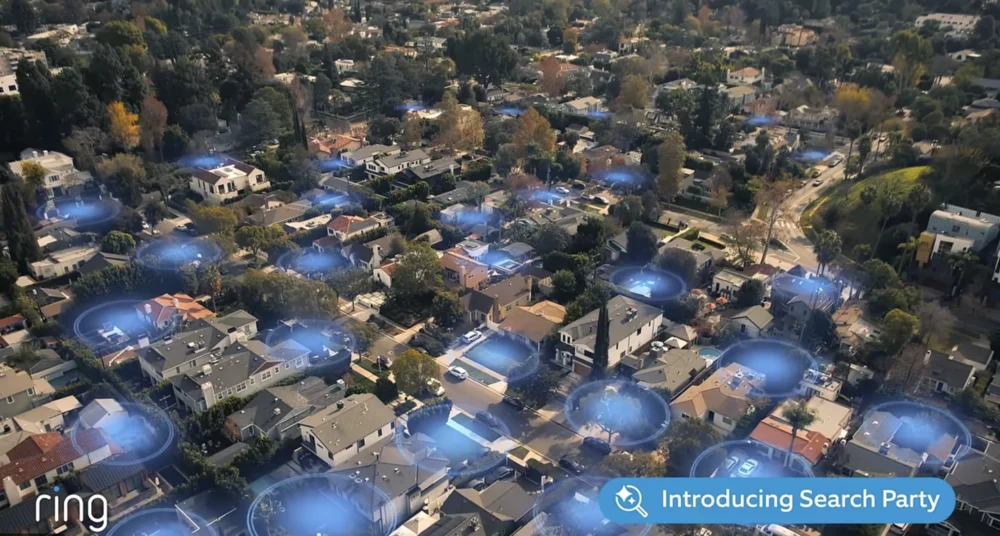
Amazon’s home security subsidiary, Ring, has ignited a firestorm of public apprehension following its prominent placement during the Super Bowl, where a thirty-second advertisement showcased its new "Search Party" feature. This initiative, designed to leverage the company’s vast network of residential cameras for locating lost pets, has been widely interpreted as a disquieting harbinger of pervasive surveillance, particularly in the current sociopolitical climate. Critics argue that the ad, by normalizing the concept of widespread camera monitoring for seemingly benign purposes, strategically masks a more ambitious agenda: the normalization and expansion of networked surveillance infrastructure, with potentially far-reaching implications for civil liberties and individual privacy.
The controversy stems from the feature’s underlying technology and Ring’s evolving partnerships. The "Search Party" tool employs artificial intelligence to analyze video footage for specific visual identifiers, in this case, a lost dog. However, this capability, when juxtaposed with Ring’s recent introduction of facial recognition technology, raises significant concerns about the potential for such systems to be repurposed for tracking human individuals. Privacy advocates and civil liberties organizations point to this convergence of technologies as a critical juncture, where a feature initially framed as a community-oriented utility could easily be reconfigured into a potent tool for state-sponsored surveillance, blurring the lines between personal safety and governmental oversight.
Chris Gilliard, a recognized expert in privacy and surveillance, characterized the advertisement as a "clumsy attempt by Ring to put a cuddly face on a rather dystopian reality: widespread networked surveillance by a company that has cozy relationships with law enforcement and other equally invasive surveillance companies." This sentiment is echoed by a growing chorus of critics who perceive the ad not as a celebration of community spirit, but as a sophisticated marketing maneuver designed to acclimate the public to an increasingly intrusive surveillance landscape. The underlying message, they contend, is less about reuniting a child with a beloved pet and more about conditioning consumers to accept the constant monitoring of their neighborhoods as a standard feature of modern life.
Senator Ed Markey, a persistent critic of Ring’s burgeoning ties with law enforcement agencies, has been particularly vocal in his condemnation. His assertion that "This definitely isn’t about dogs – it’s about mass surveillance" encapsulates the core of the public’s unease. Markey has consistently championed increased transparency regarding Ring’s collaborations with police departments and has advocated for more robust privacy protections for consumers who utilize the company’s products. His ongoing efforts to scrutinize Ring’s data-sharing practices underscore a broader societal debate about the balance between security and privacy in an era of ubiquitous digital monitoring.
The escalating concerns are inextricably linked to Ring’s strategic alliance with Flock Safety, a company specializing in surveillance technologies. Flock Safety provides law enforcement agencies with a suite of tools, including automated license plate readers and comprehensive video surveillance systems. This partnership effectively integrates Ring’s extensive network of residential cameras with an entity that has reportedly facilitated access to its own nationwide camera data for government agencies, including U.S. Immigration and Customs Enforcement (ICE). The implications of this synergy are profound: a vast, privately owned surveillance apparatus is being woven into the fabric of public safety infrastructure, raising questions about data ownership, access, and accountability.
The data privacy implications of such partnerships are multifaceted. When Ring cameras, often positioned in private residences, are connected to platforms utilized by law enforcement and federal agencies, the potential for misuse or overreach becomes a tangible threat. The concept of "Community Requests," where users can voluntarily share footage with law enforcement, is presented by Ring as a controlled mechanism. However, critics argue that the infrastructure for more direct and potentially less transparent data sharing already exists or is in development, particularly through integrations with third-party evidence management systems like those offered by Axon and Flock Safety. The argument that these systems offer a "more secure chain of custody" is countered by concerns about the inherent vulnerabilities of any networked system and the potential for regulatory loopholes to be exploited.
Ring spokesperson Emma Daniels has attempted to allay these fears, asserting that the "Search Party" feature is specifically designed for animal identification and "is not capable of processing human biometrics." She further clarified that the "Familiar Faces" facial recognition capability operates independently and at the individual account level, without the communal sharing inherent in "Search Party." Daniels emphasized that these tools are not intended for mass surveillance and that the company adheres to strict transparency protocols, including making law enforcement requests publicly visible on its Neighbors app profile.
However, the company’s assurances are met with skepticism by many who point to the historical trajectory of surveillance technologies. The argument that current capabilities are limited is often seen as a temporary constraint, subject to change as technology evolves and corporate priorities shift. The history of surveillance technologies has consistently demonstrated a tendency to expand beyond their initial intended purposes. What begins as a tool for finding lost pets can, through incremental developments and evolving partnerships, transform into a comprehensive system for tracking individuals. The stated goal of "zeroing out crime" by founder Jamie Siminoff, enabled by the expansive possibilities of AI, further fuels these anxieties. The prospect of a feature designed for canine identification being repurposed for human tracking, even if not currently on the immediate roadmap, remains a significant concern.
The integration with Flock Safety, though reportedly not yet fully operational, remains a focal point of the backlash. Ring’s statement that "As we explore the integration, we will ensure the feature is built for the use of local public safety agencies only" offers a degree of reassurance, but the potential for downstream sharing of data with federal entities remains a significant point of contention. The absence of a clear update on the partnership’s progress following the public outcry suggests a company navigating a complex public relations challenge while continuing to pursue its strategic objectives.
Ultimately, the debate surrounding Ring’s Super Bowl advertisement and its associated technologies hinges on a fundamental question of trust. Consumers are being asked to place their faith in a company that has a documented history of collaborating with law enforcement, and whose parent company, Amazon, operates at the forefront of technological innovation. The argument that "history has shown that tools capable of large-scale surveillance are rarely limited to their original purpose" serves as a potent reminder of the inherent risks associated with the proliferation of such technologies. Ring’s commitment to user protection, while stated, must be weighed against the tangible capabilities of its expanding surveillance network and its evolving relationships within the broader security and law enforcement ecosystem. The continued development and deployment of these technologies necessitate a sustained public discourse on the ethical boundaries of surveillance and the imperative of safeguarding individual privacy in an increasingly connected world. The company’s current defense, cloaked in the guise of community safety and the heartwarming image of reuniting a pet with its owner, may be insufficient to assuage the deep-seated anxieties surrounding the potential for mass surveillance.




 Lisa Mariana
 Safa Marwah
 Ayu Aulia