Lisa Mariana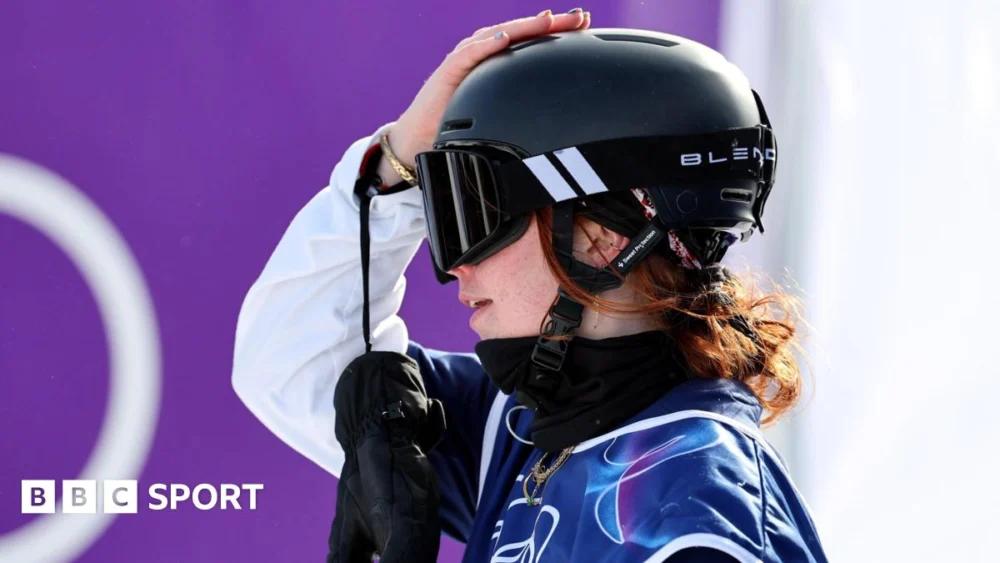
The slopestyle event, renowned for its dynamic blend of aerial maneuvers and technical rail features, culminated in a thrilling contest where margins were exceptionally fine. Swiss athlete Mathilde Gremaud, demonstrating unparalleled consistency and nerve, successfully defended her Olympic title, an achievement that solidifies her standing as one of the sport’s all-time greats. Her winning run, executed with precision and flair, edged out her closest competitor by a mere 0.38 points, a testament to the escalating standards and microscopic differences that now define elite freestyle skiing. This razor-thin victory margin highlights the immense pressure and the critical importance of every detail in a sport where milliseconds and minute degrees of rotation dictate ultimate success.
China’s Eileen Gu, a global icon whose influence transcends the boundaries of winter sports, secured the silver medal. Gu’s presence on the slopes always electrifies the atmosphere, drawing significant media attention and fan engagement. Despite a stumble on her final attempt, which ultimately paved the way for Gremaud’s unassailable lead and subsequent celebratory victory lap – a poignant moment with the Swiss flag draped around her – Gu’s overall performance was formidable. Her ability to consistently deliver high-level runs, even under immense scrutiny, reinforces her status not only as an exceptional athlete but also as a powerful cultural figure. The dynamic between Gremaud’s steadfast execution and Gu’s star power defined much of the slopestyle narrative, showcasing the diverse forms of excellence prevalent in contemporary freestyle skiing.
For Kirsty Muir, a key figure in Team GB’s medal aspirations at these Games, the slopestyle final represented a significant milestone in her post-injury comeback, even if it did not yield the desired hardware. Her participation and competitive showing at this level, following a period of intense rehabilitation, are themselves indicative of profound resilience and an unwavering commitment to her craft. Muir remains one of Great Britain’s most promising talents, and the experience gained in the slopestyle final will undoubtedly serve as crucial preparation for her next challenge: the big air competition, scheduled to commence on Saturday. The transition from slopestyle to big air requires a nuanced shift in focus, prioritizing massive aerials and complex rotational tricks over the integrated flow of a full course. Muir’s versatility across these disciplines is a cornerstone of her athletic profile.
Reflecting on her slopestyle performance, Muir articulated a balanced perspective, acknowledging the need for introspection while immediately shifting her focus to the future. "I’m going to look forward to big air, but I just need to take this one in," she stated, a sentiment that speaks to the psychological discipline required at the elite level. The emotional support from her family, present at the event, provided a vital grounding moment. "I got to see my family. They were hugging me a bit too tightly – I was getting a bit claustrophobic. They’re proud of me no matter what, so I can take that away," Muir shared. This interaction underscores the crucial role of personal support networks in navigating the highs and lows of Olympic competition, offering solace and perspective beyond the immediate outcome of a single event. The unconditional encouragement from her loved ones serves as a powerful reminder that an athlete’s worth is not solely defined by medal counts.
Muir’s journey to Milan-Cortina is particularly compelling when viewed through the lens of her previous Olympic experience and her subsequent battles with injury. Four years prior, at the Beijing 2022 Games, a then 17-year-old Muir was the youngest member of Great Britain’s delegation. Despite her youth and relative inexperience on the grandest stage, she delivered impressive performances, securing a commendable fifth-place finish in big air and an eighth-place ranking in slopestyle. These results were not merely respectable; they were a powerful harbinger of her future potential, signaling her arrival as a serious contender in the highly competitive world of freestyle skiing. Her Beijing debut established a baseline of expectation and provided invaluable exposure to the unique pressures of Olympic competition, laying the groundwork for her current campaign.
The period following Beijing, however, presented significant physical challenges. While Muir continued to ascend, achieving three World Cup podium finishes, her progress was abruptly interrupted by a severe injury. In December 2023, an MRI scan revealed a fully torn anterior cruciate ligament (ACL), a devastating blow for any athlete, particularly in a high-impact sport like freestyle skiing. The ACL, crucial for knee stability, necessitates extensive surgical repair and a prolonged, arduous rehabilitation process. This significant setback was compounded by the need for additional surgery on a persistent shoulder problem that had troubled her for an extended period. These dual injuries mandated a comprehensive physical overhaul and tested Muir’s mental fortitude to its absolute limits.
The path to recovery from such injuries is typically protracted and fraught with physical and psychological obstacles. Yet, Muir’s dedication and resilience shone through. Eleven months post-operation, she was remarkably back on snow, a testament to her disciplined rehabilitation regimen and her innate drive. Her return was not merely ceremonial; it was marked by immediate success. Her maiden World Cup gold medal arrived triumphantly in Tignes in March 2025, signaling a full and emphatic return to elite form. This victory was not an anomaly; it was followed by two more World Cup golds earlier this season, cementing her status as a dominant force. Furthermore, on the very eve of the Milan-Cortina Games, Muir demonstrated her competitive readiness by securing a slopestyle gold and a big air silver at the invitation-only X Games, a premier event that consistently features the sport’s top athletes. These pre-Olympic successes provided crucial momentum and validated the effectiveness of her comeback strategy.
Beyond her own performances, Muir’s connection to the broader Team GB contingent highlights the collaborative spirit within the delegation. She is expected to be present at the snow park to lend her support to close friend and teammate Mia Brookes, who is set to compete in the snowboard big air final, scheduled for 18:30 GMT. Brookes herself represents a formidable force in her sport, having already achieved global recognition as a world champion and a two-time X Games gold medallist. Her qualification in third place for the Olympic final underscores her strong medal prospects and further amplifies the excitement surrounding Team GB’s freestyle disciplines. The camaraderie between athletes like Muir and Brookes not only fosters a supportive environment but also elevates the overall performance potential of the national squad.
The medal hunt for Team GB extends beyond the freestyle skiing and snowboarding slopes. In a parallel narrative of Olympic ambition, curlers Bruce Mouat and Jen Dodds are poised to compete for a coveted spot in the gold medal mixed doubles final. Their semi-final clash against Sweden, set to unfold in Milan from 17:05, carries immense significance. Mouat and Dodds represent a strong contingent in British curling, a sport where the nation has historically achieved considerable success. Their journey through the mixed doubles tournament has been marked by strategic prowess and exceptional teamwork, positioning them as serious contenders for Olympic glory. The outcome of their semi-final will not only dictate their immediate medal chances but also significantly influence Great Britain’s overall medal tally in the early stages of the Games.
The broader context of Team GB’s participation in Milan-Cortina 2026 reflects a strategic investment in winter sports, aimed at fostering a new generation of talent capable of consistently challenging for podium places. Athletes like Muir and Brookes, with their youth, raw talent, and recent successes, embody the potential for sustained excellence. Their resilience in overcoming significant obstacles, particularly Muir’s arduous recovery from dual surgeries, serves as a powerful narrative of determination that resonates far beyond the competitive arena. The increasing professionalism of winter sports, coupled with advanced training methodologies and sports science support, is enabling athletes to push the boundaries of performance further than ever before.
Looking ahead, Kirsty Muir’s performance in the big air event will be closely watched. Her fifth-place finish in Beijing’s big air competition demonstrated her inherent capability in the discipline, and her recent X Games silver in the same event suggests she is in prime form. The big air format, with its focus on amplitude, rotation, and clean landings from a single massive jump, plays to her strengths as an aerialist. Regardless of the immediate outcome in Milan-Cortina, Muir’s journey signifies a pivotal moment for British winter sports. Her ability to return to elite competition after such significant injuries, coupled with her consistent podium finishes, positions her as a leading figure for years to come. Her dedication, mental fortitude, and evolving skill set ensure that her Olympic narrative is far from complete, promising further compelling chapters in her pursuit of sporting immortality. The Milan-Cortina Games are proving to be a testament not just to athletic prowess, but to the indomitable spirit of those who dare to dream big on the world’s most challenging stages.



 Aura Kasih
 Safa Marwah
 Ayu Aulia