
 Ridwan Kamil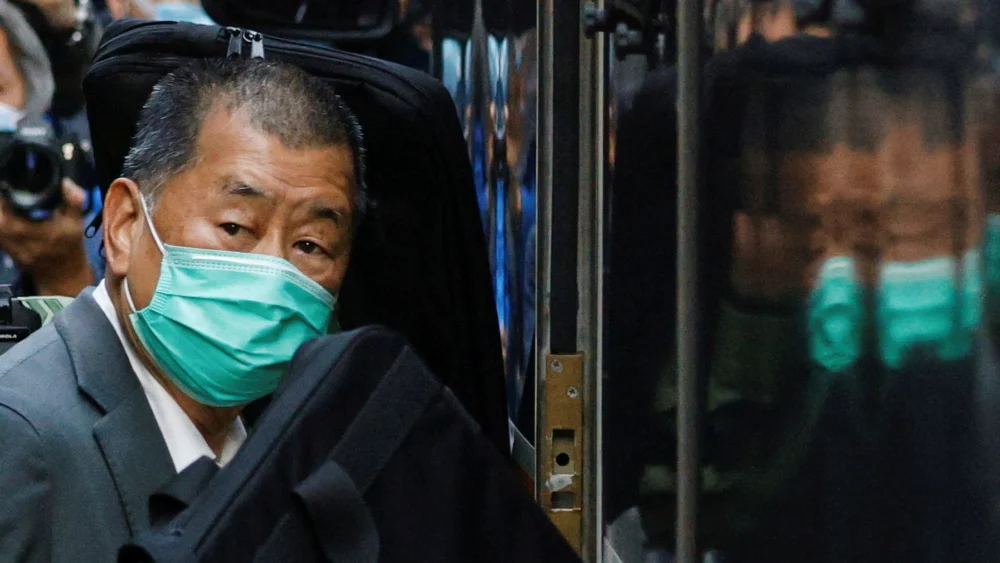
In a watershed moment for press freedom and legal precedent in Hong Kong, prominent media entrepreneur Jimmy Lai has been handed a severe 20-year prison sentence, underscoring the intensifying impact of Beijing’s national security legislation on the city’s once-vibrant civil society and independent media landscape.
The conviction and subsequent sentencing of Jimmy Lai, the founder of the now-defunct pro-democracy newspaper Apple Daily, represents a stark escalation in the ongoing campaign to reshape Hong Kong’s political and social fabric under the National Security Law (NSL) imposed by mainland China in 2020. Lai, a vocal critic of the Chinese Communist Party and a significant figure in the city’s democracy movement, was found guilty of multiple charges, including collusion with foreign forces and sedition. This lengthy prison term, far exceeding typical sentences for similar offenses in other jurisdictions, signals a clear message from authorities regarding the perceived severity of actions deemed to undermine national security.
Lai’s legal battles have been protracted and closely watched, drawing international condemnation from human rights organizations, democratic governments, and press freedom advocates. His arrest and subsequent trial have been framed by supporters as a politically motivated persecution aimed at silencing dissent and dismantling independent media critical of Beijing’s policies. Conversely, the Hong Kong and Chinese governments have maintained that Lai’s conviction was a legitimate application of the law, necessary to safeguard national security and public order. The prosecution’s case centered on allegations that Lai used his media empire and personal influence to solicit foreign sanctions and interference in Hong Kong affairs, thereby endangering China’s sovereignty.
The sentencing concludes a significant chapter in the erosion of Hong Kong’s autonomy, a process accelerated following the large-scale pro-democracy protests of 2019. The National Security Law, enacted in June 2020, has been instrumental in this transformation, leading to the arrest of thousands and the dismantling of numerous civil society groups, political organizations, and independent media outlets. Apple Daily, once a powerful voice with a substantial readership, was forced to cease publication in 2021 after its assets were frozen and its senior editors were arrested. Lai’s conviction and sentence are seen by many as the symbolic culmination of this broader crackdown.
Background and Legal Proceedings:
Jimmy Lai’s legal journey has been complex, involving multiple charges and court appearances. The core of the prosecution’s argument against him revolved around the interpretation and application of the National Security Law, specifically provisions related to collusion with foreign countries or external elements. Prosecutors presented evidence suggesting that Lai engaged in activities that aimed to destabilize Hong Kong and undermine China’s national interests, including alleged appeals for international pressure and sanctions against the city and mainland China.
The legal process itself has been a subject of intense scrutiny. Critics have raised concerns about the fairness of the trials, the use of national security courts, and the potential for political influence. The denial of Lai’s request to engage foreign legal counsel for his defense further fueled these concerns. The sheer length of the sentence, 20 years, has been interpreted as a deliberate punitive measure, intended to serve as a strong deterrent against future acts of perceived sedition or foreign collusion. The judge’s sentencing remarks, while upholding the legal framework, highlighted the gravity of the offenses in the context of national security.
Implications for Hong Kong’s Media Landscape and Civil Society:
The sentencing of Jimmy Lai carries profound implications for the future of media freedom and civil society in Hong Kong. For years, Hong Kong was lauded as a bastion of press freedom in Asia, a city where a diverse range of viewpoints could be expressed and debated openly. The crackdown initiated under the National Security Law, and epitomized by Lai’s conviction, has fundamentally altered this landscape.
Independent journalism, once a cornerstone of Hong Kong’s vibrant public sphere, has been severely curtailed. Many journalists have left the city, fearing reprisal, while media organizations have either ceased operations or significantly altered their editorial stances to avoid conflict with the authorities. The chilling effect of Lai’s conviction is likely to be felt across the remaining media outlets, potentially leading to greater self-censorship and a reduction in critical reporting. This shift away from a pluralistic media environment raises concerns about the public’s access to diverse information and the ability of citizens to hold power to account.
Beyond the media, the broader civil society sector has also experienced a dramatic contraction. The NSL has been used to dismantle or suppress numerous non-governmental organizations, advocacy groups, and political parties that were perceived as challenging Beijing’s authority. Lai’s case, therefore, is not an isolated incident but rather a prominent example within a wider pattern of repression. The shrinking space for dissent and independent expression has led to a significant change in Hong Kong’s social and political dynamics, impacting everything from public discourse to the city’s international standing.
International Reaction and Geopolitical Context:
The international community has largely condemned the sentencing of Jimmy Lai. Governments in North America, Europe, and Oceania, along with numerous international human rights organizations, have issued statements expressing deep concern and calling for Lai’s release. These reactions underscore the global significance of the case, viewing it as a critical test of Hong Kong’s commitment to the rule of law, human rights, and the "one country, two systems" principle.
The United States, in particular, has been a vocal critic, imposing sanctions on Hong Kong and mainland Chinese officials deemed responsible for undermining the city’s autonomy. The EU has also expressed its dismay, emphasizing the importance of preserving Hong Kong’s freedoms and the rule of law. This international backlash highlights the geopolitical implications of the National Security Law and its impact on Hong Kong’s relationship with the West. The verdict further strains already tense relations between China and Western democracies, framing Hong Kong as a key battleground in the broader ideological and geopolitical competition.
From Beijing’s perspective, the crackdown is framed as an essential measure to restore stability and sovereignty, particularly in the wake of the 2019 protests, which were often characterized by state media as foreign-backed insurrections. The Chinese government views the NSL as a necessary tool to prevent further unrest and ensure that Hong Kong remains a stable financial hub. The international criticism is often dismissed as unwarranted interference in China’s internal affairs.
Expert Analysis and Future Outlook:
Legal experts and political analysts offer varied perspectives on the long-term ramifications of Lai’s sentencing. Some argue that the severe penalty reflects a hardening of Beijing’s stance towards dissent and a clear intent to eliminate any perceived threats to its control over Hong Kong. This approach, they suggest, prioritizes political stability and national security over the preservation of democratic freedoms and individual liberties.
Others contend that while the immediate impact on dissent is undeniable, the long-term consequences could be more complex. The erosion of Hong Kong’s unique legal and social characteristics, they warn, could diminish its appeal as an international business and financial center. The city’s reputation for rule of law and open discourse has been a significant draw for foreign investment and talent. A sustained campaign of political repression, as evidenced by Lai’s sentence, may eventually lead to an exodus of businesses and skilled professionals, impacting Hong Kong’s economic vitality.
The future outlook for press freedom and civil liberties in Hong Kong remains uncertain. The broad scope and stringent application of the National Security Law provide authorities with significant power to curtail dissent. The sentencing of Jimmy Lai serves as a stark reminder of the potential consequences for those who challenge the established order. Moving forward, the landscape will likely be defined by a continued tension between Beijing’s drive for control and the lingering aspirations for freedoms that once characterized the city. The international community will continue to monitor developments closely, with the ongoing legal and political trajectory of Hong Kong shaping its role on the global stage. The legacy of figures like Jimmy Lai and the future of independent voices in Hong Kong will be a crucial barometer of the city’s evolving identity.


 Aura Kasih
 Safa Marwah
 Lisa Mariana


 Ayu Aulia