Lisa Mariana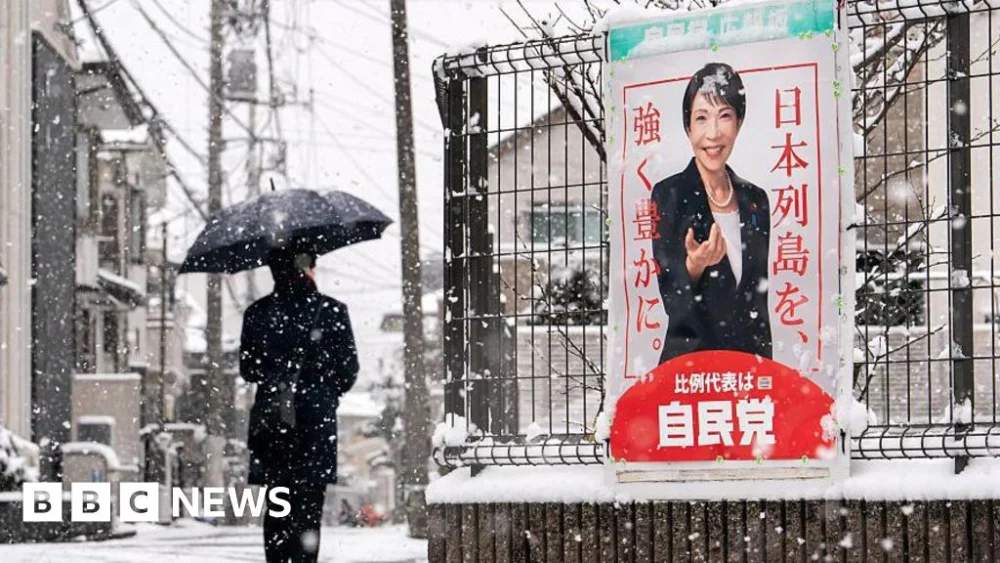
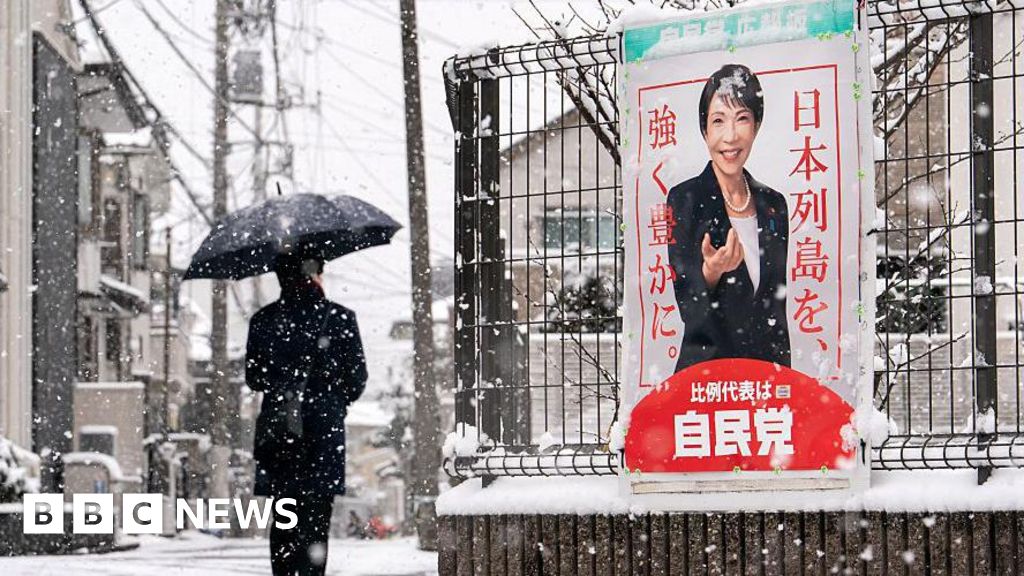
Across Japan, citizens braved unseasonal winter weather to cast their ballots in a snap general election, a strategic maneuver initiated by Prime Minister Sanae Takaichi. This high-stakes electoral challenge, called mere months after her ascent to party leadership, is widely viewed as an audacious bid to consolidate power and secure a renewed mandate for her administration’s agenda, despite earlier setbacks for her long-dominant Liberal Democratic Party and persistent public anxieties over rising living costs and the nation’s complex foreign policy landscape. The election outcome is poised to significantly shape Japan’s economic trajectory, its demographic challenges, and its role on the global stage for years to come.
Prime Minister Takaichi’s decision to dissolve the lower house and call for an early election, a rare mid-winter poll not seen in 36 years, was a calculated move following her victory in the Liberal Democratic Party’s (LDP) leadership race last October. For many political observers, this timing represented a considerable risk. The LDP, a political behemoth that has governed Japan for the vast majority of its post-war history, had recently experienced a significant erosion of its authority, having lost its majority in both houses of parliament. Furthermore, its long-standing coalition with the Komeito party had crumbled, leaving the LDP in a more vulnerable position than it had been in decades. This confluence of factors led many to label Takaichi’s move a "gamble," questioning the wisdom of seeking a public mandate when the party’s foundations appeared less stable. However, the prime minister seemingly aimed to capitalize on a surge in her personal approval ratings, which had consistently hovered above 70% since she took office, before any potential decline.
The LDP’s historical dominance in Japan’s political landscape has often been attributed to a fragmented opposition, allowing it to maintain a near-unbroken grip on power since its formation in 1955. Yet, the years preceding Takaichi’s premiership had been marked by a series of damaging corruption scandals that severely tarnished the party’s image and led to the premature resignations of two previous leaders. Public trust had waned, and the LDP found itself grappling with plummeting approval ratings and significant electoral losses. Takaichi’s ascent, therefore, marked a critical juncture. Her distinct blend of charisma, populist economic proposals, and assertive nationalist rhetoric appears to have injected new energy into the party, prompting a remarkable turnaround. Pre-election polls widely projected her new coalition, formed with the Japanese Innovation Party, to secure a commanding supermajority, potentially capturing up to 300 of the 465 seats in the lower house. This forecast suggests that Takaichi’s personal appeal has been instrumental in rallying support and restoring confidence in the LDP’s ability to govern.
Beneath the political maneuvering, a palpable sense of economic anxiety pervades the Japanese electorate. For decades, Japan has largely been accustomed to a deflationary or low-inflation environment, making the recent rise in living costs a particularly jarring experience. Voters like Ritsuko Ninomiya from Tokyo articulated this concern, expressing a desire for "long-term solutions rather than short-term fixes" to address the escalating expenses. "People want their lives to be better and more comfortable because we are so accustomed to not having inflation," Ninomiya observed, highlighting the public’s deep worry. This sentiment was echoed by Rumi Hayama, who pointed to the soaring cost of housing as a major challenge. "Our son is getting bigger and we need a bigger place but it is not affordable although we have decent jobs," Hayama lamented, adding that "prices are getting higher and it is getting hard to live in Japan. It was not like this before." Such anecdotes underscore a growing frustration with the economic realities, exacerbated by the memory of recent political scandals that many perceive as a failure of governance. The intersection of rising costs and past impropriety has undoubtedly fueled a desire for strong, decisive leadership that can genuinely address the nation’s economic vulnerabilities.
Prime Minister Takaichi’s policy platform, characterized by generous spending promises and a more pronounced nationalist stance, has undoubtedly resonated with a segment of the population eager for change and a return to perceived stability. Her administration has pledged significant fiscal interventions aimed at alleviating the immediate burden of inflation on households. However, this approach has drawn considerable skepticism from economic analysts and the business community. Critics point to Japan’s already formidable government debt, which stands as one of the highest among developed nations, questioning the sustainability and efficacy of further populist spending to revive a sluggish economy. Masahiko Takeda, a senior fellow focusing on Asia at the Australian National University, critically assessed the government’s proposed policy package, suggesting that while it might offer "short-term relief," it "fails to address the underlying problems of weak productivity and stagnant real wages." Beyond economic policy, Takaichi’s conservative stance on immigration has also raised concerns. Japan faces a rapidly aging population and a severe labor shortage, and many argue that a restrictive immigration policy will only exacerbate these critical demographic challenges, hindering long-term economic growth and innovation.
Adding complexity to the domestic political scene is a notably altered opposition landscape. The LDP’s former coalition ally, Komeito, has notably realigned, joining forces with the Constitutional Democratic Party of Japan to form a more unified and potentially formidable opposition bloc in the lower house. This strategic alliance represents a significant shift from the traditionally fragmented nature of opposition parties in Japan, presenting a more concerted challenge to the LDP’s hegemony. Despite Takaichi’s impressive personal approval ratings, not all analysts are convinced that her popularity will seamlessly translate into votes for individual LDP candidates across the country. Political science professor Koichi Nakano of Sophia University cautioned that "this is not a presidential election but a parliamentary election, in which the LDP’s candidates are mostly men tainted by past scandals." This highlights a potential vulnerability for the ruling party, where local constituencies may be less swayed by the prime minister’s personal appeal and more by the track record of their local representatives.

Beyond domestic economic woes, Takaichi’s administration faces a complex and increasingly volatile geopolitical environment. Her assertive foreign policy pronouncements, particularly her suggestion that Japan could deploy its own self-defense force in response to a Chinese attack on Taiwan, have significantly strained relations with Beijing, Japan’s largest trading partner. This hawkish stance marks a departure from more cautious diplomatic approaches and has raised concerns about regional stability and economic repercussions. Concurrently, Japan’s crucial alliance with the United States is navigating an uncertain period, particularly under the specter of a potentially "unpredictable Trump presidency." While the US has adjusted its threatened tariffs on Japan from 25% to 15%, trade relations remain a delicate balance. Notably, Takaichi has actively courted former President Donald Trump, even receiving an unusual public endorsement from him. Both leaders appear to align on the principle that Japan should significantly increase its defense spending, a point of contention for some Japanese voters. Yuko Sakai articulated this concern, stating, "I am concerned with what President Trump is doing as well as the national defense issues. I am not sure where the money is coming from to cover that. So balancing budget spending between defence and people’s life is a major concern for me." Another voter, Ms. Hattori, emphasized the broader imperative for peace in a world undergoing rapid shifts, particularly with Trump in office, underscoring how deeply foreign policy considerations weigh on the minds of the electorate.
The logistics of the election itself were significantly impacted by the weather. Rare snowfall blanketed Tokyo as citizens headed to the polls, and heavy snow was reported across northern and eastern regions, including Niigata Prefecture. This severe weather led to widespread transport disruptions, with Japan’s transport ministry reporting the closure of 37 train lines, 58 ferry routes, and the cancellation of 54 flights by Sunday morning. Such conditions invariably posed a challenge to voter turnout. Indeed, early voting figures indicated a nearly 2.5% decrease compared to the last election in 2024, with the drop largely attributed to the adverse weather. While some, like Daniel Hayama, noted that the cold weather was "not a hurdle for young people who want to vote," the overall impact on participation, especially among older demographics or those in heavily affected areas, remained a significant concern for the integrity and representativeness of the final vote count.
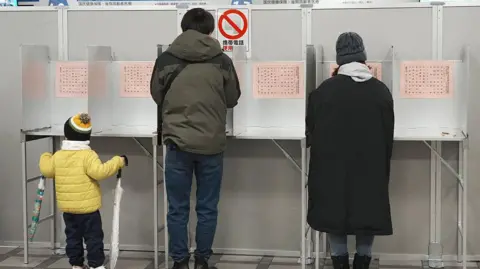
As the ballots are tallied, the nation awaits the confirmation of whether Prime Minister Takaichi’s calculated gamble has paid off. A decisive victory would grant her a strong mandate to pursue her ambitious agenda, potentially ushering in a new era of more assertive economic and foreign policy. However, the path ahead remains fraught with challenges. Takaichi must demonstrate an ability to deliver on her populist economic promises without further ballooning the national debt, all while confronting deep-seated structural issues like weak productivity and an aging workforce. On the international front, her administration will need to carefully navigate complex relations with China, maintain a robust alliance with the United States, and articulate a clear vision for Japan’s security amidst rising global uncertainties. The election, therefore, is not merely a reflection of current political sentiment but a critical juncture that will test Takaichi’s leadership and determine the course of Japan’s domestic prosperity and international standing in the years to come.




 Aura Kasih
 Safa Marwah
 Ayu Aulia