Safa Marwah
A critical United States-based payment gateway and technology solutions provider has confirmed that a sophisticated ransomware intrusion precipitated a widespread systems outage, disrupting various financial services across its platform. The incident, which commenced on a Friday, rapidly escalated from intermittent performance degradation to a significant nationwide service disruption, impacting a vast array of merchants and integrated payment functionalities reliant on the affected infrastructure.
BridgePay Network Solutions, a pivotal entity facilitating numerous digital transactions, identified and confirmed the cybersecurity breach as a ransomware attack within hours of the initial operational anomalies. This swift identification underscores the urgency and severity of the threat, prompting immediate engagement with federal law enforcement agencies, including the Federal Bureau of Investigation (FBI) and the U.S. Secret Service. Concurrently, specialized external forensic and recovery teams were mobilized to investigate the incident’s scope, mitigate further damage, and initiate restoration efforts.
Initial assessments from forensic investigators have offered a preliminary reassurance regarding sensitive data, indicating that no payment card data appears to have been compromised. The company has also stated that while files were accessed and subsequently encrypted by the attackers, there is currently "no evidence of usable data exposure." This distinction is crucial in the aftermath of a ransomware attack, where the dual threat of system encryption and data exfiltration often looms large. However, the absence of a public disclosure regarding the specific ransomware group involved leaves many questions unanswered about the nature of the threat actor and their typical modus operandi.
The operational fallout from the attack has been substantial. BridgePay’s status pages reflected extensive outages across its core production systems, including critical components such as virtual terminals, reporting functionalities, and application programming interfaces (APIs) — all integral to processing transactions and managing merchant accounts. Early indicators of trouble emerged in the pre-dawn hours, manifesting as degraded performance before cascading into a full-scale system outage. This progression highlights the typical trajectory of a successful ransomware deployment, where initial infiltration is followed by a period of reconnaissance and lateral movement before the final payload is deployed, leading to widespread encryption and disruption.
The breadth of systems affected by the ransomware attack suggests a profound disruption for merchants, aggregators, and payment integrators who depend on BridgePay’s platform for their daily card processing needs. Such outages can cripple businesses, especially those heavily reliant on digital transactions, by preventing them from accepting electronic payments. BridgePay has cautioned that the recovery process will be intricate and time-consuming, emphasizing a commitment to a "secure and responsible manner" of restoration. This approach typically involves meticulous data recovery from backups, system hardening, and thorough security audits to prevent re-infection, all while minimizing further operational risks.
The Broad Implications of a Payment Gateway Disruption

The disruption of a major payment gateway like BridgePay extends far beyond the immediate technical challenges. It reverberates through the entire commercial ecosystem, affecting merchants, consumers, and potentially the broader financial infrastructure.
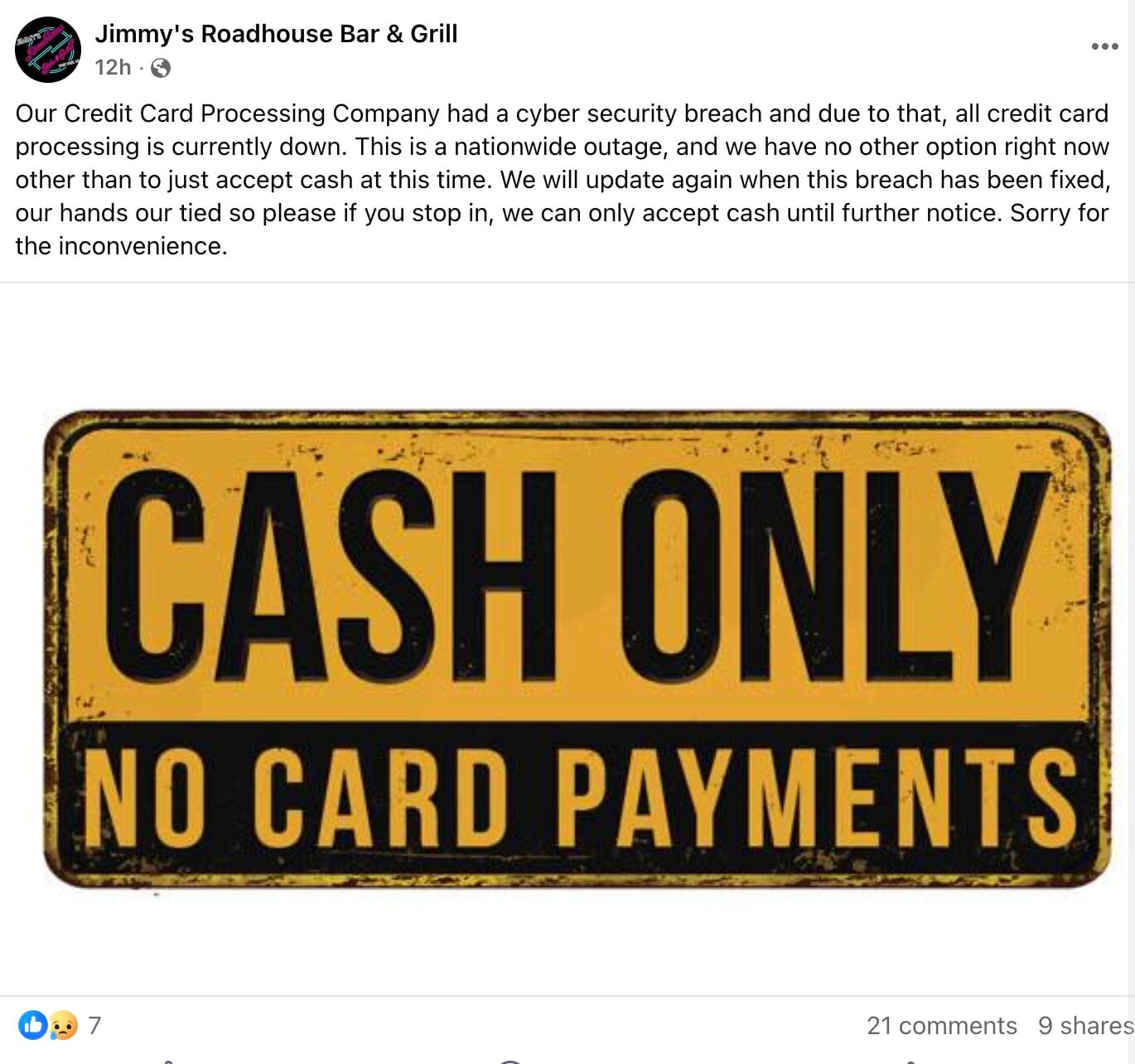
For merchants, the inability to process card payments translates directly into lost revenue. Many businesses, particularly small and medium-sized enterprises (SMEs), operate with tight margins and may not have readily available alternative payment processing solutions. The anecdote of restaurants resorting to "cash-only" payments underscores this immediate and tangible impact. Such situations not only lead to financial losses but also significant operational hurdles, including managing increased cash handling, reconciling transactions manually, and dealing with frustrated customers. Furthermore, the reputational damage can be substantial, as customers may perceive the merchant as unreliable or outdated. The reliance on a single, critical third-party vendor like BridgePay highlights the inherent supply chain risk within the fintech sector. A compromise at one point in the payment chain can cascade, affecting thousands of downstream businesses, often without any direct fault of their own.
Consumers experience inconvenience and a potential erosion of trust in digital payment systems. In an increasingly cashless society, being unable to pay with a card can disrupt daily routines, lead to abandoned purchases, and force reliance on less convenient payment methods. While the initial forensic findings suggest no payment card data compromise, the incident itself can trigger anxieties about the security of personal financial information within the digital ecosystem.
From a systemic perspective, a widespread outage in payment processing infrastructure, even if temporary, underscores the fragility of modern commerce in the face of sophisticated cyber threats. The interconnectedness of financial systems means that disruptions at one node can have ripple effects, impacting supply chains, logistics, and overall economic activity. Although the full extent of merchant outages directly attributable to BridgePay’s incident remains unclear, the timing aligns with anecdotal reports of nationwide card processing issues, suggesting a significant footprint.
Ransomware in the Financial Sector: A Persistent Threat
The attack on BridgePay is not an isolated incident but rather indicative of a disturbing trend: the increasing targeting of critical infrastructure and financial services by ransomware groups. These groups are often well-resourced, highly organized, and employ sophisticated tactics, techniques, and procedures (TTPs) to breach defenses. Their motivations are predominantly financial, seeking substantial ransoms in exchange for decrypting systems and, increasingly, refraining from publishing exfiltrated sensitive data.

The financial sector is particularly attractive to ransomware operators due to the criticality of its operations and the high value of the data it handles. Disruptions can cause immediate and tangible economic damage, making organizations more likely to pay ransoms to restore services quickly. Common attack vectors include phishing campaigns, exploitation of unpatched vulnerabilities in public-facing systems, compromised remote desktop protocol (RDP) access, and supply chain attacks where a trusted third-party vendor’s systems are breached to gain access to their clients. While BridgePay has not disclosed the initial access vector, these are typical pathways for such intrusions.
The rapid confirmation of ransomware by BridgePay demonstrates an evolving maturity in incident response within the industry. Historically, organizations might have initially attributed outages to technical glitches or maintenance issues. However, the pervasive nature of ransomware has led to a quicker identification and acknowledgement of cyber-attacks. The engagement of federal law enforcement and specialized forensic teams is standard practice for incidents of this magnitude, providing expertise in threat intelligence, attribution, and recovery, while also ensuring compliance with potential regulatory obligations.
Navigating the Complexities of Recovery and Data Integrity
The statement that "recovery could take time" and that restoration is being handled "in a secure and responsible manner" highlights the arduous and methodical process involved in recovering from a significant ransomware attack. This is not merely about restoring data from backups; it involves a comprehensive and multi-faceted approach:
- Containment: Isolating affected systems to prevent further spread of the ransomware.
- Eradication: Removing the ransomware and any persistent threats from the network.
- Forensic Investigation: Thoroughly analyzing how the breach occurred, what data was accessed, and identifying all compromised systems. This is crucial for understanding the attack vector and preventing future incidents.
- System Rebuilding and Hardening: Rebuilding systems from clean backups, applying all necessary security patches, implementing stronger access controls, and enhancing monitoring capabilities. This often involves a "trust nothing" approach, assuming all compromised systems need to be rebuilt or thoroughly scrubbed.
- Data Integrity Checks: Verifying the integrity and consistency of recovered data to ensure accuracy and prevent the reintroduction of corrupted or manipulated information.
- Post-Incident Review: Learning from the incident to improve overall cybersecurity posture, incident response plans, and employee training.
The claim of "no evidence of usable data exposure" is a critical piece of information. In many modern ransomware attacks, threat actors engage in "double extortion," not only encrypting data but also exfiltrating sensitive information and threatening to publish it if the ransom is not paid. If confirmed, the absence of data exfiltration would significantly reduce the long-term regulatory and reputational repercussions for BridgePay, particularly concerning Payment Card Industry Data Security Standard (PCI DSS) compliance and various data breach notification laws. However, forensic investigations are complex and can evolve, meaning initial findings are subject to change as more evidence is uncovered.
Future Outlook and Resilience in Fintech
The BridgePay incident serves as a stark reminder of the continuous and evolving threat landscape facing the financial technology sector. As digital payments become increasingly ubiquitous, the resilience of the underlying infrastructure becomes paramount. This event will undoubtedly prompt increased scrutiny from regulators, clients, and partners regarding BridgePay’s cybersecurity posture and incident response capabilities.
For the broader fintech industry, several critical lessons emerge:
- Robust Cybersecurity Frameworks: The need for continuous investment in advanced security technologies, threat intelligence, and a proactive security culture. This includes multi-factor authentication, endpoint detection and response (EDR), security information and event management (SIEM), and regular penetration testing.
- Incident Response Planning: Comprehensive and regularly tested incident response plans are essential. These plans should detail roles, responsibilities, communication strategies, and technical steps for containment, eradication, and recovery.
- Business Continuity and Disaster Recovery (BCDR): Beyond just data backups, organizations must have robust BCDR strategies that ensure critical operations can continue or be quickly restored in the event of a major disruption. This includes offsite, immutable backups and redundant infrastructure.
- Third-Party Risk Management: Payment processors are often part of a larger supply chain. Thorough due diligence and continuous monitoring of third-party vendors’ security postures are crucial to mitigating cascading risks.
- Employee Training: Human error remains a significant factor in many cyber breaches. Regular security awareness training for all employees, focusing on phishing detection, password hygiene, and secure computing practices, is vital.
- Collaboration and Information Sharing: Participating in industry-specific information sharing and analysis centers (ISACs) and collaborating with law enforcement can provide valuable insights into emerging threats and best practices.
The incident at BridgePay underscores the high stakes involved in securing the digital payment ecosystem. While the immediate focus is on restoring services and completing the forensic investigation, the long-term implications will likely include a renewed emphasis on cybersecurity resilience and a re-evaluation of risk management strategies across the entire financial services supply chain. As technology advances and cyber threats evolve, the commitment to robust security measures will remain a non-negotiable imperative for maintaining trust and ensuring the continuity of global commerce.




 Lisa Mariana
 Aura Kasih
 Ayu Aulia