Aura Kasih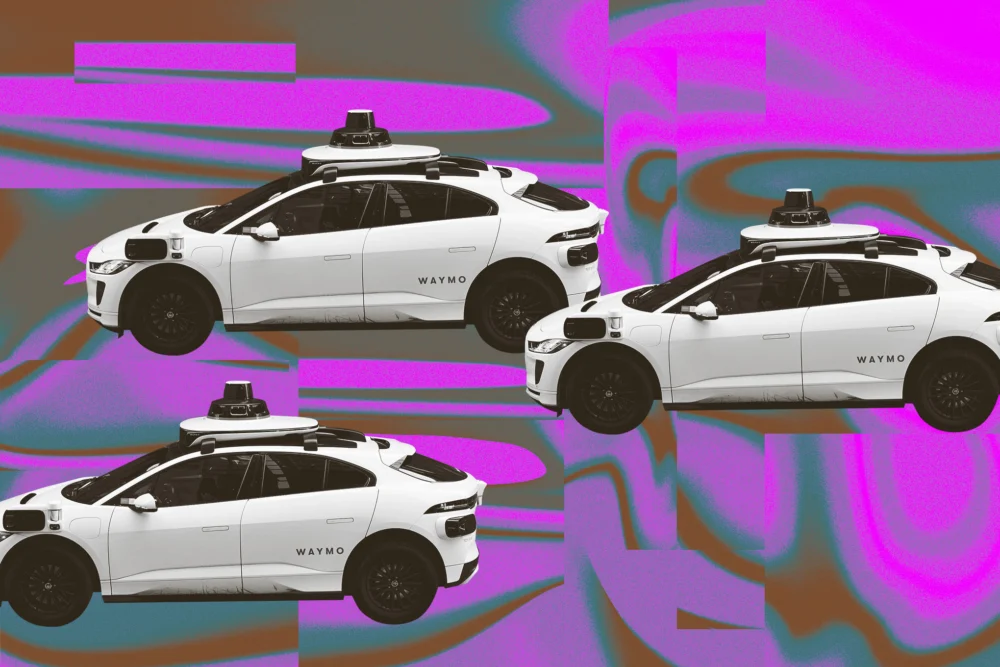
In the quest for robust and reliable autonomous driving, companies are increasingly turning to sophisticated virtual environments to test their systems against a spectrum of improbable yet critical scenarios, pushing the boundaries of what self-driving technology can safely handle. Waymo, a pioneer in the field, has significantly advanced its simulation capabilities by developing a "hyper-realistic" virtual world, a testament to the power of integrating cutting-edge AI models for comprehensive system validation. This enhanced simulation platform, powered by Google’s advanced AI technology, allows Waymo to subject its autonomous vehicles, affectionately known as robotaxis, to situations far beyond the everyday, from the cataclysmic force of a tornado to the entirely unexpected presence of an elephant on the road.
The development of such an intricate simulation environment is not merely an academic exercise; it represents a fundamental pillar in the progression of autonomous vehicle (AV) technology. Real-world testing, while indispensable, is inherently limited by time, cost, and the sheer rarity of encountering truly hazardous or unusual events. A tornado, for instance, is a phenomenon that might occur only once in a given region over decades, making it exceptionally difficult to gather sufficient real-world data on how an AV would respond. Similarly, the appearance of a large, unpredictable animal like an elephant on a public roadway is a scenario so improbable in most operational domains that it would be statistically impossible to encounter and test within a reasonable timeframe. This is precisely where advanced simulation comes into play. By meticulously recreating these "edge cases" in a controlled, virtual setting, developers can expose their AV systems to an almost infinite variety of challenging situations, observing, analyzing, and refining their decision-making algorithms without any risk to human life or property.
At the heart of Waymo’s enhanced simulation capabilities lies the utilization of Google’s groundbreaking AI world model, Genie 3. This advanced artificial intelligence is not designed for creating rudimentary virtual playgrounds; rather, it possesses the remarkable ability to generate highly detailed, photorealistic, and interactive three-dimensional environments. The key differentiator for Waymo’s application is that these environments are specifically tailored and rigorously adapted to meet the demanding requirements of the autonomous driving domain. This means that the virtual worlds are not just visually convincing but also dynamically responsive, accurately reflecting the complex physics, sensor inputs, and environmental interactions that a real-world AV would experience. The process can be initiated by simple text prompts or image inputs, allowing for rapid generation of diverse testing grounds.
The criticality of simulation in AV development cannot be overstated. It provides a safe, scalable, and cost-effective method for accumulating vast amounts of testing mileage – often in the billions – far exceeding what is feasible with physical vehicles. This extensive virtual mileage is crucial for training the complex neural networks that underpin autonomous driving systems. These networks learn to recognize patterns, predict behaviors, and make split-second decisions by being exposed to an immense dataset of driving scenarios. The more diverse and challenging the training data, the more resilient and capable the AV becomes when faced with the unpredictable realities of public roads. The goal is to ensure that the AV’s "driver" – the sophisticated software and hardware suite – is prepared for virtually any eventuality, no matter how rare or peculiar.

Waymo’s virtual testing ground goes far beyond simply placing a simulated vehicle on a digital road. The platform allows for the generation of an astonishing array of extreme and unusual scenarios. Imagine a Waymo robotaxi navigating a desolate highway, only to have a colossal tornado manifest on the horizon. The system must not only detect the approaching danger but also make an informed decision about how to react, whether that involves seeking shelter, altering its route, or employing other safety protocols. The "edge cases" Waymo is designed to tackle are varied and often dramatic. These include navigating a Golden Gate Bridge cloaked in a dense layer of snow, traversing a suburban street submerged in floodwaters with debris, a neighborhood engulfed in a raging inferno, or even an improbable encounter with a fully grown elephant that has wandered onto the thoroughfare.
In each of these simulated events, the robotaxi’s sophisticated lidar sensors meticulously generate a real-time, three-dimensional rendering of its surroundings. This digital representation includes not only the static elements of the environment but also the dynamic and potentially hazardous obstacles, such as the swirling vortex of a tornado or the imposing form of an elephant. Waymo emphasizes that its World Model is capable of generating "virtually any scene," encompassing everything from routine, everyday driving conditions to the exceptionally rare and challenging "long-tail" scenarios. Crucially, this simulation extends across multiple sensor modalities, ensuring that the AV’s perception system is tested under a wide range of simulated sensory inputs, mirroring the complex interplay of cameras, lidar, and radar in the physical world.
The underlying technology that enables this level of realism and flexibility is the sophisticated architecture of Genie 3, which Waymo leverages through three primary control mechanisms. Firstly, "driving action control" allows developers to meticulously craft and test "what if" counterfactual scenarios. This means they can precisely define a particular event and then observe how the AV’s driving system responds, making minute adjustments to the AI’s parameters and re-running the simulation to evaluate the impact of those changes. Secondly, "scene layout control" provides granular control over the virtual environment itself. This enables the customization of road layouts, the precise placement and timing of traffic signals, and the realistic simulation of other road users’ behaviors – from aggressive drivers to pedestrians stepping unexpectedly into the street.
Perhaps the most transformative aspect is the "language control" feature, which Waymo describes as its "most flexible tool." This mechanism allows for the dynamic adjustment of environmental conditions through simple textual commands. Developers can specify the time of day, thereby simulating low-light conditions, dawn, or dusk, and they can dictate weather patterns, such as heavy rain, fog, or intense glare from the sun. This capability is particularly vital for testing the vehicle’s sensor performance in challenging visibility scenarios. When light conditions are poor or glare is intense, the vehicle’s sensors may struggle to accurately perceive the road ahead, and simulating these conditions allows developers to proactively identify and mitigate potential weaknesses in the system’s perception algorithms.
Further enhancing the fidelity of the Waymo World Model is its ability to transform real-world dashcam footage into simulated environments. By ingesting actual driving data, the system can create virtual replicas of real roads and traffic situations with an "highest degree of realism and factuality." This fusion of real-world data with AI-generated environments provides an exceptionally robust testing ground. Moreover, the platform is capable of generating extended simulated sequences, such as those played back at four times the normal speed, without any degradation in visual quality or excessive demands on computer processing power. This efficiency is crucial for the sheer scale of testing required in AV development.

The strategic advantage of simulating the "impossible" is clear: it allows Waymo to proactively prepare the Waymo Driver for some of the most rare, complex, and potentially dangerous scenarios that it might encounter in its operational life. This proactive approach to safety and reliability is a cornerstone of Waymo’s development philosophy, ensuring that its vehicles are not just competent in ordinary circumstances but are exceptionally well-equipped to handle the unexpected and the extreme.
This deep integration with Google’s advanced AI resources is not a new phenomenon for Waymo. The company has consistently leveraged the vast expertise and cutting-edge technologies developed within Google’s AI ecosystem. For instance, Waymo’s EMMA (End-to-End Multimodal Model for Autonomous Driving) training model, a critical component in refining its self-driving capabilities, was built using Google’s powerful Gemini AI. Furthermore, there are ongoing reports of Waymo actively developing a Gemini-powered in-car voice assistant, suggesting a broader integration of Google’s AI into the user experience of its autonomous vehicles. Even DeepMind, Google’s renowned AI research lab, has historically contributed significantly to Waymo’s efforts, providing sophisticated solutions aimed at reducing the incidence of "false positives" in sensor data – a crucial step in ensuring the accuracy and reliability of the vehicle’s perception system.
The implications of Waymo’s sophisticated simulation capabilities extend beyond mere internal testing. As autonomous vehicle technology matures and begins to be deployed more widely, the ability to rigorously test and validate these complex systems against an exhaustive range of scenarios is paramount for public trust and regulatory approval. The development of hyper-realistic simulation environments, powered by advanced AI, represents a significant leap forward in ensuring the safety, reliability, and ultimate success of autonomous transportation. By embracing the virtual frontier, Waymo is not just preparing its vehicles for the road; it is paving the way for a future where autonomous mobility is not only a possibility but a safe and dependable reality, capable of navigating the unforeseen with unparalleled preparedness. The ability to simulate not only the mundane but the catastrophic is a testament to the industry’s commitment to pushing the boundaries of what is possible, ensuring that when the unexpected happens – be it a tornado or an elephant – the autonomous vehicle is ready.




 Lisa Mariana
 Safa Marwah
 Ayu Aulia