Lisa Mariana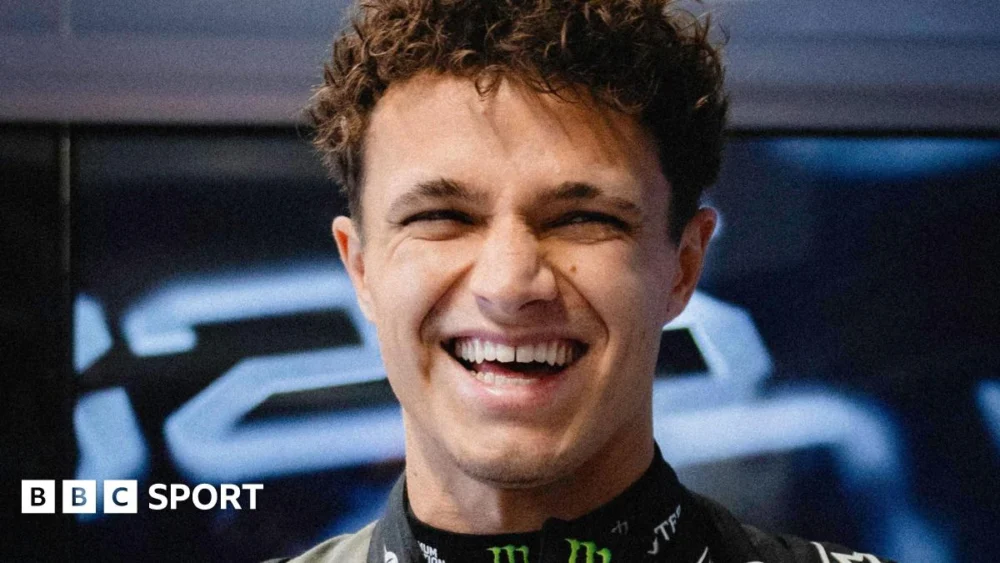
The forthcoming era of Formula 1 is poised to introduce a profound strategic shift in race dynamics, with McLaren driver Lando Norris forecasting a surge in on-track "chaos" driven by the sport’s innovative technical directives. Central to this transformation, according to Norris, will be the nuanced application of a novel ‘boost button’ and the intricate management of the battery’s state of charge, elements designed to fundamentally redefine the tactical interplay during competition. This anticipated evolution suggests a future where drivers will be compelled to execute more sophisticated maneuvers, potentially leading to a more fluid and unpredictable racing spectacle.
Norris’s early assessments, derived from initial ‘shakedown’ tests conducted in Barcelona, indicate a deliberate move by the sport’s governing bodies to engineer scenarios ripe for strategic exploitation. The integration of the boost functionality, which provides a transient burst of electrical power, is expected to empower drivers to dictate race momentum more aggressively. "You’ll be able to force people more in different positions and create racing potentially in better ways than you have been able to in the past," Norris commented, underscoring the potential for these technological enhancements to cultivate more dynamic overtaking opportunities and sustained wheel-to-wheel battles. This represents a conscious effort to move beyond the limitations of previous aerodynamic and power unit regulations that, at times, constrained overtakes to specific zones or conditions. The objective is to foster a broader spectrum of strategic choices throughout a lap and across a race distance, making the sport more engaging for both participants and spectators.
The McLaren driver further elaborated on the anticipated tactical consequences, envisioning a scenario of heightened positional flux. He predicts an increase in what he terms "yo-yoing," where cars frequently exchange positions as drivers strategically deploy their energy reserves. "You’ll see more yo-yoing, more moves with extra speed. But then that person might have to defend more than what you’ve seen in the past and that will create more chaos, which is great for you guys," Norris added, highlighting the dual impact of offensive capabilities and subsequent defensive imperatives. This dynamic promises a departure from races characterized by stable positions, introducing a continuous cycle of attack and defense that demands not only raw speed but also astute tactical foresight and impeccable execution from the drivers. The forthcoming pre-season tests in Bahrain, commencing February 11th, will offer the next crucial window into these new dynamics, providing teams and drivers with three days to further calibrate their understanding and approach to these complex new machines.
At the core of these transformative shifts are significant modifications to Formula 1’s power unit regulations, even as the fundamental 1.6-litre V6 turbo hybrid architecture, in place since 2014, remains. A key alteration involves the removal of one of the two electrical motors traditionally responsible for energy recovery. Concurrently, the total quantum of electrical energy available has been dramatically increased by a factor of three. This substantial uplift in electrical power, however, is coupled with a battery that retains more or less its previous physical dimensions, creating a critical strategic paradox: immense power density but also a significantly accelerated rate of depletion.
The implications of this energy equation are profound. Should the battery become fully depleted, the engine suffers a substantial power reduction of 350 kilowatts (approximately 470 brake horsepower). This drastic loss of power has the potential to create monumental speed differentials on track, transforming what might otherwise be a marginal overtaking opportunity into a decisive one. Consequently, drivers will be forced into an intricate dance of energy management, even during a critical qualifying lap. This will necessitate backing off towards the end of straights and exercising meticulous control over throttle application to ensure the most efficient utilization of their finite energy reserves. The strategic complexity extends beyond simply deploying power; it encompasses a comprehensive plan for energy harvesting, deployment, and conservation throughout every phase of a race. This elevates the driver’s role beyond mere pedal-to-the-metal aggression, demanding a nuanced understanding of the power unit’s sophisticated energy flow.
Beyond the power unit, the physical characteristics of the cars themselves have undergone substantial revision. The new generation of cars are designed to be smaller and lighter, accompanied by a reduction in overall downforce. These changes inherently impact the car’s handling characteristics, potentially making them more agile in certain situations while demanding greater precision from drivers in high-speed corners. Furthermore, the introduction of ‘active aerodynamics’ represents another significant departure from previous designs. Both the front and rear wings will now feature movable elements that can open on straights. This innovation serves a dual purpose: to increase top-end speed by reducing drag and to enhance the potential for energy recovery through optimized airflow. Norris noted that the new car "certainly feels more powerful and quicker" on the straight, confirming the intended effect of these aerodynamic modifications.
Despite the perceived gains in straight-line performance, Norris highlighted that the most formidable immediate challenge lies in mastering the intricate art of battery management. "The biggest challenge at the minute is battery management and knowing how to utilise that in the best way," he explained. He elaborated on the deceptively simple concept of a powerful, short-duration battery, emphasizing the deep complexity involved in its optimal application. "It’s not simple. You can explain it in quite simple terms. It’s just you have a very powerful battery that doesn’t last very long, so knowing how to use it in the right times, how much energy, how much of that power you use, how you split it up around the lap…" This description paints a vivid picture of the mental load on drivers, who must constantly calculate and adjust their energy strategies in real-time, factoring in race position, tire degradation, and competitor actions.
The process of energy recovery is equally critical and complex. Norris underscored the importance of maximizing battery replenishment, a task intrinsically linked to precise driving techniques. "The biggest challenge is how you can recover the batteries as well as possible, and that’s when it comes down to using the gears, hitting the right revs." This indicates a return to a more analog form of driving skill intertwined with digital power management, where mechanical engagement with the powertrain becomes a vital component of energy strategy. Additionally, Norris observed the re-emergence of "turbo lag," a characteristic largely mitigated in recent F1 power units. While he doesn’t believe this will be a game-changer ("I don’t think that changes too much"), it adds another layer of subtle complexity to throttle response and power delivery that drivers must account for. Despite these multifaceted challenges, Norris maintains a pragmatic view, acknowledging that such technical intricacies are an inherent part of Formula 1’s evolving identity. "In a perfect world, I probably wouldn’t have [all] that in a race car, but it’s just F1. Sometimes you have these different challenges."
Echoing a more measured sentiment, Norris’s team-mate, Oscar Piastri, offered a reassuring perspective on the new machinery. He stated that the cars were "not as alien as I think we might have feared" and firmly believed that F1 "hadn’t lost its identity at all." Piastri’s assessment suggests that while adaptation is necessary, the fundamental thrill and challenge of driving a Formula 1 car remain intact. He added that many of the initial concerns harbored before hitting the track have largely been "alleviated," despite acknowledging that some differences will persist. Ultimately, Piastri concluded, "There’ll be some differences, but I think fundamentally they’re still the fastest cars in the world," reinforcing the core appeal of the sport. This balanced view from within the McLaren garage indicates a team grappling with new complexities but also recognizing the underlying strengths and continued allure of Formula 1.
Norris, a driver who has steadily built a formidable reputation within Formula 1 through consistent performances and a relentless pursuit of excellence, reflected on his career trajectory and future ambitions. He spoke of achieving a significant life’s ambition through past successes and expressed a keen desire to continue that momentum. "If I don’t achieve something again, I always have something that I’m very proud about. If anything, I enjoyed last year a lot – and of course I really want to do it again." This sentiment underscores a profound sense of accomplishment coupled with an unyielding drive for further triumphs.
His sustained improvement and increasing competitiveness, particularly evident in strong performances during previous seasons following initial challenges, are attributed to diligent work with his team. Norris emphasized his ongoing commitment to personal development: "I’m always trying to improve on my things. I know there’s still areas that I’m not at the level I need to be – and it’s still a good level – but when you’re fighting these guys, you need to be close to perfection." This self-critical approach, even from a high baseline, highlights the intense competitive environment of Formula 1 where marginal gains can be decisive. He affirmed that his "motivation to win is exactly the same" and that he has "definitely not lost anything." If anything, his confidence has only grown, a crucial factor in elite sports. "If anything, I think I just have more confidence because I’ve said in interviews and stuff in the past that I’m very much a guy who has to see something to believe it, especially when it’s been on anything to do with myself." This introspection reveals a driver whose self-belief is forged through tangible achievements and continuous progress, positioning him as a formidable contender as Formula 1 enters this new, tactically intricate era.




 Aura Kasih
 Safa Marwah
 Ayu Aulia