Lisa Mariana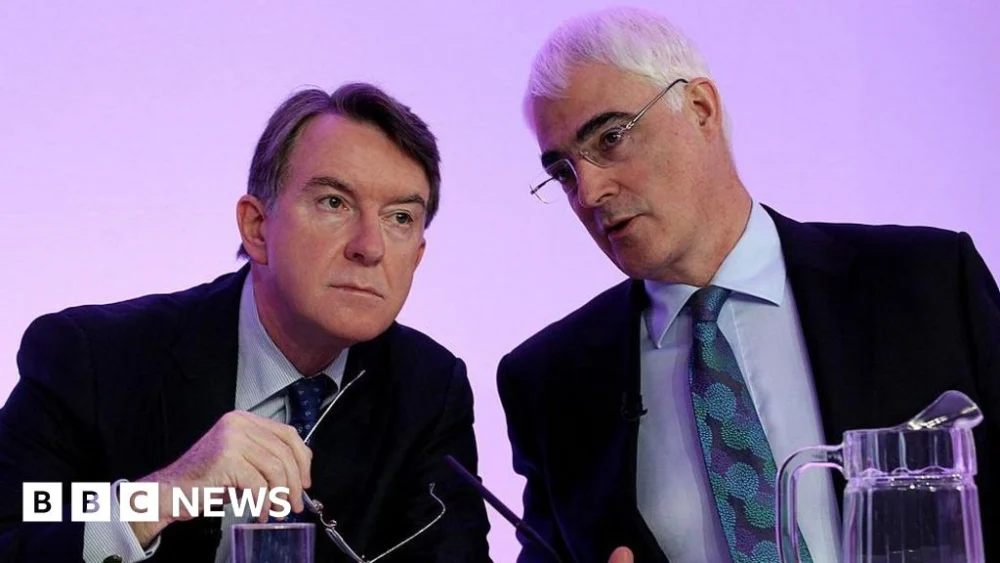
A pivotal moment in the aftermath of the 2008 global financial crisis, involving high-stakes negotiations over banker remuneration, has been re-examined through newly surfaced documents, casting an unprecedented light on the intricate and often opaque interactions between government, global finance, and influential intermediaries. At the heart of this re-evaluation lies a significant, previously private exchange between the then-Chancellor of the Exchequer, Alistair Darling, and Jamie Dimon, the chief executive of the formidable American banking institution, JPMorgan Chase. What was initially understood as a robust confrontation over proposed taxation on bankers’ bonuses has now acquired astonishing new dimensions, suggesting an orchestrated campaign of influence involving a prominent cabinet minister and an unexpected conduit.
The global financial meltdown of 2008 sent shockwaves through economies worldwide, plunging nations into recession and eroding public trust in financial institutions. Governments, having committed vast sums to bail out struggling banks, faced immense pressure to demonstrate accountability and prevent a recurrence of the crisis. In the United Kingdom, the Labour government under Prime Minister Gordon Brown, with Alistair Darling at the helm of the Treasury, found itself navigating a perilous landscape of economic recovery while grappling with profound public anger directed at the banking sector. It was against this backdrop that the government unveiled plans in late 2009 to levy a significant one-off tax on bankers’ bonuses, a move designed to recoup some of the public funds expended and signal a new era of responsibility.
The proposed "bankers’ bonus tax" was not merely a fiscal measure; it was a highly charged political statement. Aimed at bonuses exceeding £25,000, it sought to impose an additional 50% tax rate, a figure that sparked immediate outrage within the financial industry. For Darling, the policy was a necessary assertion of governmental authority and public interest over an industry perceived to have operated with impunity. For the banks, it represented an existential threat to London’s standing as a global financial hub, potentially driving talent and capital elsewhere. This ideological chasm set the stage for intense lobbying and direct confrontations between policymakers and financial titans.
One such confrontation, deeply etched in the memory of the late Alistair Darling, occurred in December 2009. Darling recounted a "painful and angry" telephone call with Jamie Dimon, an encounter that encapsulated the raw tension of the period. Dimon, representing one of the world’s most powerful financial entities, reportedly issued thinly veiled threats. These included the possibility of abandoning JPMorgan’s plans for a substantial new headquarters in the UK, a development that would have brought considerable investment and prestige. More alarmingly, Dimon is said to have highlighted JPMorgan’s significant role as a purchaser of UK government debt, implying that the bank could cease its lending to Britain. This latter suggestion carried a profound weight, hinting at the potent leverage financial markets hold over sovereign nations, particularly during times of economic fragility.
Darling, known for his calm resolve during the crisis, refused to yield to these pressures. He steadfastly maintained that JPMorgan’s decision to purchase UK government debt, or "gilts," was predicated on sound business principles and the attractiveness of the investment, not as a favour to the British government. His account further revealed a pattern of coordinated resistance from the banking sector; numerous bankers, he recalled, telephoned him with what appeared to be a rehearsed script, reiterating identical arguments against the bonus tax and urging a policy reversal. The uniformity of these complaints became so pronounced that Darling found himself anticipating their arguments, often completing their sentences before they could utter them. While the new office eventually materialized, the bonus tax remained in effect, and JPMorgan did not, in the end, discontinue its acquisition of gilts, affirming Darling’s resilience in the face of considerable pressure.
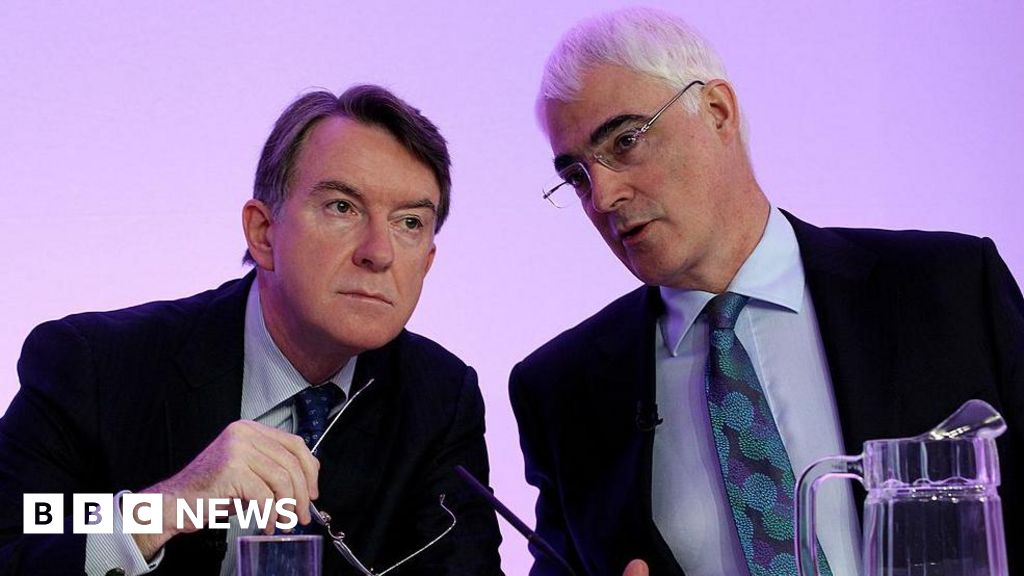
However, the historical understanding of this critical episode has been profoundly reshaped by recent disclosures from the so-called "Epstein files." These documents, released publicly, contain astonishing details that suggest a concerted effort to influence UK government policy, allegedly involving a high-ranking British cabinet minister and the controversial figure, Jeffrey Epstein. The files intimate that Peter Mandelson, then the UK Business Secretary and a key member of Gordon Brown’s financial crisis cabinet, played an advisory role in this lobbying effort. Specifically, it is alleged that Mandelson communicated with Epstein in December 2009, prior to Dimon’s call to Darling, indicating his engagement with the issue. An email attributed to Epstein on December 15 reportedly queried the possibility of limiting the bonus tax to only the cash portion of remuneration. Crucially, a subsequent email on December 17 shows Epstein asking Mandelson whether Dimon should make one final call to Darling. The response attributed to Mandelson was to advise Dimon to "mildly threaten" the Chancellor. The timeline aligns chillingly, with Dimon’s call to Darling occurring just one week later, on December 23, 2009.
This revelation introduces an entirely new and deeply troubling layer to the narrative. That a senior government minister, privy to the intimate details of the government’s financial crisis strategy, might have advised a powerful banking CEO, through an intermediary like Epstein, on how to apply pressure to a cabinet colleague over a core government policy, raises profound questions of ethics, governance, and propriety. Peter Mandelson, upon being approached for comment, stated that every UK and international bank was articulating identical concerns regarding the impact of the bonus tax on UK financial services. He asserted that his discussions within government at the time reflected the broader sentiment of the sector, not merely the views of a single individual. While Mandelson’s defense points to the widespread opposition to the tax, the alleged specific advice to "mildly threaten" the Chancellor through such a channel moves beyond general advocacy for an industry and into the realm of strategic policy intervention via an unconventional and ethically ambiguous route.
The involvement of Epstein, a figure with a deeply tarnished reputation, as a channel for communication between a British cabinet minister and a global banking chief, adds an unprecedented dimension of intrigue and concern. While the contents of the files pertaining to this specific interaction do not delve into the wider, more nefarious aspects of Epstein’s activities, their mere existence within his records underscores the extraordinary and sometimes illicit networks through which influence can be sought and exerted in global power circles. This revelation compels a re-examination of the mechanisms of lobbying and the conduits through which powerful interests attempt to shape public policy, particularly in moments of national crisis.
This episode serves as a powerful, real-time illustration of the delicate and often adversarial relationship between sovereign governments and global financial markets. The concept of "bond vigilantes"—market participants who can exert pressure on governments by selling off their bonds, thereby driving up borrowing costs—was vividly demonstrated in Dimon’s implied threat. It showcased the formidable leverage that institutions like JPMorgan can wield, especially when a nation’s fiscal stability is perceived as vulnerable. Darling’s unwavering stance, despite the significant risks, highlights a rare moment where political will and public interest prevailed over the considerable financial might of the private sector. The eventual outcome, with the tax implemented and the investment proceeding, underscored that while financial markets possess immense power, they are not always omnipotent, and resolute governmental action can sometimes withstand their pressures.
The enduring legacy of this confrontation, now illuminated by the Epstein files, extends beyond the immediate policy outcome. It forces a deeper scrutiny of the channels through which lobbying operates, the ethical boundaries that might be transgressed, and the potential for influential figures to operate in the shadows of public accountability. For future policymakers, it offers a stark reminder of the complexities of governing in an interconnected global economy, where the lines between legitimate advocacy and undue influence can become perilously blurred. The narrative surrounding the 2009 bonus tax, once a testament to governmental resolve, now stands as a complex tapestry woven with threads of political strategy, financial power, and the unsettling spectre of hidden intercession. It underscores the critical importance of transparency and robust ethical frameworks in maintaining the integrity of democratic governance against the relentless pressures of powerful economic interests.




 Aura Kasih
 Safa Marwah
 Ayu Aulia