Lisa Mariana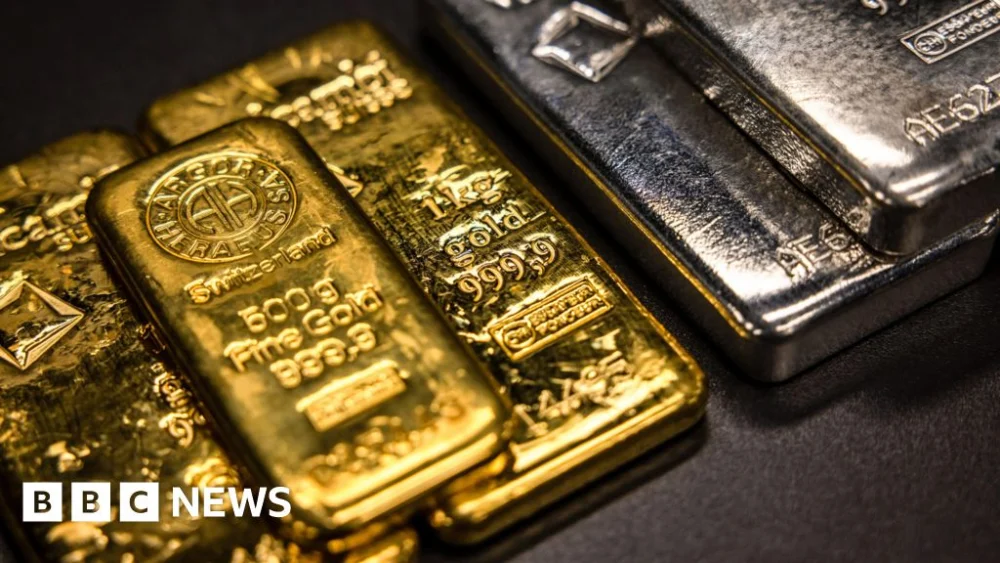
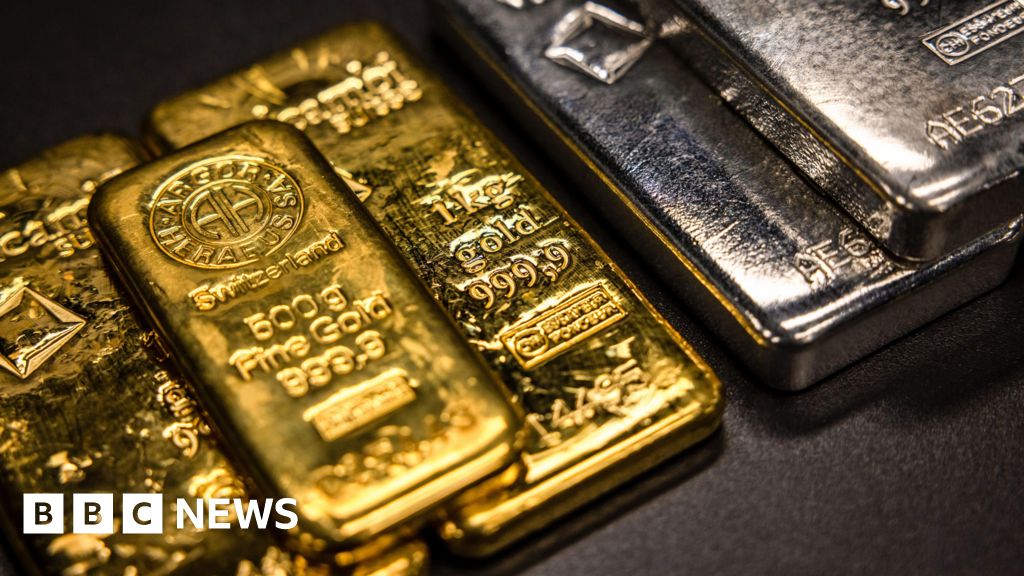
Precious metals markets experienced a dramatic downturn in early trading this week, with gold and silver prices extending the steep declines initiated last Friday, signaling a significant reversal from their recent record-setting rallies. This pronounced correction reflects a profound shift in investor sentiment, as once-dominant safe-haven flows rapidly dissipate amidst evolving monetary policy expectations and a broader re-evaluation of global financial risks. The sharp depreciation across these traditionally stable assets underscores the intricate interplay of macroeconomic factors, geopolitical developments, and market psychology that govern their valuation in an increasingly volatile global economy.
The magnitude of the recent sell-off is striking, particularly for assets often lauded for their stability. In Monday’s Asian trading session, spot gold registered a decline exceeding 9%, pushing its value to approximately $4,403 per ounce. Silver, known for its greater volatility due to industrial demand, experienced an even more precipitous drop, plummeting by over 15% to trade below $72 per ounce. These figures follow an already turbulent Friday, which saw spot gold endure its most severe one-day percentage loss since 1983, with a fall exceeding 9%, while silver suffered an astonishing 27% decrease. The cumulative effect of these losses has erased a substantial portion of the gains accumulated over months of sustained upward momentum, forcing market participants to recalibrate their outlook on the trajectory of these key commodities.
For an extended period leading up to this reversal, gold and silver had enjoyed an unprecedented surge, reaching fresh all-time highs in January. This rally was underpinned by a confluence of factors that collectively fueled an insatiable appetite for perceived safe-haven assets. A primary driver was the consistent accumulation of bullion by global central banks, which sought to diversify their reserves and hedge against currency volatility and geopolitical uncertainties. Nations around the world, particularly emerging economies, have increasingly viewed gold as a strategic asset to bolster financial resilience and assert monetary independence in a multipolar global order.
Beyond institutional demand, individual and corporate investors flocked to precious metals as a sanctuary against pervasive financial and geopolitical anxieties. The global landscape was characterized by a mosaic of destabilizing elements: persistent inflation concerns, fears of an impending economic slowdown, ongoing trade disputes between major powers, and a complex web of regional conflicts. In such an environment, the intrinsic value and historical reliability of gold and silver rendered them exceptionally attractive, serving as a perceived bulwark against the erosion of purchasing power and capital preservation.
Moreover, a significant undercurrent contributing to the precious metals rally was a palpable unease surrounding the future direction and independence of the United States Federal Reserve. Market participants harbored worries about potential political interference in monetary policy decisions, fearing that such influence could compromise the central bank’s autonomy and its ability to effectively manage inflation and economic stability. These concerns amplified the allure of gold as a hedge against potential currency debasement or policy missteps, further bolstering its appeal as a non-sovereign store of value.
The dramatic shift in market sentiment, however, was abruptly triggered by a pivotal announcement last Friday: President Donald Trump’s nomination of former central bank governor Kevin Warsh as the new Federal Reserve chair. This development served as an immediate catalyst, prompting a re-evaluation of the Fed’s prospective monetary policy trajectory. Warsh, generally perceived by markets as leaning towards a more hawkish stance, signaled a potential departure from the dovish policies that had previously characterized the central bank’s approach. Investors interpreted this nomination as a strong indication that the Fed might adopt a more aggressive stance on interest rate normalization or maintain a tighter monetary policy for longer, thereby increasing the opportunity cost of holding non-yielding assets like gold and silver.
The ripple effects of the precious metals sell-off quickly permeated other segments of the global financial system. Asian equity markets, already grappling with their own set of domestic and regional challenges, experienced significant declines. South Korea’s benchmark Kospi index led the losses, falling by more than 5%, reflecting concerns about global trade slowdowns and export-dependent economies. Elsewhere in the region, Hong Kong’s Hang Seng index dropped by 3%, while Japan’s Nikkei 225 was down by over 1%. This synchronized downturn across Asian bourses underscored a broader retreat from risk assets, indicative of a shift in global investor appetite following the precious metals correction.
The energy sector also felt the pressure, with the price of crude oil declining by more than 5%. This movement was largely attributable to an agreement among major oil-producing nations to maintain current output levels, defying some market expectations for supply cuts. The decision to keep output unchanged, in the context of slowing global economic growth projections, raised concerns about an oversupply scenario, leading to downward price pressure. This confluence of negative movements across commodities and equities painted a picture of widespread de-risking and a cautious outlook among investors.
Beneath the surface of daily price fluctuations, several persistent anxieties have continued to shape financial markets, contributing both to the previous rally in precious metals and the current volatile environment. President Trump’s tariff policies, for instance, have introduced significant uncertainty into global trade flows, disrupting supply chains and raising production costs for businesses worldwide. The specter of trade wars has consistently weighed on corporate earnings forecasts and global growth prospects, prompting investors to seek refuge in assets perceived as less susceptible to these geopolitical frictions.
Simultaneously, concerns about the potential overvaluation of artificial intelligence-related stocks have been a growing source of market apprehension. The rapid ascent of tech giants driven by AI enthusiasm has drawn parallels to historical market bubbles, leading some analysts to warn of an impending correction. Should such a correction materialize, it could trigger a broader flight from equity markets, potentially redirecting capital towards traditional safe havens or, conversely, exacerbating a generalized risk-off environment that impacts all asset classes, including precious metals.
Looking ahead, the outlook for monetary policy, particularly from the US Federal Reserve, remains a critical determinant for precious metals. Wall Street analysts are currently anticipating at least two interest rate cuts from the Fed in 2026. This expectation, however, clashes with the recent Warsh nomination and the market’s re-evaluation of a potentially more hawkish Fed. Typically, lower interest rates tend to make gold a more attractive investment, as it reduces the opportunity cost of holding a non-yielding asset compared to interest-bearing alternatives like bonds. Any deviation from these rate cut expectations, whether due to a more aggressive Fed stance or stronger-than-anticipated economic data, could exert further pressure on gold and silver prices.
The fundamental appeal of gold also stems from its inherent scarcity. According to the World Gold Council, only an estimated 216,265 tonnes of the metal have ever been mined throughout history. This finite supply, combined with its enduring cultural and industrial utility, underpins its long-term value proposition. Unlike fiat currencies, which can be printed at will by central banks, gold’s limited availability provides a natural hedge against inflation and currency debasement, making it a timeless store of wealth.
However, the dynamics of precious metals pricing are not solely dictated by fundamental scarcity or monetary policy. Investor sentiment plays an equally crucial role. While economic uncertainties and geopolitical tensions can propel the value of gold and silver upwards, prices can just as swiftly retreat when those concerns begin to ease, or when investors perceive that the gains have become excessive and ripe for profit-taking. The recent dramatic reversal serves as a stark reminder of this inherent volatility, even within asset classes typically associated with stability.
The path forward for gold and silver markets is likely to be characterized by continued volatility and sensitivity to emerging economic and geopolitical signals. Key factors for investors to monitor include the trajectory of global inflation, the actual implementation of monetary policy by major central banks, and the resolution or exacerbation of ongoing geopolitical flashpoints. Any further indications of a robust global economic recovery, coupled with a more aggressive stance from central banks, could continue to weigh on precious metals. Conversely, a resurgence of systemic financial risks, a weakening US dollar, or renewed geopolitical instability could provide the impetus for a rebound. The current market environment underscores the complex and often unpredictable interplay of forces that govern the valuation of these historically significant commodities. The recent plunge represents not merely a price correction but a profound re-assessment of risk and opportunity in a rapidly evolving global financial landscape.



 Aura Kasih
 Safa Marwah
 Ayu Aulia