Aura Kasih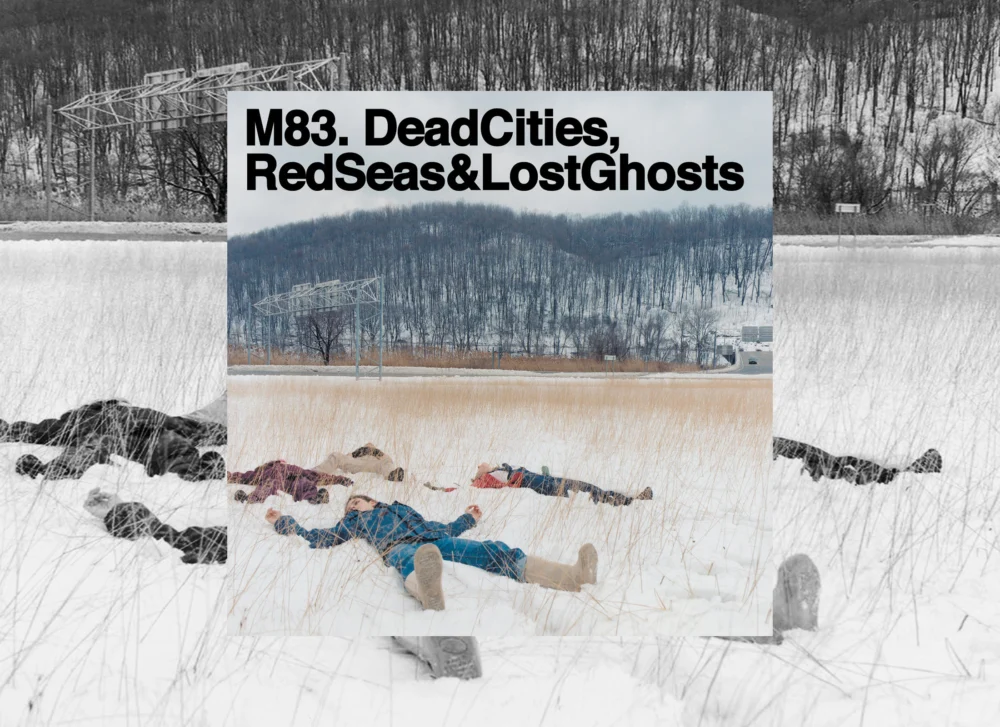
Amidst the recent, visceral impact of a significant snowstorm that blanketed New York City, a profound sonic accompaniment emerged, resonating with the stark beauty and unsettling quietude of the urban landscape transformed by winter’s embrace. As the city surrendered to an eerie stillness, its streets emptied and its inhabitants sought refuge from the biting cold, the evocative soundscapes of M83’s sophomore album, Dead Cities, Red Seas & Lost Ghosts, offered a compelling soundtrack to this atmospheric shift. This record, released prior to the duo’s later explorations into more conventional pop structures and vocal-driven anthems, stands as a testament to an earlier, more experimental phase, one deeply rooted in the expansive textures and emotional weight of instrumental post-rock.
Before Anthony Gonzalez solidified M83’s trajectory towards chart-topping accessibility, marked by the inclusion of soaring saxophone solos and introspective lyrical themes, the French electronic duo, then a partnership with Nicolas Fromageau, delved into a more abstract sonic territory. Their self-titled debut album, while a foundational effort, often recedes into relative obscurity when compared to the profound impact of its successor. Dead Cities, Red Seas & Lost Ghosts represents a significant evolution, drawing overt inspiration from the monumental sonic architecture of bands like Mogwai and Godspeed You! Black Emperor. However, the album is far from a mere imitation; it imbues the post-rock ethos with a distinctly French sensibility, crafting colossal sonic tapestries woven from the intricate interplay of drum machines, vintage analog synthesizers, and guitars subjected to intense compression, resulting in a sound that is both expansive and intimately textured.
The album cultivates a pervasive sense of liminality, an uncanny atmosphere that directly mirrors the evocative title. The track "Be Wild," with its gently unfolding and repeating melodic motif, gradually accrues layers of sonic complexity, conjuring vivid imagery of a once-vibrant metropolis now eerily deserted, its former inhabitants vanished, leaving behind only the lingering echoes of their presence. This impression is amplified by "America," a composition that masterfully captures a palpable sense of existential dread, reminiscent of the unsettling isolation explored in Rod Serling’s iconic The Twilight Zone episode, "Where Is Everybody?". The track builds with a frantic urgency, propelled by propulsive drumming, shimmering, shoegaze-inflected guitar work, and dissonant synthesizers, culminating in an early, anxiety-inducing crescendo that underscores the album’s underlying tension.
This sense of foreboding is established from the album’s very inception. The opening track, "Birds," a mere fifty-four seconds in duration, functions as a deliberate sonic misdirection. Delivered via a vocoded, computerized voice, the seemingly idyllic lyrics – "Sun is shining / Birds are singing / Flowers are growing / Clouds are looming and I am flying" – are initially shrouded in digital distortion. As the distortion recedes, revealing a clearer, almost soothing tone, an inherent untrustworthiness pervades the message. The stark reality, as presented by the album’s subsequent trajectory, is that there is no sun, no birds, and no flowers; the album opens with a calculated deception, a sonic prelude to the compelling narratives that follow, particularly the pivotal track "Unrecorded."
"Unrecorded" arguably serves as the thematic nucleus of Dead Cities, Red Seas & Lost Ghosts, articulating the album’s core artistic statement. The track is a masterful synthesis of disparate sonic elements: the precise, almost mathematical cadence of analog arpeggios, the relentless drive of percussive elements, the resonant drones of guitars, the ethereal manipulation of vocals, and the sweeping grandeur of cinematic synth strings coalesce into an overwhelming, immersive sonic environment. Listening to such compositions, it becomes strikingly apparent that it took Hollywood a considerable amount of time – nearly a decade – to recognize M83’s profound capacity for crafting evocative film scores, a recognition that eventually manifested in their contribution to the soundtrack for the 2013 film Oblivion.
M83’s subsequent artistic evolution saw them embrace a more accessible, shoegaze-influenced retro-pop aesthetic, leading to significant commercial success with tracks like "Kim & Jessie" and the undeniably ubiquitous "Midnight City." These later works showcased a refined ability to craft infectious melodies and anthemic choruses, solidifying their position within the mainstream music landscape. However, the sonic explorations undertaken in Dead Cities, Red Seas & Lost Ghosts represent a crucial period of artistic experimentation, a time when the duo ventured into more cinematic, open-ended, and emotionally resonant sonic territories, laying the groundwork for the expansive and atmospheric qualities that would continue to define their artistry, albeit in different forms.
The genesis of M83’s sound can be traced back to the burgeoning electronic music scene in France during the late 1990s and early 2000s. While Anthony Gonzalez initially focused on creating music independently, the collaboration with Nicolas Fromageau proved pivotal in shaping the distinctive sonic palette of their early work. Inspired by the ambient textures of Brian Eno, the shoegaze pioneers like My Bloody Valentine, and the atmospheric grandeur of post-rock titans, M83 began to forge a sound that was both deeply introspective and powerfully expansive. Dead Cities, Red Seas & Lost Ghosts, released in 2003, marked a significant departure from their more rudimentary debut, showcasing a maturity in songwriting and production that hinted at the sonic ambitions that would later define their career.
The album’s title itself is a potent distillation of its thematic concerns. "Dead Cities" evokes a sense of urban decay, of places abandoned and forgotten, imbued with the ghosts of past lives and lost memories. "Red Seas" suggests a dramatic, almost apocalyptic landscape, a canvas of intense emotion and potential upheaval. The inclusion of "Lost Ghosts" further reinforces the pervasive themes of memory, absence, and the spectral remnants of what once was. This evocative nomenclature is not merely decorative; it serves as a conceptual framework that permeates the entire listening experience, inviting the audience to immerse themselves in a world of desolation, beauty, and profound melancholy.
The production techniques employed on Dead Cities, Red Seas & Lost Ghosts are instrumental in achieving this atmospheric density. The liberal use of analog synthesizers, with their inherent warmth and unpredictable character, contributes to a sonic richness that digital instruments often struggle to replicate. Drum machines, rather than providing a sterile, metronomic beat, are often programmed with intricate patterns and textures, adding a subtle but crucial rhythmic complexity. The heavily compressed guitars, a hallmark of shoegaze and post-rock, are layered to create immense walls of sound, capable of both overwhelming the listener and providing delicate, shimmering textures. This meticulous attention to sonic detail allows M83 to construct immersive environments that are both vast and intimately detailed, drawing the listener into a world that feels both alien and strangely familiar.
The influence of Mogwai and Godspeed You! Black Emperor is evident in the album’s structural approach. Like these post-rock progenitors, M83 often builds tracks gradually, allowing melodic fragments to repeat and evolve, accumulating layers of instrumentation and emotional intensity over extended periods. This slow-burn approach creates a sense of narrative progression, even in the absence of explicit lyrical storytelling. The tracks often eschew traditional verse-chorus structures in favor of dynamic shifts, crescendos, and moments of profound quietude, mirroring the ebb and flow of natural phenomena or the unfolding of a cinematic narrative. This deliberate pacing is crucial to the album’s ability to evoke specific moods and emotions, allowing the listener to become fully enveloped in its sonic world.
The conceptual depth of Dead Cities, Red Seas & Lost Ghosts also extends to its underlying philosophical implications. The album can be interpreted as a reflection on the ephemeral nature of human existence, the cyclical patterns of creation and decay, and the enduring power of memory and imagination. In a world increasingly dominated by rapid technological advancement and the constant flux of information, M83’s sonic landscapes offer a counterpoint, a space for contemplation and introspection. The album encourages a slowing down, a deliberate engagement with the present moment, and an acknowledgment of the past’s indelible mark on our collective consciousness.
The album’s critical reception upon its release was largely positive, with many critics recognizing its artistic ambition and unique sonic identity. While it may not have achieved the widespread commercial success of their later work, Dead Cities, Red Seas & Lost Ghosts has since garnered a dedicated following among fans of ambient, electronic, and post-rock music. Its enduring appeal lies in its ability to transcend genre boundaries, offering a listening experience that is both intellectually stimulating and emotionally resonant. The album has become a touchstone for a particular brand of atmospheric electronic music, influencing subsequent artists who have sought to explore similar sonic territories.
The implications of Dead Cities, Red Seas & Lost Ghosts extend beyond its immediate musical impact. In an era where the lines between electronic music, instrumental post-rock, and ambient soundscapes are increasingly blurred, M83’s early work stands as a significant contribution to the evolution of these genres. The album demonstrates the potential for electronic instruments to convey profound emotional depth and narrative complexity, challenging conventional notions of what constitutes "instrumental" music. Its cinematic qualities have also foreshadowed the increasing integration of electronic music into film and television scoring, a trend that has become increasingly prominent in recent years.
Looking forward, Dead Cities, Red Seas & Lost Ghosts continues to serve as a vital reference point for artists and listeners alike. Its intricate sound design, thematic depth, and emotional resonance ensure its continued relevance in a music landscape that is constantly seeking new forms of expression. The album’s enduring power lies in its ability to transport the listener to imagined worlds, to evoke powerful emotions through purely sonic means, and to offer a profound reflection on the human condition. As the snow continues to fall and the city finds itself transformed by the quietude of winter, the icy, expansive soundscapes of M83’s Dead Cities, Red Seas & Lost Ghosts remain a potent and evocative sonic companion, a reminder of the enduring power of atmospheric music to capture the complexities of our inner and outer worlds.




 Lisa Mariana
 Safa Marwah
 Ayu Aulia