Lisa Mariana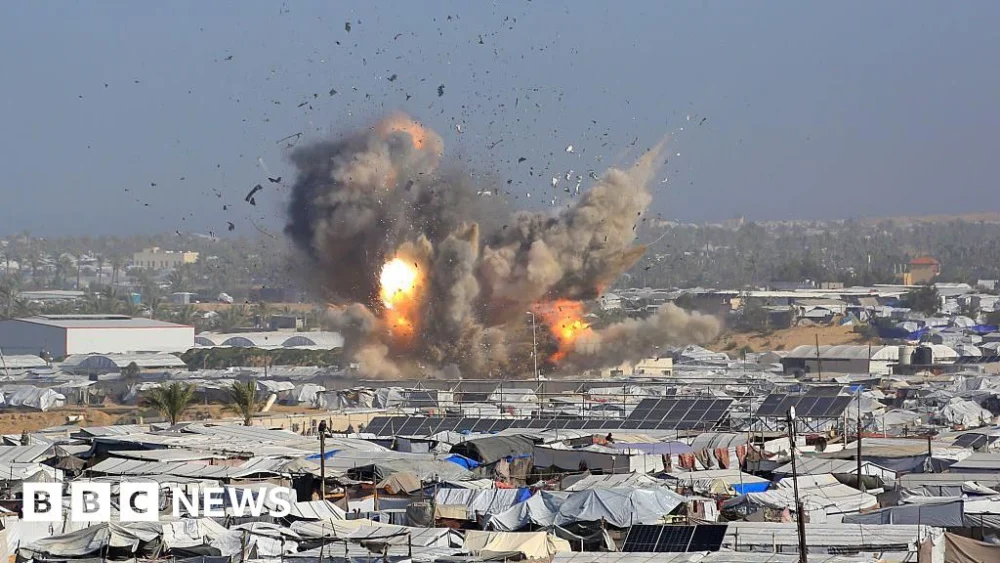
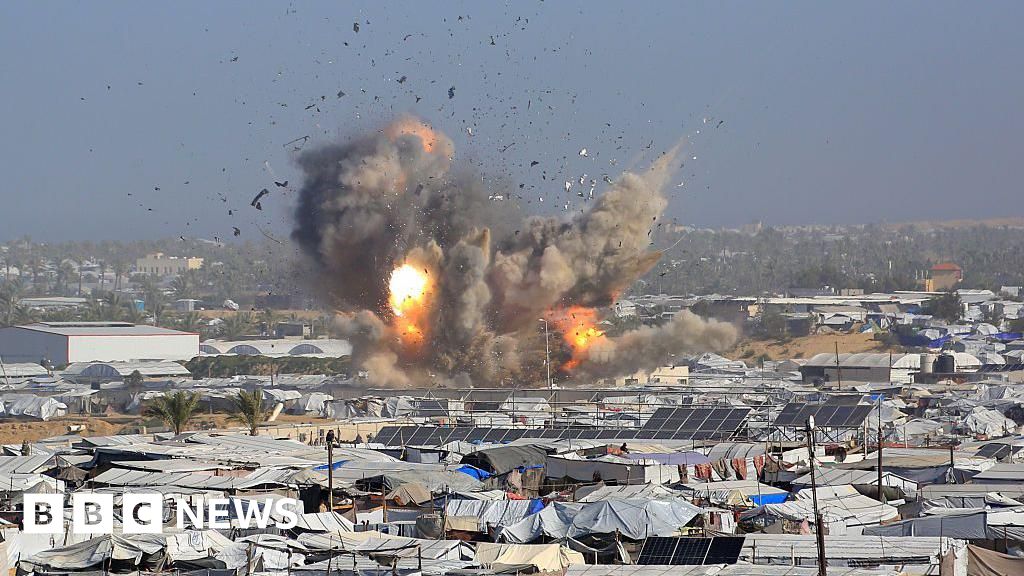
A devastating surge of Israeli aerial bombardments across the Gaza Strip on Saturday resulted in the deaths of at least 32 Palestinians, according to local emergency services, casting a grave shadow over the precarious ceasefire agreement brokered last autumn. The extensive strikes, described by residents as the most intense since the current phase of the truce commenced, have triggered urgent calls for de-escalation from international mediators amid escalating accusations of violations from both Israeli and Palestinian factions.
The recent outbreak of hostilities underscores the profound fragility of the internationally negotiated ceasefire, which had aimed to pave the way for a more stable future in the beleaguered enclave. Rescue agencies, primarily operated by the Hamas-led administration, reported that the casualties included numerous women and children, highlighting the devastating impact on Gaza’s civilian population. One particularly harrowing account detailed a helicopter gunship strike on a tent encampment sheltering internally displaced persons in the southern city of Khan Younis, a region already overwhelmed by refugees from earlier phases of the conflict. Further reports from the civil defence agency indicated that residential buildings, temporary shelters, and even a police station were among the targets hit across the Strip, including a strike in Gaza City that claimed the lives of three children and two women within a single residential apartment.
The Israeli military swiftly confirmed its involvement, stating that its operations were a direct response to what it characterized as a violation of the ceasefire agreement by Hamas on Friday. The Israel Defense Forces (IDF), in a formal statement, asserted that "eight terrorists were identified exiting the underground terror infrastructure in eastern Rafah," referring to an area where Israeli forces maintain a presence under the terms of the October agreement. Jointly with the Israel Security Agency (ISA), the IDF reported striking multiple targets, including "four commanders and additional terrorists," as well as a weapons storage facility, a weapons manufacturing site, and "two launch sites belonging to Hamas in the central Gaza Strip." This narrative from Tel Aviv paints the actions as targeted responses against militant infrastructure and personnel, framed within the broader context of maintaining Israel’s security and upholding the truce’s integrity.
However, Hamas vehemently condemned the Israeli actions, characterizing them as "ongoing violations" that confirm the Israeli government’s "brutal war of genocide against the strip." The group issued an immediate appeal to the United States, the primary architect of the ceasefire, to intervene and take decisive action to halt what it described as Israeli aggression. This exchange of accusations is not new; both Israel and Hamas have consistently traded blame for breaches of the ceasefire since its initial implementation late last year, revealing a deep-seated mistrust and a perpetual cycle of recrimination that perpetually threatens to unravel any diplomatic progress.
The current ceasefire framework, a multi-phased initiative, represents the most significant diplomatic effort to halt the prolonged conflict that erupted following the devastating Hamas-led assault on southern Israel on 7 October 2023. That initial attack resulted in the deaths of approximately 1,200 people and the abduction of 251 individuals, triggering an extensive Israeli military campaign in Gaza. According to the Hamas-run health ministry, this campaign has since claimed the lives of over 71,660 Palestinians. The figures provided by the health ministry, though difficult to independently verify given Israel’s restrictions on international news organizations reporting from Gaza, have been widely cited by the United Nations and various human rights organizations as generally reliable indicators of the scale of casualties.
The first phase of the ceasefire, initiated in October 2025, entailed a cessation of hostilities, a prisoner-hostage exchange, a partial withdrawal of Israeli forces from certain areas, and a crucial surge in humanitarian aid deliveries to the besieged enclave. This initial phase, while challenging, demonstrated the potential for de-escalation and humanitarian relief when both parties adhered to the agreement. The subsequent second phase, announced by US special envoy Steve Witkoff in January of the current year, set forth far more ambitious goals. These included the establishment of a technocratic Palestinian government to administer Gaza, comprehensive reconstruction efforts to rebuild the war-ravaged territory, and, most controversially, the full demilitarization of the Strip, encompassing the disarmament of Hamas and other Palestinian militant groups. The viability of these latter objectives has always been a point of contention, given the entrenched positions and capabilities of the various factions involved.
The recent escalation critically endangers these ambitious long-term goals. The civilian toll, with entire families reportedly decimated and displaced persons targeted, amplifies the humanitarian catastrophe that has gripped Gaza for months. Samer al-Atbash, an uncle of three children killed in Gaza City, articulated the profound despair felt by many: "We found my three little nieces in the street. They say ‘ceasefire’ and all. What did those children do? What did we do?" Such sentiments underscore the immense human cost of the conflict and the profound sense of betrayal felt by those who believed a period of relative calm had begun. Visual evidence circulating from across Gaza, including video footage and still images, corroborates the accounts of widespread destruction, showing bodies being recovered from beneath mounds of rubble and numerous buildings reduced to ruins.
International reactions have reflected deep concern. Egypt’s foreign ministry, a key regional mediator, issued a statement seen by AFP news agency, condemning the strikes and urging all parties to "exercise the utmost restraint" to prevent a full-scale collapse of the truce. Similarly, Qatar, another pivotal facilitator in the ceasefire negotiations, denounced the "repeated Israeli violations" through its foreign ministry, signaling growing frustration among the diplomatic community regarding the consistent breaches. These statements from critical intermediaries highlight the precariousness of the diplomatic achievements and the potential for a wider regional destabilization if the ceasefire completely unravels.
The long-term implications of these renewed hostilities are significant. The prospect of establishing a unified, technocratic Palestinian government in Gaza appears increasingly remote amidst such violence and mutual distrust. The extensive reconstruction required for the Strip, already estimated to cost billions and take years, becomes an even more daunting task if security remains elusive. Furthermore, the goal of full demilitarization, central to Israel’s security concerns and a cornerstone of Phase Two, is inherently complex and arguably unattainable without a fundamental shift in the political landscape and a robust, internationally backed security framework that earns the trust of all stakeholders. Hamas, viewing its armed wing as essential for resistance, is unlikely to voluntarily disarm without significant political concessions and guarantees that Israel is currently unwilling to provide.
The current death toll since the ceasefire began on 10 October 2025 now stands at 509 Palestinians, alongside four Israeli soldiers. These figures serve as a stark reminder that even under a supposed truce, the conflict continues to extract a heavy human price. The international community, particularly the United States, faces an immense challenge in salvaging the ceasefire and preventing a return to full-scale warfare. The credibility of the diplomatic process, the suffering of millions of civilians, and the broader stability of the Middle East all hang in the balance as violence once again engulfs the Gaza Strip, threatening to erase months of arduous negotiations and leave behind only deeper scars. The path forward demands an urgent re-commitment from all parties to the terms of the agreement, coupled with sustained and forceful international pressure to ensure adherence and protect civilian lives.




 Aura Kasih
 Safa Marwah
 Ayu Aulia