Lisa Mariana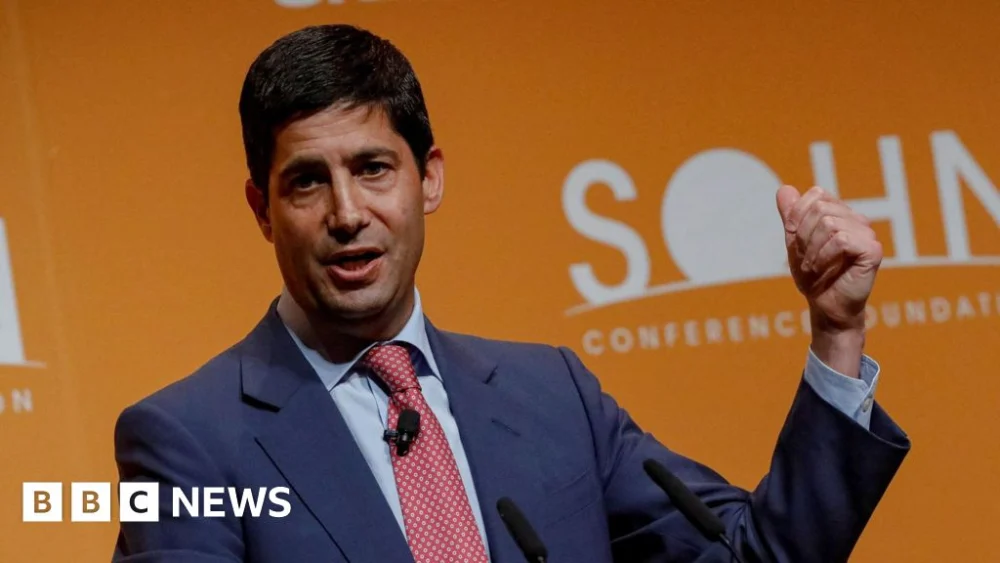
In a significant move poised to reshape the leadership of the United States central banking system, Kevin Warsh has been formally designated by former President Donald Trump as his preferred candidate to helm the Federal Reserve. This nomination emerges amidst a period of intense scrutiny over the institution’s independence and its policy direction, setting the stage for a potentially transformative shift in America’s economic governance.
The announcement, conveyed by Mr. Trump via his Truth Social platform, lauded Mr. Warsh as a figure destined for historical acclaim, asserting he could become "one of the GREAT Fed Chairmen, maybe the best." This pronouncement signals a clear intention to steer the Federal Reserve away from its current trajectory under incumbent Chair Jerome Powell, whose tenure has been marked by increasing friction with the former president. Mr. Warsh, a familiar face within the Federal Reserve’s corridors, having served as a governor from 2006 to 2011, has recently re-emerged as a prominent contender for the top role, intensifying speculation regarding the institution’s future leadership.
The backdrop to this nomination is defined by a contentious relationship between Mr. Trump and Mr. Powell. The former president has been an vocal critic of Mr. Powell’s stewardship, particularly expressing dissatisfaction with the pace of interest rate adjustments. Mr. Trump has consistently advocated for more aggressive rate cuts, viewing the Fed’s more measured approach as an impediment to economic growth. This policy disagreement has escalated beyond mere rhetoric. Federal prosecutors have initiated a criminal investigation into testimony provided by Mr. Powell to the Senate concerning renovations undertaken at Federal Reserve facilities. This probe has drawn widespread condemnation, prompting Mr. Powell to issue a forceful rebuttal and eliciting an outpouring of solidarity from past Fed chairs and prominent central bank figures globally, all emphasizing the critical importance of the Fed’s operational autonomy.
Kevin Warsh, at 55 years old, brings a distinct blend of academic rigor, private sector experience, and prior central banking insight to the nomination. He currently holds a distinguished fellowship at the Hoover Institution, a conservative public policy think tank, and contributes his expertise as a board member for the global courier giant, UPS. His name had previously surfaced as a potential Fed chair candidate during Mr. Trump’s initial presidential term, underscoring his consistent presence within conservative economic circles and his alignment with a specific economic philosophy.
A notable characteristic of Mr. Warsh’s public profile is his history as an outspoken critic of the Federal Reserve’s methodologies and policies. His critiques have spanned a wide spectrum, from questioning the central bank’s heavy reliance on specific data sets to scrutinizing its expansive use of its balance sheet as a monetary policy tool. As his candidacy for the top Fed position gained momentum, Mr. Warsh intensified his rhetoric, famously calling for nothing less than "regime change" at the central bank.
Historically, during his tenure as a Fed governor, Mr. Warsh cultivated a reputation as a "hawkish" policymaker. This label typically signifies a predisposition towards prioritizing inflation control, often advocating for higher interest rates to temper price pressures even at the risk of moderating economic expansion. However, his current articulated stance suggests an evolution, positioning him as a proponent for lower interest rates in the near term. Intriguingly, he has advanced the argument that the Federal Reserve should actively shrink its balance sheet as a mechanism to bring down short-term interest rates – a proposition that has invited some debate and skepticism among economic analysts regarding its logical underpinnings. Mr. Trump himself echoed this perspective in a December interview with the Wall Street Journal, stating, "He thinks you have to lower interest rates. And so does everybody else that I’ve talked to."
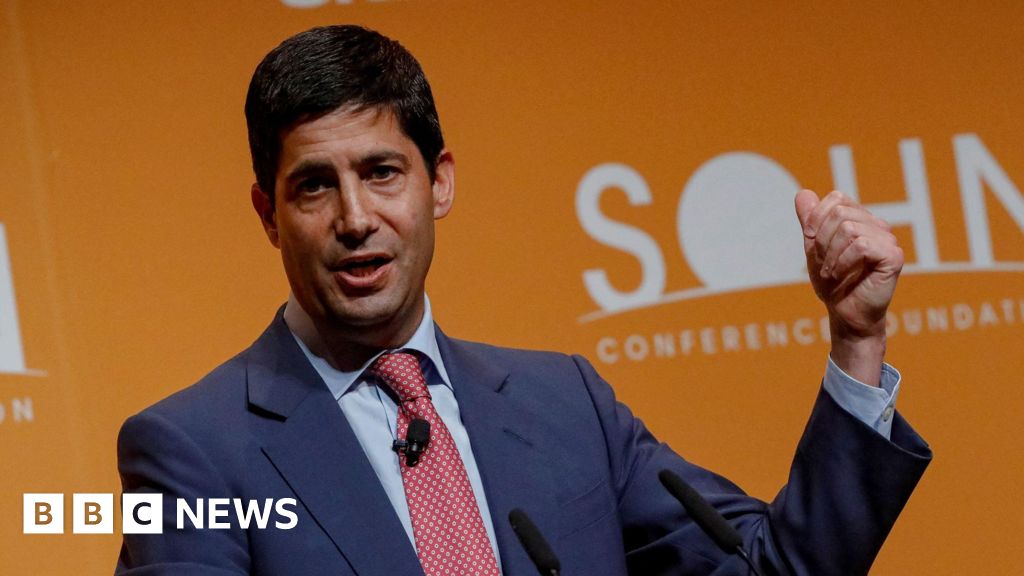
Beyond his professional credentials and policy views, Mr. Warsh possesses significant familial connections within Mr. Trump’s influential orbit. He is married to Jane Lauder, a prominent member of the esteemed Estée Lauder cosmetics dynasty. His father-in-law, billionaire businessman Ronald Lauder, is not only a long-standing donor to Mr. Trump’s political campaigns but also a close personal and political ally. Such close ties inevitably invite scrutiny, raising questions about potential influences on the future impartiality of the Federal Reserve under his leadership.
The path to assuming the chairmanship is not straightforward, as Mr. Warsh’s appointment necessitates confirmation by the United States Senate. This legislative hurdle introduces the potential for protracted delays and political maneuvering. Notably, Republican Senator Thom Tillis, a key member of the Senate Banking Committee—the body responsible for vetting Fed nominees—has publicly declared his intention to oppose any of Mr. Trump’s nominations until the legal proceedings against Mr. Powell are definitively resolved. This stance underscores the highly politicized atmosphere surrounding the Federal Reserve and signals potential resistance that could complicate Mr. Warsh’s confirmation process.
Mr. Warsh was not the sole individual considered for this pivotal role. The speculative field of frontrunners included other prominent figures such as White House economic adviser Kevin Hassett, current Fed governor Christopher Waller, and distinguished Wall Street bond strategist Rick Rieder. The ultimate selection of Mr. Warsh reflects a strategic choice by Mr. Trump, signaling a preference for a candidate who aligns with his vision for a more accommodative monetary policy and a more responsive central bank.
Upon Mr. Warsh’s potential assumption of the role, global financial markets will undoubtedly fixate on the extent to which he exercises independent judgment, particularly in light of the past administration’s public criticisms of the Fed. Analysts are already weighing the implications. Stephen Brown, deputy chief North America economist at Capital Economics, offered an initial assessment, describing Mr. Warsh as "a relatively safe choice." Brown further elaborated, suggesting that "Warsh’s long-running hawkish views should help to counteract concerns that he might morph into a full-blown Trump stooge," hinting at a complex perception of his potential independence.
The initial market reactions to the leaked news of Mr. Warsh’s impending nomination were discernible. The U.S. dollar experienced a modest strengthening against other major currencies, while the price of gold, often seen as a safe-haven asset, registered a notable decline of approximately 6%. This immediate response indicates a perception among investors that Mr. Warsh’s appointment could signal a degree of stability or a clear direction for monetary policy.
Stuart Clark, a portfolio manager at wealth management firm Quilter, expressed a similar sentiment, suggesting that investors would be "breathing somewhat of a sigh of relief" at the news. Clark emphasized Mr. Warsh’s previous consideration for the role in 2017, asserting that this background endows him with "a level of authority that is respected across the market." He concluded by noting that "concerns around Fed independence and an erosion on this should now be tempered, although Warsh’s words and actions will be scrutinised by market participants intensely."
The nomination of Kevin Warsh to lead the Federal Reserve represents more than just a change in personnel; it signifies a potential recalibration of the institution’s direction, its relationship with the executive branch, and its approach to managing the nation’s economy. His past criticisms of the Fed’s operational framework, coupled with his evolving views on interest rates and balance sheet management, suggest a leader who might pursue significant structural and policy adjustments. The delicate balance between political alignment and institutional independence will be the central theme defining his potential tenure. As the confirmation process unfolds, and if confirmed, as he begins to articulate his vision, the global economic community will be observing closely, seeking clarity on the future trajectory of U.S. monetary policy and the enduring autonomy of its central bank. The stakes are profoundly high, not only for the U.S. economy but for the stability of the global financial system that looks to the Federal Reserve for consistent and predictable leadership.


 Aura Kasih
 Safa Marwah
 Ayu Aulia