
 Ayu Aulia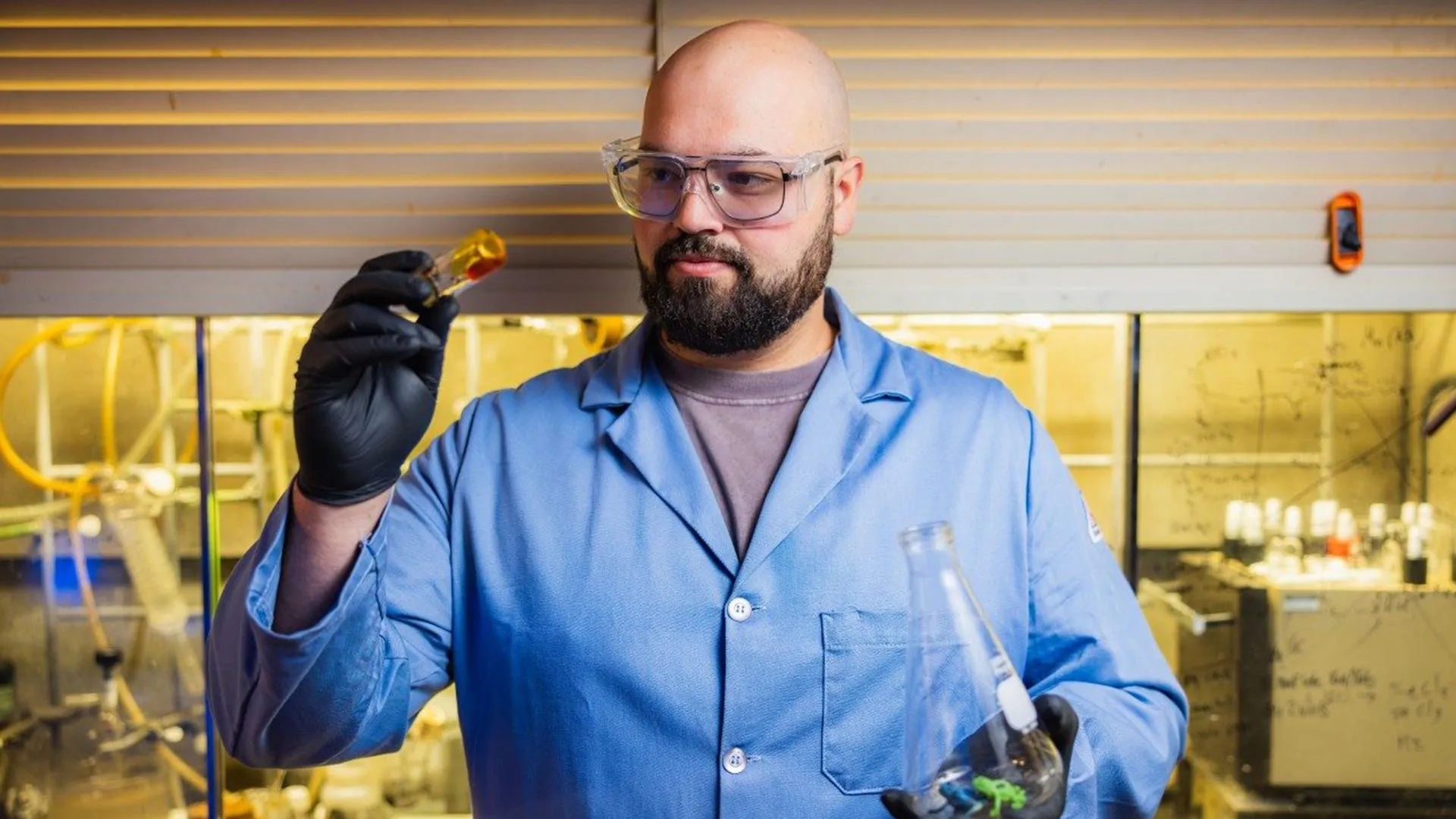
A groundbreaking innovation in materials science and chemical engineering has demonstrated the viable conversion of polyvinyl chloride (PVC), one of the most challenging plastics to recycle, into high-performance polyalphaolefin (PAO), a critical component in advanced lubricants, offering a dual solution to pressing environmental and industrial challenges.
The persistent global issue of plastic waste accumulation, particularly from recalcitrant polymers like polyvinyl chloride, represents a formidable environmental burden. Simultaneously, the burgeoning demand for high-performance industrial lubricants, essential for the efficient operation of modern machinery, often relies on petroleum-derived feedstocks with their own associated environmental footprint. Against this backdrop, a pioneering research endeavor led by Virginia Tech’s Guoliang "Greg" Liu and his dedicated team has unveiled a novel chemical pathway that not only addresses the formidable recycling complexities of PVC but also presents a sustainable alternative for producing vital lubrication components. This transformative research, recently detailed in a leading scientific journal, marks a significant stride toward a more circular economy and sustainable industrial practices.
Polyvinyl chloride, omnipresent in construction materials, medical devices, automotive components, and consumer goods, poses unique obstacles to conventional recycling methodologies. Its chemical structure, characterized by a high chlorine content and a diverse array of plasticizers, stabilizers, and other additives, renders it thermally unstable and prone to releasing corrosive byproducts during processing. These characteristics complicate mechanical recycling efforts, often leading to degradation of material properties and making large-scale reprocessing economically unfeasible and environmentally problematic. Consequently, vast quantities of PVC end their lifecycle in landfills or incinerators, contributing to persistent pollution and greenhouse gas emissions. The development of an economically viable and environmentally sound chemical recycling route for PVC has long been a paramount objective for materials scientists and environmental engineers alike.
Concurrently, the global industrial landscape is underpinned by an immense reliance on lubricants. From the smallest precision instruments to the largest industrial turbines and jet engines, lubricants are indispensable for reducing friction, minimizing wear, dissipating heat, and preventing corrosion. Polyalphaolefins (PAOs), a class of synthetic hydrocarbons, are particularly prized for their superior performance characteristics, including excellent thermal and oxidative stability, high viscosity index, and low volatility, making them ideal for high-stress applications such as engine oils, hydraulic fluids, and gear lubricants. However, the production of PAOs traditionally relies on petrochemical feedstocks, contributing to fossil fuel dependency and the associated environmental impacts of extraction and processing. The prospect of sourcing PAOs from a waste stream, specifically from a plastic that currently presents a disposal dilemma, therefore carries profound implications for industrial sustainability and resource management.
The innovative process developed by Liu’s laboratory meticulously transforms discarded PVC into these valuable polyalphaolefins. The method initiates with readily available PVC feedstock, analogous to the material found in common household plumbing or credit cards. This PVC is introduced into a solvent, followed by the addition of aluminum trichloride, serving as a critical catalyst, and alpha olefins, which participate in the reaction. The mixture undergoes a controlled thermal treatment at a relatively mild temperature of 158 degrees Fahrenheit (70 degrees Celsius) for a duration of three hours. This precise combination of conditions facilitates a chemical transformation, ultimately yielding a relatively thick oil that exhibits the desired lubricant properties. The extracted oil is a high-quality polyalphaolefin, demonstrating its potential as a direct replacement or blend component for existing commercial lubricants.
The scientific breakthrough lies in the astute manipulation of PVC’s inherent chemical structure. Early attempts by the team focused on direct functionalization, aiming to replace the chlorine atoms in PVC with other chemical groups to create new polymer derivatives. While chemically sound in principle, these initial efforts often yielded materials that were soft and lacked the robust performance characteristics required for industrial applications. It was a pivotal insight from Dr. Liu that redirected the research path: instead of attempting to maintain the polymer’s integrity while modifying its side groups, the strategy shifted towards deliberate chain scission. By systematically breaking down the long polymer chains of PVC into smaller, controlled segments, the researchers were able to synthesize oligomers with properties suitable for lubrication. The aluminum trichloride acts as a Lewis acid, facilitating the dehydrochlorination of PVC and subsequent oligomerization of the resulting unsaturated fragments with the alpha olefins, thereby creating the desired polyalphaolefin structure. This elegant re-conceptualization of the problem was instrumental in achieving the successful conversion.
This development positions itself squarely within the burgeoning field of chemical recycling and advanced upcycling, representing a significant departure from conventional mechanical recycling methods. While mechanical recycling focuses on physically reprocessing plastics into products of often lower value (downcycling), chemical recycling aims to break down polymers into their constituent monomers or other valuable chemical feedstocks. Liu’s method, however, represents an upcycling pathway, transforming a low-value, problematic waste material into a high-value, high-performance product. This aligns perfectly with the principles of green chemistry, emphasizing the use of waste as a resource and designing processes that minimize environmental impact. The ability to valorize such a challenging waste stream demonstrates the potential for chemical innovation to redefine waste management paradigms and contribute to a truly circular economy, where resources are kept in use for as long as possible, extracting maximum value before being regenerated.
The implications of this research are multi-faceted and potentially transformative. Environmentally, the technology offers a robust pathway to divert substantial quantities of PVC from landfills, thereby mitigating soil and water contamination, reducing microplastic pollution, and diminishing the need for incineration, which can release harmful dioxins. From an economic perspective, it creates a new value chain for what was previously considered waste. The production of PAOs from PVC waste could potentially reduce manufacturing costs for lubricants, enhance supply chain resilience, and foster new industries focused on plastic waste collection, sorting, and chemical processing. Strategically, it contributes to reducing reliance on virgin petrochemical feedstocks for lubricant production, bolstering resource independence and promoting a more sustainable industrial ecosystem.
Scaling this laboratory-demonstrated process to an industrial level will undoubtedly present its own set of challenges. These include optimizing reaction conditions for higher yields and purities, exploring more benign and recyclable catalysts, developing efficient separation and purification techniques for the final product, and ensuring a consistent and diverse supply of PVC feedstock. Furthermore, comprehensive techno-economic analyses, such as those already initiated by Virginia Tech colleague Xi Chen, will be crucial to evaluate the economic viability and competitiveness of the process against existing PAO production methods. Regulatory approvals and market acceptance for lubricants derived from recycled plastics will also play a significant role in widespread adoption.
The journey to this discovery underscores the collaborative and iterative nature of modern scientific research. The current project built upon earlier successes by Dr. Liu’s team, which had previously demonstrated methods for converting other types of plastic waste into surfactants used in detergents, published in prestigious journals like Science and Nature Sustainability. This foundational work provided the conceptual framework and experimental expertise to tackle the more complex challenge of PVC. The research team itself exemplified interdisciplinary collaboration, with doctoral student Eric Munyaneza Nuwayo leading the effort, supported by graduate students Connor S. Thompson and Abby Civiello. Dr. Liu affectionately referred to them as "the three musketeers," highlighting the synergy and dedication that drove the project forward. The crucial validation and characterization of the synthesized lubricants were further strengthened by external collaborations with experts like Ali Erdemir at Texas A&M University, who conducted rigorous performance testing, and William Goddard at Caltech, who provided invaluable chemical computations.
Looking ahead, the research trajectory involves refining the process to enhance its sustainability footprint further, potentially through the exploration of greener solvents or catalyst systems. The ultimate vision extends beyond the laboratory, aiming for industrial scalability to make these "green" lubricants widely accessible. As Dr. Liu articulates, lubricants are the "silent heroes" of modern industry, often overlooked but indispensable. The ability to produce high-performance, sustainable lubricants from a problematic waste stream represents not just a scientific triumph but a tangible step towards a future where industrial necessity and environmental stewardship are seamlessly integrated. This innovation offers a beacon of hope for addressing two of the most persistent challenges of the 21st century: plastic pollution and the sustainable supply of critical industrial materials.



 Lisa Mariana
 Aura Kasih


 Safa Marwah