Safa Marwah
A high-severity security flaw has been identified and patched in Palo Alto Networks’ next-generation firewalls and Prisma Access configurations, presenting a significant risk where unauthenticated attackers could trigger a denial-of-service (DoS) condition, effectively disabling vital network security protections.
Designated CVE-2026-0227, this vulnerability specifically impacts devices running PAN-OS versions 10.1 and later, as well as cloud-based Prisma Access deployments where the GlobalProtect gateway or portal is actively enabled. The exposure allows a remote, unauthenticated adversary to repeatedly force an affected firewall into a maintenance mode, rendering it inoperable for its primary security functions. This represents a critical compromise of the network perimeter, potentially leaving an organization’s internal systems exposed and vulnerable to subsequent, more targeted attacks.
Palo Alto Networks, a leading provider of enterprise cybersecurity solutions, has acknowledged the seriousness of the issue. In their official advisory, the company detailed that sustained attempts to exploit this weakness would lead to the firewall entering a state where its protective capabilities are effectively neutralized. For its cloud-based Prisma Access service, the majority of instances have already received the necessary security updates, with the remaining few slated for immediate patching according to their standard upgrade protocols. This proactive approach for cloud customers mitigates some of the immediate widespread risk, but emphasizes the urgency for on-premise deployments.

The ramifications of such a DoS vulnerability extend far beyond mere inconvenience. Firewalls serve as the bedrock of an organization’s network security posture, acting as the primary gatekeepers that inspect and control inbound and outbound network traffic. Their incapacitation means that established security policies – including intrusion prevention, threat detection, and access control – are temporarily bypassed or rendered inert. This creates a critical window of opportunity for threat actors to launch more sophisticated attacks, exfiltrate data, deploy malware, or establish persistent footholds within a compromised network without the primary defensive mechanisms in place. The unauthenticated nature of the exploit further lowers the barrier to entry for attackers, making it accessible to a wider range of malicious actors, from opportunistic script kiddies to highly motivated state-sponsored groups.
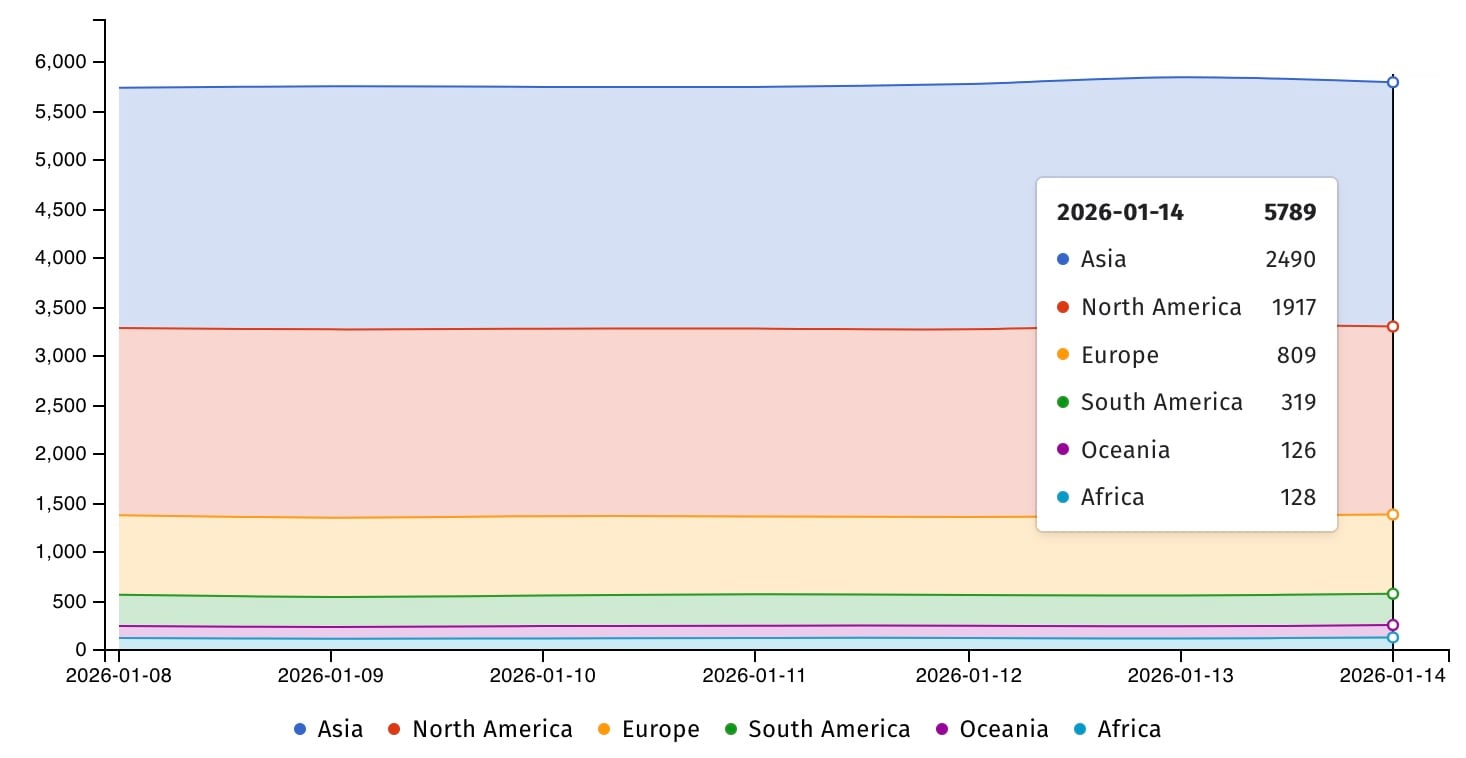
According to data compiled by the internet security watchdog Shadowserver, approximately 6,000 Palo Alto Networks firewalls are currently exposed online. While this figure does not specify how many of these are configured with the vulnerable GlobalProtect components or have already applied the necessary patches, it underscores the vast attack surface available to potential adversaries. This highlights the critical need for organizations to not only patch promptly but also to maintain stringent network hygiene and minimize unnecessary exposure of management interfaces to the public internet.
Upon the initial disclosure of the security advisory, Palo Alto Networks indicated that there was no active evidence of the vulnerability being exploited in the wild. However, this status can rapidly change, and the cybersecurity community widely understands that the gap between vulnerability disclosure and active exploitation by malicious actors is often measured in hours or days. This timeline places immense pressure on network administrators to implement patches immediately.
Palo Alto Networks has released a comprehensive suite of security updates across its affected product lines. The prescribed mitigation involves upgrading to specific patched versions of PAN-OS for various branches, including 12.1.4 or later, 11.2.10-h2 or later, 11.1.13 or later, and 10.2.18-h1 or later. For Prisma Access, specific upgrade paths for versions 11.2 and 10.2 are also detailed. The guidance for Cloud NGFW is that no action is needed, indicating its architecture inherently addresses the flaw or has already been updated seamlessly. Organizations operating unsupported PAN-OS versions are strongly advised to upgrade to a supported and patched release without delay, as continuing to run outdated software vastly increases their risk profile.

This incident is not an isolated event but rather fits into a recurring pattern of critical vulnerabilities affecting Palo Alto Networks’ products, which are extensively deployed across governmental agencies, critical infrastructure, and Fortune 10 companies globally. The company’s large market share, encompassing over 70,000 customers worldwide, including major financial institutions, means that any vulnerability in their offerings carries systemic risk across various sectors.
In November of the preceding year, Palo Alto Networks was compelled to patch two actively exploited zero-day vulnerabilities in PAN-OS firewalls. These flaws enabled attackers to escalate privileges to root level, leading to the compromise of thousands of firewalls, despite the company initially downplaying the extent of the attacks. The severity of these breaches prompted the U.S. Cybersecurity and Infrastructure Security Agency (CISA) to issue an emergency directive, mandating federal agencies to secure their devices within a mere three weeks.
Just a month later, in December, another DoS vulnerability (CVE-2024-3393) emerged, with evidence of active exploitation. This flaw targeted PA-Series, VM-Series, and CN-Series firewalls configured with DNS Security logging enabled, forcing devices to reboot and temporarily disable critical firewall protections. Such repeated instances underscore the persistent threat landscape and the continuous efforts by attackers to identify and exploit weaknesses in foundational security infrastructure.
Further compounding these challenges, February saw the disclosure of three additional vulnerabilities (CVE-2025-0111, CVE-2025-0108, and CVE-2024-9474) that were reportedly being chained together in sophisticated attacks to compromise PAN-OS firewalls. These successive disclosures paint a picture of an intense and ongoing campaign by threat actors targeting these critical network devices.
More recently, threat intelligence firm GreyNoise issued a warning regarding an automated campaign of brute-force and login attempts specifically targeting Palo Alto GlobalProtect portals. This campaign, originating from over 7,000 distinct IP addresses, highlights the persistent probing of these widely used VPN and remote access components, which are essential for many organizations’ remote work capabilities. The continuous targeting of GlobalProtect underscores its strategic importance as an entry point for adversaries seeking to breach corporate networks.
The repeated discovery and exploitation of critical flaws in products from a leading cybersecurity vendor like Palo Alto Networks serves as a stark reminder of the relentless nature of cyber warfare. Organizations must adopt a multi-layered security strategy, moving beyond reliance on a single vendor or technology. This includes not only immediate patching but also robust network segmentation, continuous security monitoring, proactive threat hunting, and comprehensive incident response plans. The ability of an unauthenticated attacker to disable a firewall’s protections through a DoS attack represents a significant operational risk, demanding immediate attention from all affected entities to safeguard their digital assets and maintain operational continuity in an increasingly hostile cyber environment. The imperative for vigilance, rapid response, and a holistic security posture has never been more critical.




 Lisa Mariana
 Aura Kasih
 Ayu Aulia