Aura Kasih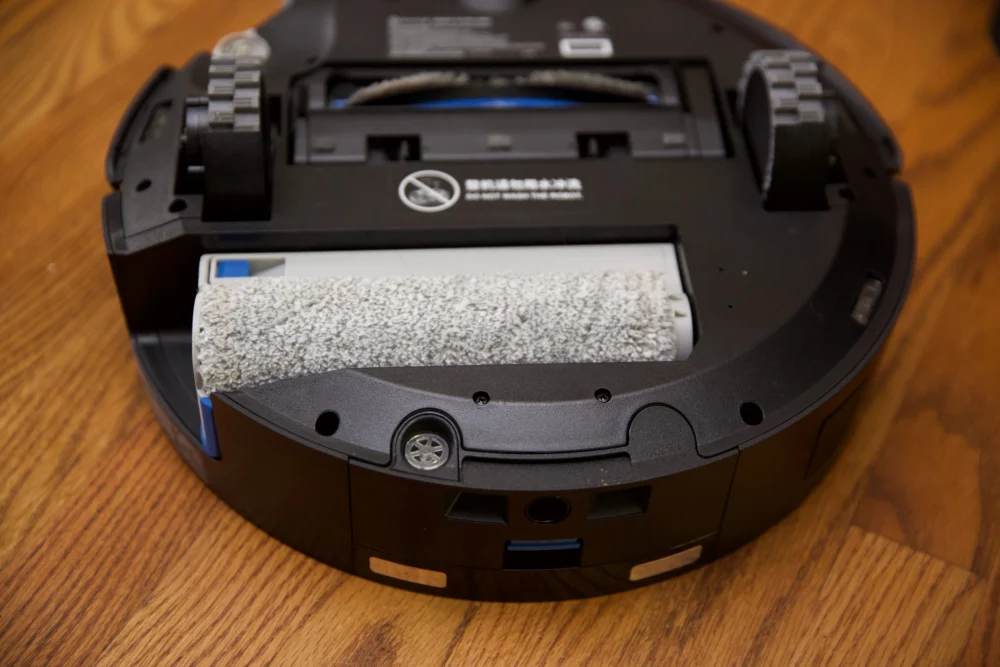
In the ever-evolving landscape of smart home technology, robotic vacuums have transitioned from niche curiosities to indispensable tools for maintaining immaculate living spaces, offering a sophisticated blend of convenience and cleaning efficacy. Advancements in battery longevity and sophisticated AI-driven navigation systems have propelled these automated assistants to new heights, enabling them to tackle extensive cleaning tasks with minimal human intervention. What were once basic floor-sweeping devices have now become comprehensive home robots, capable of vacuuming, mopping, self-maintenance, and intelligently preparing for subsequent operational cycles.
Drawing upon over seven years of dedicated testing and rigorous evaluation of more than 80 distinct robotic vacuum models, this comprehensive guide presents the definitive selections for consumers seeking the zenith of autonomous cleaning performance. The curated list includes top-tier recommendations for all-encompassing home maintenance, alongside specialized options catering to distinct user requirements. Whether the priority is advanced mopping capabilities, superior pet hair management, budget-conscious acquisitions, or solutions tailored for compact living environments, a suitable robotic vacuum exists to meet every demand. The current market offers a diverse array of highly effective robotic vacuums, ensuring that individuals with expansive multi-story residences and numerous pets, or those inhabiting minimalist apartments with minimal occupants, can find an optimal cleaning companion.

Dissecting the Core Components of Exceptional Robotic Vacuums
The efficacy of a robotic vacuum extends far beyond mere suction power, a common misconception that overlooks critical design elements. In extensive testing, the primary brush mechanism has emerged as a pivotal factor in determining overall cleaning performance. Large, robust rubber roller brushes demonstrate a marked superiority over smaller bristle designs in their ability to capture a wide spectrum of debris, while also exhibiting a reduced propensity for entanglement with hair. The integration of dual brush systems generally enhances cleaning efficiency, and a flexible brush housing that adapts to floor contours further optimizes debris collection across varied surfaces.
While the inclusion of mopping functionality is now nearly ubiquitous, significant disparities exist in their effectiveness. Optimal mopping robots are assessed on their capacity to remove stubborn, dried-on stains, such as those left by milk or ketchup, and to adeptly manage minor liquid spills without compromising their operational integrity. Oscillating, spinning, or vibrating mop pads deliver a more profound cleaning action compared to simple drag-and-wipe mechanisms. However, the advent of self-cleaning roller mops represents the latest frontier in mopping technology, offering even greater efficiency. Crucially, automated carpet detection is a vital feature, preventing the inadvertent wetting and soiling of valuable floor coverings.

The pursuit of true hands-free operation is significantly advanced by robots equipped with self-emptying dustbins and self-cleaning mopping systems. Multifunctional docking stations that integrate auto-emptying and mop washing capabilities are rapidly becoming standard. These sophisticated bases transform the robot’s charging station into an automated debris removal system, employing powerful suction to empty the robot’s onboard bin. While this process can generate noticeable noise, it dramatically extends the intervals between manual bin emptying, typically reducing it to a monthly bag replacement. These docking stations, however, can be substantial in size. For users prioritizing a discreet robotic presence, models with larger onboard bins (exceeding 500ml) and more compact docking stations are advisable.
AI-powered obstacle detection represents a significant evolutionary leap for high-end robotic vacuums. This technology enables robots to intelligently identify and circumvent clutter, thereby mitigating the risk of common operational failures, including the notorious "poopocalypse" scenario involving pet waste. These advanced models leverage onboard cameras to perceive objects in their path and utilize sophisticated processors to dynamically adjust their cleaning strategy based on visual input. The efficacy of AI detection varies, with some systems demonstrating superior object recognition and avoidance compared to others. The net result is a marked reduction in instances where robots become immobilized, ensuring a higher probability of returning to a clean home rather than encountering a stalled cleaning unit.
Effective floor mapping is fundamental to achieving comprehensive cleaning coverage. Robots that generate detailed maps of their operational environment can systematically navigate and clean every accessible area more effectively than those relying solely on random bumping and rolling. Mapping also empowers users to direct the robot to clean specific rooms or zones, and to establish virtual boundaries, preventing the robot from entering restricted areas. This functionality is particularly crucial for homes with delicate objects or known robot-trapping zones. The majority of modern robots employ variations of Simultaneous Localization and Mapping (SLAM) technology, often utilizing Lidar or vSLAM sensors, although some models rely exclusively on camera-based navigation.

A well-designed mobile application is paramount for user interaction. Key features include intuitive controls for starting and stopping cleaning cycles, robust scheduling capabilities with customizable "do-not-disturb" periods, and effective map management. Advanced functionalities such as room-specific cleaning settings, allowing for differentiated cleaning modes (e.g., vacuum and mop in the kitchen, vacuum only in the living room), significantly enhance user control. Frustrations often arise from maps that are difficult to update or prone to resetting, necessitating frequent rebuilding. While voice control is increasingly common, some applications offer more granular command options, such as instructing the robot to perform a double pass in a specific area.
The "recharge and resume" function, where robots automatically return to their charging dock when battery levels are low and resume cleaning upon replenishment, is a standard feature. However, robots with extended battery life, ideally 120 minutes or more (180 minutes being optimal), can complete entire cleaning cycles in a single operation. Prolonged cleaning times can lead to user annoyance, especially with noisy units. Given the significant investment associated with robotic vacuums, the availability of replacement parts and robust customer support are critical considerations for long-term ownership and maintenance.
The Matic: Redefining Autonomous Cleaning

The Matic represents a paradigm shift in robotic vacuum design, earning its designation as the preeminent choice for 2026. Its sophisticated camera-based SLAM navigation, coupled with exceptional AI-driven obstacle avoidance, ensures an unparalleled operational success rate, rarely succumbing to common navigational challenges. This meticulous engineering translates to a cleaning unit that consistently completes its tasks with remarkable reliability.
The Matic’s innovative approach addresses a persistent issue with traditional disc-shaped robots, which, despite advancements in AI and specialized robotic arms, often remain susceptible to getting stuck. For users prioritizing a robot vacuum that reliably executes its cleaning duties with minimal intervention, the Matic stands as the definitive solution.
- Multifunctional Dock: Not applicable (charging only)
- Mapping: Camera-based SLAM
- AI-Powered Obstacle Detection: Yes
- Suction Power: 3,000Pa
- Remote Check-in: No
- Brush Style: Single rubber roller
- Mop Style: Roller
- Mop Washing: Yes
- Mop Lift: Yes
- Edge Cleaning: Mop extension
- Smart Home Integration: None
While excelling in navigation and obstacle avoidance, the Matic’s cleaning performance, though robust, does not entirely eclipse that of flagship models from other leading manufacturers in every specific aspect. Its substantial height can limit access under very low furniture, and its baseboard cleaning, while effective, might not be as precise as some competitors. The cleaning process is also sequential: vacuuming followed by a separate mopping pass, which can extend the overall duration of a cleaning cycle. However, its exceptionally quiet operation allows it to function unobtrusively, even when occupants are present.

A significant advantage of the Matic is its ability to operate entirely offline, a rare feature in the current market. All operational data, including home maps, is stored locally on the device, enhancing user privacy. Despite its premium price point of $1,245, the absence of a multifunctional dock (it carries its dust and water receptacles onboard) contributes to a more minimalist aesthetic and avoids the visual clutter of elaborate docking stations. This design choice, while requiring manual emptying of the onboard receptacles, offers a streamlined and unobtrusive presence in the home. The Matic’s deliberate design compromises, aimed at delivering an elevated user experience, position it as the "iPhone" of robotic vacuums, offering a refined and highly effective solution for autonomous home cleaning.
Roborock Saros 10: The Refined All-Rounder
For consumers who find the Matic’s specific design philosophy less appealing, the Roborock Saros 10 emerges as a compelling alternative. Building upon the legacy of its highly regarded predecessors, the Saros 10 refines the already impressive capabilities of models like the S8 MaxV Ultra, offering a more accessible yet still premium cleaning experience. It retains the core strengths of its lineage, minus the extraneous features and associated cost of robotic arms found in some earlier iterations.

The Saros 10 functions as a comprehensive vacuum and mop hybrid, employing Roborock’s acclaimed sonic mopping technology. Unlike its siblings, the Saros 10R and Saros Z70, which utilize spinning mop pads, the Saros 10’s flat pad mopping, combined with vibration, proves exceptionally effective and is less prone to entanglement with rug tassels. A notable feature, also present in the Dreame line, is the Saros 10’s automatic mop pad removal mechanism, ensuring carpets remain dry during cleaning cycles.
- Multifunction Dock: Yes
- Mapping: Lidar-based
- AI-Powered Obstacle Detection: Yes
- Suction Power: 22,000Pa
- Remote Check-in: Yes
- Brush Style: Single hybrid rubber bristle
- Mop Style: Flat pad
- Mop Washing: Yes
- Mop Lift: 18mm (plus automatic removal)
- Edge Cleaning: Mop extension
- Smart Home Integration: Amazon Alexa, Google Home, Siri Shortcuts, Matter
The Saros 10 demonstrates exceptional navigation, adeptly maneuvering around obstacles and overcoming common household thresholds up to 4cm. Its retractable lidar tower allows it to access spaces as low as 8cm, facilitating cleaning beneath furniture. The powerful 22,000Pa suction, combined with the innovative Duo Divide brush, proved highly effective in tests involving fine debris like Cheerios and dried oatmeal, and exceptionally adept at removing pet hair from high-pile carpets without tangling.
In a market often characterized by complex and unreliable mobile applications, Roborock’s app stands out for its user-friendliness and extensive customization options. The integrated voice assistant, accessible via "Rocky," provides convenient command capabilities, allowing users to initiate cleaning tasks with simple voice prompts. While other manufacturers also offer voice control, Roborock’s implementation is noted for its responsiveness.

Tapo RV30 Max Plus: The Budget-Conscious Powerhouse
For individuals seeking robust cleaning capabilities without a premium price tag, the Tapo RV30 Max Plus presents an outstanding value proposition. This model integrates several advanced features typically found in significantly more expensive units, including Lidar mapping, room-specific cleaning directives, adjustable suction and water flow settings, and an auto-empty dock. This combination makes it a highly competitive option for budget-conscious consumers.
The RV30’s navigation system, powered by Lidar, ensures efficient path planning and thorough cleaning coverage. The ability to define specific cleaning zones within the mobile app allows users to target areas requiring more attention or to exclude zones where cleaning is unnecessary. The auto-empty dock significantly enhances convenience by automatically disposing of collected debris, reducing the frequency of manual emptying.

- Multifunction Dock: Auto-empty only
- Mapping: Lidar-based
- AI-Powered Obstacle Detection: No
- Suction Power: 5,300Pa
- Remote Check-in: No
- Brush Style: Single hybrid rubber bristle
- Mop Style: Flat pad with integrated tank
- Mop Washing: No
- Mop Lift: No
- Smart Home Integration: Amazon Alexa, Google Home, Siri Shortcuts, Matter
The RV30’s 5,300Pa suction power is notably strong for its price category, effectively capturing dry debris on hard floors. While the single brush design is less adept at picking up extremely fine particles compared to dual-brush systems, its performance is generally satisfactory for everyday cleaning. The mopping function, while lacking pressure or oscillation, provides a competent surface clean due to its broad pad and ample water reservoir. Users must manually define carpeted areas within the app to prevent accidental mopping. The unit’s 2,600mAh battery may necessitate a recharge cycle for larger homes, but the compact dock design mitigates space concerns. An even more economical option is available by opting for the model without the auto-empty dock.
Ecovacs Deebot X8 Pro Omni: Superior Roller Mopping Performance
The Ecovacs Deebot X8 Pro Omni distinguishes itself as a leading contender in the realm of robotic vacuums with roller mopping capabilities. Its advanced design and competitive pricing make it an attractive option for those prioritizing effective hard floor cleaning. Compared to other flagship models featuring roller mops, the X8 Pro Omni offers a more accessible entry point into this premium technology.

The X8 Pro Omni excels in tackling liquid spills and dried stains on hard surfaces. Its roller mop system provides even coverage, minimizing streaks and ensuring a thorough clean. The unit’s edge cleaning is particularly noteworthy, with its mop pads extending to clean along baseboards and other vertical surfaces. The self-cleaning brush system further enhances its hygienic operation, preventing the smearing of spills.
- Multifunctional Dock: Yes
- Mapping: Lidar-based
- AI-Powered Obstacle Detection: Yes
- Suction Power: 18,000Pa
- Brush Style: Single rubber/bristle
- Mop Style: Roller
- Mop Washing: Yes
- Mop Lift: 10mm
- Edge Cleaning: Mop extension
- Smart Home Integration: Amazon Alexa, Google Home, Siri Shortcuts, Matter
While its vacuuming capabilities are robust, the X8 Pro Omni’s single rubber roller brush may not be as effective on high-pile carpets as some competing dual-brush designs. The unit’s substantial weight and height can also present challenges in navigating very low furniture or complex transitions. However, its integrated carpet sensors allow for adaptable cleaning strategies, including avoiding carpets, passing over them, or solely vacuuming them. The dock’s ability to automatically dispense cleaning solution offers a slight advantage in convenience over models requiring manual addition.
Dreame X50 Ultra: Advanced Mobility and Dual-Roller Cleaning

The Dreame X50 Ultra represents a significant advancement in robotic vacuum technology, particularly for its enhanced mobility and superior dual-roller brush system. This model addresses key limitations of previous iterations by incorporating a "motorized swing arm" mechanism that significantly improves its ability to traverse varied floor transitions and overcome obstacles.
The X50 Ultra’s innovative leg-like mechanism allows it to navigate higher thresholds (up to 6cm), enabling seamless movement between rooms and over challenging surfaces like high-pile rugs. This enhanced mobility, combined with increased suction power and the refined dual-rubber roller brush system, delivers exceptional cleaning performance, particularly in carpeted environments. The dual-roller configuration proved highly effective in tests involving carpeted debris, ensuring thorough extraction.
- Multifunctional Dock: Yes
- Mapping: Lidar-based
- AI-Powered Obstacle Detection: Yes
- Suction Power: 20,000Pa
- Brush Style: Dual rubber rollers
- Mop Style: Dual spinning pads
- Mop Lift: 20mm (plus automatic removal)
- Mop Washing: Yes
- Edge Cleaning: Mop extension
- Smart Home Integration: Amazon Alexa, Google Home, Siri Shortcuts
The X50 Ultra maintains the exceptional mopping capabilities of its predecessors, with dual oscillating mop pads that effectively tackle hard floor stains and automatically extend for edge cleaning. The ability to remove and reattach mop pads based on surface type ensures carpets remain dry. The retractable lidar tower facilitates cleaning under low furniture. However, the Dreame app, while feature-rich, can be prone to instability and slower load times compared to competitors. While the AI-powered obstacle detection is commendable, it occasionally struggles with very small objects, a scenario where the Matic demonstrates superior performance.

Narwal Freo Z10: Specialized Pet Hair Management
For households contending with significant amounts of pet hair, particularly on hard flooring, the Narwal Freo Z10 offers a specialized and effective solution. This model is engineered to address the unique challenges posed by long hair, employing a distinctive brush system designed to prevent tangles and ensure efficient debris collection.
The Freo Z10’s dual-sided brushes effectively sweep long hairs towards a cone-shaped roller brush, which then channels the debris into the vacuum’s collection system. This design significantly minimizes hair entanglement, a common issue with other robotic vacuums. The unit’s mopping performance is also a strong suit, with triangular mop pads that excel at reaching corners and baseboards. The oscillating motion of the mop pads simulates scrubbing, proving effective against tougher stains like muddy paw prints.

- Multifunctional Dock: Yes
- Mapping: Lidar-based
- AI-Powered Obstacle Detection: Yes (basic, upgradeable)
- Suction Power: 15,000Pa
- Remote Check-in: No
- Brush Style: Single rubber/bristle
- Auto-refill Mop: Yes
- Mop Lift: 12mm
- Mop Washing: Yes
- Edge Cleaning: Mop extension
- Smart Home Integration: Amazon Alexa, Google Home, Siri Shortcuts
The Freo Z10’s mop pads demonstrated a high degree of effectiveness in removing floor stains, surpassing some of the top-tier competitors in tests involving dried flour. However, the unit’s large dock can be an aesthetic consideration, and its 12mm mop lift height may not be sufficient for very high-pile carpets. The absence of advanced AI-powered obstacle detection, relying instead on basic object recognition, means it may struggle with finer cables or shoelaces. For enhanced obstacle avoidance, the more expensive Freo Z10 Ultra, equipped with dual HD cameras, is recommended.
SwitchBot Robot Vacuum K11: Compact Efficiency for Smaller Spaces
The SwitchBot Robot Vacuum K11 is an ideal solution for individuals residing in smaller living spaces, such as apartments, studios, or dedicated home office areas. Its compact form factor allows for exceptional maneuverability around furniture and in confined areas, ensuring thorough cleaning where larger robots might struggle.

An evolution of its predecessor, the K10 Plus, the K11 boasts a notable increase in suction power, delivering robust performance on both hard floors and carpets. The integrated auto-empty dock is notably compact, maintaining a low profile that complements smaller living environments. This combination of size and power makes it a highly practical choice for targeted cleaning needs.
- Multifunctional Dock: Auto-empty only
- Mapping: Lidar-based
- AI-Powered Obstacle Detection: No
- Suction Power: 6,000Pa
- Brush Style: Single rubber roller
- Mop Style: Disposable pad
- Auto-refill Mop: No
- Mop Lift: No
- Smart Home Integration: Amazon Alexa, Google Home, Siri Shortcuts, Matter
The K11’s Lidar mapping system ensures efficient cleaning routes, and the accompanying mobile app offers room-specific cleaning options for greater control. While the mopping function is basic, it provides a satisfactory surface clean for light debris. The absence of AI obstacle avoidance necessitates pre-cleaning to remove potential hazards like cables. The unit’s quiet operation and quick cleaning cycles further enhance its suitability for smaller, less demanding environments. The charging dock’s aesthetic, featuring a wooden top, blends well with various decor styles.
Emerging Technologies and Future Trajectories

The relentless pace of innovation in the robotic vacuum sector indicates a future where these devices become even more integrated into the fabric of smart home ecosystems. We anticipate further refinements in AI-powered navigation, leading to enhanced object recognition and adaptive cleaning strategies. The integration of advanced sensor technologies, such as 3D vision and more sophisticated Lidar, will further improve their ability to perceive and interact with their environment.
The development of more versatile docking stations, capable of handling not only dust and water but also providing basic maintenance like brush cleaning or filter replacement, is a probable progression. Furthermore, increased interoperability through standards like Matter will empower users with seamless control across diverse smart home platforms. The trend towards quieter operation and extended battery life will continue, making robotic vacuums more unobtrusive and efficient. As these technologies mature, the line between a cleaning appliance and a truly intelligent home assistant will continue to blur, promising an era of unparalleled autonomous home maintenance.



 Lisa Mariana
 Safa Marwah
 Ayu Aulia