
 Ridwan Kamil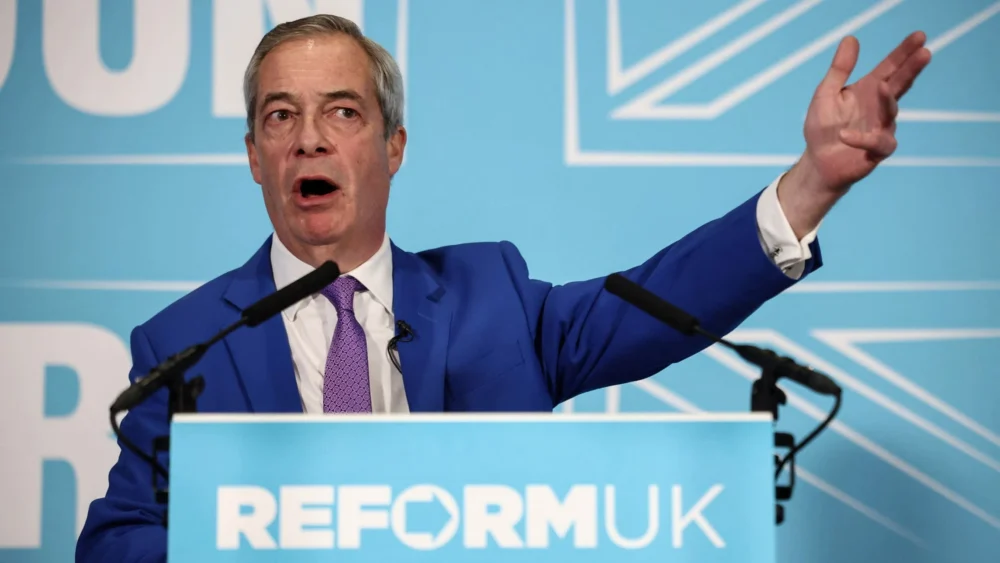
The European Union is reportedly demanding the inclusion of a specific clause, colloquially termed the "Farage safeguard," as a non-negotiable prerequisite for engaging in substantive discussions aimed at recalibrating the United Kingdom’s post-Brexit relationship with the bloc. This stipulation, emerging from behind the scenes of ongoing diplomatic overtures, signals a hardening of the EU’s stance and underscores a deep-seated concern regarding the UK’s perceived trajectory concerning its commitments to the Withdrawal Agreement and future regulatory alignment. The demand suggests Brussels is seeking assurances that any future agreements or modifications to existing frameworks will not be subject to unilateral undermining or a perpetual state of challenge, potentially fueled by political forces advocating for a more radical departure from EU norms.
The genesis of this "Farage safeguard" can be traced to a confluence of factors that have characterized the UK’s post-Brexit journey. Since the referendum in 2016, and particularly following the UK’s formal departure from the European Union, political discourse on both sides of the Channel has been significantly shaped by the rhetoric and actions of prominent figures advocating for a clean break. Nigel Farage, a key architect of the Leave campaign, has consistently championed a vision of the UK unbound from European regulations and institutions, often expressing skepticism towards any form of continued alignment or cooperation. This persistent advocacy, coupled with subsequent political developments in the UK, has fostered an environment where Brussels perceives a latent risk of the UK seeking to incrementally dismantle existing agreements or renege on commitments under political pressure.
The EU’s demand is not merely a symbolic gesture; it represents a strategic imperative to ensure the stability and predictability of its relationship with a crucial neighbour. The Withdrawal Agreement, a complex and hard-won settlement, established the terms of the UK’s departure and laid the groundwork for future cooperation. However, its implementation has been fraught with challenges, most notably concerning the Northern Ireland Protocol. The EU views the protocol as a vital mechanism to avoid a hard border on the island of Ireland, a cornerstone of the Good Friday Agreement. Yet, the protocol has been a persistent source of political friction within the UK, with various factions arguing it undermines national sovereignty and creates trade barriers. The repeated challenges to the protocol, including legislative attempts to override parts of it, have created an atmosphere of distrust and uncertainty in Brussels.
Therefore, the "Farage safeguard" is likely intended to serve as a mechanism to prevent future UK governments from pursuing policies that could fundamentally destabilize the existing agreements or create a precedent for unilateral divergence that could embolden other member states to demand similar opt-outs or renegotiations. It signifies a desire for a degree of political commitment and predictability that has been perceived as lacking in recent years. This could manifest in various forms, such as explicit commitments to uphold the principles of the Withdrawal Agreement, mechanisms for dispute resolution that are binding, or assurances that the UK will not seek to unilaterally alter agreed-upon arrangements.
The implications of this demand are significant for the future of UK-EU relations. If the UK rejects this precondition, it could effectively halt any meaningful progress towards a reset of the relationship, leaving the current, often strained, arrangements in place. This would perpetuate the economic and political uncertainties that have accompanied Brexit, hindering opportunities for enhanced cooperation in areas of mutual interest such as security, climate change, and research. Conversely, if the UK agrees to such a safeguard, it would represent a considerable political concession and a potential shift in its post-Brexit strategy, signaling a willingness to engage with the EU on terms that prioritize stability and predictability over absolute regulatory autonomy.
The nature of the "Farage safeguard" itself remains a subject of intense speculation. It is unlikely to be a literal clause naming a specific individual. Instead, it is understood to be a broader principle designed to address the underlying concerns that figures like Farage represent – a political force advocating for a more disruptive form of Brexit. The EU may be seeking assurances that any future UK government will be constitutionally or politically bound to respect the integrity of agreed-upon treaties, perhaps through parliamentary commitments or specific legislative measures. The precise wording and enforcement mechanisms would be critical to its efficacy.
From an analytical perspective, the EU’s demand can be interpreted as a strategic move to solidify its negotiating position and to elicit a clear signal from London regarding its long-term intentions. For years, Brussels has been navigating a complex relationship with a UK government that has often seemed to oscillate between seeking closer alignment and asserting a desire for complete divergence. This ambiguity has made it difficult for the EU to plan and to foster a stable partnership. The "Farage safeguard" is, in essence, a demand for clarity and a commitment to a more predictable and reliable relationship.
The economic dimension of this demand is also substantial. A more stable and predictable relationship between the UK and the EU would undoubtedly benefit businesses on both sides of the Channel, reducing trade friction and fostering investment. Conversely, continued uncertainty and the potential for further renegotiations or disputes could continue to dampen economic activity and deter long-term planning. The EU, as a bloc that thrives on internal market stability, is acutely aware of the disruptive potential of a volatile relationship with its largest neighbour.
Moreover, the political ramifications extend beyond the immediate bilateral relationship. The EU’s willingness to engage in a "reset" signals a recognition that the current state of affairs is suboptimal for both parties. However, its insistence on a safeguard indicates a learned caution, a response to the perceived erosion of trust and the challenges encountered in implementing previous agreements. This approach underscores the EU’s commitment to its own internal cohesion and its desire to prevent any precedent that could weaken its collective bargaining power or its foundational principles.
The UK’s response to this demand will be a defining moment in its post-Brexit evolution. A refusal would likely lead to a prolonged period of diplomatic stalemate and continued friction. A willingness to engage with the concept, however, would necessitate a significant recalibration of domestic political discourse and a potential shift away from the confrontational rhetoric that has often characterized UK-EU relations. It would signal a pragmatic acceptance that the path to a more beneficial relationship requires mutual concessions and a commitment to established frameworks.
The context of international relations also plays a role. In an increasingly complex global landscape, both the UK and the EU have strategic interests that are best served by a stable and cooperative partnership. Issues such as geopolitical security, the transition to a green economy, and technological innovation require a coordinated approach. The EU’s demand, therefore, can be seen not just as a matter of protecting its existing agreements but also as a forward-looking effort to build a foundation for future collaboration.
Ultimately, the "Farage safeguard" is more than just a specific policy demand; it is a reflection of the EU’s strategic imperative to ensure the integrity of its agreements and the predictability of its external relationships. It is a demand for a clear commitment from the UK that its post-Brexit path will be one of constructive engagement rather than perpetual renegotiation or unilateral divergence. The outcome of these discussions will have profound implications for the future trajectory of both the United Kingdom and the European Union, shaping the nature of their partnership for years to come. The onus is now on London to demonstrate its readiness to build a stable and mutually beneficial relationship, a prospect that hinges on its willingness to address Brussels’ fundamental concerns about the durability of future agreements. This nuanced demand from Brussels is not about punishing the UK, but about ensuring that any future reset is built on a bedrock of trust and commitment, preventing a recurrence of the protracted disputes that have defined the post-Brexit era.


 Lisa Mariana
 Aura Kasih
 Ayu Aulia


 Safa Marwah