Ridwan Kamil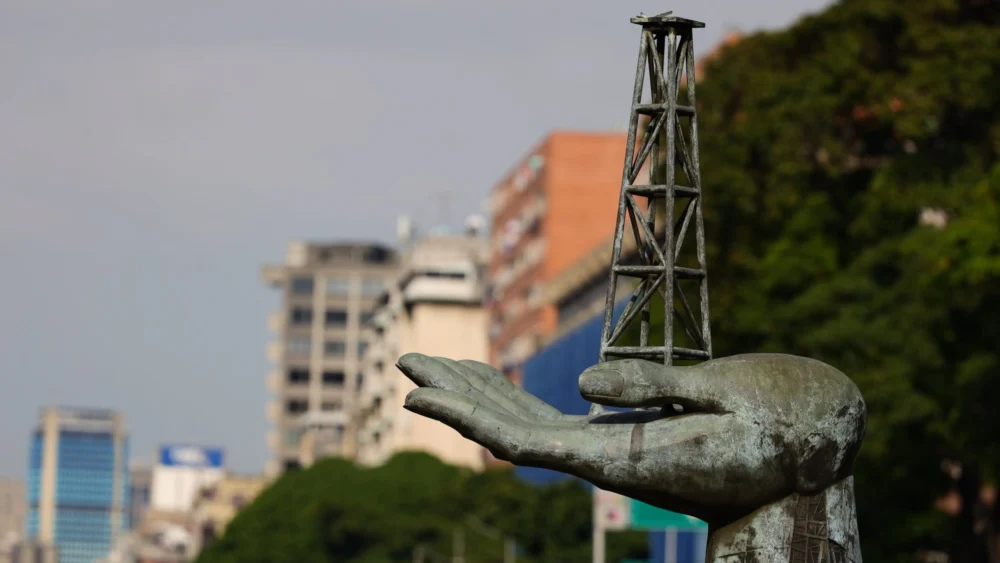
In a dramatic shift within the global energy landscape, a cohort of agile, independent oil producers, often referred to as "wildcatters," are aggressively pursuing lucrative opportunities in Venezuela’s vast, yet historically challenging, oil fields. This surge of activity is unfolding against a backdrop of considerable apprehension from major Western oil corporations, who remain hesitant to fully re-engage with the South American nation due to persistent political instability, sanctions, and operational uncertainties. The unfolding scenario signifies a burgeoning new era of Venezuelan oil exploration, where the nimbleness and risk appetite of smaller entities are proving instrumental in unlocking the country’s immense, and long-dormant, hydrocarbon potential.
Venezuela, once a titan of global oil production, possesses the largest proven reserves of crude oil in the world. However, decades of mismanagement, economic collapse, and international sanctions have severely crippled its state-owned oil company, Petróleos de Venezuela S.A. (PDVSA), leading to a precipitous decline in output and infrastructure decay. This paralysis has created a vacuum, now being filled by a diverse array of private entities, ranging from established independent producers to newer, venture-backed firms, all vying for access to exploration and production licenses and joint venture agreements. These "wildcatters" are characterized by their willingness to navigate complex geopolitical landscapes and their ability to mobilize capital and technical expertise more rapidly than their larger, more risk-averse counterparts.
The cautious stance adopted by Western majors is understandable. Companies like ExxonMobil, Chevron, and Shell have significant historical ties to Venezuela but have largely withdrawn or significantly scaled back operations in recent years. The lingering specter of sanctions, coupled with the unpredictable nature of the Venezuelan political climate and the inherent risks associated with PDVSA’s operational capacity and contractual frameworks, makes a full-scale return a high-stakes gamble. These larger players often require a more stable and predictable operating environment, robust legal protections, and a clearer long-term vision before committing the substantial capital required for large-scale oil development. Furthermore, concerns about reputational risk and the potential for asset seizure or nationalization continue to weigh heavily on their strategic decisions.
Conversely, the "wildcatters" exhibit a different strategic calculus. Their business model often thrives on identifying and exploiting overlooked or undervalued assets. They possess a greater tolerance for risk, understanding that the potential rewards in a market like Venezuela—with its immense reserves and depressed asset valuations—can be extraordinarily high. These companies are often more adept at forming strategic partnerships with local entities, negotiating flexible terms, and operating with leaner organizational structures that allow for quicker decision-making and adaptation to changing circumstances. Their focus is often on specific blocs or projects where they believe their technical prowess and operational efficiency can yield tangible results, even within a challenging operating framework.
The current landscape in Venezuela is a complex tapestry of evolving geopolitical dynamics and pragmatic commercial interests. The United States, while maintaining broad sanctions against the Venezuelan government, has shown some flexibility in granting specific licenses to certain companies, particularly those with existing operations or those seeking to revive dormant fields. This has opened doors for some independent producers to resume or expand their activities, albeit under strict conditions. These licenses are often tied to specific projects and are subject to ongoing review, creating a dynamic and sometimes uncertain operating environment.
The allure of Venezuelan crude is undeniable. The country’s heavy, sour crude is a valuable commodity for global refiners, particularly those equipped to process such grades. The sheer volume of untapped reserves represents a potential game-changer for global oil supply, especially at a time when many established oil-producing regions are facing declining production or geopolitical headwinds. For the "wildcatters," securing a foothold in Venezuela represents an opportunity to diversify their portfolios, gain access to world-class reserves, and potentially achieve significant returns on investment if they can successfully navigate the operational and political hurdles.
The operational challenges within Venezuela are substantial. Decades of underinvestment have led to aging infrastructure, a lack of spare parts, and a shortage of skilled personnel. PDVSA itself, while still the nominal owner of the country’s oil assets, faces significant internal challenges, including corruption, bureaucracy, and a lack of capital. Independent producers must therefore be prepared to invest heavily not only in exploration and production but also in rehabilitation and modernization of existing facilities. This requires a deep understanding of the local operating environment, strong relationships with local communities and workforces, and a robust plan for ensuring the safety and reliability of their operations.
Furthermore, the legal and contractual frameworks governing oil exploration and production in Venezuela can be opaque and subject to change. Western majors, accustomed to well-defined and internationally recognized legal protections, find this uncertainty particularly unpalatable. Independent producers, however, may be more willing to accept a degree of ambiguity, relying on their ability to negotiate bespoke agreements and build strong working relationships with PDVSA and relevant government authorities. Their success often hinges on their capacity to deliver tangible results and demonstrate value to the Venezuelan state, thereby building trust and securing ongoing operational autonomy.
The implications of this "wildcatter" resurgence are far-reaching. On one hand, it could lead to a gradual increase in Venezuela’s oil output, contributing to global supply and potentially influencing global oil prices. This increased production could also provide much-needed revenue for the Venezuelan economy, although the equitable distribution and impact of such revenues remain a significant concern. On the other hand, the dominance of independent producers may alter the traditional power dynamics within the global oil industry, with smaller, more agile players taking on a more prominent role in developing challenging but resource-rich territories.
The future outlook for Venezuela’s oil sector remains intrinsically linked to the country’s broader political and economic trajectory. Any significant improvement in the political climate, coupled with a clearer and more stable regulatory framework, would undoubtedly attract greater interest from major international oil companies. However, until such conditions materialize, the "wildcatters" are likely to continue to be the primary drivers of new investment and production growth. Their ability to adapt, innovate, and persevere in a challenging environment will be the key determinant of their success and, by extension, Venezuela’s renewed role on the global energy stage.
The current trend suggests a bifurcation of the Venezuelan oil market. Major Western corporations will likely maintain their cautious approach, waiting for a more stable and predictable environment before making substantial commitments. Meanwhile, the "wildcatters," with their inherent agility and risk appetite, will continue to push the boundaries, seeking to capitalize on the immense opportunities that Venezuela’s vast hydrocarbon wealth presents. This dynamic creates a unique and evolving landscape, where the traditional giants of the oil industry are observing from the sidelines while a new breed of entrepreneurial players races to secure their stake in the nation’s energy future.
The geopolitical considerations are also paramount. The United States’ role in this unfolding scenario is critical. While sanctions remain in place, the selective issuance of licenses indicates a willingness to allow for some engagement, likely driven by a desire to influence Venezuela’s internal dynamics and to ensure global energy market stability. However, any significant shift in U.S. policy could dramatically alter the landscape for all players involved. The interaction between U.S. policy, Venezuelan internal politics, and the commercial strategies of oil companies will continue to shape the narrative of Venezuela’s oil renaissance.
Moreover, the increasing involvement of independent producers raises questions about transparency and governance within Venezuela’s oil sector. While these companies may bring operational efficiencies, ensuring that revenues are managed responsibly and benefit the Venezuelan people will be a significant challenge. The legacy of past mismanagement and corruption casts a long shadow, and the international community will be closely watching to see if the new wave of investment leads to a more equitable and sustainable distribution of wealth.
The technical challenges of extracting Venezuela’s heavy crude are also significant. These reserves often require advanced extraction techniques, such as steam injection or chemical flooding, which demand substantial capital investment and specialized expertise. The "wildcatters" who succeed will be those who possess the technological capabilities and financial resources to overcome these hurdles, often by partnering with technology providers or forming consortia to share the burden of investment.
In conclusion, the current pursuit of Venezuelan oil deals is a compelling illustration of how market dynamics can shift in response to political and economic realities. The cautious retreat of established Western majors has created an opening for a more aggressive and adaptable class of independent producers. These "wildcatters" are not only betting on the immense potential of Venezuela’s oil reserves but also on their own ability to navigate a complex and often unpredictable operating environment. Their success or failure will not only determine their own fortunes but will also play a crucial role in shaping Venezuela’s economic future and its position within the global energy order. The race for Venezuelan oil is on, and it is being run by a new set of contenders, driven by a different set of imperatives.


 Aura Kasih
 Safa Marwah
 Ayu Aulia