Ayu Aulia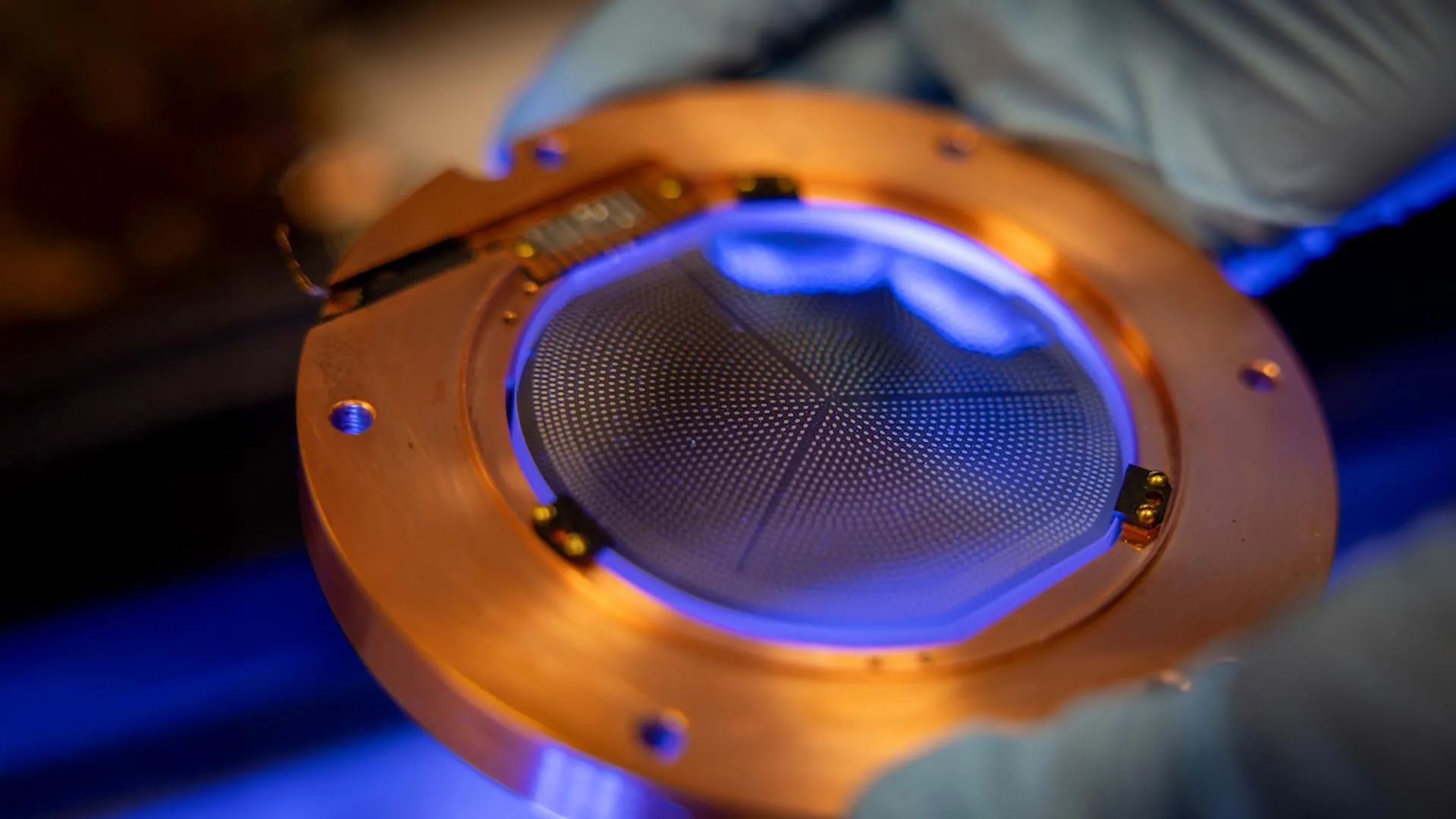
Humanity stands on the precipice of a monumental discovery, diligently unraveling the profound cosmic mystery of dark matter and dark energy, which collectively constitute an astonishing 95% of the observable universe, dictating its structure and destiny. For centuries, our understanding of the cosmos has been shaped by the visible universe – the stars, galaxies, and nebulae that emit or reflect light. Yet, this familiar realm, composed of ordinary baryonic matter, represents merely a fragile 5% of all that exists. The overwhelming majority remains an enigma, a pervasive, invisible influence that sculpts galactic formations and propels the universe’s accelerating expansion. Pioneers in experimental physics are now pushing the boundaries of detection technology, utilizing sophisticated instruments equipped with advanced cryogenic quantum sensors to peer into this hidden cosmic landscape. Their efforts represent a profound scientific quest to complete our cosmic inventory and redefine the fundamental laws of physics.
The current epoch of cosmological understanding is often likened to attempting to comprehend an entire elephant by merely grasping its tail. While we perceive immense gravitational forces and the dynamic expansion of space, our direct sensory input captures only a minuscule fraction of the underlying reality. This conceptual challenge underscores the monumental task faced by scientists like Dr. Rupak Mahapatra, an experimental particle physicist at Texas A&M University, whose work in designing and deploying next-generation detectors is pivotal to this global endeavor. His recent contributions, alongside collaborators, have been recognized in prestigious scientific publications such as Applied Physics Letters, highlighting the innovative strides being made in this field.
The Invisible Fabric of Reality: Dark Matter and Dark Energy Defined
The terms "dark matter" and "dark energy" are apt descriptors, primarily signifying humanity’s current lack of direct observational evidence regarding their composition and nature. These appellations are placeholders for phenomena whose existence has been robustly inferred through their gravitational and cosmological effects, rather than through direct interaction with light or other electromagnetic radiation.
Dark matter, constituting approximately 27% of the universe’s total mass-energy content, acts as the invisible scaffolding upon which galaxies and colossal galaxy clusters are built. Its presence is primarily detected through its gravitational pull, which far exceeds what can be accounted for by visible matter alone. Observations of galactic rotation curves, where stars on the outskirts of galaxies orbit far too quickly to remain bound by the visible mass, provided some of the earliest compelling evidence for dark matter. Subsequent analyses of gravitational lensing – the bending of light from distant objects as it passes through massive structures – and the large-scale distribution of matter in the universe have further solidified its inferred existence. It behaves like a cosmic glue, holding structures together across vast interstellar and intergalactic distances, without emitting, absorbing, or reflecting any form of electromagnetic radiation.
Dark energy, on the other hand, is an even more mysterious entity, representing the dominant component of our universe, accounting for approximately 68% of its total energy density. Its defining characteristic is its role in driving the accelerating expansion of space itself. Discovered through observations of distant Type Ia supernovae in the late 1990s, which appeared dimmer than expected, indicating they were receding faster than predicted, dark energy suggests a pervasive, repulsive force inherent to the vacuum of space. While dark matter clusters gravitationally, dark energy appears to be smoothly distributed, pushing the fabric of the universe apart at an ever-increasing rate, fundamentally shaping its ultimate destiny. Understanding its nature is paramount to predicting the long-term evolution and fate of the cosmos.
The Search for Elusive Interactions: Detecting Whispers in the Cosmic Storm
The profound challenge in identifying dark matter lies in its exceptionally weak interaction with ordinary baryonic matter. Unlike protons or electrons, dark matter particles are theorized to interact primarily through gravity and potentially the weak nuclear force, making direct detection an incredibly arduous task. It is akin to attempting to hear a whisper during a hurricane – the signal is vanishingly faint, easily drowned out by ambient noise.
At the forefront of this experimental quest, Dr. Mahapatra’s research group at Texas A&M is dedicated to developing detectors of unprecedented sensitivity. These instruments are meticulously engineered to register the exceedingly rare instances where a dark matter particle might collide with an atomic nucleus within the detector material. Such an interaction, if it occurs, would impart a minuscule amount of energy, manifesting as a tiny recoil or vibration. The rarity of these events is staggering; Mahapatra himself emphasizes the difficulty, stating, "The challenge is that dark matter interacts so weakly that we need detectors capable of seeing events that might happen once in a year, or even once in a decade."
To overcome this formidable challenge, these detectors often operate at ultracold, cryogenic temperatures, typically mere millikelvins above absolute zero. This extreme cooling dramatically reduces thermal noise, allowing the instruments to register the minute energy depositions from a potential dark matter interaction without interference from the random thermal vibrations of atoms within the detector material. Furthermore, these experiments are often conducted deep underground in purpose-built laboratories, shielded by kilometers of rock from cosmic rays and other sources of background radiation that could mimic a dark matter signal.
Dr. Mahapatra’s team plays a critical role in global dark matter search collaborations, including the pioneering TESSERACT experiment. TESSERACT, like other direct detection efforts, seeks to identify the subtle energy signatures of dark matter particles colliding with detector nuclei. "It’s about innovation," he notes. "We’re finding ways to amplify signals that were previously buried in noise." This amplification often involves leveraging advanced semiconductor technologies coupled with sophisticated quantum sensors capable of detecting single phonons (quantized vibrations) or ionization events generated by these elusive interactions. Texas A&M stands among a select group of institutions globally contributing to the cutting-edge research and development that underpins experiments like TESSERACT.
Pushing the Limits of Particle Detection: Decades of Innovation
Dr. Mahapatra’s current endeavors are built upon a quarter-century of dedicated experience in refining particle detection methodologies. For the past 25 years, he has been an integral contributor to the SuperCDMS experiment (Cryogenic Dark Matter Search), which has consistently performed some of the world’s most sensitive searches for dark matter. SuperCDMS detectors, often made from highly pure germanium or silicon crystals, operate by simultaneously measuring the ionization and phonon signals produced when a particle interacts within the crystal lattice. The ratio of these two signals can help discriminate between potential dark matter interactions and background events.
A landmark achievement occurred in 2014, when Dr. Mahapatra and his collaborators published a pivotal paper in Physical Review Letters. This research introduced a revolutionary technique: voltage-assisted calorimetric ionization detection within the SuperCDMS framework. This breakthrough significantly enhanced the detectors’ sensitivity to low-mass Weakly Interacting Massive Particles (WIMPs), which are among the leading candidates for dark matter. By applying a voltage bias across the detector, the small ionization signal produced by a low-energy interaction is amplified, converting it into a larger phonon signal that is easier to detect. This ingenious method dramatically lowered the energy threshold for detection, opening a new window into the search for lighter dark matter particles that had previously been beyond experimental reach. This advancement represented a critical step forward, expanding the parameter space where dark matter might be found.
The complexity of the dark matter problem necessitates a multi-faceted approach. Recognizing this, Dr. Mahapatra co-authored another significant study in 2022, which meticulously examined multiple strategies for identifying WIMPs. This comprehensive work explored not only direct detection methods, like those employed by SuperCDMS and TESSERACT, but also indirect detection and collider searches. Indirect detection involves searching for the products of dark matter annihilation or decay (such as gamma rays, neutrinos, or antimatter) that might occur in regions where dark matter is highly concentrated, like galactic centers or dwarf galaxies. Collider searches, conversely, aim to produce dark matter particles artificially in high-energy accelerators, such as the Large Hadron Collider, by looking for missing energy signatures in collision events. This multi-pronged attack underscores the scientific community’s understanding that no single experimental avenue is likely to yield all the answers. "No single experiment will give us all the answers," Mahapatra emphasizes. "We need synergy between different methods to piece together the full picture." This collaborative and comprehensive strategy maximizes the probability of a discovery, ensuring that all plausible pathways are rigorously explored.
WIMPs: A Leading Candidate in the Dark Matter Hypothesis
Among the numerous theoretical candidates for dark matter, Weakly Interacting Massive Particles (WIMPs) have long stood as one of the most compelling possibilities. These hypothetical particles are theorized to possess a mass significantly greater than that of a proton, while interacting primarily through gravity and the weak nuclear force – one of the four fundamental forces of nature. Their weak interaction explains why they have remained elusive despite their cosmic abundance.
The theoretical framework for WIMPs often arises from extensions to the Standard Model of Particle Physics, such as supersymmetry, which posits a heavier "superpartner" for every known fundamental particle. If WIMPs exist with properties predicted by these theories, their interactions with ordinary matter would be precisely what current direct detection experiments are designed to observe: rare, low-energy collisions. The voltage-assisted calorimetric ionization detection technique developed by Mahapatra and his team is specifically tailored to enhance the sensitivity to the recoil energies expected from these WIMP interactions, particularly those with lower masses.
Profound Implications and the Future Horizon
The successful detection and characterization of dark matter, or a deeper understanding of dark energy, would precipitate a paradigm shift in our comprehension of the universe. Such a discovery would not merely add a new particle to the Standard Model of particle physics but would fundamentally expand it, potentially necessitating a complete overhaul of our current understanding of matter, energy, and the forces that govern them. It could unveil entirely new fundamental principles that operate on scales far beyond our current experimental reach.
Beyond the immediate scientific gratification, the pursuit of these cosmic mysteries often yields unforeseen technological advancements. As Mahapatra speculates, "If we can detect dark matter, we’ll open a new chapter in physics. The search needs extremely sensitive sensing technologies and it could lead to technologies we can’t even imagine today." The development of ultra-sensitive cryogenic detectors, advanced quantum sensors, and sophisticated data analysis techniques required for dark matter searches already have potential spin-off applications in diverse fields. These could include highly sensitive medical imaging, advanced security screening, quantum computing, and even new methods for fundamental materials science research. The relentless drive for precision and sensitivity pushes the boundaries of engineering and technology in ways that often transcend the initial scientific objective.
Understanding dark energy holds equally profound implications, especially concerning the ultimate fate of the universe. Different theoretical models for dark energy — ranging from a constant energy density of empty space (the cosmological constant) to a dynamic, evolving field (quintessence) — predict vastly different cosmic futures, from a "Big Rip" that tears apart all structures, to a continued, cold expansion. Pinpointing the true nature of dark energy would allow cosmologists to definitively chart the universe’s long-term trajectory.
The quest to unveil the universe’s hidden architecture is one of humanity’s most ambitious scientific endeavors. It unites physicists, astronomers, and engineers across continents in a shared pursuit of knowledge that promises to rewrite textbooks and ignite new avenues of inquiry. While the challenges are immense and the signals exquisitely faint, the ingenuity, dedication, and collaborative spirit of researchers like Dr. Rupak Mahapatra bring us ever closer to illuminating the dark sectors of the cosmos and, in doing so, profound insights into our own existence. The next decade promises to be a period of intense discovery, as next-generation experiments and theoretical advancements converge, potentially bringing the universe’s biggest mysteries into the light.




 Aura Kasih
 Safa Marwah