Aura Kasih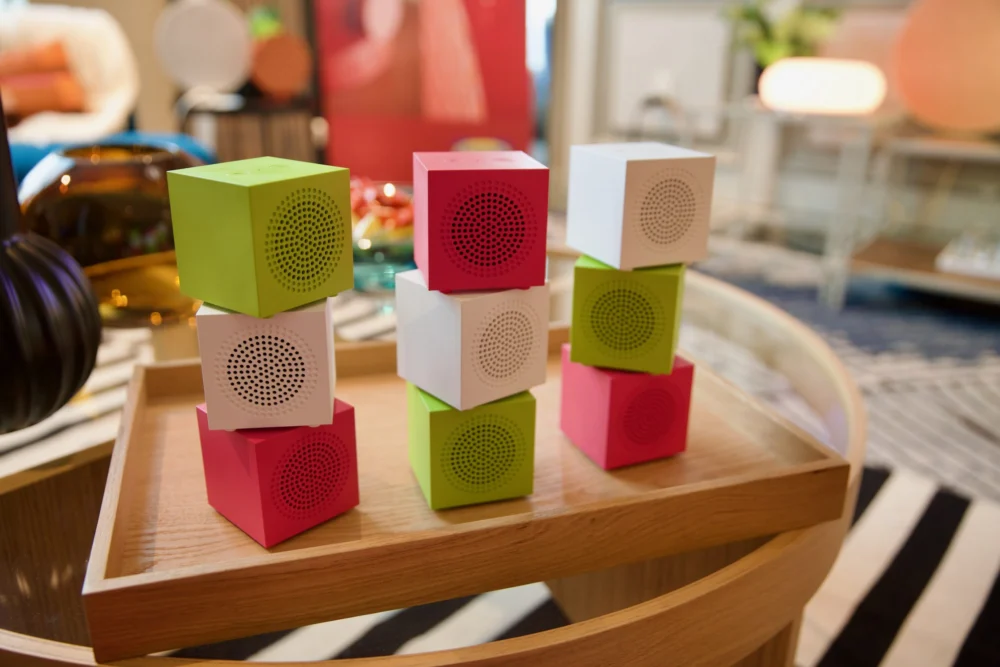
In a move poised to disrupt the consumer electronics landscape, IKEA has unveiled the KALLSUP, an exceptionally affordable and surprisingly potent Bluetooth speaker that promises to democratize immersive audio experiences. This compact, vibrantly colored device, priced at a mere $10 USD (approximately €9 in European markets), introduces a novel approach to multi-speaker synchronization, allowing users to effortlessly expand their soundstage with an impressive degree of scalability.
The KALLSUP’s design philosophy centers on simplicity and accessibility, a hallmark of IKEA’s renowned product ethos. Spearheaded by the celebrated Swedish designer Ola Wihlborg, a frequent and successful collaborator with the furniture giant, the speaker presents a minimalist, cubist aesthetic. Measuring a mere 2.75 x 2.75 x 3 inches, its diminutive footprint belies its acoustic capabilities. The exterior is characterized by a textured speaker grille on one side, a smooth, unadorned surface, and a discreet set of controls on the top panel: a pairing button and a play/pause function. Its availability in a trio of appealing hues – classic white, a bold dark pink, and a zesty lime green – allows for a degree of personalization that complements modern interior design. Furthermore, the inclusion of a USB-C charging port and the stated replaceability of its battery underscore IKEA’s commitment to both contemporary technology standards and long-term product utility.
The true innovation of the KALLSUP lies in its sophisticated yet user-friendly audio expansion system. The device leverages Bluetooth 5.3 technology, ensuring a stable and efficient wireless connection. Initial pairing to a primary device, such as a smartphone or tablet, is a straightforward process. Subsequently, users can initiate a secondary pairing sequence by engaging a simple two-button combination on an additional KALLSUP unit. This action seamlessly integrates the new speaker into the existing audio network. The theoretical capacity for synchronizing up to 100 KALLSUP speakers is a remarkable feat, suggesting a future where elaborate, room-filling sound systems can be assembled with unprecedented ease and affordability. While the IKEA team demonstrated pairing around 40 units at their CES debut, the potential for creating vast, distributed audio installations is a compelling proposition for both domestic and commercial environments.

The implications of this multi-speaker linking capability are far-reaching. For consumers, it transforms the concept of a portable speaker from a solitary sound source into a modular component of a larger, adaptable audio ecosystem. Imagine a household where multiple KALLSUP units are strategically placed in different rooms, allowing music to follow occupants seamlessly as they move through their living space. Alternatively, a single unit could be sufficient for personal listening, while a cluster of them could provide ambient background music for a gathering, or even serve as a surprisingly robust sound system for a small party. The ease of setup and the low barrier to entry in terms of cost suggest that IKEA is targeting a broad demographic, from students and young professionals to families seeking an accessible way to enhance their home entertainment.
Beyond the consumer market, the KALLSUP’s potential extends to various commercial applications. Small businesses, such as cafes, boutiques, or galleries, could utilize multiple units to create a consistent and pleasant auditory atmosphere without the need for expensive professional audio installations. The portability of the speakers also makes them ideal for temporary event setups or for businesses that frequently reconfigure their retail spaces. The ability to deploy numerous units quickly and efficiently, all while maintaining a unified sound profile, offers significant operational advantages.
The acoustic performance of the KALLSUP, particularly given its diminutive size and price point, has been noted as a significant surprise. During initial demonstrations, the device delivered a powerful and clear sound output, capable of filling a space with impressive volume. The seamless integration of multiple units amplified this effect considerably, creating an immersive sonic environment that defied expectations for such an economically priced product. This suggests that IKEA has prioritized sonic fidelity and output power in the KALLSUP’s engineering, aiming to deliver a genuinely satisfying listening experience rather than merely a functional audio output.
The technical specifications, including Bluetooth 5.3, indicate a commitment to current wireless audio standards, promising better range, lower latency, and improved power efficiency compared to older Bluetooth versions. The adoption of USB-C for charging aligns with the universal trend in consumer electronics, simplifying charging needs for users who likely already possess multiple USB-C cables for their other devices. The inclusion of a replaceable battery is a particularly noteworthy aspect, demonstrating a design consideration for sustainability and extended product lifespan, a growing concern among environmentally conscious consumers. This feature stands in contrast to many modern electronic devices where batteries are often integrated and non-user-replaceable, leading to premature obsolescence.

The KALLSUP’s debut at CES, IKEA’s first-ever presence at the consumer electronics trade show, signals a strategic expansion for the Swedish retailer. Traditionally known for its flat-pack furniture and home goods, IKEA is increasingly venturing into the smart home and consumer electronics arena. Products like the SYMFONISK smart speakers, developed in partnership with Sonos, have already established a precedent. The KALLSUP represents a further evolution of this strategy, focusing on a segment of the market where affordability and accessibility are paramount. This diversification allows IKEA to offer a more holistic approach to home living, encompassing not only furnishings and décor but also the technological elements that enhance daily life.
The pricing strategy for the KALLSUP is particularly aggressive. At $10, it positions itself as an impulse purchase item, easily accessible to a wide range of consumers. This low price point could potentially disrupt the market for entry-level Bluetooth speakers, forcing competitors to re-evaluate their own pricing structures. The scalability of the system further enhances its value proposition. A user could begin with a single KALLSUP and gradually add more units over time as their needs or budget allow, creating a personalized audio system that grows with them.
Looking ahead, the success of the KALLSUP will likely depend on several factors. Its durability and long-term performance will be crucial for building consumer trust. The ease with which users can troubleshoot and manage multiple connected devices will also be a key determinant of its adoption rate. Furthermore, IKEA’s ability to effectively market the KALLSUP’s unique multi-speaker linking feature and its surprising acoustic capabilities will be essential in capturing consumer attention. The company’s established global retail presence and brand recognition provide a strong foundation, but differentiation in a crowded market will require clear and compelling communication of its benefits.
The KALLSUP speaker is scheduled to become available in IKEA stores in April 2026. This release date suggests that the product has undergone rigorous development and testing. The anticipation surrounding its launch is palpable, fueled by the promise of an innovative, affordable, and highly versatile audio solution that could redefine how consumers interact with sound in their homes and beyond. IKEA’s foray into this segment of the electronics market, with a product as thoughtfully designed and aggressively priced as the KALLSUP, indicates a serious commitment to becoming a significant player in the connected home ecosystem. The long-term impact of the KALLSUP could be substantial, potentially democratizing multi-room audio and setting new benchmarks for value and performance in the consumer electronics industry.


 Lisa Mariana
 Safa Marwah
 Ayu Aulia