Aura Kasih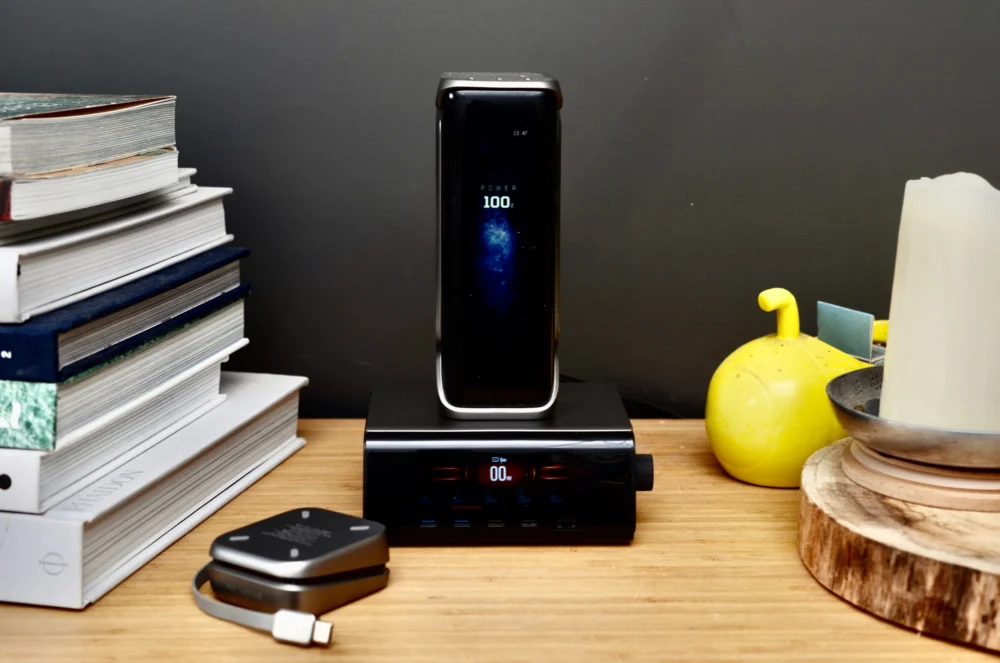
The portable power bank landscape, once a bastion of straightforward utility, has dramatically transformed into a complex ecosystem of over-engineered gadgets, straying far from its fundamental purpose of providing on-the-go charging solutions. This evolution, while seemingly driven by innovation, often results in a deluge of superfluous features that inflate costs, compromise usability, and ultimately dilute the core value proposition for the average consumer.

In an era where portable power has become an indispensable companion to our digital lives, the humble power bank has undergone a radical metamorphosis. Not long ago, selecting a power bank was a simple affair: find a device that could reliably charge your smartphone, fit comfortably in a pocket or bag, and perhaps ponder the transition from the ubiquitous USB-A to the more modern USB-C ports. The primary considerations revolved around capacity, portability, and charging speed. However, the contemporary market presents a starkly different picture, one where manufacturers are increasingly infusing these essential accessories with an array of features that often border on the absurd, seeking to differentiate themselves in a commoditized market and justify escalating price tags. This phenomenon is particularly evident in larger capacity power banks, especially those that approach the 99Wh (approximately 27,650mAh) airline-friendly limit, designed to charge not just phones but also laptops.
The recent Consumer Electronics Show (CES) of 2026 has illuminated this trend with striking clarity. While the integration of cables into power bank designs represents a genuine step forward in convenience, the proliferation of large, power-hungry displays on these portable chargers is a questionable development. This is merely the tip of the iceberg, as a survey of recent product releases reveals a growing pattern of feature creep that often undermines the very essence of a power bank’s utility.

One such product, the EcoFlow Rapid Pro X Power Bank, exemplifies this excess. Priced at a substantial $270, this device attempts to be an all-in-one portable power solution, yet its execution falls short. Its design features decorative, snap-on faceplates that are more of a novelty than a practical addition. More significantly, the proprietary magnetic modules for its integrated Apple Watch charger and retractable USB-C cable are easily misplaced, leading to frustration and potential loss. The substantial display, a prominent feature, proves to be a significant drain on the battery, is difficult to navigate, and even requires a screensaver – a clear indication that the product development team may have lost sight of fundamental functionality. The touch-sensitive controls are clumsy, and the display itself scratches easily and is too dim for effective outdoor use. The lengthy wake-up time from sleep and the gratuitous visual effects, such as swirly graphics and blinking eyeballs, serve only to consume precious energy reserves, a design choice that directly contradicts the purpose of a portable power source.
This trend of incorporating oversized displays is not isolated to EcoFlow. Anker, another major player in the power accessory market, has also been criticized for this practice. While a simple four-dot LED indicator suffices for most users to gauge remaining battery capacity, many consumers are now finding it increasingly difficult to purchase a power bank without a vibrant LCD screen. Anker, for instance, no longer offers display-less models in its popular 20,000mAh range. While power enthusiasts may appreciate the detailed wattage readouts that these displays can provide, the vast majority of users have no practical need for such granular information, especially when it comes at the expense of battery life and complexity.

Furthermore, the adoption of proprietary pogo-pin connectors by brands like Anker and EcoFlow, used to facilitate faster charging via dedicated, expensive desk chargers, represents another layer of unnecessary complexity and vendor lock-in. While the promise of ultra-fast charging speeds is appealing, the premium cost associated with these proprietary systems is rarely justifiable for the average consumer. Most non-gaming laptops require 65W of power delivery or less, and the primary charging needs of a smartphone typically cap out around 20W. The pursuit of extreme charging speeds in portable power banks often overshoots the practical requirements of the devices they are intended to power.
The inclusion of features like built-in mobile hotspots, as seen in some Baseus models, is particularly redundant. Modern smartphones, both Android and iOS, already possess this functionality, rendering an integrated hotspot on a power bank an unnecessary duplication of features. Similarly, Bluetooth and Wi-Fi connectivity, while potentially useful for monitoring large-scale, off-grid power stations, offer little tangible benefit for portable power banks intended for everyday use, such as charging a phone in hand or a device plugged into a nearby wall outlet. These connectivity features add complexity, potential security vulnerabilities, and further drain the battery, all without providing a compelling user advantage.

The addition of integrated flashlights, while seemingly a minor convenience, further contributes to the clutter of unnecessary features. Many modern smartphones already incorporate powerful LED flashlights, making a flashlight on a power bank largely redundant. Each extraneous feature, no matter how small, contributes to increased size, weight, and cost. Moreover, the increased complexity inherent in these added functionalities raises the potential for malfunctions, compromising the reliability of a device that is fundamentally expected to be dependable in critical moments. It is worth noting that the power bank industry has faced significant recall issues in recent years due to overheating and fire risks, underscoring the importance of prioritizing safety and reliability over feature bloat.
Amidst this trend of feature overload, there are a few innovations that genuinely enhance the user experience and justify their inclusion. Integrated cables, particularly retractable or neatly stored designs, offer a significant convenience. When these cables are properly specced to match the device’s maximum input and output capabilities, they eliminate the need to carry separate charging cords. For example, a power bank with a well-designed retractable USB-C cable that wraps around the chassis and plugs into a hidden port provides a tidy and practical solution. The ability to replace a frayed or broken cable also adds to the longevity and practicality of such designs.

Another welcomed development is the integration of kickstands on MagSafe-compatible power banks. These allow users to prop up their phones at an optimal angle for extended viewing or content creation, transforming the power bank from a mere charging accessory into a multi-functional mobile accessory. Crucially, some manufacturers are now adopting semi-solid state battery chemistry. This advancement offers enhanced safety by reducing susceptibility to thermal runaway, a persistent issue that plagued the industry in previous years. While these power banks may come with a higher upfront cost, their improved safety profile and potentially extended lifespan represent a sound long-term investment.
However, even within these positive trends, there are instances where design aesthetics can overshadow practical considerations. The Sharge Retractable 3-in-1 Power Bank, for instance, boasts an attractive design that integrates a wall outlet and charger, yet its specifications may not always align with the premium price point and the overall argument against feature creep. This highlights the subjective nature of design and the potential for aesthetic appeal to sometimes distract from core functionality.

Fortunately, amidst the proliferation of overly complex devices, simpler, more affordable options remain available. For users whose primary need is smartphone charging, basic power banks like Anker’s PowerCore 10k offer a reliable and cost-effective solution. For those seeking a more streamlined yet capable device for charging laptops, options like INIU’s Cougar P64-E1 Power Bank or Belkin’s UltraCharge Pro Laptop Power Bank provide sufficient power delivery without an overwhelming array of extraneous features.
Ultimately, the pursuit of headline-grabbing specifications and a plethora of "gee-whiz" features in power banks often overlooks the fundamental needs of the consumer. While the most powerful and feature-rich devices may garner attention, the "best" power bank is not necessarily the one with the most capabilities, but rather the one that most effectively and affordably meets the user’s essential charging requirements. The industry would be better served by a renewed focus on core functionality, reliability, and user-centric design, rather than an endless race towards feature saturation.



 Lisa Mariana
 Safa Marwah
 Ayu Aulia