Ridwan Kamil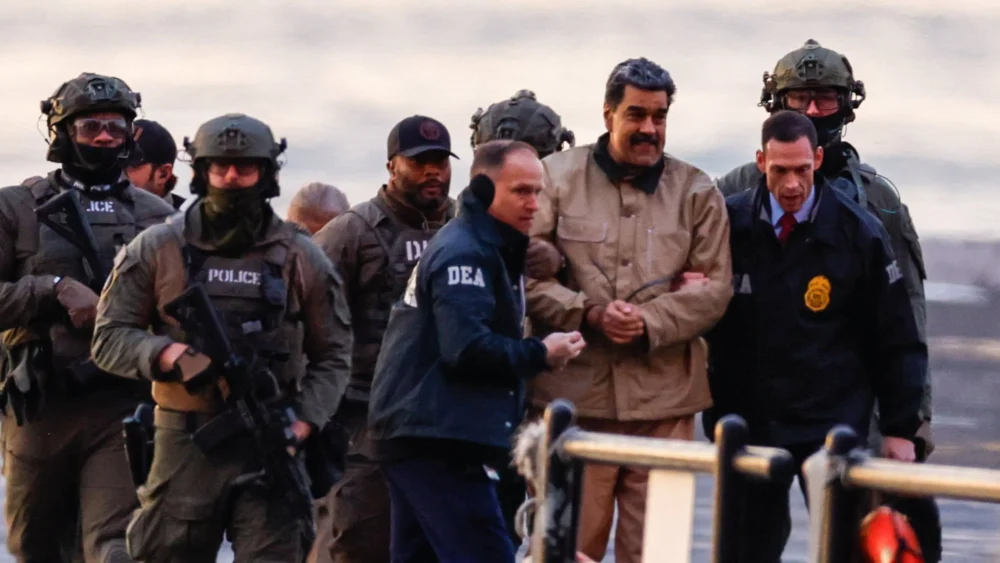
Venezuelan President Nicolás Maduro and his wife, Cilia Flores, may soon find themselves in the unfamiliar setting of a New York courtroom, as legal proceedings potentially involving their presence in the United States gain traction.
The prospect of Venezuelan President Nicolás Maduro and his wife, Cilia Flores, appearing in a New York court marks a significant development in the ongoing international legal and political landscape surrounding the South American nation. While the specifics of any potential legal action remain subject to confirmation and the intricacies of judicial processes, the mere possibility signals a heightened level of scrutiny and potential accountability for the Venezuelan leadership on the international stage. This situation underscores the complex web of geopolitical tensions, alleged financial impropriety, and human rights concerns that have characterized Venezuela’s recent history, and which are increasingly intersecting with the global legal system. The implications of such a legal confrontation could extend far beyond the courtroom, potentially impacting diplomatic relations, financial sanctions, and the ongoing efforts to address Venezuela’s protracted political and economic crisis.
Unveiling the Legal Underpinnings: A Multifaceted Challenge
The potential for President Maduro and Ms. Flores to face legal proceedings in New York is not an isolated event but rather a manifestation of a broader pattern of international legal actions and investigations targeting individuals associated with the Venezuelan government. These actions are often rooted in allegations of corruption, illicit financial activities, and human rights abuses. While the exact nature of the legal claims that could necessitate their appearance in a New York court is not definitively public, it is highly probable that they relate to accusations that fall within the jurisdiction of U.S. federal courts, such as violations of the Racketeer Influenced and Corrupt Organizations Act (RICO), money laundering, sanctions violations, or other financial crimes.
For decades, the United States has been a prominent venue for prosecuting individuals and entities involved in transnational criminal activities, particularly those with links to narcotics trafficking and financial corruption. Venezuela, under the leadership of the late Hugo Chávez and subsequently Nicolás Maduro, has been a focal point of such concerns, with numerous reports and investigations alleging widespread corruption within state-owned enterprises, the judiciary, and the highest levels of government. The extensive oil wealth of Venezuela, coupled with a complex economic system and a history of political instability, has created fertile ground for illicit financial flows and allegations of personal enrichment by political figures.
The legal framework that could bring Maduro and Flores before a New York court likely involves the complex interplay of U.S. extraterritorial jurisdiction laws, international cooperation agreements, and investigative efforts by various U.S. law enforcement agencies, including the Department of Justice, the FBI, and potentially agencies focused on financial crimes and sanctions enforcement. These agencies have a mandate to pursue individuals and organizations that engage in criminal activities that have a nexus to the United States, regardless of their nationality or location, particularly when those activities involve the U.S. financial system or American citizens.
Furthermore, the timing of any potential legal action could be influenced by ongoing diplomatic efforts, the evolving geopolitical landscape, and the availability of compelling evidence. International investigations often require years of meticulous data collection, witness interviews, and the tracing of complex financial transactions. The decision to initiate formal legal proceedings is a significant undertaking, typically requiring substantial evidence to support the charges.
The Broader Context: Venezuela’s Crisis and International Law
The potential legal entanglements of President Maduro and his wife are inextricably linked to the multifaceted crisis that has gripped Venezuela for years. This crisis is characterized by hyperinflation, widespread shortages of food and medicine, mass emigration, and a severe erosion of democratic institutions. International bodies, including the United Nations and the International Criminal Court (ICC), have also been involved in investigating alleged human rights abuses committed within Venezuela, adding another layer of international legal scrutiny to the regime.
The United States has been a leading proponent of sanctions against the Venezuelan government and individuals associated with it, aiming to pressure the Maduro administration to relinquish power and restore democratic governance. These sanctions have targeted key sectors of the Venezuelan economy, including its oil industry, and have imposed travel bans and asset freezes on numerous officials. The potential for Maduro and Flores to appear in a New York court could be a consequence of investigations that have uncovered evidence of financial activities that circumvented or violated these sanctions, or that involved the illicit movement of funds through the U.S. financial system.
The concept of universal jurisdiction, which allows national courts to prosecute individuals for certain international crimes regardless of where the crime occurred or the nationality of the perpetrator or victim, could also play a role in the broader legal landscape. While the primary focus in this instance appears to be U.S. domestic law, the global nature of alleged illicit activities means that legal avenues in multiple jurisdictions could be explored.
Expert Analysis: Navigating the Legal Labyrinth
Legal analysts suggest that any potential court appearance would hinge on a number of critical factors. Firstly, the ability of U.S. authorities to establish jurisdiction over President Maduro and Ms. Flores is paramount. This typically requires demonstrating a sufficient connection between the alleged criminal activities and the United States. This could involve the use of U.S. financial institutions, the involvement of U.S. citizens, or the planning or execution of illicit acts within U.S. territory.
Secondly, the strength of the evidence will be a decisive element. Prosecutors would need to present a compelling case, supported by concrete proof, to secure any form of conviction or legal judgment. This often involves forensic accounting, digital evidence, and testimony from witnesses, which can be challenging to obtain in cases involving high-level government officials from a country with which diplomatic relations are strained.
Thirdly, the legal implications of bringing a sitting head of state before a foreign court are complex. International law often grants certain immunities to heads of state while they are in office. However, these immunities are not absolute and can be waived or circumvented in cases involving serious international crimes or if the individual is no longer in power. The specific nature of the charges would determine how these immunity issues are addressed.
The appearance of Cilia Flores alongside her husband is also noteworthy. As First Lady, she has often been implicated in or associated with various business dealings and financial activities within Venezuela. Any legal action against her would likely stem from her alleged direct or indirect involvement in the same alleged illicit activities attributed to the president or other members of the administration.
Implications and Future Outlook: A Shifting Legal Terrain
The prospect of President Maduro and Ms. Flores facing legal proceedings in New York carries significant implications. For the Venezuelan people, it could represent a step towards accountability for alleged corruption and human rights abuses that have contributed to their suffering. It could also embolden further legal actions against other individuals associated with the current regime.
For the United States, such a development would underscore its commitment to upholding international legal norms and combating transnational crime. It would also reinforce its policy of applying pressure on the Maduro government. However, it could also introduce diplomatic complexities, particularly if Venezuela were to retaliate through its own legal or diplomatic channels.
The international community would be closely watching these developments. The outcome of any legal proceedings could set precedents for how similar cases involving heads of state and their associates are handled in the future. It could also influence the broader debate on the role of international law in addressing authoritarian regimes and state-sponsored corruption.
Looking ahead, the situation remains fluid. The legal processes involved are often protracted and can be subject to political considerations. However, the mere possibility of such a court appearance highlights the increasing interconnectedness of national legal systems and the growing willingness of international bodies and powerful nations to pursue accountability for alleged transgressions, regardless of the perpetrator’s position or location. The legal pursuit of Venezuelan leadership in New York, if it materializes, would be a potent symbol of this evolving legal terrain, where allegations of corruption and human rights abuses are increasingly meeting the long arm of international justice.

 Aura Kasih
 Safa Marwah
 Ayu Aulia