 Lisa Mariana
As the Formula 1 season approaches its climax, with the primary championships already determined, the Sao Paulo Grand Prix at Interlagos transcends its immediate sporting context, serving as a critical battleground for future dominance where team strategies for the 2027 regulatory cycle begin to crystallize, amidst simmering internal tensions at Ferrari, a remarkably resurgent Red Bull, McLaren’s calculated development trajectory, and the unsettling geopolitical uncertainties impacting the season’s final fixtures. While the drivers’ title has been secured by Kimi Antonelli, and the constructors’ crown potentially decided this weekend, the relentless pursuit of competitive advantage continues unabated, shaping the landscape for forthcoming seasons.
Mercedes, having demonstrated a formidable resurgence throughout the year, stands on the cusp of formally reclaiming the Constructors’ Championship, a testament to their engineering prowess and strategic adaptation. Their target in Sao Paulo is to secure the requisite three points more than Ferrari, thereby stamping their authority on a season that has underscored their return to the consistent form characteristic of their previous dominant era. The reigning world champion, Antonelli, views these concluding races as vital preparation for the defense of his title in 2027, highlighting a forward-looking perspective within the team. Concurrently, his Mercedes teammate, George Russell, is engaged in a rigorous analytical process, seeking to comprehensively understand the factors that contributed to the challenges faced this season, with the explicit aim of rectifying them for future campaigns. This dual focus – on immediate competitive success and long-term strategic development – exemplifies the intricate planning inherent in top-tier Formula 1 operations.
The competitive equilibrium has undergone a significant transformation over the course of the season. The initial phase saw Mercedes establish a commanding lead, securing seven victories from the first eight races. However, the latter two-thirds of the championship witnessed a dramatic compression of performance, with Ferrari, McLaren, and Red Bull all experiencing periods of heightened competitiveness. This shift has resulted in a more evenly distributed share of victories across the grid, with Mercedes claiming six of the last twelve races, Red Bull three, McLaren two, and Ferrari one. This dynamic evolution of performance paints a complex picture, with early indications from Sao Paulo practice sessions suggesting the reigning champion, Antonelli, and Lando Norris in an updated McLaren demonstrated promising pace. Beyond the immediate on-track performance, several compelling narratives continue to unfold, maintaining intense interest as the season progresses.
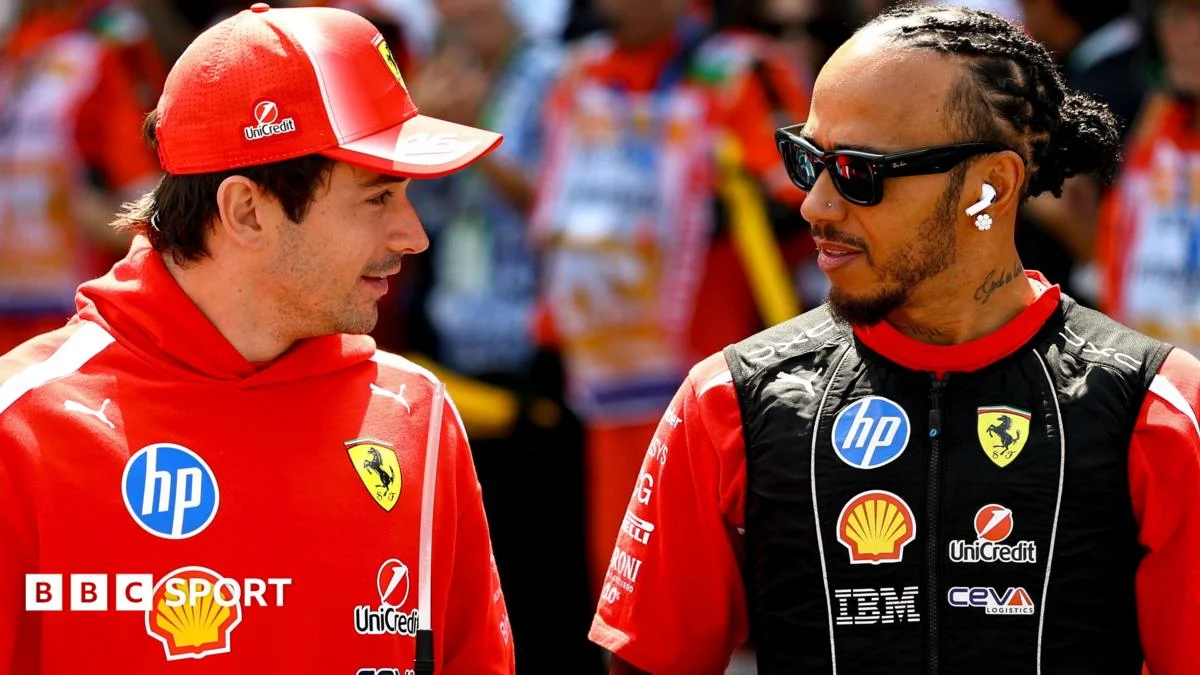
Central among these is the palpable friction within the Ferrari camp, stemming from an on-track incident between Lewis Hamilton and Charles Leclerc during the Mexico Grand Prix. Their first-lap entanglement demonstrably compromised the team’s prospects, costing them a potential one-two finish. Following that race, Hamilton publicly articulated his concerns, identifying "big problems" and advocating for "serious talks" within the team. These discussions subsequently occurred on Thursday evening, following Leclerc and team principal Frederic Vasseur’s return to Brazil from Europe. Vasseur later characterized the meeting as productive, serving to "clarify our positions" and allowing the team to "turn the page." He reiterated fundamental guidelines: mutual respect among drivers, a competitive spirit balanced with deference to the team’s integrity, and an overarching commitment to Ferrari’s collective objectives. Vasseur’s assertion that "the team has to come first" underscored the gravity of the situation and the imperative for a unified approach.
The magnitude of this internal dynamic at Ferrari is undeniable, presenting a significant management challenge with potential ramifications for future performance. Hamilton, a seven-time world champion, has been particularly vocal on the matter, drawing a pointed contrast between Leclerc’s assertive racing against him and his more yielding approach when competing with other drivers, such as Max Verstappen in Singapore. Hamilton emphasized the lost opportunity for a one-two finish in Mexico, stressing the need to prevent recurrence. He further suggested that this pattern of driver interaction was not isolated, noting similar dynamics between Leclerc and his former teammates, Sebastian Vettel and Carlos Sainz. Hamilton defended his outspokenness, stating his commitment to authenticity and his refusal to be silenced, highlighting his philosophy of wearing "my heart on my sleeve." From Vasseur’s strategic vantage point, resolving this internal discord is paramount. Should Ferrari successfully capitalize on their current chassis advantage and elevate their power unit to the competitive standard of Mercedes and Red Bull, internal cohesion will be a non-negotiable prerequisite for a credible title challenge in 2027. Hamilton himself acknowledged his role as a catalyst, stating that his assertive nature and relentless pursuit of change are inherent to his presence within any team, driven by his singular objective: to win. He expressed genuine belief in Ferrari’s potential to contend for the championship next year, detailing his active involvement with technical leadership to optimize the car’s strengths and address its weaknesses, alongside efforts to enhance the power unit.
In stark contrast to Ferrari’s internal complexities, the narrative at Red Bull Racing is one of remarkable simplicity and surging momentum in the latter stages of the season. Max Verstappen, benefiting from the Ferrari incident in Mexico, secured his third victory in four races, propelling him unexpectedly into second place in the drivers’ championship standings. This achievement appeared improbable earlier in the year when the team faced significant performance deficits, often trailing by close to a second per lap. Verstappen articulated his surprise at his championship standing, attributing it to the team’s perseverance and a substantial learning curve with their power units throughout the season. His philosophy of relentlessly maximizing performance, even when the car is uncompetitive, coupled with the team’s unwavering commitment to improvement, has facilitated this dramatic turnaround. This late-season surge not only demonstrates Red Bull’s engineering resilience but also provides crucial psychological momentum and data for their 2027 campaign.
The battle for second place in the drivers’ championship remains intensely contested, with Verstappen holding a slender two-point lead over Hamilton, who is nine points ahead of Russell, himself with a five-point advantage over Leclerc. While the primary championship is settled, this secondary battle carries significant implications. Beyond the prestige, avoiding a top-three finish exempts a driver from the mandatory FIA prize-giving ceremony in Shanghai, a week after the season concludes. More significantly, it serves as a powerful motivator for the subsequent season and contributes to the teams’ financial standing. The constructors’ championship, which directly influences prize money distribution, sees Red Bull and McLaren locked in a tight contest for third place, with merely 17 points separating them and approximately $10 million in prize money at stake.
McLaren’s trajectory this season, while distinct, mirrors Red Bull’s in its pattern of substantial improvement. They have progressively narrowed a significant performance gap to Mercedes, a chasm that was pronounced at the season’s outset. During the summer, McLaren briefly emerged as the fastest team, evidenced by Lando Norris’s two victories in Hungary and the Netherlands. Although their performance has since regressed slightly, the team arrives in Sao Paulo with further upgrades, hoping to re-enter the competitive mix. Norris expressed optimism regarding their recent Sunday race pace, believing minor improvements could yield significantly better results. He tempered expectations, not anticipating immediate race victories, but expressed hope that the new upgrades would enhance their qualifying performance and subsequently their race prospects, with a return to the podium being a key objective. McLaren’s strategic foresight saw them prioritize the 2027 championship, consciously compromising their 2026 prospects. They have also identified inherent design issues within their current car, including sub-optimal gear ratios, excessive aerodynamic drag, and a less-than-ideal wheelbase. These fundamental issues are slated for comprehensive rectification in the coming year, alongside addressing the initial lack of power-unit operational knowledge that hampered them during the introduction of new engine regulations.
As the season draws to a close, the number of remaining races—three on paper: Las Vegas, Qatar, and Abu Dhabi—serves as a diminishing window for teams to gather critical data and refine their strategies for the 2027 regulations. However, the viability of the two Gulf races, in Qatar and Abu Dhabi, remains under considerable scrutiny due to the escalating geopolitical tensions in the Middle East. MotoGP, which shares common ownership with Formula 1, is currently holding its event in Qatar, effectively serving as a logistical and security test case for the impending F1 Grand Prix later in the month. Reports from MotoGP personnel, including highly concerning instructions on appropriate conduct in the event of a missile strike, underscore the gravity of the situation.
A definitive decision regarding the status of these races is imminent. Formula 1 management has engaged in extensive consultations with governmental bodies and security experts, endeavoring to secure comprehensive assurances regarding the safety and viability of hosting the events. Yet, much like the technical complexities faced by the racing teams, external geopolitical factors ultimately lie beyond their direct control. While F1 will proceed with meticulous preparation and an optimistic outlook, relying on thorough research and planning, the ultimate outcome rests on the unpredictable currents of regional stability. The confluence of internal team dynamics, fierce competitive battles for secondary honors, and overarching geopolitical considerations ensures that the conclusion of this Formula 1 season will be anything but uneventful, setting a complex stage for the pivotal 2027 championship.


 Aura Kasih

 Ayu Aulia