
 Lisa Mariana
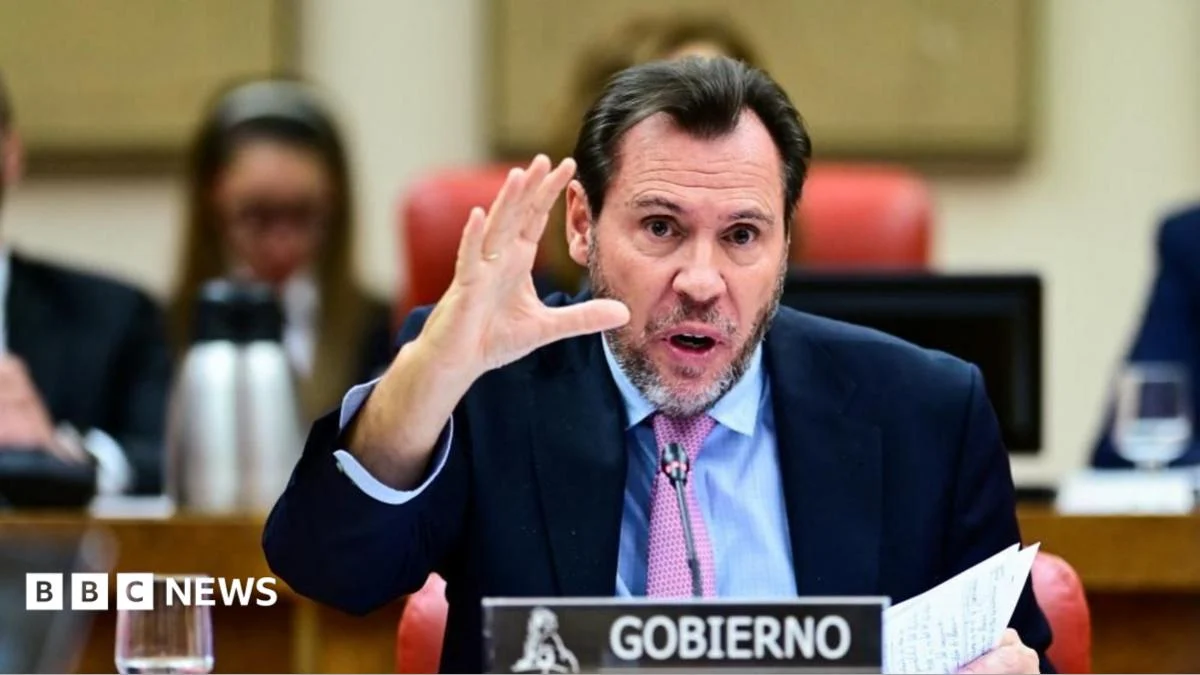
In a dramatic and politically charged development, Spain’s Minister of Transport, Oscar Puente, tendered his resignation just days following a catastrophic high-speed train collision that resulted in multiple fatalities and numerous injuries, a decision made under intense scrutiny and in the immediate run-up to the nation’s snap general elections. The abrupt departure of a senior cabinet member underscores the profound impact of the rail tragedy, not only on public safety perceptions but also on the delicate political landscape as the Socialist-led government navigates a contentious electoral campaign. Puente’s exit, announced after a lengthy parliamentary session dedicated to rail safety, sent ripples through the political establishment, signaling a major setback for the ruling coalition and casting a long shadow over the upcoming polls.
The incident itself, occurring on October 28, quickly escalated from a tragic accident into a full-blown national crisis, exposing vulnerabilities within Spain’s otherwise highly regarded railway infrastructure and igniting a fierce debate over accountability. Spain has long prided itself on its extensive and modern high-speed rail network, the AVE (Alta Velocidad Española), which is one of the largest in the world and a symbol of national technological prowess. For decades, it has maintained an impressive safety record, a fact that made the recent collision all the more shocking and unsettling for the Spanish populace. The collision, which involved a Renfe train and an Iryo train, occurred under circumstances that immediately raised questions about operational protocols, communication systems, and the efficacy of backup safety mechanisms. Initial reports and subsequently leaked audio recordings from the control centre painted a concerning picture of multiple technical malfunctions and potential miscommunications leading up to the impact.
According to these critical recordings, the Renfe train, one of the two involved in the collision, was reportedly experiencing significant technical difficulties. In a sequence of exchanges that have since become central to the investigation, a control centre operator instructed the Renfe driver to proceed under a "Lateral Signalling Block." This system, by its very nature, is designed as a contingency, a fallback mechanism activated when primary automatic signalling or data transmission systems fail. The operator’s instruction to continue "at normal speed with normal operation" under such a backup protocol immediately drew concern, as it implied a deviation from standard operating procedures potentially without a corresponding reduction in speed or heightened caution. The driver’s questioning "At normal speed?" followed by the controller’s affirmative "Yes" highlights a critical juncture in the unfolding events, suggesting a reliance on a downgraded system under conditions that may have warranted greater circumspection.
Concurrently, the Iryo train, which ultimately bore the brunt of the collision, was experiencing its own severe operational issues. The driver of this train reported a complete loss of communication with the train-control system, rendering the vehicle stationary. Positioned "in front of the entry signal at Urda," the Iryo driver conveyed the inability to move the train to the control centre. Despite these clear indications of immobility and system failure, the Iryo driver was also instructed to "resume the journey" normally. A subsequent recording revealed the driver’s persistent inability to restart the train, stating, "The train won’t allow me to control the [security] system. That’s why I am still stopped in front of the entry signal." Crucially, this later communication strongly suggested that the control centre had been unequivocally notified of the Iryo train’s continued stationary status even as the Renfe train, operating under the Lateral Signalling Block, approached. The tragic outcome saw the Iryo carriages "struck from behind" by the Renfe train, a stark illustration of a systemic breakdown involving technical failures, communication lapses, and potentially flawed operational directives.
The immediate aftermath of the crash saw a rapid escalation of political pressure on Minister Puente. The gravity of the incident, coupled with the detailed revelations from the audio recordings, fueled widespread public outrage and demands for immediate accountability. Leading the charge were the main opposition parties, the conservative People’s Party (PP) and the far-right Vox, both of whom swiftly called for Puente’s resignation. Their arguments centered on the principle of ministerial responsibility, asserting that as the head of the transport portfolio, Puente was ultimately accountable for the safety and operational integrity of the national rail system. They painted a picture of a high-speed network whose once-impeccable credibility was now "broken," a sentiment even acknowledged by Socialist Prime Minister Pedro Sánchez, albeit in a more subdued tone. The opposition also vehemently criticized Puente for what they perceived as an attempt to deflect blame onto human error, arguing that this narrative sought to obscure deeper systemic failings within the ministry and the state-owned rail operator. They contended that focusing solely on individual actions ignored the crucial role of infrastructure, maintenance, training, and supervisory oversight.
Adding to the government’s woes, calls for Puente’s departure were not confined to the opposition benches. Even some of the government’s own allies, sensing the profound public discontent and the potential electoral damage, began to voice their concerns and indirectly pressure the minister to step down. This internal dissent highlighted the severity of the crisis and the precarious position of the ruling coalition. Initially, Puente had expressed an intention to remain in his post, a stance that, in hindsight, appeared to have been a miscalculation given the relentless public and political pressure. His eventual resignation, therefore, caught many by surprise, suggesting a sudden shift in strategy or an acknowledgement of the untenable nature of his position.
Puente’s announcement came at the close of a particularly gruelling congressional session, during which he had presented a raft of new rail safety measures, presumably in an attempt to restore confidence and demonstrate proactive leadership. However, the session quickly devolved into a heated grilling by the opposition, further intensifying the calls for his resignation. In a dramatic declaration, Puente not only confirmed his stepping down from the ministerial role but also announced his withdrawal from the lists for the early legislative elections scheduled for November 29. This dual withdrawal underscored the profound political cost of the rail disaster, effectively ending his immediate political career.
The timing of the resignation, occurring just weeks before a critical general election, presented both Puente and Prime Minister Sánchez with an acute political dilemma. Refusing to resign could have been perceived as deeply insensitive in the wake of a tragedy that claimed lives and shattered public trust, potentially inflicting irreparable damage on the government’s image. Conversely, stepping down risked being interpreted as an admission of fault or incompetence, providing ammunition for the opposition and undermining the government’s narrative. In the end, Puente opted for the latter course, articulating his decision as being driven by "political dignity." This rationale suggests an attempt to transcend mere political calculation, portraying his resignation as a principled act of accountability and respect for the victims and the gravity of the situation, rather than an admission of direct culpability.
Prime Minister Sánchez, in his public comments, swiftly moved to frame Puente’s departure in a positive light, praising his colleague for having "faced up to the situation, provided answers and solutions, and then stepped aside." Sánchez reiterated the theme of "dignity" and "respect for the victims," seeking to mitigate the political fallout and present the resignation as a noble, voluntary act rather than a forced capitulation. This rhetoric was a clear attempt at damage control, aiming to protect the government’s broader electoral prospects by demonstrating a capacity for decisive, if painful, action.
The rail accident and Puente’s subsequent resignation have undoubtedly arrived at a profoundly crucial juncture in the Spanish political calendar. With early general elections scheduled for November 29, the incident has been widely interpreted by political observers as a massive electoral setback for the Socialist-led government. The tragedy has diverted public attention from the government’s preferred campaign narratives, forcing it onto the defensive regarding issues of safety, infrastructure management, and accountability. It has fueled public cynicism and distrust, potentially making it significantly harder for Prime Minister Sánchez to defy the polls and secure an electoral victory. The perception of a government struggling to manage a fundamental public service like transport safety can erode voter confidence, sway undecided voters, and depress turnout among traditional supporters, thereby impacting the overall balance of power. The opposition will undoubtedly leverage this crisis, portraying it as emblematic of broader governmental failings.
Looking ahead, a central question looms large for the Spanish populace and its political leaders: will Puente’s successors be able to restore faith in the country’s railway system? The challenge is formidable. It will necessitate not only a thorough and transparent investigation into the causes of the collision but also a comprehensive review of existing safety protocols, maintenance schedules, and emergency response mechanisms. Significant investment in upgrading technology, enhancing training for personnel, and ensuring robust communication systems will likely be paramount. The reputation of Spain’s high-speed rail, once a source of national pride, now faces an unprecedented crisis of confidence.
The long-term implications for Spain’s infrastructure image on the international stage are also considerable. A system once lauded for its efficiency and safety must now contend with questions about its reliability. The next transport minister will inherit a portfolio burdened by tragedy and public skepticism, tasked with the monumental responsibility of rebuilding trust and demonstrating an unwavering commitment to passenger safety. This will involve not just technical solutions but also a sustained effort in transparent communication and public engagement to reassure a shaken populace.
In conclusion, the high-speed rail disaster and the subsequent resignation of Spain’s Transport Minister represent a confluence of tragedy, political accountability, and profound electoral stakes. The incident has not only claimed lives and raised serious questions about the operational integrity of a vital national service but has also injected a new layer of volatility into an already tense political environment. As Spain heads to the polls, the shadow of the rail crash and the imperative to restore public trust in its institutions will undoubtedly cast a long and decisive influence on the nation’s political future and the credibility of its governance.



 Aura Kasih

 Ayu Aulia