
 Lisa Mariana
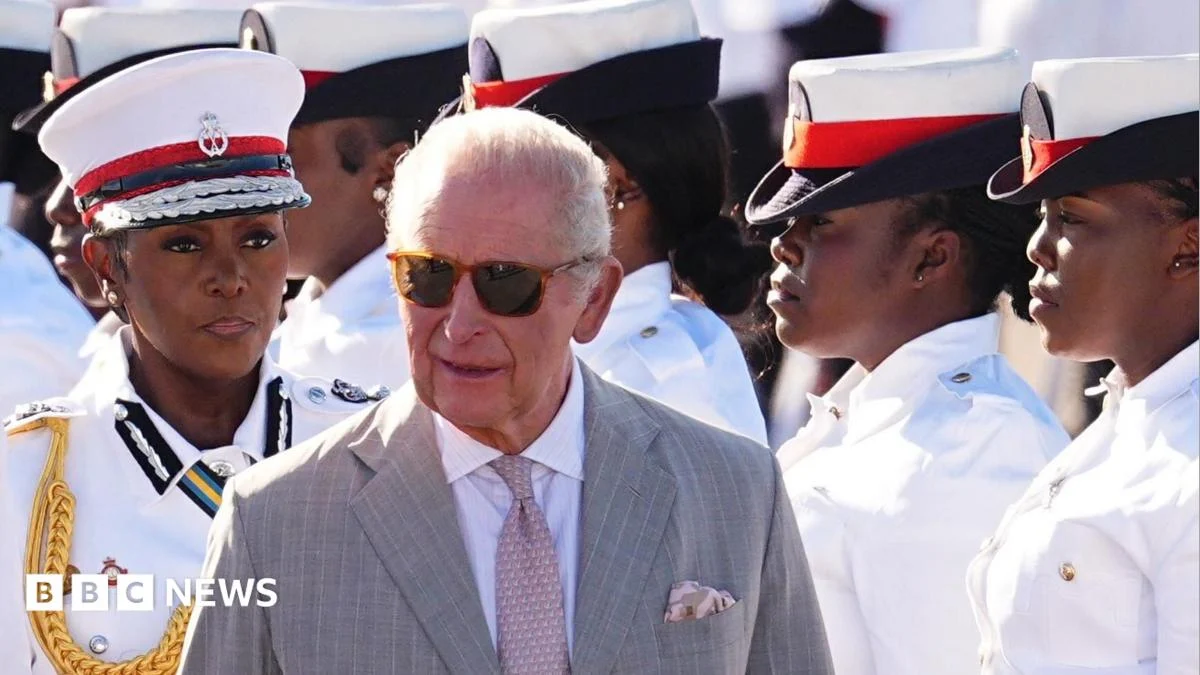
King Charles III has embarked upon a pivotal nine-day diplomatic tour of the Caribbean, his inaugural visit to the region as sovereign, where the itinerary is meticulously crafted to acknowledge the profound historical injustices of colonialism while simultaneously fostering forward-looking partnerships, particularly in the critical domain of environmental resilience. His arrival in the Bahamas signaled the commencement of an engagement that seeks to navigate the complex tapestry of historical reckoning and contemporary global challenges facing these island nations.
Upon his descent in the Bahamian capital, a meticulously choreographed ceremonial welcome unfolded, replete with the traditional pageantry expected for a visiting head of state. Dressed in a conventional grey suit and sunglasses, the monarch was greeted by high-ranking officials before proceeding to a youth rally, an engagement strategically designed to connect with the region’s younger demographic. This initial interaction set the tone for a tour underscored by a dual mandate: confronting the uncomfortable truths of the past and galvanizing efforts for a sustainable future.
Prior to the expedition, Buckingham Palace had issued a proactive statement, indicating that King Charles would not shy away from the sensitive discussions surrounding the "colonial legacy" and the enduring impact of the transatlantic slave trade. This acknowledgment, however, was carefully balanced with the explicit reiteration of the United Kingdom government’s long-standing position: there would be no formal apology for Britain’s historical role in the slave trade, nor would there be an offer of reparations. This nuanced stance highlights the delicate diplomatic tightrope the monarchy and the UK government seek to walk, balancing historical recognition with current policy.
During his inaugural public appearance at the youth rally, the King directly addressed the historical dimension, stating it was "only right" to "acknowledge the great suffering and injustices of the past." This carefully chosen phrase encapsulates a strategy of acknowledging historical pain without committing to the direct restitution measures many Caribbean nations advocate for. The symbolism of this acknowledgment, delivered early in the tour, was not lost on observers, underscoring the enduring weight of history in the Commonwealth’s contemporary relationships.
The formal reception upon his arrival included meetings with key Bahamian dignitaries, notably Governor General Dame Cynthia A. Pratt, the King’s representative in the Commonwealth realm, and Prime Minister Philip Edward. These encounters are foundational to reinforcing the constitutional ties between the UK monarchy and its Caribbean realms. A subsequent inspection of a guard of honour composed of members of the Royal Bahamas Defence Force further emphasized the enduring institutional connections and military cooperation.
The subsequent youth rally at Clifford Park held particular historical resonance for the King. It was at this very location, half a century ago in 1973, that he had attended the Bahamas’ independence celebrations as the Prince of Wales. His return to this site, now as sovereign, provided a powerful visual narrative of continuity and change. The cheers that greeted his arrival signaled a degree of enthusiasm, particularly from the younger attendees, reflecting the strategic importance of engaging this demographic in discussions about the Commonwealth’s future.
In his address to the assembled youth, King Charles underscored his lifelong commitment to environmental stewardship, a theme that has consistently defined his public service over five decades. He specifically highlighted the acute vulnerabilities faced by low-lying Caribbean islands, which are on the front lines of climate change’s devastating impacts, stating evocatively that "our world cries out for healing." This particular emphasis serves to pivot the discourse from historical grievances towards a shared existential threat, positioning the monarchy as a potential convener for global climate action.
The King’s speech at the rally culminated in a direct call to action for the young people present, urging them to "take up the sacred task to play your part." He articulated a vision where future generations would be judged by their response to the environmental crisis, emphasizing that "in years to come, this will be surely be the measure of every person – how they answered the call to care for planet earth – the source of our life, our prosperity and our security." This appeal aims to foster a sense of shared responsibility and empower youth as agents of change, aligning the monarchical visit with contemporary global priorities.
Buckingham Palace’s strategic planning for the tour included specific provisions for the King to engage with the legacy of the slave trade. Opportunities for reflection and remembrance were carefully integrated into his schedule across all three host nations, including visits to memorials and other sites of historical significance. This deliberate inclusion signifies an understanding of the profound need for symbolic gestures and a recognition of the collective memory of suffering.
A spokesperson for the Palace further elaborated on the tour’s overarching objectives, informing media outlets that the King’s program would "primarily focus on shining a light on the many modern partnerships and opportunities for the future," specifically those initiatives demonstrating a "transformative effect on the region." This emphasis on contemporary collaboration and future potential seeks to balance the historical acknowledgment with a forward-looking agenda. The spokesperson also characterized the tour for the King as "both a new journey but also the continuance of a lifelong one, in which he has sought to engage, understand and educate about the most shameful aspects of our past." This statement reinforces the personal commitment of the monarch to understanding and addressing historical complexities.
These overarching themes—honoring the past while simultaneously fostering ambition and possibility for future generations—are the bedrock upon which the entire nine-day itinerary has been constructed. The visit has been meticulously planned in close consultation with the respective governments of the Bahamas, Guyana, and Antigua and Barbuda, ensuring a collaborative approach that respects national priorities and sensitivities.
Beyond the initial engagements in the Bahamas, the King’s itinerary will lead him to Guyana later in the week. Here, his engagements are specifically tailored to highlight environmental issues and biodiversity conservation, aligning with the nation’s vast rainforests and significant ecological importance. This focus underscores a continued commitment to global environmental challenges and supports Guyana’s role as a steward of critical natural resources.
The final leg of the tour will take King Charles to Antigua and Barbuda, where he will be joined by Queen Camilla. This segment is particularly significant as it coincides with the Commonwealth Heads of Government Meeting (CHOGM), a biennial summit that brings together leaders from the 56 Commonwealth countries. King Charles is scheduled to deliver a keynote speech as the symbolic head of the Commonwealth, an address that will be keenly observed for its message on the institution’s future direction and its role in a rapidly evolving geopolitical landscape. CHOGM serves as a critical forum for addressing shared challenges, fostering cooperation, and advancing collective goals among member states.
The enduring legacy of the transatlantic slave trade continues to cast a long shadow over the relationship between the United Kingdom and its former Caribbean colonies. Calls for reparations have intensified in recent years, spearheaded by initiatives such as the CARICOM Reparations Commission. This body advocates for a comprehensive program of reparatory justice, encompassing elements such as formal apologies, debt cancellation, and financial investments in affected communities. The UK’s consistent refusal to offer a formal apology or direct financial reparations remains a point of contention, leading to a complex dynamic where acknowledgment of suffering is often seen as insufficient without tangible redress. The King’s carefully worded statements reflect this ongoing tension, aiming to offer empathy without altering established governmental policy.
Climate change represents another profound challenge, disproportionately affecting Small Island Developing States (SIDS) like those in the Caribbean. These nations face existential threats from rising sea levels, increased frequency and intensity of hurricanes, coastal erosion, and the degradation of vital ecosystems such such as coral reefs. The economic implications are equally severe, impacting critical sectors like tourism and agriculture. King Charles’s sustained advocacy for environmental protection, dating back decades before his ascension to the throne, positions him as a credible voice on this issue. His emphasis on climate action during the tour is therefore not merely a diplomatic gesture but a reflection of a deeply held personal commitment, aligning the monarchy with a pressing global crisis that resonates deeply with the region.
The engagement with youth at the Clifford Park rally is a strategically vital component of the tour. For the Commonwealth to remain relevant in the 21st century, it must capture the imagination and secure the commitment of younger generations. Many young people in the Caribbean hold diverse perspectives on the historical ties to the monarchy and the future trajectory of their nations. By directly addressing them and empowering them as agents of environmental change, the King seeks to cultivate renewed interest and engagement with the Commonwealth’s principles and objectives.
The CHOGM in Antigua and Barbuda will be a critical platform for King Charles to articulate his vision for the Commonwealth. As Head of the Commonwealth, his role is primarily symbolic, yet it carries significant moral authority. The diverse grouping of 56 nations, spanning different continents and economic stages, faces a myriad of shared challenges, including climate change, economic development, security, and human rights. The King’s keynote speech will be an opportunity to reinforce the Commonwealth’s values, encourage cooperation, and foster a sense of shared purpose in an increasingly fragmented world. The presence of Queen Camilla at this crucial gathering further underscores the monarchical commitment to the institution.
In conclusion, King Charles III’s inaugural Caribbean tour as monarch is a meticulously choreographed exercise in modern royal diplomacy, navigating the intricate currents of historical legacy and contemporary challenges. By acknowledging the "suffering and injustices of the past" while steadfastly adhering to the UK government’s stance on reparations, the King aims to foster a dialogue that is both empathetic and forward-looking. His profound emphasis on climate change resonates deeply with the region’s vulnerabilities, positioning the monarchy as a facilitator for global environmental action. The tour’s ultimate impact will be measured not only by the immediate diplomatic successes but also by its capacity to shape the evolving relationship between the British Crown and its Caribbean realms, fostering new partnerships while respectfully acknowledging the complex and often painful chapters of shared history. The journey underscores the ongoing efforts to redefine the monarchy’s role in a post-colonial world, seeking relevance and purpose amidst calls for self-determination and historical justice.



 Aura Kasih


 Safa Marwah
