
 Lisa Mariana
The dramatic apprehension of Venezuelan leader Nicolás Maduro has plunged the nation into an unprecedented power vacuum, triggering a complex and highly uncertain political transition orchestrated by the United States. While many anticipated a swift installation of the long-recognized democratic opposition, Washington’s surprising engagement with Maduro’s staunch vice president, Delcy Rodríguez, has introduced a perplexing dynamic, raising profound questions about the country’s immediate future and the nature of American foreign policy in the region.
The pre-dawn operation that led to Maduro’s capture on Saturday sent shockwaves across the globe, culminating years of escalating tensions, economic sanctions, and rhetorical threats from the United States. President Donald Trump’s subsequent announcement, declaring America’s intent to "run" Venezuela temporarily to ensure a "safe, proper and judicious transition," signaled a direct and assertive posture. However, the true surprise emerged when Trump revealed that Secretary of State Marco Rubio had been in discussions with Delcy Rodríguez, implying her willingness to cooperate with U.S. objectives to "make Venezuela great again." This declaration immediately conflicted with Rodríguez’s own public statements, where she defiantly denounced Maduro’s detention as an act of "kidnapping" and vehemently rejected any notion of Venezuela becoming a "colony," leaving observers to grapple with the true locus of power.
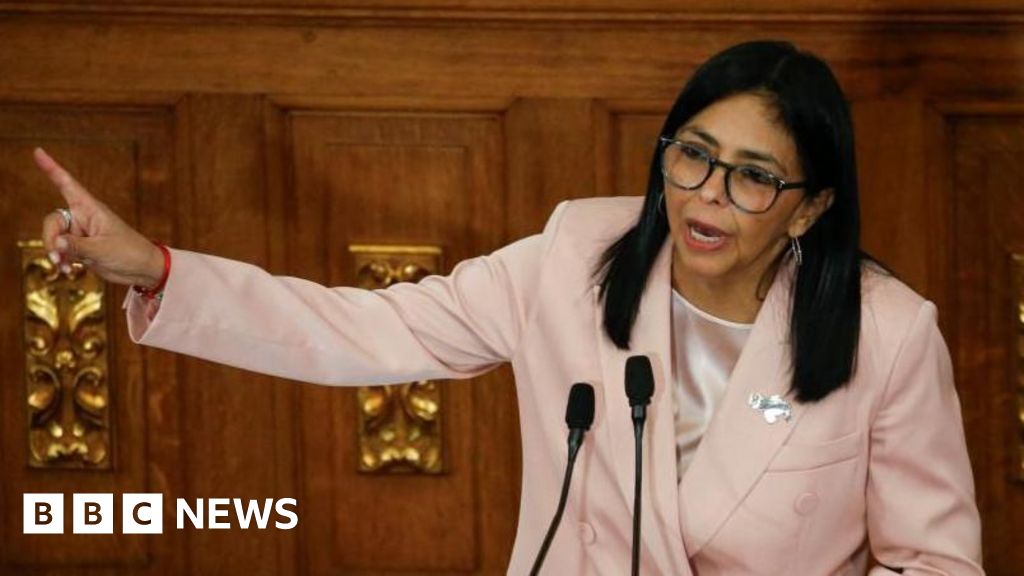
Under the Venezuelan constitution, the vice president is designated to assume executive authority in the event of the president’s absence. In a seemingly logical move, the Venezuelan Supreme Court, a body largely perceived as loyal to the now-deposed regime, swiftly affirmed Delcy Rodríguez as the nation’s acting president. This immediate succession, however, diverged significantly from the expectations of many international observers and Venezuelan democracy advocates. For years, the United States and numerous other international entities had steadfastly refused to recognize Nicolás Maduro’s legitimacy, particularly after the highly contested 2024 presidential election. The National Electoral Council (CNE), dominated by government loyalists, had declared Maduro the victor, yet failed to provide transparent, detailed voting tallies. Independent assessments, including those reviewed by the Carter Center, strongly suggested that opposition candidate Edmundo González had secured a decisive landslide victory.
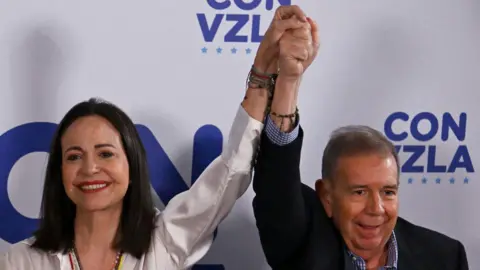
In light of these irregularities, a broad coalition of international powers, including the U.S., had recognized González as Venezuela’s president-elect. González, a seasoned but relatively unknown diplomat, had stepped in for the immensely popular opposition figure María Corina Machado, who had been controversially barred from holding public office by Maduro’s administration. Following the crackdown on dissent in the aftermath of the 2024 election, González sought refuge in exile in Spain, while Machado remained in hiding within Venezuela, both consistently advocating for Maduro’s resignation and lobbying for robust international backing, particularly from Washington. Machado’s international stature had been further amplified by her recent Nobel Peace Prize for her "struggle to achieve a just and peaceful transition from dictatorship to democracy" in Venezuela. Her perilous journey from her clandestine location in Venezuela to Oslo to accept the award garnered significant global attention, fueling widespread anticipation that any post-Maduro scenario would see her and González assuming leadership to fulfill the popular mandate.
Upon news of Maduro’s capture, Machado herself issued a potent statement on social media, proclaiming that "the hour of freedom has arrived" and asserting the opposition’s readiness "to enforce our mandate and take power." Yet, President Trump’s subsequent dismissal of Machado, stating she lacked the "support or respect" to lead the country and confirming that his team had not engaged with her, sent a clear message that Washington’s immediate strategy did not align with the opposition’s aspirations. Instead, Trump pointed to Rodríguez’s purported concession: "we’ll do whatever you want," a statement that, if accurate, underscored the immense leverage the United States believed it held over the remnants of the Maduro apparatus.
This strategic pivot towards Rodríguez, a deeply entrenched figure within the chavista establishment, reflects a calculated, albeit risky, approach by the Trump administration. As former senior national security official Mara Rudman characterized it, this could be an attempt at a "guardianship" arrangement, designed to avoid the complexities and potential quagmire of direct military occupation or comprehensive administrative takeover. The rationale might be rooted in a desire for a smoother, less disruptive transition, leveraging existing governmental structures and personnel to maintain a semblance of order while Washington dictates the broader policy direction. Such a strategy could also be aimed at quickly stabilizing Venezuela’s critical oil sector, a key interest for the U.S. and global markets.
However, this unprecedented approach carries significant inherent risks. It effectively grants a degree of legitimacy to a figure deeply implicated in the very regime the U.S. has spent years attempting to dismantle, potentially alienating the democratic opposition and undermining the aspirations of millions of Venezuelans who voted for a complete break from chavismo. The potential for Rodríguez to consolidate power, resist genuine democratic reforms, or even revert to authoritarian tendencies remains a considerable concern.
Rodríguez’s immediate public appearance, flanked by powerful figures from Maduro’s inner circle – including her brother Jorge Rodríguez, president of the National Assembly; Interior Minister Diosdado Cabello; Defense Minister Vladimir Padrino; and armed forces commander Domingo Hernández Lárez – suggests she has secured the internal backing necessary to maintain control within the regime’s loyalist structures. This unity, while seemingly contradictory to her defiant rhetoric, might have assuaged U.S. concerns about a chaotic internal power struggle following Maduro’s removal. Nevertheless, her strong nationalistic tone, denouncing the "kidnapping" and pledging to "defend" Venezuela from becoming a "colony," starkly contrasted with Trump’s portrayal of a cooperative subordinate. This duality suggests a delicate balancing act by Rodríguez, aimed at appeasing the hardline chavista base while navigating the demands of the new American oversight.
Secretary of State Marco Rubio’s subsequent remarks hinted at this nuanced reality. While affirming the U.S.’s willingness to exert pressure, he acknowledged the uncertainty surrounding Rodríguez’s future actions. "Do I know what decisions people are going to make? I don’t," Rubio stated, emphasizing that the U.S. would assess her actions, not merely her words. He underscored the continued potency of U.S. "levers of leverage," including the existing oil quarantine, to ensure American interests are protected. Rubio also openly discussed the need for "real elections" in Venezuela, suggesting that such a process would require a period of transition and careful preparation, tempering expectations for an immediate democratic resolution. "Everyone’s asking, why 24 hours after Nicolas Maduro was arrested, there isn’t an election scheduled for tomorrow? That’s absurd," he remarked, highlighting the practical challenges involved.
Yet, this prospect of delayed elections profoundly disappoints the democratic opposition and the millions of Venezuelans who cast their ballots for Edmundo González, believing their votes represented a mandate for immediate change. The opposition has consistently argued that free and fair elections are unattainable as long as the key institutions responsible for their organization remain under the control of Maduro loyalists. Reforming these bodies, dismantling the entrenched power structures, and rebuilding public trust will undeniably be a protracted and arduous undertaking.
The geopolitical dimensions of this transition are also significant. Former National Security Adviser John Bolton, a vocal critic of the Trump administration’s engagement with Rodríguez, argued that the rational course of action would be to dismantle the remainder of the Maduro regime and install the legitimate opposition to oversee interim governance and organize truly free elections. Bolton highlighted the continued support for the Maduro regime from international actors like China, Russia, and Cuba, whose vested interests in Venezuela could complicate any U.S.-led transition. These external powers, along with regional neighbors, will closely monitor the situation, potentially seeking to influence the outcome.
In the immediate term, Venezuela appears poised to be governed by Delcy Rodríguez and key figures from Maduro’s inner circle, their tenure intrinsically linked to their willingness and ability to meet the Trump administration’s expectations. Rodríguez now finds herself in an unenviable position, walking a precarious tightrope between accommodating Washington’s directives and appeasing the deeply ingrained interests of the chavista base she must lead. Her capacity to strike this delicate balance will determine the stability and direction of Venezuela’s immediate future, making the country a critical test case for a novel and highly controversial approach to regime change and democratic transition. The road ahead for Venezuela remains fraught with uncertainty, balancing the promise of freedom against the specter of continued authoritarian influence, all under the watchful, and now directly interventionist, eye of the United States.

 Aura Kasih
 Ayu Aulia
 Safa Marwah