Lisa Mariana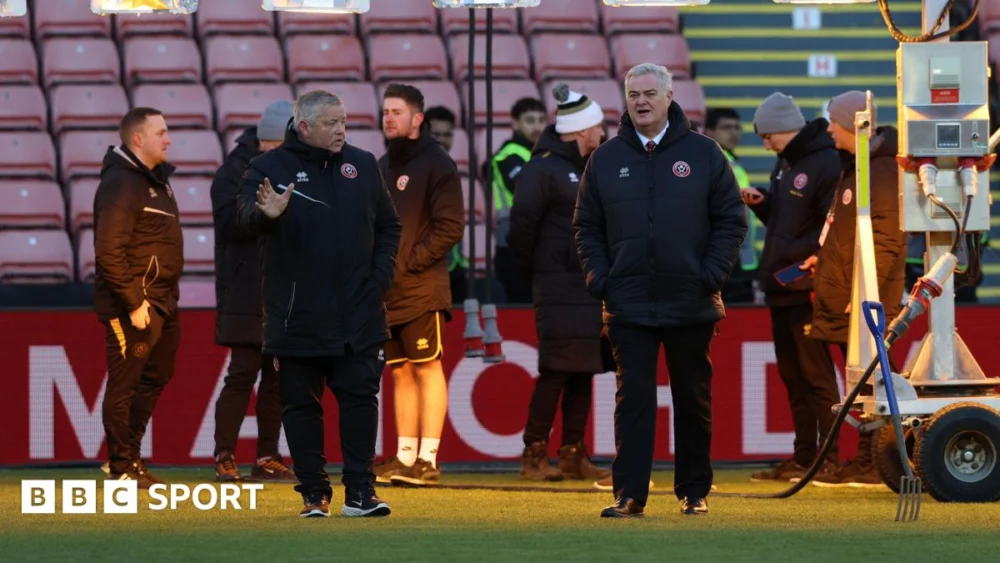
The highest tier affected by this climatic event was the Championship, where two key encounters scheduled for Sunday were called off. Among these was the eagerly anticipated 12:00 GMT kick-off between Sheffield United and Oxford United. A pitch inspection at Bramall Lane, conducted by the match referee prior to the scheduled start, determined that significant portions of the playing surface were dangerously frozen and therefore unplayable. This decision, made in the interest of player safety and the integrity of the game, prevented what would have been a crucial fixture for both sides navigating their respective league campaigns. Later in the day, the 15:00 GMT match featuring Portsmouth against Ipswich also succumbed to the conditions, with a pitch inspection at Fratton Park confirming its unsuitability for play. These cancellations represent not merely a delay but a significant disruption, particularly for teams in contention for promotion or battling against relegation, where every point and every match holds considerable weight.
The repercussions of the cold snap extended significantly into League One, with three pivotal matches being postponed. Doncaster’s scheduled clash with Luton Town, a fixture that would have carried substantial implications for both clubs’ seasonal objectives, was among those affected. Similarly, Barnsley’s journey to face Port Vale and Rotherham’s encounter with Mansfield were also deemed unplayable. For clubs operating with tighter margins than their Championship counterparts, such postponements can be particularly impactful. The loss of matchday revenue, including gate receipts, food and beverage sales, and merchandise, directly affects their operational budgets. Furthermore, the disruption to training schedules and tactical preparations can derail momentum built over previous weeks, forcing managers to recalibrate their strategies and player conditioning.
The most extensive impact of the freezing temperatures was observed in League Two, where a total of nine fixtures were ultimately called off. This included five matches that had already been confirmed as postponed on Saturday, indicative of the widespread and persistent nature of the cold front. On Sunday morning, further pitch inspections led to the cancellation of four additional games: Barnet versus Crewe, Barrow against Bristol Rovers, Colchester facing Accrington, and Newport’s fixture with Tranmere. These postponements illustrate the geographical breadth of the adverse weather, affecting clubs from the south coast to the north-west of England. For League Two clubs, many of whom do not possess the sophisticated undersoil heating systems common in the higher divisions, frozen pitches represent an almost insurmountable challenge when temperatures plummet. Their reliance on natural grass surfaces makes them particularly vulnerable to such climatic events, highlighting a disparity in infrastructure that often comes to the fore during severe winter conditions.
The decision-making process for calling off a match is rigorously defined, prioritizing player welfare and the fairness of competition. Typically, a pitch inspection is conducted by the match referee, sometimes in consultation with local officials and ground staff. Criteria for deeming a pitch unplayable include hard, frozen areas that pose a risk of injury, or a surface where the ball cannot bounce or roll naturally, thus compromising the sporting integrity of the game. While clubs strive to implement measures such as pitch covers and aeration techniques to mitigate the effects of frost, prolonged periods of freezing temperatures, especially when combined with insufficient sunlight, can overwhelm even the best preparatory efforts. The timing of these inspections is critical; an early decision minimizes inconvenience for travelling supporters and away teams, but sometimes conditions can deteriorate rapidly on match day, necessitating a later assessment.
Beyond the immediate disruption, these postponements carry significant long-term implications. Foremost among these is the burgeoning issue of fixture congestion. Each postponed game must be rescheduled, often into already packed midweek slots, or at the expense of potential cup runs. This creates a cascade effect, leading to increased player fatigue, heightened risk of injuries, and reduced recovery times. For clubs competing in multiple competitions, such as the FA Cup or League Cup, the accumulation of postponed league matches can become an unsustainable burden, forcing difficult choices between priorities. The integrity of the league standings can also be temporarily skewed, with some teams having played significantly fewer games than others, creating a psychological dynamic of "games in hand" that can be either an advantage or a pressure point.
Financially, the cumulative effect of multiple postponements can be substantial, particularly for clubs in League One and League Two. Gate receipts constitute a vital revenue stream, often making the difference between profit and loss for smaller entities. A cancelled match means not only lost ticket sales but also foregone income from concessions, merchandise, and hospitality. While insurance may cover some aspects, the direct loss of cash flow can be acutely felt. Furthermore, there are additional operational costs associated with postponements, including the expense of rescheduling, potential refunds for tickets, and the logistical nightmare of re-arranging travel and accommodation for away teams and their supporters, many of whom might have already embarked on their journeys. This financial strain can exacerbate existing budgetary pressures, especially in a landscape where clubs are constantly seeking to optimize their commercial operations.
The broader context of winter football in the United Kingdom has long been a subject of debate. The recurring issue of weather-related postponements often rekindles discussions about the viability of a winter break, similar to those observed in many other European leagues. While the primary argument for a winter break usually centres on player welfare and mental recuperation, the consistent disruption caused by adverse weather provides another compelling reason for its consideration. However, implementing such a break in the packed English football calendar, which already includes multiple domestic cup competitions, presents its own set of challenges and logistical complexities. Another area of continuous discussion revolves around the mandatory implementation of undersoil heating systems across all EFL divisions. While such technology significantly mitigates the risk of frozen pitches, the substantial capital outlay and ongoing operational costs associated with heating systems remain a prohibitive barrier for many lower-league clubs, creating an economic divide that directly impacts playing conditions.
Looking ahead, clubs and governing bodies must continually adapt their strategies to manage the unpredictable nature of British winters. Robust contingency planning, effective communication channels with supporters and media, and flexible scheduling frameworks are paramount. The English Football League, in its role as the governing body, provides guidelines and support to clubs facing such challenges, striving to ensure fair competition and minimize disruption. However, the fundamental reality remains that football, particularly at the grassroots and lower professional levels, is intrinsically linked to its environment. While technological advancements have mitigated many historical challenges, extreme weather events will continue to test the resilience and adaptability of the sport. The recent widespread postponements serve as a stark reminder of this enduring reality, emphasizing the need for ongoing investment, careful planning, and a collective understanding of the unique demands placed upon English football during the colder months. The immediate focus now shifts to the complex task of rescheduling these numerous fixtures, a puzzle that will require careful coordination to ensure the smooth progression of the season.


 Aura Kasih
 Safa Marwah
 Ayu Aulia