
 Lisa Mariana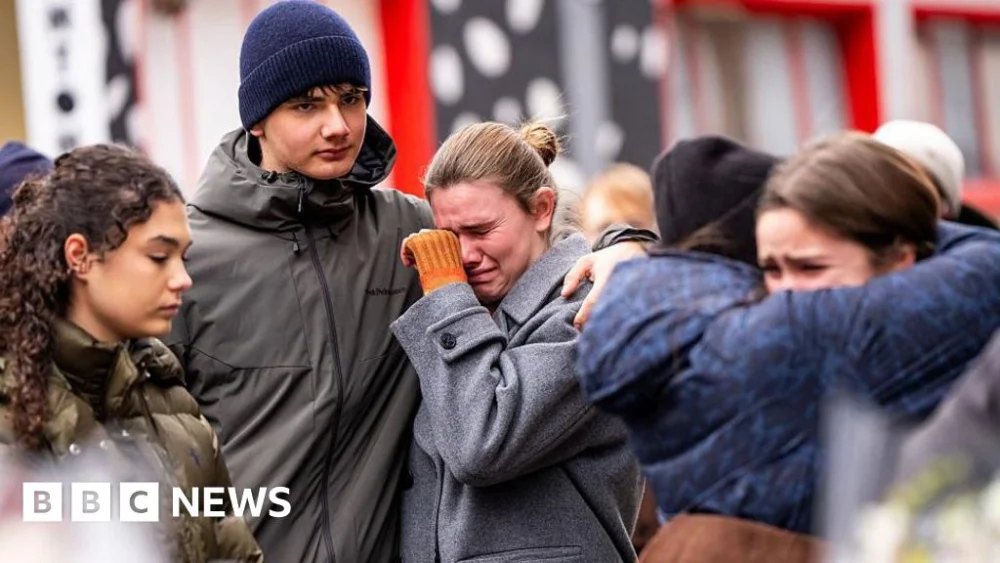
In the solemn aftermath of the devastating conflagration that engulfed a popular establishment in the Swiss alpine resort of Crans-Montana on New Year’s Eve, authorities have confirmed the initial identification of four individuals among the deceased, marking a critical, albeit somber, step in the extensive post-disaster response. The meticulous work of forensic specialists and law enforcement agencies is gradually bringing clarity to the tragic events, providing initial closure for some families amidst a widespread period of profound grief and uncertainty.
Valais cantonal police have officially announced the successful identification of two Swiss women, aged 21 and 16, and two Swiss men, aged 18 and 16, whose remains have now been released to their respective families. This breakthrough represents the culmination of "extensive" collaborative efforts between uniformed officers and experts from the Institute of Forensic Medicine. The challenging task of identifying the remaining victims continues, underscoring the severe nature of the incident and the complexities inherent in such mass casualty investigations. The fire, which rapidly consumed "Le Constellation," a well-known venue in Crans-Montana, resulted in a catastrophic toll, claiming the lives of 40 individuals and inflicting injuries upon 119 others, according to official statements. While a significant portion of the injured have been identified, numerous families across Switzerland and internationally face an agonizing vigil, awaiting definitive information regarding their missing loved ones.
Preliminary investigative findings suggest that the inferno originated from sparklers, reportedly affixed to champagne bottles, coming into direct contact with the ceiling within the establishment. This initial assessment points towards an ignition source common in celebratory environments but one that carries significant fire safety risks, particularly when deployed in close proximity to combustible materials or within venues with inadequate fire prevention measures. The Swiss President, Guy Parmelin, has described the incident as "one of the worst tragedies" to befall the nation, reflecting the profound shock and sorrow resonating throughout the country.
Further specific details regarding the identities of the newly identified victims, beyond their ages and nationalities, have not been disclosed by the authorities, respecting the privacy of the affected families during this immensely difficult period. Concurrently, the identification process for the injured has advanced considerably, with 113 individuals confirmed, comprising 71 Swiss nationals, 14 French citizens, and 11 Italian citizens. The international composition of the casualties highlights Crans-Montana’s status as a global tourism destination, particularly popular during holiday seasons.
A significant demographic among both the deceased and the missing comprises teenagers and young adults. "Le Constellation" was widely recognized as a favored destination among the younger demographic in the vibrant ski resort town, where the legal drinking age is 16. This demographic concentration amplifies the tragic impact, affecting a generation at the outset of their lives. Initial reports had mentioned a teenage Italian golfer as potentially among the fatalities, though Swiss and Italian officials have refrained from official confirmation, emphasizing the rigorous and sensitive nature of the ongoing identification protocols.
The immediate vicinity of the charred establishment has transformed into an impromptu memorial site, with an accumulating display of floral tributes, soft toys, and heartfelt messages expressing collective grief, hope, and solidarity. This spontaneous outpouring of public emotion serves as a poignant testament to the community’s shared sorrow and the deep impact of the tragedy.
In a concerted effort to support affected families, a dedicated conference centre situated just outside Crans-Montana has been established. Here, families receive coordinated assistance, including direct engagement with representatives from the Italian Civil Protection team and Italy’s Ambassador to Switzerland, Gian Lorenzo Cornado. Ambassador Cornado has provided updates on the identification efforts, indicating that the complex process was actively ongoing and anticipated to reach completion by Sunday afternoon. He further elaborated that the protracted nature of the identification stems from the severe thermal injuries sustained by many of the victims, necessitating advanced forensic techniques. A specialized helpline, +41 848 112 117, has been activated to provide essential information and support for concerned families, serving as a critical communication channel during this period of crisis.
Background and Context: Crans-Montana and New Year’s Festivities
Crans-Montana, nestled in the heart of the Swiss Alps, is renowned globally as a premier ski resort, attracting a diverse international clientele seeking winter sports, luxury amenities, and vibrant nightlife. New Year’s Eve is traditionally one of the peak periods for the resort, characterized by extensive celebrations, fireworks displays, and a festive atmosphere in its numerous bars, clubs, and restaurants. The tragic fire at "Le Constellation," a venue integral to this festive landscape, thus occurred at a time of heightened activity and celebration, exacerbating the scale of the human impact. The resort’s appeal to a younger demographic, partly due to the accessible legal drinking age and its dynamic entertainment scene, meant that a significant proportion of the clientele present at the time of the incident were in their late teens and early twenties. This demographic factor adds a particular layer of poignancy to the disaster, representing a substantial loss for a generation.
Forensic Challenges and Identification Protocols
The identification of victims in mass casualty incidents, particularly those involving severe thermal damage, presents formidable forensic challenges. Standard visual identification is often impossible, necessitating reliance on scientific methods. These typically include DNA analysis, dental record comparisons, and fingerprint identification. In cases of extensive incineration, as appears to be the situation in Crans-Montana, DNA profiling becomes paramount. This involves collecting post-mortem samples (e.g., bone fragments, muscle tissue) and comparing them against ante-mortem samples (e.g., medical records, personal items like toothbrushes, hairbrushes, or DNA from close relatives). The Institute of Forensic Medicine, working in conjunction with police and potentially international forensic teams, employs highly specialized techniques, including anthropological analysis, to establish age, sex, and other biological characteristics from fragmented remains. The methodical, often time-consuming nature of these processes, coupled with the need for absolute certainty, explains the extended timeline for victim identification, despite the intense pressure from grieving families.
Investigation into Fire Causation and Safety Implications
The preliminary determination that sparklers on champagne bottles initiated the blaze raises critical questions regarding fire safety protocols and enforcement within entertainment venues. While sparklers are often perceived as relatively benign celebratory items, their open flame and high heat generation pose a significant fire risk in enclosed spaces, especially in proximity to flammable materials such as ceiling decorations, curtains, or even insulation. An in-depth investigation will likely examine several crucial aspects:
- Source of Ignition: Confirming definitively that sparklers were the sole or primary ignition source.
- Fuel Load: Assessing the types and quantities of combustible materials present in the venue, including furnishings, decorations, and building materials, which could have contributed to rapid fire spread.
- Fire Safety Systems: Evaluating the functionality and adequacy of the venue’s fire suppression systems (sprinklers), fire alarms, emergency lighting, and clearly marked exit routes.
- Crowd Management: Analyzing crowd density at the time of the fire, the effectiveness of staff in guiding patrons to safety, and potential bottlenecks at exits.
- Regulatory Compliance: Determining whether the venue adhered to all local and national fire safety codes, including permits for pyrotechnics (if applicable) and staff training in emergency procedures.
The findings of this comprehensive investigation will have significant implications, potentially leading to stricter regulations concerning pyrotechnics in public venues, enhanced fire safety inspections, and mandatory training for staff in emergency response.
Crisis Management and Psychosocial Support
The response to a disaster of this magnitude involves a multifaceted crisis management effort. Immediately following the incident, emergency services – including fire brigades, paramedics, and medical personnel – were mobilized from across the Valais canton and potentially beyond. The rapid deployment of resources aimed to contain the fire, rescue survivors, and provide immediate medical attention to the injured. Hospitals in the region would have activated mass casualty protocols, preparing for a surge of trauma patients.
Beyond the immediate emergency, the psychosocial support for survivors, bereaved families, witnesses, and first responders is paramount. The establishment of the family support centre in Crans-Montana, alongside the helpline, provides vital resources for individuals grappling with trauma, loss, and uncertainty. Specialized grief counseling and psychological first aid are critical components of long-term recovery, addressing the profound mental health impact of such a catastrophic event. The involvement of international consular services and civil protection teams underscores the cross-border nature of the tragedy and the collaborative efforts required for international victim support.
Broader Implications and Future Outlook
The Crans-Montana fire is poised to trigger significant re-evaluation of fire safety standards within the European entertainment and hospitality sectors. National and regional authorities may introduce more stringent regulations regarding the use of pyrotechnics in enclosed spaces, potentially banning certain items or requiring explicit permits and professional oversight. Furthermore, there could be increased scrutiny of building codes, exit strategies, and emergency training requirements for staff in venues, particularly those popular with younger crowds.
Economically, while the long-term impact on Crans-Montana’s tourism industry is yet to be fully assessed, initial negative perceptions are inevitable. The resort and the wider Swiss tourism board will likely undertake concerted efforts to reassure visitors about safety standards and maintain its reputation. Legally, the investigation may lead to criminal charges against individuals or entities found responsible for negligence or breaches of safety regulations. Corporate liability and compensation claims are also probable outcomes.
The Crans-Montana community faces a protracted period of mourning and healing. The collective memory of this New Year’s Eve will be irrevocably marked by the tragedy. Memorials, community gatherings, and ongoing support networks will be essential for the town to process its grief and gradually move towards recovery. The full scope of the human impact, both immediate and long-term, will continue to unfold as investigations conclude and the affected individuals and families navigate their path forward. The imperative remains to thoroughly understand the circumstances that led to this disaster, ensuring that lessons learned are rigorously applied to prevent such a catastrophic loss of life from ever recurring.




 Aura Kasih
 Ayu Aulia

 Safa Marwah