Safa Marwah
Thousands of network security appliances from Fortinet, specifically FortiGate firewalls, continue to operate with a critical, five-year-old two-factor authentication (2FA) bypass vulnerability, exposing organizations to persistent and actively observed exploitation efforts. Despite the availability of patches for this high-severity flaw (CVE-2020-12812) since July 2020, a significant portion of the global install base remains unmitigated, presenting a substantial attack surface for malicious actors seeking unauthorized access.
The vulnerability, an improper authentication weakness affecting FortiGate SSL VPN, carries a severe CVSS score of 9.8 out of 10. Its core mechanism allows an attacker to circumvent the requirement for a second authentication factor (such as FortiToken) by subtly altering the case of a legitimate username during the login process. This seemingly minor manipulation tricks the system into granting access without the expected multi-factor verification, effectively degrading security to a single-factor authentication scheme. Fortinet initially addressed this flaw with the release of FortiOS versions 6.4.1, 6.2.4, and 6.0.10. Alongside the patches, the vendor provided an immediate workaround for administrators unable to deploy updates promptly: disabling username-case-sensitivity to block these specific bypass attempts. However, recent intelligence confirms that these advisories and mitigations have not been universally applied, leaving a large segment of infrastructure vulnerable.
The Persistent Challenge of Legacy Vulnerabilities
The continued exposure to CVE-2020-12812 highlights a pervasive and complex challenge within cybersecurity: the failure to patch known, critical vulnerabilities even years after their disclosure. While Fortinet promptly released fixes in 2020, the longevity of this threat underscores several systemic issues. Organizations often struggle with patch management due to the complexity of their IT environments, concerns about service disruption, lack of resources, or simply an oversight in identifying and prioritizing older, albeit still critical, vulnerabilities. For an attacker, a five-year-old vulnerability that remains widespread offers a reliable and low-cost entry point, reducing the need for developing sophisticated zero-day exploits. This scenario illustrates a fundamental breakdown in cyber hygiene across a broad spectrum of entities.
Recently, Fortinet issued a renewed warning to its customer base, indicating a resurgence in the exploitation of CVE-2020-12812. The latest intelligence suggests attackers are specifically targeting configurations where Lightweight Directory Access Protocol (LDAP) is enabled, leveraging this particular setup to facilitate the 2FA bypass. This specificity indicates that threat actors are not merely indiscriminately scanning but are likely profiling vulnerable systems and tailoring their attacks to exploit specific environmental conditions. Such targeted exploitation elevates the risk, as it implies a more deliberate and potentially sophisticated adversary.
Scope of Exposure: A Global Attack Surface

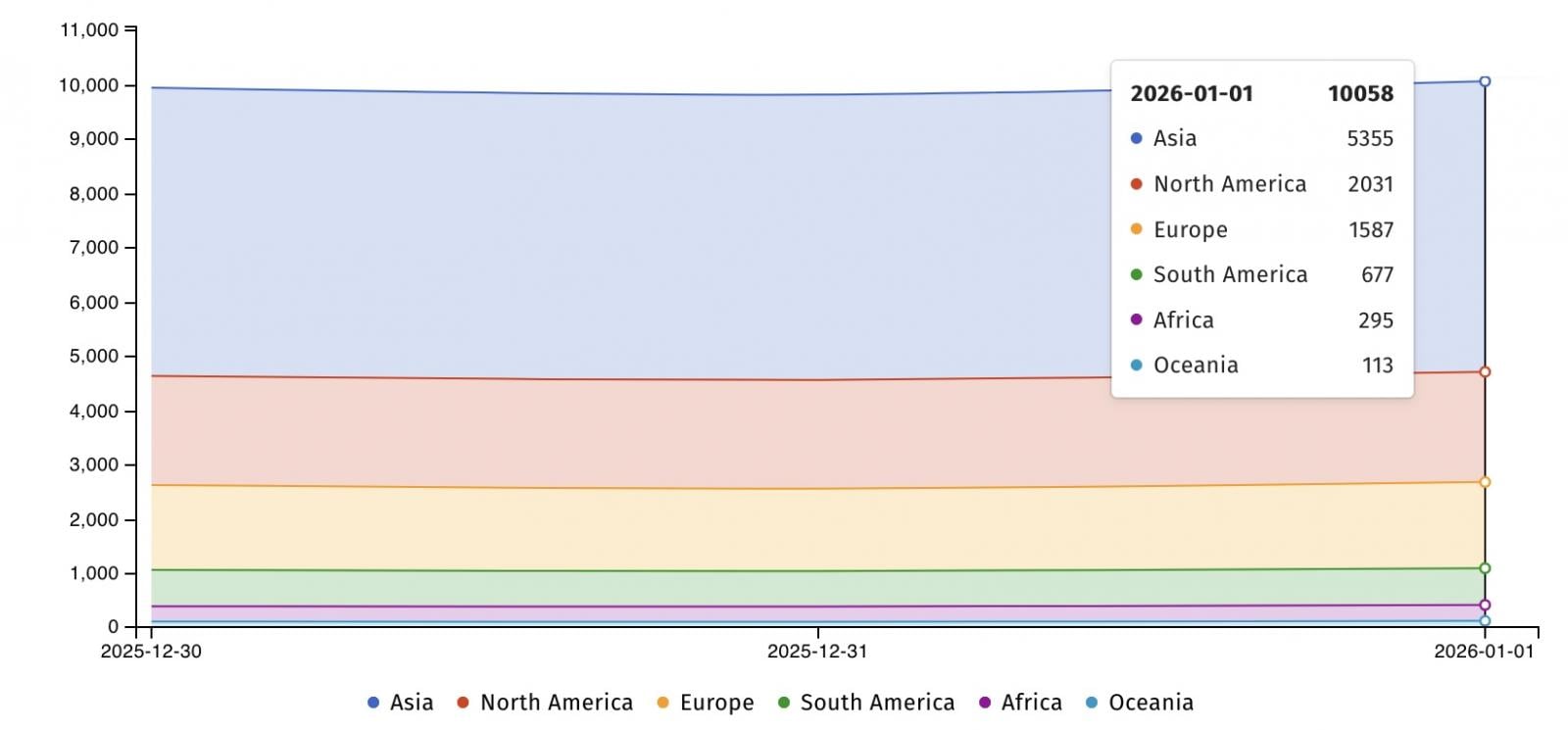
Internet security monitoring organizations provide a stark picture of the current exposure. Shadowserver, a prominent watchdog in the cybersecurity community, recently reported tracking over 10,000 Fortinet firewalls that are still accessible on the public internet, unpatched against CVE-2020-12812, and thus susceptible to these ongoing campaigns. A significant concentration of these vulnerable devices, exceeding 1,300 unique IP addresses, is located within the United States alone. This extensive footprint represents a vast attack surface, encompassing a diverse range of organizations from small and medium-sized businesses to potentially larger enterprises that may have overlooked or deprioritized the patch.
The implications of such widespread exposure are profound. Firewalls are the primary defensive barrier for most organizational networks, designed to control incoming and outgoing network traffic based on predetermined security rules. A successful bypass of a firewall’s authentication mechanism can grant attackers direct access to an organization’s internal network, allowing them to move laterally, escalate privileges, exfiltrate sensitive data, deploy malware (including ransomware), or establish persistent footholds for future operations. The sheer number of exposed devices means that many organizations may be unknowingly operating with a critical security flaw at their network perimeter, effectively leaving their digital doors ajar.
Historical Warnings and Escalating Threat Levels
The gravity of CVE-2020-12812 is not a recent revelation. National cybersecurity authorities have long highlighted its danger. In April 2021, the Cybersecurity and Infrastructure Security Agency (CISA) and the Federal Bureau of Investigation (FBI) jointly issued a warning, cautioning that state-sponsored hacking groups were actively leveraging exploits for multiple Fortinet FortiOS vulnerabilities, explicitly naming CVE-2020-12812 as a tool for 2FA bypass. This alert underscored the strategic value of such vulnerabilities to sophisticated adversaries, including nation-state actors, who seek to gain covert access to critical infrastructure and sensitive networks.
Further emphasizing its severity, CISA added CVE-2020-12812 to its authoritative Known Exploited Vulnerabilities (KEV) Catalog in November 2021. Inclusion in this catalog signifies that a vulnerability has been confirmed to be under active exploitation by threat actors, making it a critical priority for federal agencies. CISA’s directive mandated that all U.S. federal civilian executive branch agencies secure their systems against this flaw by May 2022. The catalog also explicitly noted the vulnerability’s exploitation in ransomware attacks, revealing the direct financial and operational risks it poses to any organization, regardless of its size or sector. The fact that a vulnerability identified as critical by national security agencies and patched years ago continues to be a widespread problem speaks volumes about the challenges of effective cybersecurity implementation.
A Pattern of Critical Vulnerabilities in Fortinet Products

The ongoing exploitation of CVE-2020-12812 is not an isolated incident but rather part of a discernible pattern of critical vulnerabilities affecting Fortinet products. As a leading vendor of network security solutions, Fortinet’s offerings are frequently targeted by threat actors due to their widespread deployment and strategic position within enterprise networks. This makes any identified weakness in their products a high-value target.
Recent examples further illustrate this trend:
- Late last year, cybersecurity firm Arctic Wolf alerted the industry to active exploitation of a newly patched critical authentication bypass vulnerability (CVE-2025-59718). This flaw allowed attackers to hijack administrative accounts through malicious single sign-on (SSO) logins, demonstrating the evolving tactics used to compromise privileged access.
- A month prior, Fortinet itself issued a warning regarding an actively exploited zero-day vulnerability in its FortiWeb web application firewall (WAF), identified as CVE-2025-58034. Zero-day vulnerabilities are particularly insidious as they are exploited before a patch is publicly available, leaving organizations with little immediate defense.
- Just a week after the FortiWeb zero-day disclosure, Fortinet confirmed that it had quietly patched a second FortiWeb zero-day (CVE-2025-64446), which had also been actively abused in widespread attacks. The rapid succession of these zero-day exploits underscores the intense focus of attackers on Fortinet’s security solutions.
- Earlier this year, Fortinet disclosed that the sophisticated Chinese state-sponsored threat group, Volt Typhoon, had exploited two FortiOS flaws (CVE-2023-27997 and CVE-2022-42475) to compromise a Dutch Ministry of Defence military network. These vulnerabilities facilitated the deployment of custom Coathanger remote access trojan (RAT) malware, highlighting the use of Fortinet flaws in high-stakes espionage campaigns.
This consistent stream of critical vulnerabilities, encompassing both N-day (patched but unapplied) and zero-day (unpatched) exploits, places a significant burden on organizations. It necessitates not only rapid patching capabilities but also continuous monitoring, robust incident response plans, and a proactive security posture to defend against a highly motivated and capable adversary ecosystem.
Strategic Implications and Path Forward
The pervasive nature of the CVE-2020-12812 issue, five years post-patch, serves as a critical case study in the broader challenges of cybersecurity resilience. For organizations, the implications extend beyond immediate technical fixes to fundamental aspects of security governance and risk management.
Key Recommendations for Organizations:
- Immediate Patching: The most urgent action is to identify and patch all FortiGate firewalls to the latest secure FortiOS versions that address CVE-2020-12812 and other known vulnerabilities. This should be a top priority for all IT and security teams.
- Configuration Review: Thoroughly review all FortiGate firewall configurations, paying particular attention to SSL VPN settings and LDAP integration. If vulnerable configurations are present, such as enabling LDAP with username-case-sensitivity, these must be remediated immediately. Disabling username-case-sensitivity remains a viable interim mitigation where patching is delayed.
- Vulnerability Scanning and Asset Management: Implement robust vulnerability scanning practices to continuously identify unpatched systems and misconfigurations. Maintain an accurate inventory of all network devices and their patch status.
- Network Segmentation: Employ strong network segmentation to limit the lateral movement of attackers even if an perimeter device is compromised. This can contain breaches and reduce their impact.
- Enhanced Monitoring: Deploy advanced threat detection and response solutions, including intrusion detection/prevention systems (IDS/IPS) and security information and event management (SIEM) platforms, to monitor firewall logs and network traffic for signs of compromise or suspicious activity.
- Multi-Factor Authentication (MFA) Enforcement: While CVE-2020-12812 bypasses 2FA, it underscores the critical importance of strong, pervasive MFA across all possible access points. Organizations should ensure MFA is enforced for all administrative and user accounts, ideally using phishing-resistant methods.
- Incident Response Planning: Develop and regularly test a comprehensive incident response plan to ensure the organization can effectively detect, contain, eradicate, and recover from a cybersecurity incident.
- Regular Audits and Penetration Testing: Conduct periodic security audits and penetration tests to identify weaknesses that automated scans might miss, including logic flaws in authentication mechanisms.
Vendor and Industry Perspective:
For vendors like Fortinet, the continuous emergence and exploitation of critical vulnerabilities necessitate a heightened focus on secure development lifecycle (SDL) practices, rigorous internal security testing, and transparent communication with customers. While patches are crucial, ensuring that these patches are effectively deployed across the customer base requires ongoing awareness campaigns and simplified update processes.
From an industry perspective, the Fortinet situation is a microcosm of a larger systemic issue: the enduring "N-day" vulnerability problem. Organizations must shift from a reactive "patch when attacked" mentality to a proactive, continuous security posture. This involves prioritizing security investments, fostering a culture of cybersecurity awareness, and recognizing that foundational security hygiene, such as timely patching, is paramount to resilience in an increasingly hostile digital landscape. The battle against cyber threats is ongoing, and the continuous exposure of critical infrastructure to known vulnerabilities represents an unnecessary and dangerous liability that the global cybersecurity community must collectively address.



 Lisa Mariana
 Aura Kasih
 Ayu Aulia