
 Ridwan Kamil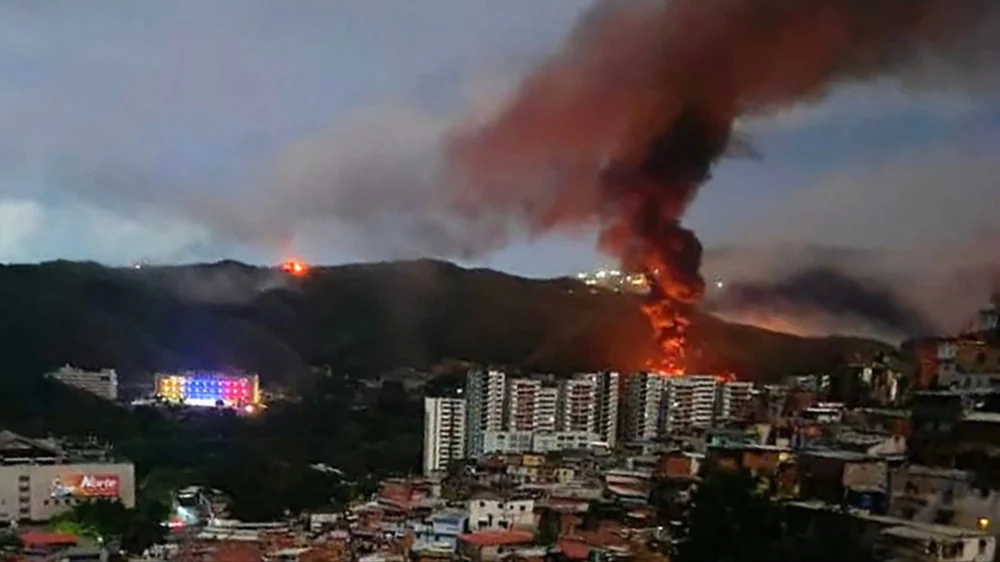
Former President Donald Trump has escalated his public pronouncements concerning Venezuela, launching a pointed critique of the current leadership and signaling a potential shift in his approach to the South American nation should he return to office. This heightened rhetoric, delivered through various public statements and social media platforms, has drawn significant attention from international observers and policymakers, prompting a deeper examination of the underlying geopolitical implications and potential future policy trajectories.
The core of Trump’s recent commentary revolves around the persistent political and economic crisis gripping Venezuela. He has consistently characterized the government of Nicolás Maduro as illegitimate and detrimental to the well-being of the Venezuelan people, frequently employing strong condemnatory language. These statements are not entirely new; during his presidency, Trump’s administration pursued a policy of "maximum pressure" against Maduro’s government, characterized by sanctions, diplomatic isolation, and support for opposition leader Juan Guaidó. However, the current pronouncements suggest a potential re-emphasis and perhaps an intensification of these strategies, reflecting a continuation of his pre-existing foreign policy doctrine towards countries perceived as adversaries.
The context for Trump’s renewed focus on Venezuela is multifaceted. Internally, the ongoing humanitarian crisis, marked by widespread poverty, food shortages, and mass emigration, continues to be a significant concern for the international community. Millions of Venezuelans have fled the country, creating regional instability and straining the resources of neighboring nations. Externally, Venezuela’s strategic location, its significant oil reserves, and its complex relationships with other global powers, including Russia and China, make it a focal point of geopolitical interest. Trump’s pronouncements often align with a broader conservative foreign policy framework that prioritizes challenging perceived authoritarian regimes and promoting democratic ideals, albeit through a lens that emphasizes national interests and decisive action.
Trump’s critique of the Venezuelan regime often centers on allegations of corruption, human rights abuses, and electoral fraud. He has frequently voiced concerns about the erosion of democratic institutions and the suppression of political dissent within the country. These criticisms echo the findings of numerous international organizations, including the United Nations and various human rights advocacy groups, which have documented extensive human rights violations and the systematic dismantling of democratic processes under Maduro’s leadership. The economic collapse, exacerbated by years of mismanagement, volatile oil prices, and international sanctions, has further fueled the widespread discontent and desperation among the Venezuelan population.
The implications of Trump’s intensified rhetoric extend beyond rhetorical pronouncements. Should he secure a second term in office, it is plausible that his administration would revisit and potentially re-implement policies aimed at isolating and pressuring the Maduro government. This could involve a recalibration of existing sanctions, potentially targeting a wider range of individuals and entities, or exploring new avenues for diplomatic engagement with opposition factions. The effectiveness of such measures, however, remains a subject of debate. While sanctions have undoubtedly inflicted economic hardship on Venezuela, they have not, to date, led to a fundamental shift in the political landscape or the removal of Maduro from power. Critics argue that sanctions can disproportionately harm the civilian population and may entrench the regime by fostering a siege mentality.
Furthermore, any renewed focus on Venezuela by a potential Trump administration would necessitate careful consideration of the regional dynamics at play. Neighboring countries, such as Colombia, Brazil, and Ecuador, have borne the brunt of the Venezuelan exodus and have varying approaches to addressing the crisis. Engaging with these nations to forge a cohesive regional strategy would be crucial for any impactful policy initiative. Moreover, the involvement of other global powers, particularly Russia and China, which have maintained diplomatic and economic ties with Venezuela, presents a complex challenge. Any concerted effort to alter the Venezuelan status quo would likely require navigating these intricate international relationships and potentially confronting the influence of these key players.
The historical context of U.S. involvement in Venezuela is also pertinent. The United States has a long-standing interest in the stability and democratic development of Latin America, and its policies towards Venezuela have evolved over decades, reflecting shifts in political administrations and regional challenges. The Obama administration, for instance, also imposed sanctions and expressed concerns about human rights abuses. Trump’s approach, however, was often characterized by a more confrontational and unilateral style, emphasizing direct challenges to perceived adversaries. This approach, while resonating with a segment of his domestic base, also generated controversy and skepticism among some international allies.
From an analytical perspective, Trump’s pronouncements on Venezuela can be viewed as part of a broader foreign policy agenda that prioritizes national sovereignty, a skeptical view of multilateral institutions, and a willingness to employ assertive measures to achieve perceived national interests. His focus on "America First" often translates into a desire to reshape international relations to favor U.S. interests, even if it means deviating from established diplomatic norms or challenging existing global alliances. In the case of Venezuela, this could manifest as a renewed effort to isolate the Maduro regime diplomatically and economically, with the stated goal of fostering conditions for democratic transition.
However, the effectiveness of such a strategy is not guaranteed. The Venezuelan crisis is deeply entrenched, with a complex interplay of internal political factors, economic pressures, and external influences. Any policy aimed at resolving the crisis would need to be comprehensive, adaptable, and grounded in a nuanced understanding of these interconnected elements. Simply re-implementing policies that have had limited success in the past may not yield different results. A more sophisticated approach might involve a combination of targeted sanctions, diplomatic engagement with all relevant stakeholders, humanitarian assistance, and support for verifiable democratic processes.
The future outlook for Venezuela remains uncertain, with a multitude of factors contributing to its ongoing challenges. The internal political landscape is characterized by deep divisions and a lack of trust between the government and the opposition. The economic situation continues to be dire, with hyperinflation and a collapse of essential services. The role of international actors, including the United States, Russia, and China, will undoubtedly play a significant role in shaping the country’s trajectory.
Trump’s renewed focus on Venezuela signals a potential shift in the global conversation surrounding the South American nation. His assertive rhetoric and his past policy actions suggest that a future Trump administration would likely pursue a more interventionist and confrontational approach. The effectiveness and the broader implications of such a strategy will depend on a variety of factors, including the specific policies adopted, the willingness of regional and international partners to cooperate, and the evolving internal dynamics within Venezuela itself. As the political landscape continues to shift, the international community will be closely watching to see how these pronouncements translate into concrete policy and what impact they will have on the future of Venezuela and its long-suffering population.
The sustained crisis in Venezuela has had profound humanitarian consequences, leading to one of the largest displacement crises in recent history. Millions have sought refuge in neighboring countries, straining social services and creating significant regional challenges. This mass exodus underscores the severity of the situation and the urgent need for effective solutions. The economic collapse, characterized by hyperinflation, widespread shortages of essential goods, and a decline in oil production, has devastated the country’s infrastructure and severely impacted the quality of life for its citizens.
From a geopolitical standpoint, Venezuela’s strategic location and its significant oil reserves make it a point of contention for global powers. The Maduro government has deepened its ties with Russia and China, receiving financial and military support, which has complicated international efforts to exert pressure. These alliances have provided a lifeline to the regime, enabling it to withstand international sanctions and maintain its grip on power. Any potential U.S. policy shift under Trump would need to carefully consider the implications of these existing relationships and the potential for increased geopolitical friction.
The debate surrounding the efficacy of U.S. sanctions on Venezuela is ongoing. Proponents argue that sanctions are a necessary tool to pressure the regime and hold it accountable for its actions. Critics, however, contend that sanctions have inflicted undue suffering on the Venezuelan population and have failed to achieve their intended political objectives. The humanitarian impact of sanctions, particularly on access to food, medicine, and other essential goods, remains a significant concern. Any future policy would need to balance the desire to exert pressure on the regime with the imperative to alleviate the suffering of the Venezuelan people.
Moreover, the internal political dynamics within Venezuela are crucial to understanding the challenges ahead. The opposition movement has faced internal divisions and external pressures, making it difficult to present a united front. The absence of a clear and viable path to a peaceful and democratic transition remains a significant obstacle. Any external intervention or policy initiative would need to be carefully coordinated with credible internal actors and support genuine democratic aspirations.
The discourse surrounding Venezuela also highlights broader questions about the role of the United States in Latin America and the effectiveness of its foreign policy tools. The Trump administration’s approach, characterized by a willingness to challenge established norms and to prioritize unilateral action, could signal a return to more assertive and potentially disruptive foreign policy strategies. The impact of such an approach on regional stability and international cooperation remains a subject of considerable debate.
Ultimately, the situation in Venezuela is a complex and multifaceted crisis with deep historical roots and far-reaching implications. Donald Trump’s renewed focus on the country, coupled with his characteristic rhetoric, suggests a potential shift in U.S. policy should he return to the presidency. The effectiveness and the consequences of any such policy will depend on a careful consideration of the intricate political, economic, and geopolitical factors at play, as well as a nuanced understanding of the humanitarian needs of the Venezuelan people. The international community will be observing closely as this situation continues to evolve.


 Aura Kasih
 Safa Marwah
 Ayu Aulia


