Ayu Aulia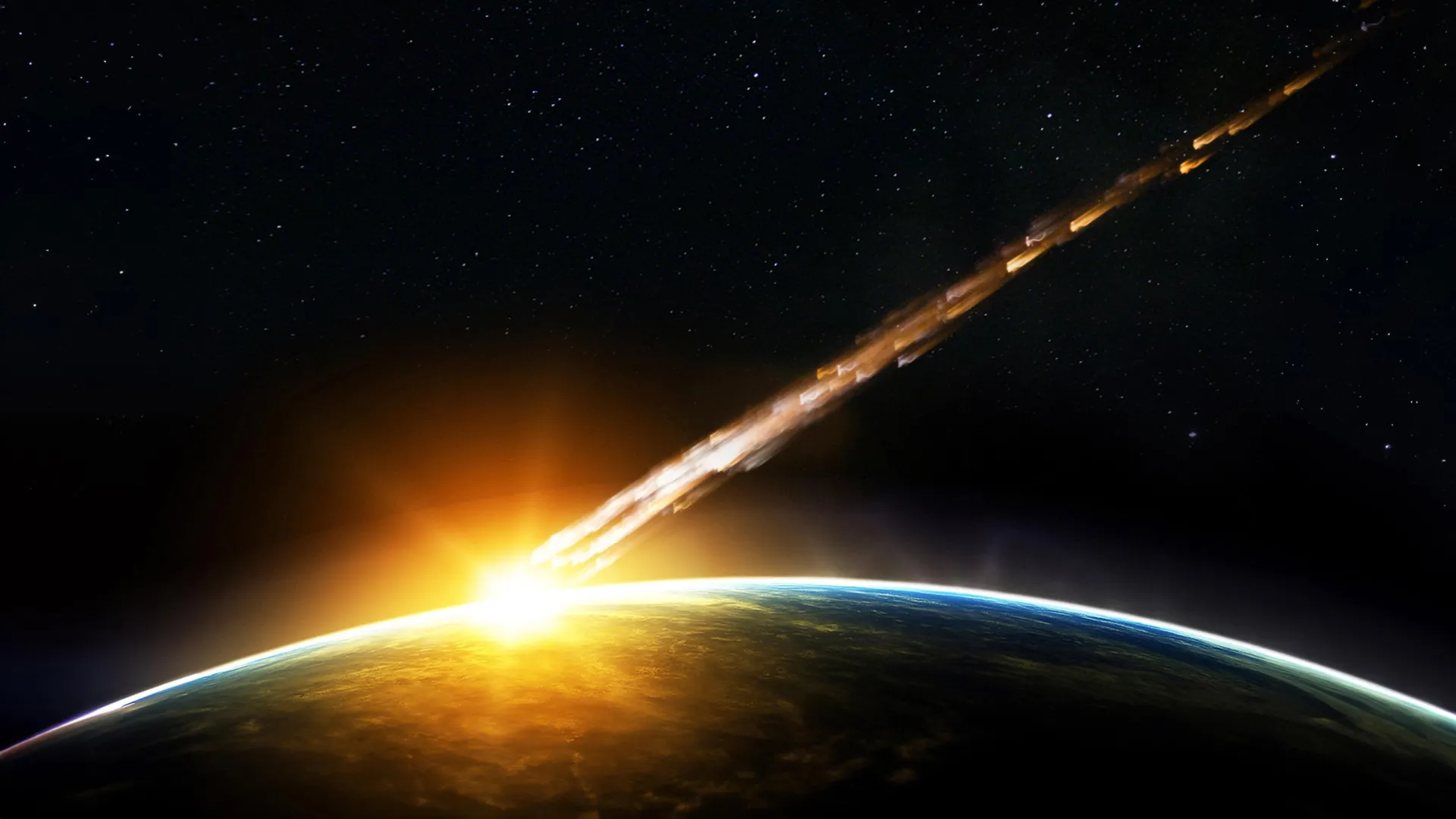
A growing body of scientific inquiry is progressively solidifying the hypothesis that an extraterrestrial object, likely a fragmented comet, underwent explosive atmospheric disintegration approximately 12,800 years ago. This monumental event is increasingly implicated as a primary driver behind the rapid demise of North America’s iconic megafauna, including woolly mammoths and mastodons, alongside the abrupt cessation of the distinctive Clovis cultural complex across the continent. New research, focusing on microscopic geological markers, significantly reinforces this controversial yet compelling theory.
The period marking this proposed catastrophe coincides precisely with the onset of the Younger Dryas, a geologically sudden and profound climatic oscillation that plunged the Northern Hemisphere back into near-glacial conditions for approximately 1,200 years. This abrupt reversal interrupted a broader post-glacial warming trend, presenting a long-standing enigma for paleoclimatologists. The synchronous disappearance of numerous large mammal species—a mass extinction event of staggering scale—and the archaeological record’s puzzling void left by the Clovis people, who crafted distinctive fluted projectile points and were the predominant human inhabitants of North America at the time, have long fueled intense academic debate regarding their ultimate causes.
The Younger Dryas impact hypothesis posits that the atmospheric detonation of multiple comet fragments unleashed a cataclysmic cascade of environmental devastation. Unlike a single, large impactor creating a prominent crater, this scenario envisions a widespread series of airbursts, generating immense thermal energy and powerful shockwaves over vast continental expanses. This immediate destruction, followed by a prolonged period of environmental disruption, is proposed as the trigger for the dramatic climate shift and the ensuing biological and cultural collapses.
Recent findings, published in a leading scientific journal, offer compelling new evidence from three pivotal archaeological sites: Murray Springs in Arizona, Blackwater Draw in New Mexico, and Arlington Canyon on California’s Channel Islands. These locations are celebrated for their rich archaeological layers documenting the terminal Pleistocene megafaunal extinctions and the final appearance of Clovis artifacts. At each site, researchers have identified a critical geological signature: shocked quartz grains. These microscopic sand particles exhibit internal structural alterations—distinctive fractures and deformations—that are unequivocally indicative of exposure to extreme temperatures and pressures far beyond those generated by conventional terrestrial processes.
The diagnostic power of shocked quartz stems from its unique formation conditions. Quartz, a common mineral, is ordinarily resistant to structural change. However, under the immense pressures and temperatures characteristic of hypervelocity impacts—such as those produced by a cosmic object striking or exploding near Earth’s surface—its crystal lattice can be permanently deformed. These deformations manifest as microscopic planar features (planar deformation features, or PDFs) and melt lamellae within the grain structure. The presence of such features differentiates impact events from other high-energy phenomena like volcanic eruptions or tectonic shifts, which produce different types of mineral alteration. The team employed advanced analytical techniques, including scanning electron microscopy and cathodoluminescence, to meticulously examine these grains. This allowed for precise identification of the characteristic impact-induced damage, some grains even showing evidence of localized melting and rapid resolidification of silica, further substantiating their extraterrestrial origin.
Beyond shocked quartz, the Younger Dryas impact hypothesis is supported by a diverse array of other geological and geochemical proxies found within the same stratigraphic layer across numerous sites in North America, Europe, and South America. One of the most widely recognized markers is the "black mat" layer—a distinct, dark, carbon-rich sediment horizon dated to approximately 12,800 years ago. This layer is interpreted as evidence of widespread biomass burning, suggesting vast wildfires ignited by the initial thermal pulse of the airbursts. The deposition of this carbon-rich material, often containing charcoal and soot, points to an environmental event of unprecedented scale.
Further reinforcing the cosmic origin are anomalous concentrations of extraterrestrial markers. Elevated levels of platinum and iridium, elements relatively rare in Earth’s crust but abundant in asteroids and comets, have been detected within the Younger Dryas boundary layer. The presence of nanodiamonds, microscopic diamonds formed under extreme pressures and temperatures, also points strongly towards an impact event. Additionally, researchers have identified metallic spherules and meltglass—tiny, spherical particles and glassy fragments formed when terrestrial materials are melted by intense heat and then rapidly cooled. The distinctive morphology and chemical composition of these spherules and meltglass distinguish them from volcanic or anthropogenic origins, providing further robust evidence for an extraterrestrial impact.
A common misconception regarding cosmic impacts is the necessity of a large, visible crater. However, the Younger Dryas impact hypothesis accounts for the absence of such a feature by proposing an atmospheric fragmentation and airburst scenario. Unlike the Chicxulub impactor, which created a massive crater beneath the Yucatán Peninsula and is linked to the dinosaur extinction event, a fragmented comet entering Earth’s atmosphere would likely disintegrate and explode at various altitudes. Events like the 1908 Tunguska event in Siberia or the 2013 Chelyabinsk meteor over Russia serve as modern, albeit smaller-scale, examples of the immense destructive power unleashed by atmospheric airbursts without leaving a traditional impact crater.
The hydrocode modeling employed by the research team further elucidates how such low-altitude explosions could generate the specific shock patterns observed in the quartz grains. These sophisticated simulations demonstrate that fragmented objects entering the atmosphere would create a gradient of pressures and temperatures across a broad region. This would result in a range of shocked quartz manifestations, from highly deformed grains to those exhibiting less intense but still diagnostic alterations. The observed variability in shock levels within the collected samples aligns precisely with the predictions of such airburst models, providing a crucial piece of corroborating evidence.
The implications of this cosmic event are profound and far-reaching. The immediate effects—blast waves capable of flattening forests, widespread thermal radiation igniting massive wildfires, and subsequent atmospheric loading with smoke, soot, and dust—would have directly devastated ecosystems and human populations. This "impact winter" effect, characterized by reduced sunlight penetration and global dimming, would have severely disrupted photosynthesis, leading to widespread plant death and a collapse of the food web. Furthermore, the rapid melting of residual ice sheets due to intense heat could have injected massive volumes of freshwater into the North Atlantic Ocean, potentially disrupting the thermohaline circulation—the "global conveyor belt" of ocean currents—and thereby triggering the dramatic and sustained cooling characteristic of the Younger Dryas.
For North America’s megafauna, already potentially stressed by pre-existing climate shifts and human hunting pressures, the Younger Dryas impact would have delivered a fatal blow. Habitat destruction, loss of food sources, and rapid, extreme climate fluctuations would have pushed many species beyond their adaptive capacities, leading to their swift extinction. Similarly, the Clovis culture, highly dependent on these megafauna for sustenance and resources, would have faced an existential crisis. The sudden scarcity of game, widespread environmental degradation, and the general chaos resulting from such an event would have necessitated rapid adaptation, population displacement, or outright cultural collapse, explaining their abrupt disappearance from the archaeological record.
While the Younger Dryas impact hypothesis continues to be a subject of vigorous scientific debate, the accumulating evidence, particularly the robust new findings regarding shocked quartz from multiple iconic sites, significantly strengthens its standing. This research not only provides a plausible explanation for one of Earth’s most enigmatic periods of rapid climate change and mass extinction but also underscores the profound influence extraterrestrial events can have on planetary systems and the trajectory of life. Future research will undoubtedly focus on identifying additional impact proxies, refining dating techniques, and developing more sophisticated climate and ecological models to fully unravel the intricate web of consequences initiated by this prehistoric cosmic catastrophe. The continuous pursuit of such evidence is crucial for a more complete understanding of Earth’s dynamic history and for assessing potential future cosmic threats.




 Aura Kasih
 Safa Marwah