
 Aura Kasih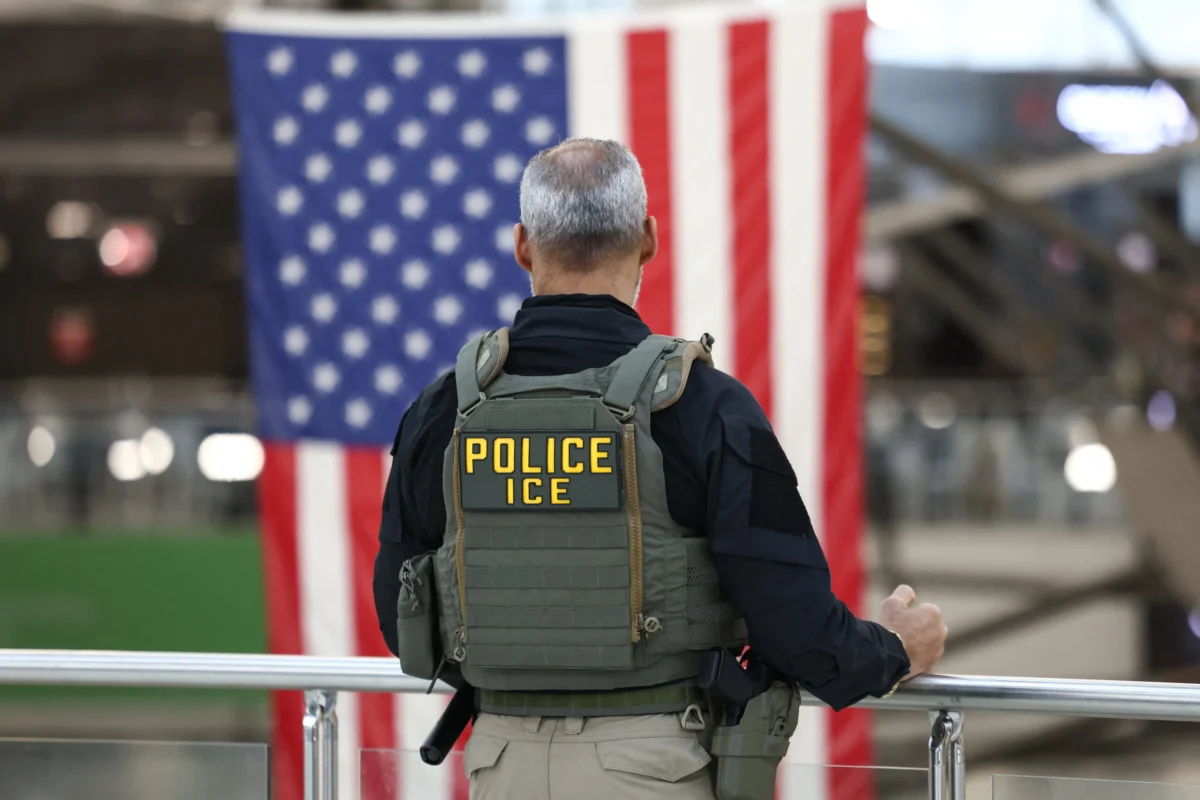
The ongoing partial government shutdown, a consequence of congressional deadlock over funding for the Department of Homeland Security (DHS), has cast a long shadow over the nation’s airports, leading to significant operational disruptions and heightened public anxiety. In an effort to purportedly mitigate the fallout of staffing shortages and extended wait times, President Donald Trump authorized the deployment of hundreds of Immigration and Customs Enforcement (ICE) agents to major airports across the country. This strategic redeployment, however, has ignited a fervent debate regarding the actual duties of these agents and the broader implications of their presence in civilian transit hubs, particularly given ICE’s reputation for robust enforcement actions.
The genesis of the current airport chaos can be traced to the expiration of appropriations for the Department of Homeland Security on February 14th. While many federal agencies within DHS, such as the Transportation Security Administration (TSA), Federal Emergency Management Agency (FEMA), Coast Guard, and Cybersecurity and Infrastructure Security Agency (CISA), have been impacted by the funding lapse, negotiations have specifically stalled over the allocation of funds for ICE and Customs and Border Protection (CBP). Democrats have sought to tie DHS funding to legislative reforms, including mandates for agents to wear identifiable insignia, while Republicans have countered with proposals like the SAVE Act, which includes provisions for voter identification that critics argue could disenfranchise millions. This protracted legislative impasse has created a volatile environment where essential services face strain and uncertainty.
The immediate and most visible consequence of this shutdown has been the degradation of the passenger screening experience. With a significant percentage of TSA officers, many of whom are federal employees working without pay, opting to call out sick, airports nationwide have grappled with unprecedented security line lengths. This has forced travelers, including the author of this report, to arrive at airports hours earlier than usual, transforming what should be a routine travel experience into a stressful ordeal. The perceived inaction of the government in resolving the shutdown has amplified passenger frustration, creating an atmosphere ripe for further disruption.
It was within this context of heightened tension and operational strain that President Trump announced the deployment of between 100 and 150 ICE agents to several airports. The stated objective was to "manage these growing, impatient crowds and alleviate wait times." However, the reality on the ground, as observed by this correspondent at John F. Kennedy International Airport (JFK), painted a different picture. Instead of actively assisting with passenger processing or crowd management, ICE agents were predominantly observed standing in small groups, often near check-in areas or within terminals, engaging in casual conversation.

At JFK’s Terminal 4, for instance, the author encountered four agents from ICE’s Enforcement and Removal Operations (ERO) division, the unit responsible for immigration arrests and raids, congregated near the Delta Sky Priority check-in. Their presence, while noted, did not appear to directly contribute to alleviating the burgeoning TSA queue, which had already reached a considerable length. Subsequent observations across other terminals at JFK yielded a similar pattern. In Terminal 5, six ERO agents were seen near a coffee stand. Terminal 7 housed five agents from Homeland Security Investigations (HSI), a division historically tasked with investigating serious crimes such as terrorism and human smuggling, but which under the current administration has seen its resources diverted towards immigration enforcement efforts. These HSI agents, like their ERO counterparts, were observed in a circular huddle, engaged in conversation rather than actively supporting passenger flow. This observation raises critical questions about the strategic deployment of specialized law enforcement personnel in a civilian airport environment.
The anecdotal evidence gathered at JFK suggests a disconnect between the stated purpose of the ICE deployment and the observed actions of the agents. While no direct instances of the agents assisting with security screening were documented, their presence did evoke a sense of unease among travelers. This apprehension is not unfounded, given ICE’s mandate and the agency’s history of high-profile enforcement actions. A viral video circulating from San Francisco International Airport, depicting ICE agents tackling a woman to the ground, further fueled public concern, although the precise timing and context of that incident relative to the broader deployment remain unclear. The mere visual of armed federal agents, whose primary function involves immigration enforcement, patrolling areas frequented by the general public can inadvertently create an atmosphere of intimidation, regardless of their immediate operational tasks.
The operational capacity of ICE and CBP has, paradoxically, been largely unaffected by the DHS funding lapse due to the provisions of the 2025 One Big Beautiful Bill Act. This legislation allocated a substantial $170 billion for immigration enforcement through 2029, effectively insulating these agencies from the immediate financial constraints impacting others within DHS. This financial resilience, while ensuring the continuity of immigration enforcement operations, exacerbates the perceived inequity of the shutdown’s impact, where agencies directly involved in public safety and essential services like TSA struggle with funding while enforcement-focused agencies continue their work unabated.
The broader societal implications of this deployment extend beyond the immediate airport experience. The visible presence of immigration enforcement officers in civilian spaces can have a chilling effect on immigrant communities, fostering a climate of fear and suspicion. For individuals who may be undocumented or have family members with precarious immigration status, encountering ICE agents in a place of travel can transform a routine journey into a potentially perilous encounter. This is particularly concerning as airports are hubs of diverse populations, and the conflation of routine travel with immigration enforcement can have disproportionate impacts.
The situation at airports has continued to devolve since the initial deployment. Reports indicate a significant increase in TSA agent call-outs nationwide, with some airports experiencing critically low staffing levels. At Houston’s George Bush Intercontinental Airport, for example, over 47% of TSA agents were absent on a single day, leading to wait times stretching to four hours. In response to the mounting passenger distress, ICE agents at this Houston airport were observed distributing water bottles, a gesture that, while seemingly helpful, underscores the agency’s role in responding to the fallout of a crisis it was ostensibly deployed to alleviate, rather than prevent.

The political landscape surrounding the DHS funding negotiations remains complex and contentious. While there have been indications of potential bipartisan compromise, including proposals to fund TSA and other critical agencies while excluding funds for ICE enforcement, a definitive resolution has yet to materialize. The airline industry, acutely sensitive to passenger experience and operational efficiency, has begun to exert its own pressure. Delta Airlines, citing the impact of the shutdown on resources, announced the suspension of standalone service for members of Congress until TSA funding is reinstated. This move, intended to ensure that lawmakers experience the same disruptions as their constituents, may indeed inject a renewed sense of urgency into the legislative process.
The question of what ICE is actually doing at the airport, based on direct observation, is complex. While their stated purpose was to manage crowds and alleviate wait times, their visible actions at JFK did not align with this objective. They were not seen actively directing passengers, assisting with baggage screening, or expediting the security process. Instead, they were primarily observed in static positions, seemingly waiting or engaged in internal discussions. This discrepancy raises critical questions about the effectiveness of such deployments and the potential for their presence to serve a purpose beyond overt crowd management, perhaps as a show of force or a deterrent, even if not actively engaged in enforcement actions at that moment.
The Port Authority of New York and New Jersey, when queried about the ICE presence, provided a statement emphasizing that any personnel assigned to assist with passenger processing would be "appropriately trained and focused on supporting screening operations, consistent with maintaining the safety, integrity, and efficiency of the security process at our airports and protecting the flying public." This official statement, however, appears to be at odds with the on-the-ground observations, suggesting a potential disconnect between policy directives and operational realities.
Looking ahead, the resolution of the DHS funding impasse is paramount to restoring normalcy to the nation’s airports. Until a legislative agreement is reached, the specter of operational disruptions, passenger frustration, and the unsettling presence of immigration enforcement agents in civilian transit hubs will likely persist. The current situation serves as a stark reminder of the interconnectedness of government functions and the profound impact that political deadlock can have on the daily lives of citizens and the efficient operation of critical infrastructure. The deployment of ICE agents to airports, while framed as a measure to address the shutdown’s fallout, has inadvertently amplified anxieties and ignited a necessary dialogue about the appropriate role of immigration enforcement agencies within civilian spaces during times of governmental instability. The long-term implications of such deployments, both for public trust and the perception of law enforcement, warrant careful consideration as the nation navigates this ongoing crisis.



 Safa Marwah
 Lisa Mariana

 Ayu Aulia