
 Lisa Mariana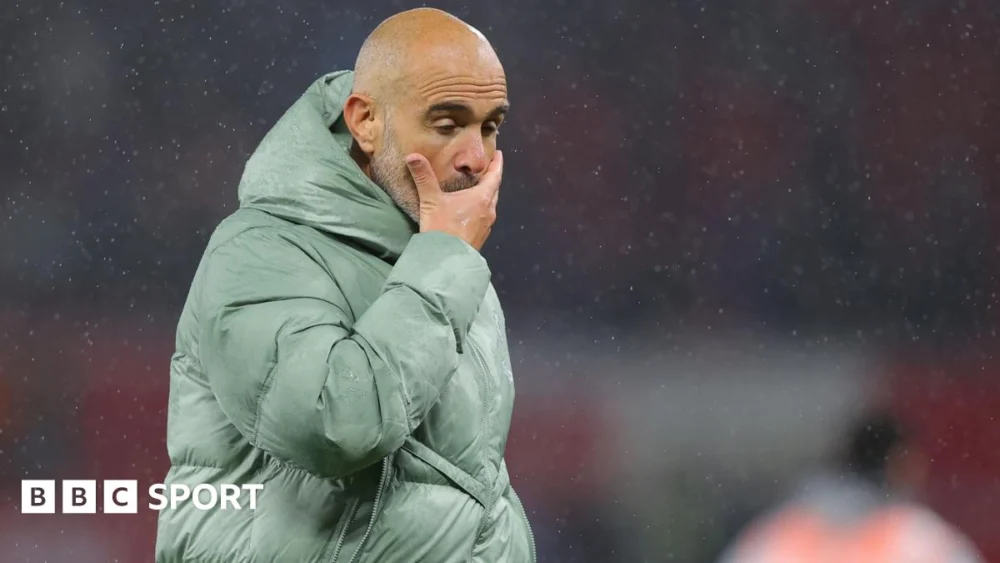
Enzo Maresca’s tenure as Chelsea manager has concluded prematurely, with the club positioned fifth in the Premier League standings, a decision underscoring a profound divergence between the Italian tactician and the Stamford Bridge hierarchy that transcended mere on-field performance. This unexpected rupture, occurring less than six months after Maresca guided the Blues to a Club World Cup triumph, highlights the formidable challenges inherent in navigating the complex dynamics of modern elite football management.
The announcement of Maresca’s departure arrived as a jolt, despite a recent downturn in domestic form. Chelsea currently occupies fifth place, a position that, while not meeting the lofty ambitions often associated with the club, still offers a potential pathway to European competition. However, the club’s statement, citing a belief that "a change gives the team the best chance of getting the season back on track" for key objectives including Champions League qualification, points to a deeper malaise. The Blues’ recent Premier League record, securing only one victory in their last seven league encounters and amassing a meagre six points from a possible eighteen in December, certainly contributed to the perception of a season losing momentum. Yet, as internal reports suggest, the deteriorating results were merely a symptom of a more fundamental breakdown in trust and vision.
Maresca’s initial period at Stamford Bridge was marked by a surprising degree of success, swiftly culminating in a Club World Cup title in his first season. This achievement, alongside a top-four Premier League finish and a UEFA Conference League victory in the preceding campaign, had initially endeared him to key decision-makers within the club, including sporting directors Paul Winstanley and Laurence Stewart, and influential co-owner Behdad Eghbali. With a contract extending until 2029, the long-term prospects appeared stable. However, this early period of ascendancy proved ephemeral, giving way to a rapidly escalating series of disagreements and perceived breaches of professional conduct that ultimately rendered the relationship untenable.
The friction between Maresca and the club’s hierarchy began to manifest through a series of incidents, some subtle, others overtly public. A pivotal moment occurred following Chelsea’s solitary Premier League victory in December against Everton, when Maresca, without prior consultation with club staff or senior management, publicly declared that the preceding 48 hours had been his "worst" since joining the club. Such candid and unsanctioned commentary, particularly concerning internal matters, is widely considered an egregious breach of the discretion expected from a manager at a top-tier institution. For the club, this public airing of grievances, rather than private dialogue, was deeply problematic and marked a significant turning point in the relationship, rendering it, in the eyes of the ownership, irreparable.
Beyond this verbal misstep, Maresca’s aspirations to cultivate a personal brand separate from the club’s image further exacerbated tensions. His attempts to publish a book were reportedly blocked by Chelsea, and his unsanctioned appearance at Il Festival dello Sport, an event organized by La Gazzetta dello Sport in Italy, demonstrated a clear intent to elevate his individual profile without the club’s express permission. In an era where club branding and unified messaging are paramount, such actions were viewed as an undermining of collective interests. Furthermore, the managerial market’s fluidity was underscored by Maresca’s switch of representation from the Wasserman agency to the influential Jorge Mendes, a move that inevitably fueled speculation about his long-term future, particularly with whispers of him being a potential successor to Pep Guardiola at Manchester City – a notion Maresca himself had dismissed, but one that nonetheless added to the perception of a manager with an eye on opportunities beyond Stamford Bridge.
A more profound ideological conflict emerged regarding transfer policy. Maresca publicly expressed his disagreement with the club’s decision not to acquire a central defender following Levi Colwill’s anterior cruciate ligament injury in pre-season. This direct challenge to the club’s strategic direction, which prioritizes the development and progression of academy prospects like Josh Acheampong, highlighted a fundamental divergence in philosophy. While Maresca sought immediate, experienced solutions to bolster his squad, the club’s hierarchy was committed to a longer-term vision that integrated youth development, even at the cost of short-term tactical preferences. The eventual decision by Maresca to retract his stance, reportedly after the club explained the potential ramifications for academy talent retention, underscored the power dynamics at play and the limits of managerial autonomy within Chelsea’s structure.
The growing detachment was also evident in more symbolic gestures. Maresca increasingly eschewed club tracksuits in favour of his own clothing, a subtle yet discernible signal of disengagement. His absence from post-match media duties following a 2-2 draw with Bournemouth on December 30th, ostensibly due to illness, was understood by insiders to be more indicative of him contemplating his future than a genuine health issue. The ultimate public statement of this fractured relationship came on New Year’s Eve, when Chelsea’s social media channels released a 52-second video summarizing the year’s events, conspicuously devoid of any footage or mention of their head coach. These seemingly minor incidents, when aggregated, painted a clear picture of a relationship in terminal decline.
From Maresca’s perspective, the pressure exerted upon him was disproportionate, given what he perceived as arduous working conditions. He reportedly felt that attempts to influence his team selection crossed a professional boundary, infringing upon his managerial autonomy. While he did not express anger over managing a predominantly young squad, he believed that supporters’ expectations needed to be meticulously managed, particularly in light of significant injuries to key players such as Colwill and the influential attacker Cole Palmer. He likely viewed the club’s aggressive transfer strategy, which has seen a high turnover of players and significant investment in young talent, as a double-edged sword: providing potential for the future but demanding patience and realistic expectations in the present, qualities often in short supply at a club of Chelsea’s stature.
Initially, Chelsea had planned to conduct a comprehensive assessment of Maresca’s position at the culmination of the season, contingent upon an improvement in results. However, the palpable and escalating unhappiness of the manager himself, coupled with the irreparable damage to the working relationship, ultimately accelerated the decision to part ways. This premature termination carries significant financial implications and further adds to Chelsea’s reputation for managerial instability, potentially complicating future recruitment efforts.
The immediate aftermath of Maresca’s departure leaves Chelsea in a precarious position, facing Manchester City in a crucial fixture without a named head coach. Assistant manager Willy Caballero, who followed Maresca from Leicester in 2024 and previously deputized during touchline bans, is a likely candidate to assume interim charge of training and the upcoming match, pending any official announcement regarding his own future.
The search for a permanent successor is now underway, with several prominent names emerging as potential candidates, reflecting Chelsea’s broad and often complex recruitment strategies. Liam Rosenior, currently impressing as manager of Strasbourg – a club within the same multi-club ownership structure as Chelsea – is a strong internal candidate, his profile aligning with the broader vision of integrated talent development. Roberto de Zerbi, the current Marseille manager, remains highly regarded by the Chelsea hierarchy, with co-owner Eghbali having met him in the past, suggesting a sustained admiration for his tactical philosophy. Other managers previously interviewed before Maresca’s appointment, such as Ipswich boss Kieran McKenna and Tottenham’s Thomas Frank, may re-enter consideration. Additionally, Crystal Palace’s Oliver Glasner and Bournemouth’s Andoni Iraola are likely to be evaluated, their recent performances in the Premier League having garnered attention for their progressive and effective approaches. The next appointment will be critical in shaping the club’s trajectory, not only for the remainder of the current season but also for establishing a more coherent long-term strategy.
This latest managerial change at Stamford Bridge underscores a recurring theme in Chelsea’s recent history: a consistent struggle to align managerial vision with the club’s overarching strategic direction, particularly under its new ownership. The rapid turnover of head coaches, even those achieving silverware, points to a deeper issue concerning institutional stability, communication protocols, and the balance between immediate results and long-term development. The challenge for the incoming manager will be immense, not only to arrest the current slide and meet ambitious performance targets but also to navigate a complex organizational structure and foster a cohesive working relationship that can withstand the inevitable pressures of elite football. The club’s identity, transfer market approach, and the morale of its expansive squad and fervent fanbase will all hinge on the success of this pivotal appointment.


 Aura Kasih
 Ayu Aulia
 Safa Marwah