Lisa Mariana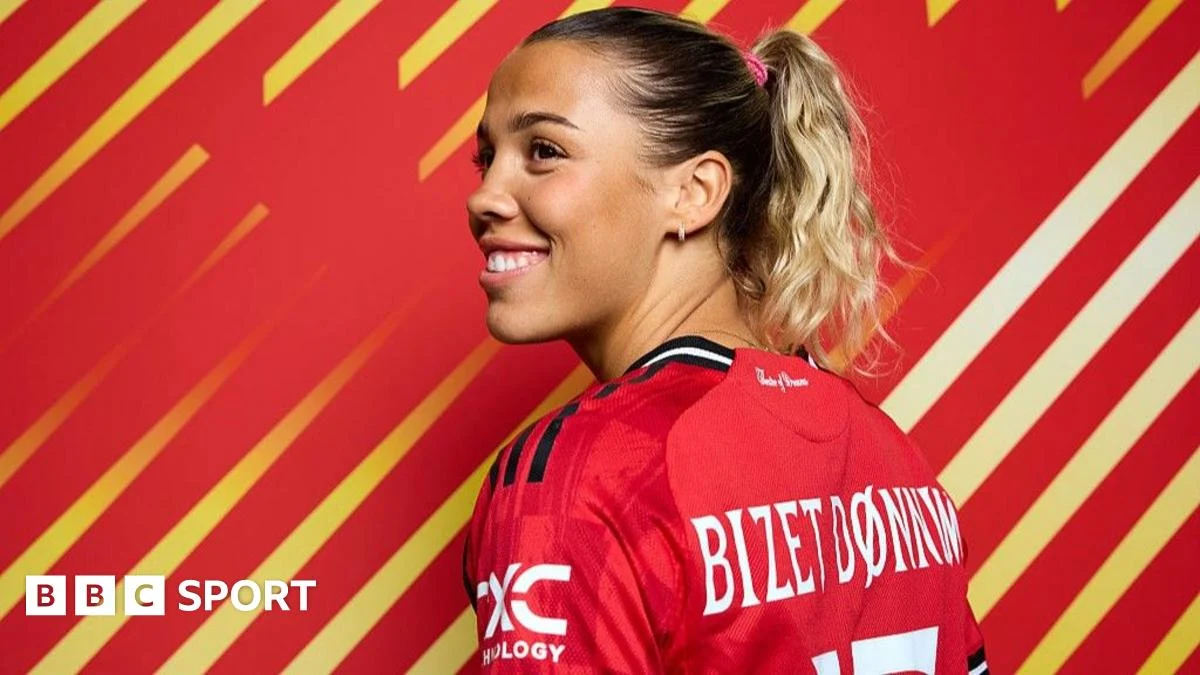
The paradigm governing elite female athletes’ career trajectories is undergoing a profound transformation, exemplified by Manchester United’s dynamic winger, Celin Bizet Donnum, whose concurrent pursuit of top-tier football and impending motherhood challenges long-held conventions within professional sports. Her decision to embark on parenthood during the zenith of her playing career signals a pivotal shift in the support structures and cultural expectations surrounding women in professional athletics, moving towards an era where family life is not viewed as an antithesis to sporting excellence but rather as an integral component of a holistic professional journey. This evolving narrative, spearheaded by athletes like Bizet Donnum and robust institutional backing, underscores a critical advancement in the professionalization and equitable treatment of female competitors.
Historically, the landscape for women pursuing professional sports careers was starkly different, particularly concerning the intersection of athletic ambition and family planning. For generations of female athletes, the conventional wisdom dictated a binary choice: deferring family until retirement or, more often, sacrificing a burgeoning career to embrace motherhood. This deeply ingrained cultural norm was not merely a personal preference but a systemic reality, often perpetuated by a lack of contractual protections, insufficient maternity leave provisions, and an overarching absence of club or federation support for pregnant and postpartum athletes. The careers of many talented sportswomen were prematurely curtailed, not due to declining performance, but due to the perceived incompatibility of elite athleticism with the demands of childbearing and rearing.
Former England striker Ellen White’s reflections vividly encapsulate this historical dilemma. Her generation, like many before it, frequently witnessed peers opting to delay starting families until after their playing days concluded. This decision was often predicated on a complex interplay of factors: the precariousness of financial security, the uncertainty of receiving adequate support from clubs, the potential for professional judgment, and a profound apprehension regarding the feasibility of returning to peak physical condition post-pregnancy. The relentless schedule of international tournaments and domestic leagues further exacerbated this challenge, creating an environment where family planning felt like an additional, often unmanageable, sacrifice in an already demanding profession. The prevailing sentiment was that one could not simultaneously be an elite athlete and an active mother, forcing countless women to make difficult, often heart-wrenching, choices.
The journey of Celin Bizet Donnum, a 24-year-old Norway international, thus represents a profound departure from these historical precedents. Her candid assertion that it felt "natural" to embrace motherhood during her playing career, and indeed, that the prospect of not having a baby during this phase was "even more scary," speaks volumes about a shifting mindset. This perspective highlights a desire not to bifurcate her life into distinct professional and personal chapters, but to integrate these fundamental aspirations. Her upcoming motherhood, announced in December, with the expectation of welcoming her first child this year, positions her at the vanguard of a movement advocating for the holistic development of female athletes. The apprehension of missing a season is acknowledged, yet it is framed within a broader understanding of life’s priorities, underscoring a belief that a temporary career pause for family enrichment is a worthwhile trade-off.
This evolving landscape is not solely driven by individual athlete choices; it is significantly bolstered by the implementation of progressive policies by governing bodies and clubs. The Football Association’s Women’s Super League (WSL), in conjunction with FIFA and FIFPro guidance, has established frameworks designed to provide greater security and support for pregnant players. These regulations often include provisions for paid maternity leave, guaranteed contract protection, and comprehensive return-to-play strategies. However, the true innovation lies in how leading clubs are interpreting and expanding upon these baseline requirements to foster genuinely supportive environments.
Manchester United, Bizet Donnum’s club, stands out as a pioneering institution in this regard. Their commitment extends beyond mere adherence to regulations, manifesting in a palpable "culture change" that empowers players to make informed decisions about their family lives without fear of professional detriment. This involves creating an ecosystem where expectant mothers receive bespoke, multidisciplinary support tailored to their unique needs. The club’s provision of personalized plans encompasses critical areas such as specialized nutrition guidance to support both maternal and fetal health, psycho-social and wellbeing support to address the emotional and mental challenges of pregnancy and postpartum recovery, dedicated physiotherapy focusing on the specific physiological changes women experience, and optimized sleep strategies crucial for recovery and overall health. These measures collectively aim to dismantle the historical barriers that once deterred female athletes from pursuing motherhood during their careers, ensuring that every aspect of a player’s journey is supported comprehensively.
Bizet Donnum’s personal experience with Manchester United’s support underscores the efficacy of this approach. She lauded the "so much freedom" she has been granted, including the flexibility to spend time with her husband, Aron Bizet Donnum, who plays professionally in Toulouse, France. This acknowledgment of personal life needs, particularly for athletes in cross-border relationships, is a testament to the club’s holistic perspective on player welfare. Furthermore, her revelation about the "game-changing" impact of pelvic floor physiotherapy highlights the club’s attention to often-overlooked but critically important aspects of female athletic health. The pelvic floor plays a crucial role in core stability, continence, and overall physical function, all of which are paramount for an elite athlete, particularly during and after pregnancy. Introducing this specialized care early and comprehensively demonstrates a sophisticated understanding of women’s physiological needs in high-performance sport.
The commitment to supporting athlete-mothers is not exclusive to Manchester United. Other prominent WSL clubs are also demonstrating leadership in this area. Arsenal, for instance, has provided bespoke support for players like Sweden international Amanda Ilestedt during her pregnancy. Similarly, West Ham United has extended comprehensive care to Katrina Gorry, among others, ensuring their professional development continues alongside their personal milestones. Tottenham Hotspur and Brighton & Hove Albion have also affirmed their adherence to and expansion upon the maternity policies stipulated by the WSL, FIFA, and FIFPro, collectively illustrating an industry-wide recognition of the imperative to support female athletes through all life stages. This collective effort is gradually solidifying a new standard, where maternity support is an expected, rather than exceptional, component of a professional football club’s player welfare strategy.
The implications of this evolving support system are far-reaching. Beyond the immediate benefit to individual athletes like Celin Bizet Donnum, the enhanced provisions contribute significantly to the broader professionalization of women’s football. By removing the historical dilemma of choosing between career and family, clubs can attract and retain top talent, knowing that athletes can envision a full, uninterrupted career path within the sport. This fosters greater stability, loyalty, and ultimately, higher performance levels across the league. Furthermore, it sends a powerful message to aspiring young female athletes that they do not need to compromise their personal dreams for their professional ambitions, thereby broadening the appeal and sustainability of women’s sports. The economic benefits are also tangible; investing in player welfare, including maternity support, can lead to increased player longevity, reduced turnover, and a stronger, more resilient sporting ecosystem.
Psychologically, enabling athletes to pursue motherhood during their careers alleviates immense pressure and fosters a more balanced sense of identity. The "scary" feeling of missing out on competitive play is a natural human reaction for an elite athlete, but it is now counterbalanced by the profound joy and fulfillment derived from starting a family. The resilience required to navigate pregnancy, childbirth, and the demanding rehabilitation process back to elite performance is immense, yet it is significantly mitigated when athletes feel fully supported, both physically and emotionally, by their clubs. The comprehensive medical, physiological, and psychological support systems are crucial in ensuring not only a safe pregnancy and delivery but also a successful and sustainable return to the rigorous demands of professional football.
As Celin Bizet Donnum eagerly anticipates both motherhood and her return to the pitch, her journey encapsulates a transformative moment in women’s sports. Her excitement to play again, despite the temporary absence, underscores the enduring passion that drives elite athletes. Her contemplation — "After my career, will I look back and think: ‘Damn, I didn’t play that season’ or will I just be happy that I’ve had a kid?" — reveals a profound understanding of life’s priorities and the ultimate value of living a full, integrated existence.
The future outlook for maternity support in women’s football appears increasingly promising. As best practices evolve and scientific understanding of female physiology in sport advances, further innovations in training, rehabilitation, and holistic player care are inevitable. The pioneering efforts of clubs like Manchester United will likely set benchmarks, fostering a competitive environment where player welfare becomes a key differentiator in attracting talent. Ultimately, the narrative spearheaded by Celin Bizet Donnum and her contemporaries is one of empowerment and progress, signaling a future where the choice between a career at the pinnacle of sport and the profound experience of motherhood becomes an antiquated relic of the past, replaced by an inclusive reality where female athletes can truly have it all.




 Aura Kasih
 Safa Marwah
 Ayu Aulia