Ayu Aulia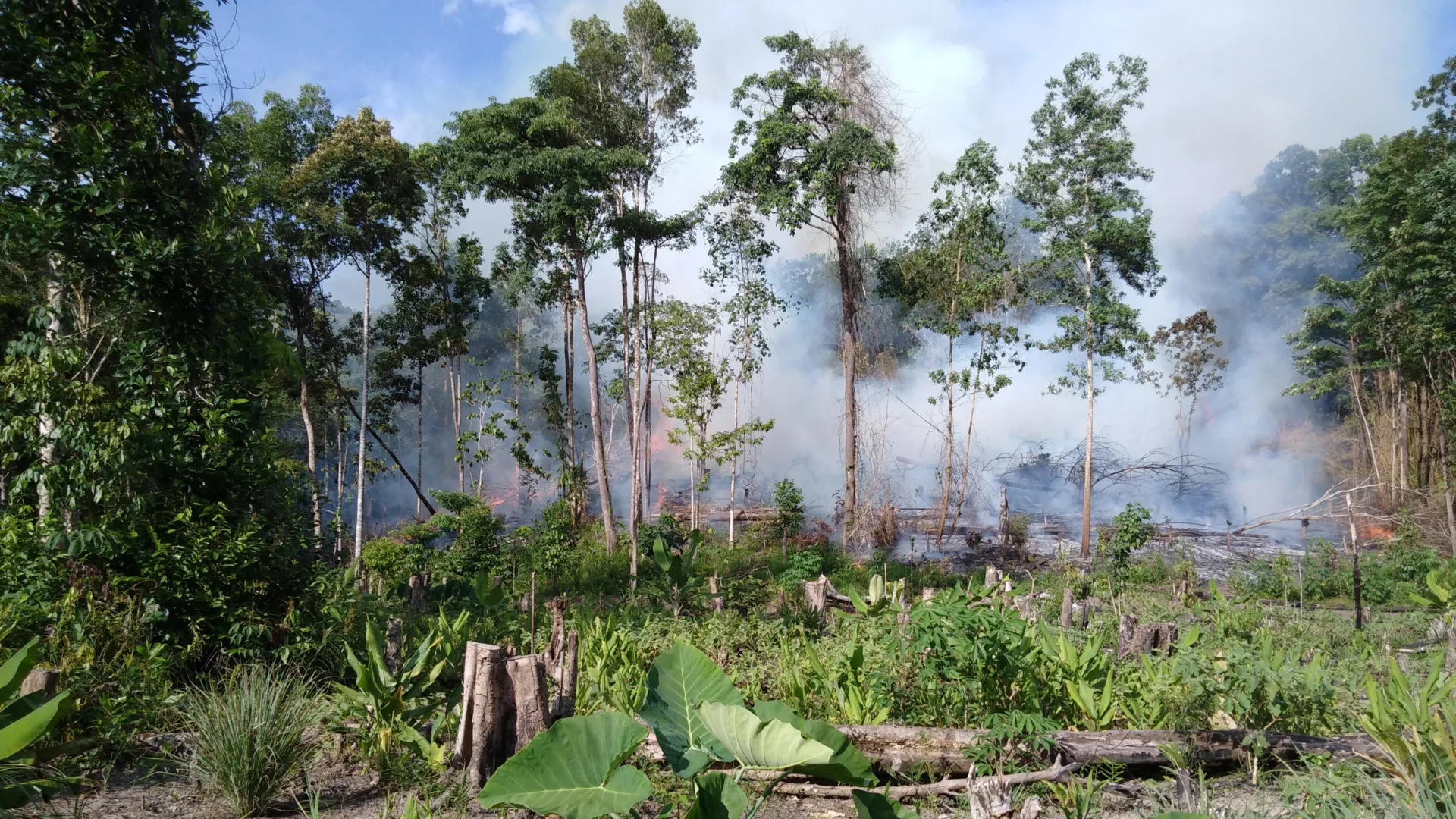
Recent scientific investigations have unveiled a dramatic and anomalous surge in the incidence of wildfires across Earth’s tropical peatland ecosystems throughout the 20th century, representing a profound deviation from historical fire regimes spanning over two millennia. This alarming escalation signals a critical threat to global carbon sequestration efforts and underscores the urgent need for reassessment of land management practices in these vital, yet vulnerable, ecological zones. The findings illuminate a stark transition from natural, climate-driven fire patterns to a new era dominated by anthropogenic influences, with potentially far-reaching implications for planetary climate stability.
Peatlands, often described as the planet’s most efficient terrestrial carbon sinks, are vast reservoirs of organic matter formed over thousands of years under waterlogged, anaerobic conditions. These unique ecosystems globally store an astonishing amount of carbon, estimated to be more than twice that held in all the world’s forests combined. The slow decomposition of plant material in these oxygen-deprived environments leads to the accumulation of thick layers of peat, effectively locking away atmospheric carbon for millennia. When these ancient carbon stores are exposed to fire, the consequences are catastrophic: massive quantities of sequestered carbon are rapidly released into the atmosphere in the form of carbon dioxide and other greenhouse gases, accelerating global warming. Unlike surface fires in forests, peat fires can smolder underground for weeks or even months, releasing persistent plumes of smoke and proving exceedingly difficult to extinguish, often requiring extensive rewetting of vast areas.
Despite the critical ecological role of tropical peatlands and the increasing frequency of fires observed in tropical regions in recent decades, comprehensive historical perspectives on fire activity within these specific ecosystems have remained surprisingly limited. Most previous studies focused on shorter timescales or lacked the detailed paleological data necessary to establish a robust baseline of natural variability. This knowledge gap hindered the ability of scientists and policymakers to differentiate between natural fluctuations and human-induced accelerations, obscuring the true scale of the contemporary crisis. Understanding the long-term history of fire in these critical biomes is indispensable for contextualizing current trends and projecting future risks.
To bridge this crucial gap in understanding, researchers undertook an ambitious paleofire reconstruction effort. Their methodology involved meticulously examining charcoal fragments meticulously preserved within peat deposits across a wide geographical distribution, encompassing sites in Central and South America, Africa, Southeast Asia, and Australasia. Peat cores act as natural archives, with each layer of sediment containing a chronological record of environmental conditions, including evidence of past fire events. By applying advanced dating techniques, such as radiocarbon dating, to these charcoal remnants, scientists were able to reconstruct detailed wildfire patterns extending back more than 2,000 years. This extensive dataset provided an unprecedented resolution of fire history, offering invaluable insights into the natural rhythms and drivers of combustion in tropical peatlands prior to significant modern human intervention.
The analysis of these ancient charcoal records revealed a compelling narrative of natural fire dynamics. Historically, fire activity in tropical peatlands was found to be intricately linked to prevailing climate conditions. Specifically, the frequency and intensity of past fires correlated strongly with the duration and severity of droughts. Periods of extended dryness, often influenced by large-scale climate phenomena like the El Niño Southern Oscillation (ENSO) cycles, would lower water tables, making the upper layers of peat more susceptible to ignition and subsequent spread. This millennia-long pattern demonstrated a natural equilibrium, where fires occurred periodically but were largely contained by the inherent moisture of the peatlands and the cyclical nature of regional climates. Such findings underscore the critical role of hydrological integrity in maintaining the fire resistance of these ecosystems under natural conditions.
Intriguingly, the study revealed a pronounced long-term trend of decreasing wildfire activity in tropical peatlands that persisted for over a millennium, from roughly the early Common Era until the late 19th century. This gradual decline in burning tracked with broader shifts in global temperatures and other natural climate factors, suggesting a period of reduced fire susceptibility potentially linked to changing precipitation patterns or temperature regimes that favored wetter conditions in these specific regions. This protracted period of reduced burning allowed for the continued, uninterrupted accumulation of organic matter, further enhancing the carbon storage capacity of these peatlands. This natural progression highlights the delicate balance of ecological processes that have historically contributed to the prodigious carbon sequestration capabilities of these environments.
However, this millennia-long trend of decreasing fire activity underwent an abrupt and unprecedented reversal in the 20th century. The scientific data unequivocally demonstrates a sharp and dramatic surge in wildfire incidence during this period, marking a radical departure from all previously observed historical patterns. This sudden acceleration, unparalleled in the preceding 2,000 years, signals a profound ecological discontinuity. The regional variations in this increase provide crucial clues regarding its underlying causation: areas with intensive human activity exhibited the most pronounced rises in fire events, strongly implicating anthropogenic influence as the primary driver behind this sudden and alarming shift. The scale and speed of this change suggest that natural climate variability alone cannot account for the observed escalation.
The rise in peatland fires was particularly pronounced and ecologically devastating in Southeast Asia, with significant impacts also observed in parts of Australasia. In these regions, a confluence of human activities has fundamentally altered the hydrological and ecological integrity of peatland landscapes, rendering them highly susceptible to ignition. Practices such as extensive drainage for industrial agriculture, particularly for oil palm and pulpwood plantations, represent a major contributing factor. Drainage canals effectively lower the water table, transforming waterlogged, anoxic peat into dry, oxygenated, and highly flammable material. Furthermore, widespread forest clearing, often employing "slash and burn" techniques, and the conversion of vast tracts of land for development and infrastructure projects, introduce numerous ignition sources and remove the protective canopy that once shaded and moisturized the peat below. The combination of exposed, desiccated peat and human-generated ignitions creates a perfect storm for runaway fires that are exceptionally difficult to control.
In stark contrast, more remote and less accessible peatland areas, particularly those found in expansive regions of South America and Africa, did not exhibit the same dramatic increase in fire activity during the 20th century. This regional divergence provides compelling evidence that direct human impact, rather than a universal climate shift, is the dominant factor driving the current peatland fire crisis. While these more pristine regions currently maintain a greater degree of natural resilience, the lead author of the study, Dr. Yuwan Wang from the University of Exeter, issued a crucial caution. As human populations continue to expand globally, and as agricultural frontiers push into previously untouched landscapes, coupled with the relentless spread of infrastructure development, these currently remote peatland areas face a growing and increasingly imminent threat of similar wildfire risks. Without proactive conservation measures, these last bastions of relatively undisturbed peatland carbon sinks could soon succumb to the same pressures.
The implications of this unprecedented surge in tropical peatland burning extend far beyond localized environmental damage, posing a severe global climate challenge. As Dr. Wang emphasized, "To avoid large carbon emissions that further contribute to global warming, we urgently need to protect these carbon-dense ecosystems." The release of vast quantities of stored carbon from burning peat creates a dangerous positive feedback loop: more emissions lead to intensified global warming, which in turn contributes to more frequent and severe droughts, further increasing the flammability of peatlands and exacerbating the fire cycle. Beyond carbon emissions, peat fires release fine particulate matter and toxic gases, leading to severe transboundary haze pollution, significant public health crises impacting millions with respiratory illnesses, and substantial economic disruption through agricultural losses, reduced tourism, and disrupted air travel. Furthermore, these unique ecosystems are home to specialized biodiversity, including critically endangered species like orangutans, whose habitats are irrevocably destroyed by these fires.
Addressing this multifaceted crisis requires a comprehensive and concerted global effort. A significant reduction in tropical peatland burning can be achieved through the implementation of robust peatland conservation strategies, which include the establishment and enforcement of protected areas, and moratoriums on new peatland drainage and development. Equally vital is the promotion of sustainable resource management practices that offer viable economic alternatives to destructive land use. This encompasses initiatives such as "paludiculture," which involves cultivating crops that thrive in wet conditions, thereby maintaining the high water table essential for peatland health. Ecosystem restoration, including blocking drainage canals to re-wet desiccated peatlands and replanting native species, is also crucial for recovery. However, the sheer scale of the problem necessitates an unprecedented level of collaboration among multiple stakeholders: national governments must enact and enforce stringent environmental policies, international organizations must provide funding and technical expertise, local communities must be empowered to participate in conservation efforts and adopt sustainable livelihoods, the private sector must commit to zero-deforestation and zero-peat development supply chains, and scientific research must continue to inform best practices. Without such integrated, large-scale action, the invaluable carbon stores held within tropical peatlands, critical to stabilizing Earth’s climate, remain precariously vulnerable to human-induced incineration.
The study, titled "Unprecedented burning in tropical peatlands during the 20th century compared to the previous two millennia," published in the esteemed journal Global Change Biology, serves as a powerful scientific indictment of current land use practices and a clarion call for immediate, transformative action. Its findings underscore that the fate of these critical carbon sinks, and by extension, a significant component of global climate stability, now hinges directly on human decisions and collective commitment to environmental stewardship.




 Lisa Mariana
 Safa Marwah

 Aura Kasih