Lisa Mariana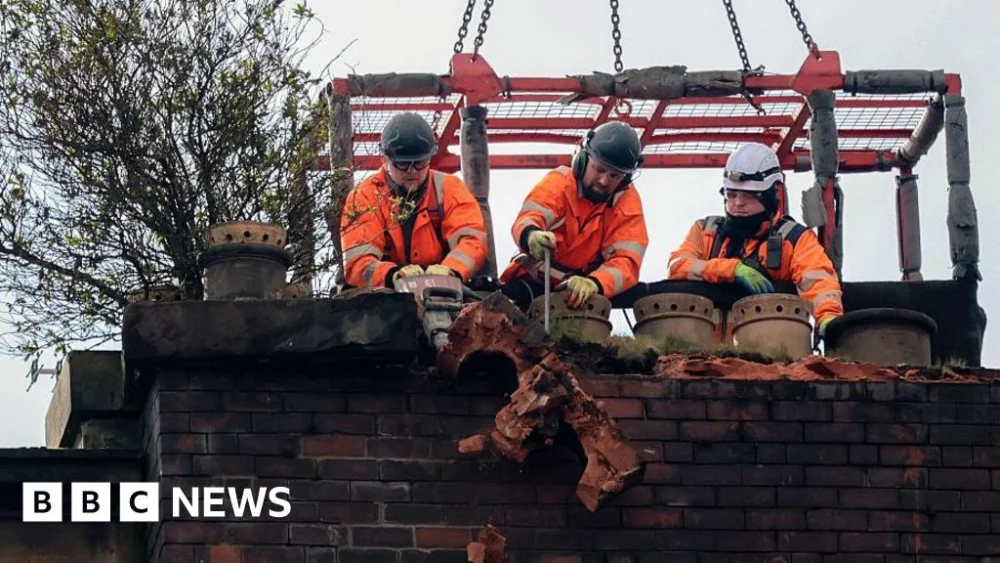
The heart of Glasgow’s bustling city centre is undergoing a profound transformation as structural engineers and demolition experts embark on the painstaking process of deconstructing the remnants of the B-listed Victorian edifice, Union Corner. This pivotal building, tragically consumed by a devastating inferno, has been deemed structurally unsound, necessitating a meticulous and complex demolition operation that signals both an end to a cherished landmark and the dawn of critical urban regeneration discussions for this strategically vital site adjacent to Glasgow Central Station.
The inferno, which erupted with alarming speed and intensity, began within a ground-floor retail unit specializing in electronic vaping products on a Sunday afternoon. Eyewitness accounts and subsequent investigations point to a swift escalation of the blaze, rapidly engulfing multiple floors and leading to a catastrophic structural collapse by late evening. The sheer scale of the emergency response was unprecedented in recent Glasgow history, mobilizing nearly 300 firefighters and a vast array of specialized equipment, including high-volume pumps drawing water directly from the River Clyde. The incident prompted the evacuation of a nearby hotel and a prolonged closure of sections of Glasgow Central Station, underscoring the severe disruption caused to the city’s critical infrastructure and daily life.
Following the Scottish Fire and Rescue Service’s arduous efforts to bring the blaze under control and cool residual hotspots, Glasgow City Council’s building standards team assumed jurisdiction over the site. Their assessment unequivocally concluded that the venerable structure, dating back to 1851, was "fatally compromised" and presented an "imminent and severe danger" to public safety. This determination paved the way for the commencement of controlled demolition, a process that promises to be protracted and fraught with engineering complexities.
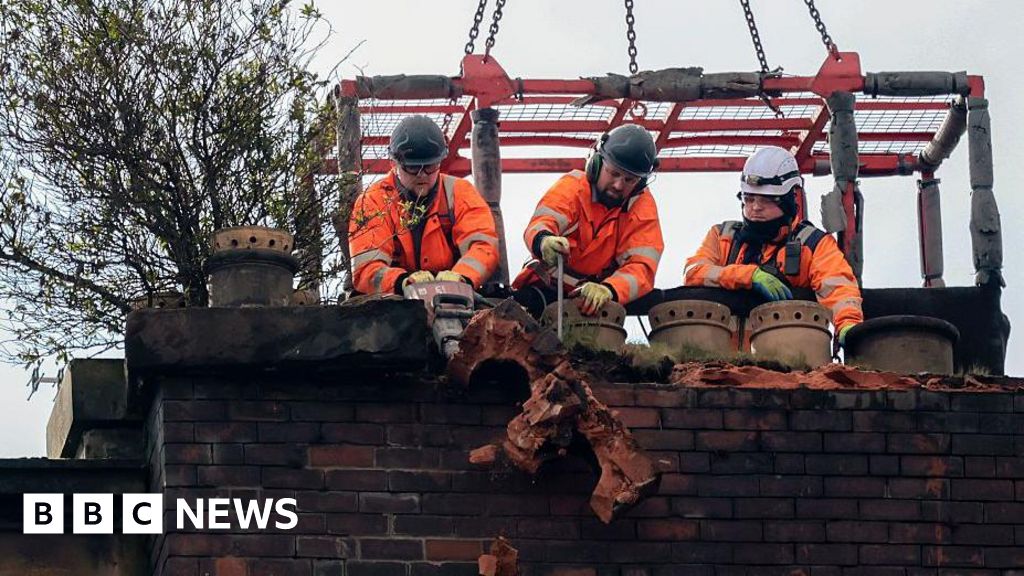
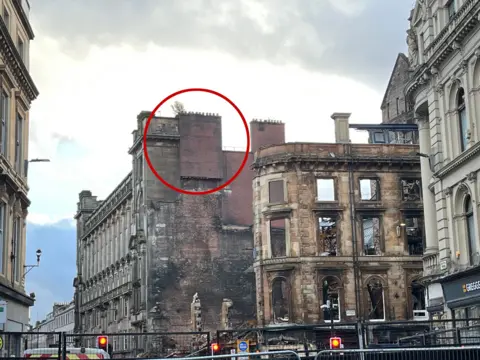
The initial phases of deconstruction commenced with the delicate removal of a precarious, seemingly ‘floating’ chimney stack. This architectural anomaly, detached from its main structure but still perilously tethered to an adjacent block several storeys above street level, symbolized the inherent instability of the fire-weakened building. Specialized teams, operating from elevated platforms, are employing manual methods to systematically dismantle the most hazardous elements, brick by painstaking brick. This ‘top-down, by-hand’ approach is necessitated by the building’s compromised state and its immediate proximity to other valuable city centre structures, including the historic Glasgow Central Station.
Raymond Barlow, a spokesperson for the council’s building standards division, emphasized the challenging nature of the undertaking. He projected a timeline spanning "a good number of weeks" for the initial phases, cautioning that progress would be heavily influenced by prevailing weather conditions, particularly high winds that preclude the safe operation of heavy lifting equipment like cranes. The immediate priority is to stabilize the area sufficiently to enable the phased reopening of critical access points to Central Station, followed by the more extensive deconstruction of the building’s remaining facade. This strategy aims to mitigate the prolonged impact on commuter traffic, which sees approximately 70,000 rail passengers utilize the station daily.
The closure of significant sections of Union Street and Gordon Street, pivotal arteries in Glasgow’s commercial district, has had a profound and immediate economic impact. Businesses operating in the immediate vicinity, many of which had just begun to recover from the economic disruptions of recent years, have faced severe trading restrictions or complete cessation of operations. The loss extends beyond the physical destruction of premises, encompassing significant financial losses for proprietors and the livelihoods of their employees. For businesses like a ground-floor fish and chip shop and a tattoo parlour located within Union Corner, the fire has meant the sudden and complete obliteration of their ventures, with owners reporting losses of tens of thousands of pounds in equipment and stock.
The human element of this disaster is equally poignant. Carina McCreery, who had invested heavily in establishing her nail bar within the building just months prior, articulated the profound personal and financial toll. Her testimony highlighted the resilience of the Glasgow community, with an outpouring of support, including financial donations and offers of replacement equipment from other businesses. This grassroots solidarity underscores the tight-knit nature of the city’s independent business sector, even as it grapples with the wider implications of such a catastrophic event. Scott McAnally, the owner of a tattoo parlour, raised a pertinent point regarding the pervasive presence of vape shops on high streets, prompting a broader societal and regulatory discussion about the risks associated with certain retail operations in densely populated urban environments.
The Scottish government, through First Minister John Swinney, has acknowledged the severity of the situation and initiated discussions with Glasgow City Council regarding targeted support for affected businesses. This support is expected to manifest in financial aid packages, the details of which are currently being finalized. Furthermore, the incident has catalyzed a re-evaluation of regulatory frameworks for vape shops, particularly concerning fire safety protocols and the types of materials stored within such premises. This proactive stance reflects a broader commitment to learning from the disaster and enhancing urban resilience.
Beyond the immediate crisis response, the long-term future of the Union Corner site presents a complex urban planning challenge. The land, currently under private ownership with a multiplicity of stakeholders, is a prime development opportunity in a high-footfall area. Council leader Susan Aitken has publicly mooted the possibility of utilizing a Compulsory Purchase Order (CPO) to acquire the site. A CPO would empower the local authority to consolidate ownership, thereby streamlining the redevelopment process and preventing potential protracted disputes among multiple private owners that could stall progress for years. This strategic intervention could significantly accelerate the site’s transformation, ensuring its future aligns with broader city-centre regeneration objectives.
The debate surrounding the site’s future use is already robust. While reports of a five-star hotel development have circulated, the council has clarified that this is but one of several options under consideration. Given its strategic location, directly opposite one of Scotland’s busiest transport hubs, the site holds immense potential for a variety of uses: a premium hotel, a mixed-use development combining retail, office space, and residential units, or a reimagined public space. Any future development will need to carefully balance commercial viability with the architectural heritage of the area, even in the absence of the original B-listed structure. There is a strong civic desire to ensure that any new building contributes positively to Glasgow’s urban fabric and its ambitious regeneration agenda.
The demolition of Union Corner is more than just the removal of a damaged building; it is a symbolic moment for Glasgow. It represents the city’s resilience in the face of adversity, the immediate and profound impact of urban disasters on local communities and economies, and the intricate challenges of modern urban planning. As the laborious process of deconstruction unfolds over the coming weeks and months, the city will watch closely, anticipating not just the clearing of rubble, but the emergence of a thoughtful, sustainable, and vibrant new chapter for this historic and much-loved corner of Glasgow. The careful handling of this pivotal site will undoubtedly set a precedent for future urban development and disaster recovery strategies within the city, solidifying Glasgow’s commitment to both its heritage and its progressive future.




 Aura Kasih
 Safa Marwah
 Ayu Aulia