Ayu Aulia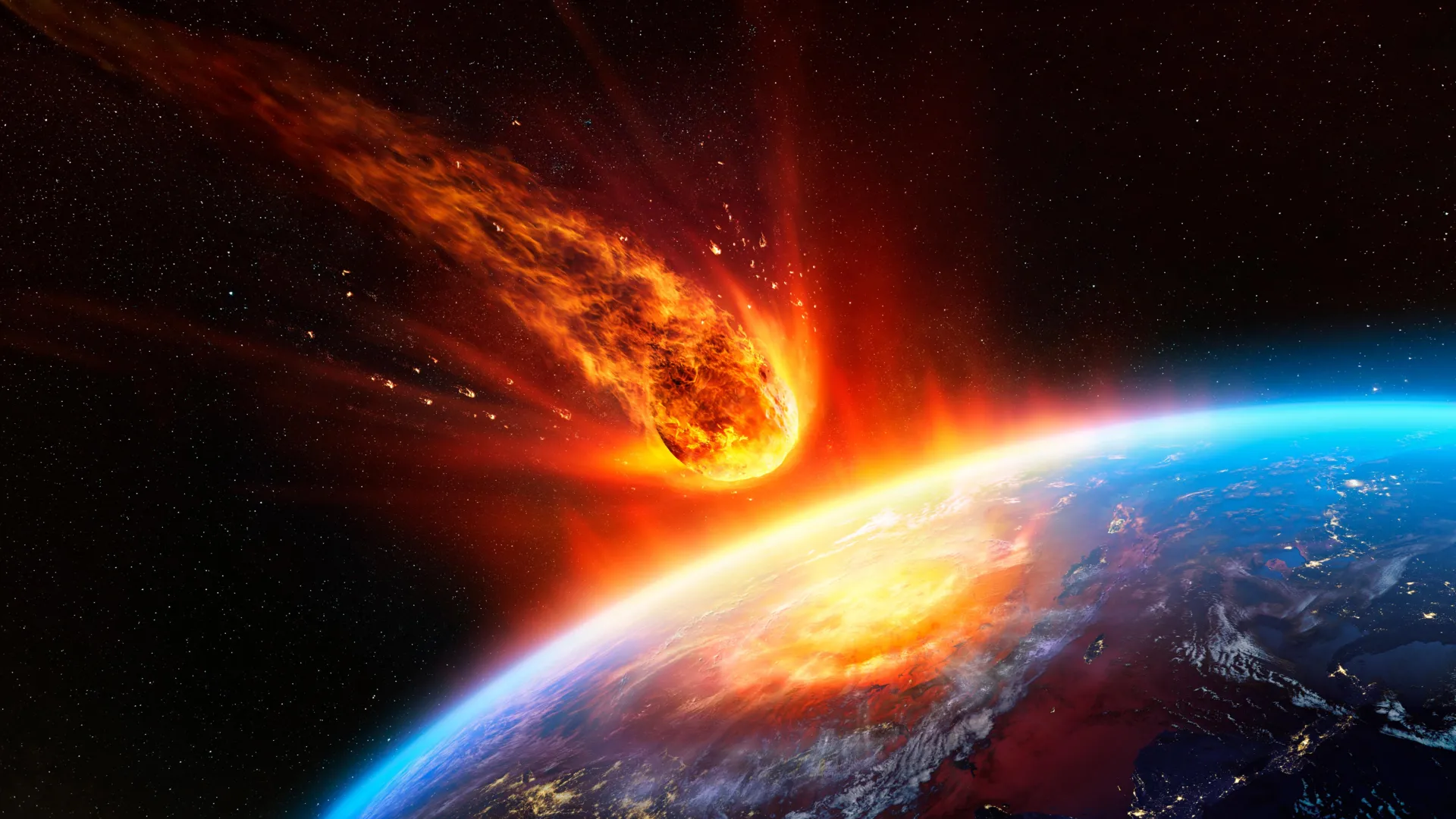
A groundbreaking geological discovery has unveiled Brazil’s first definitively identified tektite strewn field, a vast expanse of glassy material formed during an ancient, high-energy extraterrestrial impact event. These newly designated specimens, named "geraisites" after the Brazilian state of Minas Gerais where they were initially found, represent a significant addition to the planet’s sparse record of cosmic collisions and offer invaluable insights into South America’s deep geological history. The identification of this previously unknown field substantially enhances the global understanding of impact processes and their terrestrial manifestations.
Tektites are natural glass objects, typically black or dark green, formed from terrestrial material ejected into the atmosphere during hypervelocity meteorite impacts. The extreme forces involved melt target rock, propelling molten droplets into ballistic trajectories where they cool rapidly into aerodynamically shaped glass before falling back to Earth, often hundreds or thousands of kilometers from the impact site. This process distinguishes them from meteorites, which are extraterrestrial in origin, and from volcanic glasses like obsidian, which form from magmatic activity. Prior to this discovery, only five major tektite fields were recognized worldwide, situated across Australasia, Central Europe, the Ivory Coast, North America, and Belize. The integration of the Brazilian field into this exclusive group underscores the rarity and scientific importance of the find.
The initial documentation of geraisites occurred across three municipalities in northern Minas Gerais—Taiobeiras, Curral de Dentro, and São João do Paraíso—spanning an area approximately 90 kilometers in length. Subsequent to the initial scientific submission detailing these findings, additional specimens were reported in the states of Bahia and Piauí. This expansion has dramatically increased the known distribution of the strewn field to over 900 kilometers, a scale indicative of a truly powerful impact event. Geologists posit that the immense size of a tektite strewn field is directly correlated with the energy released during the extraterrestrial collision, among other complex factors. The widespread distribution of these glasses across multiple Brazilian states implies an impact of considerable magnitude, capable of lofting molten material across vast distances.
As of recent surveys, researchers have cataloged over 600 individual geralaisite fragments. These specimens exhibit a remarkable range in size, from sub-gram particles to larger pieces weighing up to 85.4 grams and measuring up to 5 centimeters along their longest axis. Their morphologies are characteristic of tektites, showcasing various aerodynamic forms such as spheres, ellipsoids, flattened disks, elongated dumbbells, and twisted, irregular shapes. These distinctive geometries are a direct consequence of the rapid heating, melting, and subsequent aerodynamic shaping as the molten material travels through the atmosphere before solidifying. The surfaces of these specimens are frequently marked by small, distinctive pits, which are residual traces of gas bubbles that escaped during the swift cooling phase of the molten material. This phenomenon, while also observed in volcanic lavas, is particularly pronounced and characteristic in tektites due to the extreme temperatures and pressures involved in their formation.
Macroscopically, geraisites typically present as opaque, lustrous black fragments. However, when subjected to strong transmitted light, they reveal a translucent quality with a subtle grayish-green hue. This coloration provides a visual distinction from other well-known tektite varieties, such as the brighter green moldavites found in Central Europe, which have been historically prized for their aesthetic qualities and utilized in jewelry since the medieval period. The unique visual and textural characteristics of the geraisites provide important clues about the specific conditions of their formation and the geological composition of the target rock.
Detailed laboratory analysis has provided crucial chemical and physical evidence unequivocally confirming the impact origin of the geraisites. Spectroscopic and elemental analyses reveal a high silica content, ranging from 70.3% to 73.7% (SiO2), which is consistent with the melting of silicic crustal rocks. The combined concentrations of sodium (Na2O) and potassium (K2O) oxides fall between 5.86% and 8.01%, a range slightly elevated compared to other known tektite regions globally. Furthermore, the presence of trace elements such as chromium (10-48 parts per million) and nickel (9-63 ppm) exhibits small variations, suggesting a degree of heterogeneity in the original target rock. A particularly decisive indicator of an impact origin is the detection of lechatelierite, a high-temperature glassy silica that forms exclusively under the extreme thermal conditions generated by hypervelocity impacts. This mineral is a hallmark of impact melts and rarely, if ever, forms under typical volcanic processes.
Perhaps the most compelling evidence for their tektite classification lies in their remarkably low water content. Infrared spectroscopy measurements revealed water concentrations between 71 and 107 parts per million (ppm). This is starkly contrasted with volcanic glasses, such as obsidian, which typically contain water levels ranging from 700 ppm to as much as 2%. The "dry" nature of tektites is a direct consequence of the instantaneous and intense heating during an impact, which vaporizes nearly all volatile components, including water, from the molten material as it is ejected into the vacuum of space or high atmosphere. This critical geochemical signature serves as a robust discriminant between impact glasses and glasses of endogenic (volcanic) origin.
The precise timing of this ancient cosmic collision has been determined through advanced argon isotope dating (&sup4;⁰Ar/³⁹Ar) techniques. The analysis yielded an approximate age of 6.3 million years ago, placing the event firmly near the end of the Miocene epoch. Three distinct, yet closely grouped, age results were obtained (6.78 ± 0.02 Ma, 6.40 ± 0.02 Ma, and 6.33 ± 0.02 Ma), providing strong corroboration that the geraisites originated from a single, catastrophic event. It is important to note that the 6.3 million-year age should be interpreted as a maximum age, as some of the argon within the samples may have been inherited from the ancient target rocks that were melted during the impact, a common consideration in radiometric dating of such materials. The Miocene epoch itself was a period of significant global climate change and tectonic activity, and understanding the environmental context of such an impact can provide further insights into its potential broader effects, though these would likely have been localized.
Despite the identification of a vast tektite strewn field, the impact crater itself remains elusive. This situation, while seemingly paradoxical, is not uncommon in the study of impact geology. Only three of the six classical major tektite fields have definitively identified associated craters. For instance, the immense Australasian tektite field, spanning thousands of kilometers, is believed to have originated from an impact structure now submerged beneath the ocean, making direct detection challenging. Craters can also be obscured by extensive erosion over millions of years, or buried beneath subsequent layers of sediment and volcanic deposits.
However, isotopic geochemistry offers a powerful clue regarding the provenance of the melted material. Analysis indicates that the source rock for the geraisites was an ancient continental crust, dating back between 3.0 and 3.3 billion years old. This specific age signature strongly points to the São Francisco craton, one of the oldest and most geologically stable regions of continental crust in South America. A craton represents an ancient and stable part of the continental lithosphere that has survived cycles of merging and rifting of continents and supercontinents. The isotopic signature, indicative of a very ancient, granitic continental source rock, significantly narrows the range of potential impact locations, guiding future investigative efforts. Geophysical surveys employing magnetic and gravimetric techniques could prove instrumental in the search for a buried or deeply eroded circular structure consistent with a large impact crater within the São Francisco craton. Such methods can detect subtle variations in the Earth’s magnetic and gravitational fields caused by subsurface geological anomalies, potentially revealing the hidden scar of this ancient cosmic collision.
While the exact dimensions of the celestial object that struck Earth 6.3 million years ago cannot yet be precisely determined, the sheer volume of melted rock and the expansive distribution of the debris unequivocally point to a powerful event. Researchers suggest the impact was substantial, though likely less intense than the cataclysm that generated the colossal Australasian tektite field, which extends across several thousand kilometers. Current research involves the development of sophisticated mathematical models designed to estimate key parameters of the impact, including the total energy released, the entry velocity of the bolide, its trajectory angle, and the overall volume of terrestrial material melted and ejected. These calculations are continually refined as more data regarding the geographical distribution and characteristics of the geraisites are accumulated through ongoing fieldwork and analysis.
The discovery of the geraisite strewn field represents a vital addition to South America’s impact history. The continent currently has only about nine known large impact structures, most of which are significantly older than the 6.3 million-year-old Brazilian event and predominantly located within Brazil itself. This finding not only fills a critical gap in the regional geological record but also implies that tektites may be more widespread globally than previously acknowledged. It raises the possibility that other tektite fields might have been overlooked or misidentified as ordinary terrestrial glass due to their sometimes unassuming appearance. This suggests a potential for future discoveries in other underexplored regions.
Beyond the immediate scientific implications, this research also contributes to broader efforts in science communication, particularly concerning the public understanding of asteroid threats. The study of past impact events provides a crucial empirical foundation for distinguishing genuine astronomical risks from speculative or exaggerated claims. Impacts, while significant, were far more common in the early solar system when planetary orbits were less stable and debris was abundant. Today, the solar system has achieved a greater degree of stability, and major impact events, though still a possibility, occur with much lower frequency. Understanding these fundamental astrophysical and geological processes is essential for fostering scientific literacy and promoting an evidence-based approach to planetary defense. This ongoing research underscores the dynamic nature of our planet’s interaction with the cosmos and the enduring power of geological inquiry to uncover Earth’s profound and often violent past.



 Lisa Mariana
 Aura Kasih
 Safa Marwah