Ayu Aulia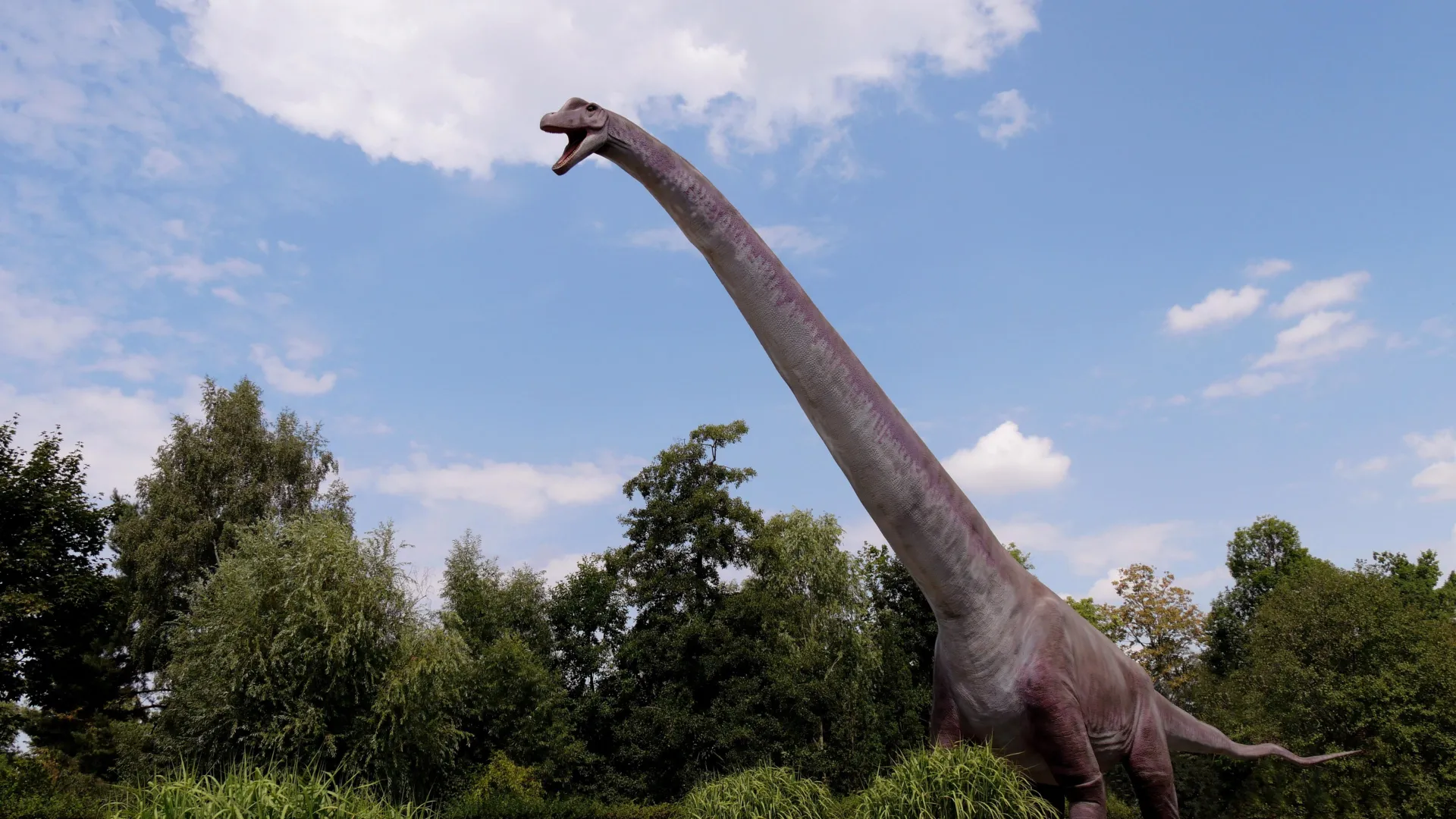
For decades, paleontologists have drawn parallels between the dominant terrestrial fauna of the Mesozoic Era, dinosaurs, and their mammalian successors, often overlooking a critical distinction in their life histories. A groundbreaking analysis now suggests that fundamental differences in reproductive strategies and parental investment profoundly altered the ecological architecture of ancient worlds, revealing a previously underestimated layer of biodiversity driven by the distinct life stages of dinosaurs. This re-evaluation necessitates a paradigm shift in understanding how ancient ecosystems functioned and sustained themselves.
The conventional wisdom in paleontology has frequently viewed dinosaurs as ecological analogues to modern large mammals, occupying similar apex predator and dominant herbivore roles within their respective biomes. This comparative framework, while intuitively appealing, has obscured a pivotal divergence: the developmental trajectory from hatchling to adult and the associated parental care strategies. Modern mammalian species typically exhibit prolonged parental investment, with offspring remaining dependent on adults for sustenance and protection until they reach a significant proportion of their adult size, often sharing similar dietary preferences and habitat utilization. This extended familial association means that juvenile mammals generally occupy ecological niches closely aligned with their parents.
However, the reproductive and developmental patterns characteristic of dinosaurs paint a starkly different picture. Dinosaurs, as egg-layers, often produced numerous offspring simultaneously. While some species likely engaged in short-term nest guarding or brief protection of hatchlings, the prevailing evidence indicates a rapid transition to independence for most juvenile dinosaurs. Within a relatively short period, often months or a year, young dinosaurs would disperse from their birth sites and coalesce into age-segregated groups, embarking on a largely self-sufficient existence. This behavior, observed in fossil assemblages of juvenile aggregations devoid of adult remains, suggests a "latchkey" model of development, contrasting sharply with the "helicopter parenting" prevalent among many large mammals.
This early separation, coupled with the dramatic increase in size from hatchling to adulthood, meant that individual dinosaur species effectively occupied a succession of distinct ecological niches throughout their lifespan. This phenomenon, known as ontogenetic niche partitioning, is a cornerstone of the new understanding. A newly hatched sauropod, for instance, might be no larger than a small dog, consuming low-lying vegetation and vulnerable to a wide array of predators. As it grew to the size of a horse, then an elephant, and eventually a colossal adult weighing tens of tons, its diet, foraging range, and predator profile would shift dramatically. Each developmental stage represented a unique functional role within the ecosystem, akin to a distinct "functional species" from an ecological perspective.
Consider the implications for resource utilization. A juvenile Brachiosaurus the size of a sheep could not access the canopy foliage that sustained its towering parents. Its dietary requirements would have been focused on ground-level flora, placing it in competition with other small herbivores, including the juveniles of different dinosaur species. As it matured, its feeding height would increase, gradually shifting its competitive landscape and enabling it to exploit resources inaccessible to smaller animals. This staged progression of ecological roles across a single species’ lifespan created a complex tapestry of resource partitioning, allowing multiple "functional species" to coexist where a single mammalian species might occupy only one broad niche.
This re-evaluation fundamentally alters our perception of ecological diversity in Mesozoic ecosystems. Historically, assessments of ancient biodiversity have primarily focused on taxonomic species counts – the number of distinct biological species present. However, by incorporating the concept of ontogenetic niche partitioning, and counting each distinct life-stage niche as a "functional species," the apparent ecological diversity of dinosaur-dominated communities appears significantly higher than previously estimated. In fact, preliminary analyses suggest that the total number of functional species in many dinosaur fossil communities may have surpassed that observed in modern mammalian ecosystems. This implies a level of ecological complexity and resource exploitation in the Mesozoic that challenges long-held assumptions about the relative "richness" of ancient versus modern biomes.
The capacity of ancient environments to sustain such an intricate web of distinct ecological roles across dinosaur life stages prompts inquiry into the underlying environmental and physiological factors. Two primary explanations emerge from this research. Firstly, the prevailing environmental conditions during the Mesozoic Era differed significantly from today. Global temperatures were generally warmer, and atmospheric carbon dioxide levels were considerably higher. These conditions are conducive to enhanced plant growth and primary productivity, forming a more robust foundation for the food chain. A richer base of vegetation would have provided abundant resources, capable of supporting a greater number of specialized ecological roles and higher biomass densities across various trophic levels. In essence, the Mesozoic world may have been characterized by a level of photosynthetic output that surpasses contemporary environments.
Secondly, the physiological characteristics of dinosaurs themselves likely played a crucial role. While the precise metabolic rates of all dinosaurs remain a subject of ongoing scientific debate, evidence suggests that many dinosaur groups, particularly the large sauropods, may have exhibited metabolic demands somewhat lower than those of similarly sized endothermic mammals. A more moderate metabolic rate would translate to lower overall food requirements per individual, allowing a given quantity of resources to sustain a larger population or a greater array of functional diversity. If dinosaurs were, on average, more metabolically efficient or possessed varied thermal strategies (e.g., mesothermy or gigantothermy in larger forms), their ecosystems could have supported a more intricate web of life than would be possible for a biome dominated by strictly endothermic, high-metabolism organisms of comparable size.
This analytical framework does not necessarily assert that dinosaur ecosystems were inherently "more diverse" in a simplistic numerical sense than modern mammal-dominated ones. Rather, it underscores that the structure of diversity was fundamentally different. Instead of a large number of taxonomically distinct species each occupying a relatively stable niche throughout their lives, dinosaur ecosystems fostered diversity through the dynamic ecological shifts of individuals within a single biological species. This nuanced perspective offers a more accurate lens through which to interpret the fossil record and construct ecological models of ancient worlds.
Future research will undoubtedly delve deeper into the specifics of ontogenetic niche partitioning across various dinosaur clades, examining dietary shifts through dental microwear analysis, habitat preferences through sedimentological studies, and growth rates through bone histology. Understanding the full spectrum of these life-stage changes is critical for reconstructing ancient food webs, analyzing interspecies competition, and modeling the resilience and productivity of Mesozoic biomes. This innovative approach moves beyond anthropocentric or mammocentric biases in ecological thought, urging paleontologists to appreciate dinosaurs not merely as prehistoric analogues but as unique biological entities that structured their environments in ways distinct from anything seen today. By acknowledging the profound influence of life cycles on ecological roles, we gain a far richer, more complex, and more accurate understanding of the extraordinary biodiversity that characterized the Age of Dinosaurs.



 Lisa Mariana
 Aura Kasih
 Safa Marwah