Aura Kasih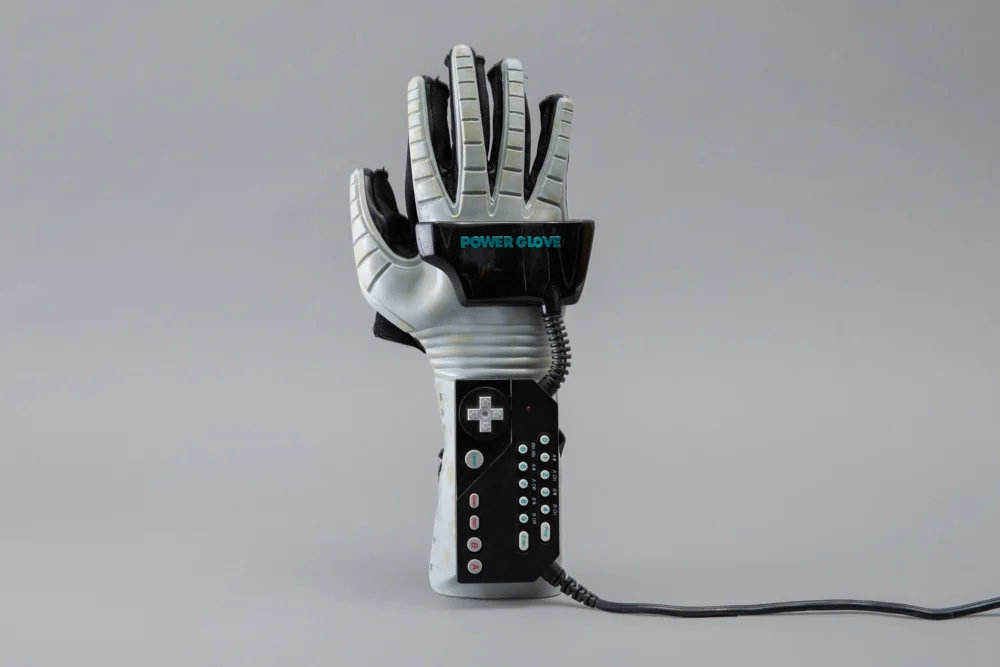
In the annals of technological history, few devices embody the tantalizing blend of groundbreaking ambition and practical shortcomings quite like the Nintendo Power Glove. This ambitious peripheral, born from a confluence of innovative spirit and market opportunism, stands as a pivotal, albeit imperfect, stepping stone in the evolutionary journey toward immersive virtual reality, profoundly influencing both the trajectory of interactive entertainment and the very concept of embodied digital interaction.
The late 1980s was a period of profound transformation for the video game industry. Nintendo, having already cemented its dominance with the Nintendo Entertainment System (NES), was actively exploring the frontiers of user input. Amidst this landscape of rapid evolution, the Power Glove emerged not as a fully formed Nintendo product, but as a fascinating case study in serendipitous development. Its genesis lay in experimental research, a concept that transitioned into a consumer toy before a strategic presentation to Nintendo ultimately attached the iconic brand to its name. Bolstered by a sophisticated marketing campaign that tapped into the zeitgeist of futuristic possibility – a feeling that has since become synonymous with virtual reality – the Power Glove achieved a surprising, albeit ephemeral, commercial success. Crucially, the conceptual leap it represented, from thumb-based button presses to gestural control, created a ripple effect that can be traced through subsequent Nintendo innovations and, more broadly, to the burgeoning virtual reality ecosystem of today.
To truly appreciate the Power Glove’s significance, one must delve into its origins and the technological climate of its inception. The concept of physically interacting with digital environments was, by the late 1980s, largely confined to the realm of science fiction and specialized research laboratories. While joysticks and gamepads had become the standard interface for video games, offering a degree of tactile feedback and precision, they fundamentally limited player agency to a set of predefined inputs. The idea of manipulating a virtual world with the nuanced movements of one’s hands was a radical departure, promising a level of immersion and intuitiveness that was, at the time, largely theoretical.
The Power Glove’s journey began not in a sterile corporate research facility, but within the more experimental confines of Abrams/Gentile Entertainment (AGE). This company, known for its toy development and licensing, recognized the potential for a more visceral gaming experience. Their vision was to translate the intuitive nature of human movement into digital commands, moving beyond the limitations of traditional controllers. The resulting prototype, a bulky, glove-like apparatus, incorporated accelerometers and pressure sensors to detect hand and finger movements. This was a monumental leap, conceptually at least, from the digital d-pad and button configurations that had defined gaming for years.
The path from AGE’s workshop to store shelves was anything but linear. The initial concept underwent several iterations, grappling with the inherent complexities of translating fluid human motion into precise digital signals. The technology available in the late 1980s, while advancing rapidly, was not yet sufficiently refined to handle the intricacies of such a demanding interface without significant compromises. This inherent technological limitation would become a defining characteristic of the Power Glove.
The fateful pitch meeting with Nintendo was a turning point. Nintendo, ever on the lookout for innovative peripherals that could differentiate its hardware and expand the appeal of its games, saw potential in the Power Glove. The prospect of a controller that allowed players to "become" their on-screen avatars, using their own hands to wield virtual swords or cast digital spells, was an enticing vision. This appeal was amplified by a savvy marketing strategy. The Power Glove was positioned not merely as a gaming accessory, but as a glimpse into the future of human-computer interaction. Its appearance in popular culture, most notably in the film The Wizard, further cemented its image as a futuristic marvel, capturing the imagination of a generation of gamers.
However, the reality of the Power Glove fell far short of its futuristic promise. The device was notoriously difficult to calibrate, often misinterpreting gestures or failing to register them altogether. The accelerometers, while innovative for their time, lacked the precision required for responsive gameplay. This led to a frustrating user experience, where the player’s intent was frequently at odds with the game’s response. Simple actions could become Herculean tasks, turning what was intended to be an immersive experience into one of profound exasperation. The pressure sensors, designed to detect finger flexion, were similarly imprecise, making nuanced control a near impossibility.

Despite its significant functional shortcomings, the Power Glove’s impact on the trajectory of interactive technology is undeniable. Its very existence, however flawed, served as a powerful demonstration of a new paradigm for human-computer interaction. It proved that consumers were receptive to the idea of more intuitive, body-driven control schemes. This concept, once a niche curiosity, began to percolate through the industry, inspiring further research and development into gestural interfaces.
The Power Glove’s legacy can be observed in several key areas. Firstly, it acted as a vital proof of concept for motion control. While the NES version was rudimentary, it laid the groundwork for future advancements. Nintendo itself would later achieve monumental success with the Wii, a console whose innovative motion controls revolutionized the gaming landscape by making interaction accessible and intuitive for a broader audience. The Wii’s success was, in part, a validation of the fundamental premise that the Power Glove had attempted to pioneer: that physical movement could be a more engaging and natural way to interact with digital content.
Secondly, the Power Glove’s ambitious failure highlighted the critical importance of seamless integration between hardware and software. The technological limitations of the era meant that the hardware simply couldn’t keep pace with the ambitious vision. This lesson would inform future developments in virtual reality, emphasizing the need for precise tracking, low latency, and intuitive input methods to create truly believable and engaging immersive experiences. The development of modern VR controllers, with their sophisticated sensors and haptic feedback, is a direct descendant of the conceptual exploration initiated by the Power Glove.
Furthermore, the Power Glove’s cultural impact cannot be overstated. It became a symbol of futuristic technology, albeit a flawed one. Its place in popular culture, particularly through its cinematic appearances, ensured that the idea of a gestural interface remained in the public consciousness. This cultural resonance played a subtle but significant role in priming the market for the eventual emergence of virtual reality. When VR headsets and controllers began to gain traction, the public was already familiar with the underlying concept, even if their prior experience with such technology was a bulky glove that didn’t quite work as intended.
The broader implications of the Power Glove’s journey extend beyond gaming. The quest for more intuitive and embodied forms of interaction is a continuous thread in the evolution of computing. From early attempts at gesture recognition to the sophisticated motion capture technologies used in film and animation, the desire to bridge the gap between human physicality and digital representation has been a persistent driving force. The Power Glove, despite its limitations, was an early and bold step in this direction, demonstrating the potential for technology to augment human capabilities and create new forms of experience.
Looking forward, the principles pioneered by the Power Glove continue to inform the development of emerging technologies. Virtual reality and augmented reality platforms are increasingly reliant on precise and intuitive input methods. The ongoing research into brain-computer interfaces and advanced haptic feedback systems can be seen as further extensions of the fundamental goal that the Power Glove represented: to create a more direct and natural connection between humans and the digital world.
In conclusion, the Nintendo Power Glove, despite its widely acknowledged functional deficiencies, occupies a unique and important place in the history of interactive technology. It was a visionary product that dared to imagine a future of embodied digital interaction, pushing the boundaries of what was technologically feasible and culturally accepted. While its immediate impact was marred by practical limitations, its conceptual boldness and cultural resonance proved to be a catalyst. The Power Glove served as a crucial, albeit imperfect, stepping stone, illuminating the path toward the immersive virtual reality experiences that are beginning to define our present and future. Its story is a testament to the fact that even the most flawed innovations can plant the seeds for profound technological advancements.




 Safa Marwah
 Ayu Aulia