Aura Kasih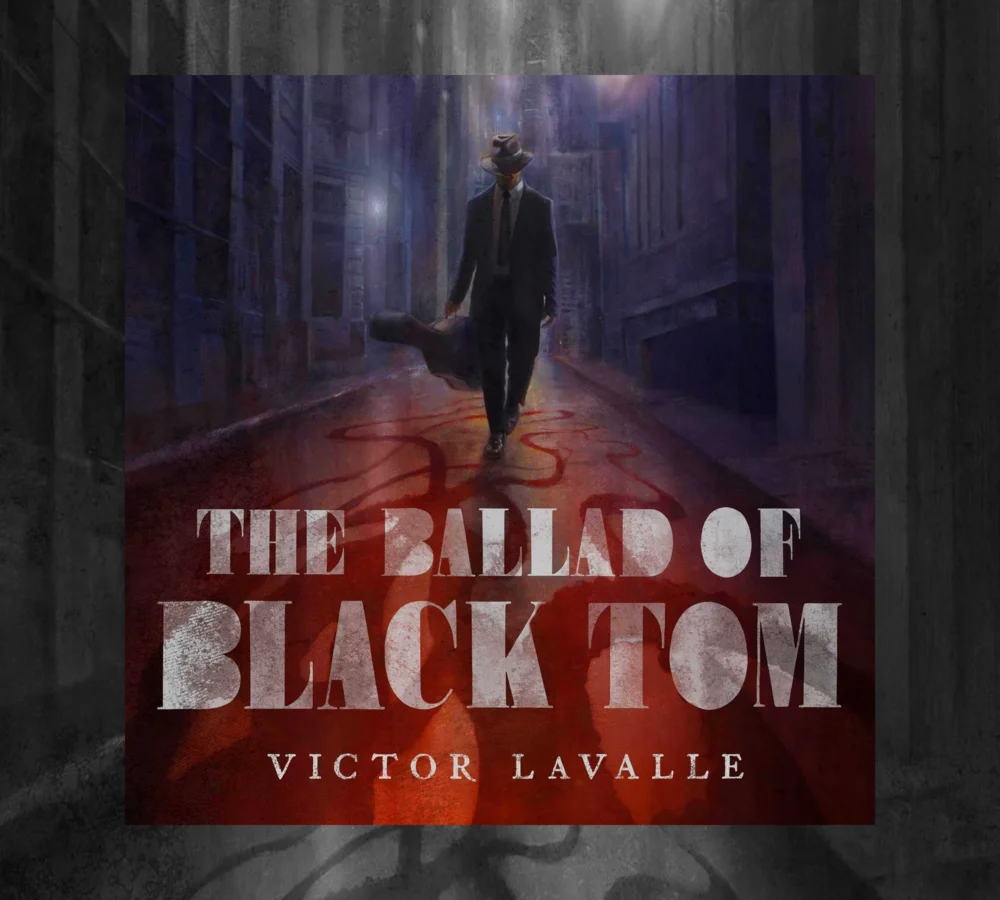
Victor LaValle’s novella, "The Ballad of Black Tom," stands as a potent and necessary reinterpretation of H.P. Lovecraft’s problematic legacy, transforming a tale steeped in xenophobia into a searing indictment of systemic racism and police brutality, all while retaining the chilling allure of cosmic horror.
H.P. Lovecraft, a towering figure in the realm of horror fiction, undeniably possessed a singular talent for crafting intricate mythologies and conjuring palpable atmospheres of dread. However, his literary prowess was regrettably overshadowed by profound personal prejudices, a fact that consistently seeped into his narratives, often alienating and offending readers. This inherent flaw is starkly evident in "The Horror at Red Hook," a story wherein Detective Thomas Malone navigates the dark underbelly of Brooklyn, confronting a sinister cult. LaValle’s "The Ballad of Black Tom" takes this original narrative and fundamentally reorients its perspective, shifting the focus to Charles "Tommy" Tester, a Black man from Harlem whose life becomes entangled in the machinations of power-hungry individuals and the relentless gaze of law enforcement.
LaValle masterfully inverts the overtly xenophobic underpinnings of Lovecraft’s original, repurposing the cosmic horror framework to deliver a trenchant social commentary. The novella dissects themes of police violence, the pervasive nature of racism, and the profound psychological toll exacted upon those relegated to the margins of society. It is a work that Lovecraft himself would undoubtedly have vehemently opposed, a testament to its success in subverting his foundational, albeit deeply flawed, worldview.
Tommy Tester is introduced as a resourceful individual, a hustler adept at navigating the often precarious economic landscape of his time. The narrative subtly reveals his familiarity with arcane knowledge and mystical artifacts, eschewing lengthy exposition for an organic integration into the fabric of the story’s world. This economical approach to world-building is not a detractor but rather a strategic choice, allowing the novella, at a concise 149 pages, to prioritize narrative momentum over exhaustive explanations of its supernatural elements. The focus remains squarely on the unfolding drama and its thematic resonance.
The plot propels Tommy to Flatbush, where he intends to earn a meager living through busking, despite his limited musical talent. His presence attracts the attention of Robert Suydam, an elderly man who subsequently hires Tommy for a gathering at his residence. This interaction is observed by Officer Malone and a private investigator, Mr. Howard, who confront Tommy, attempting to intimidate him and discourage his return to the neighborhood. However, the allure of a substantial sum—$300 in the 1920s—proves irresistible, compelling Tommy to return and thereby setting in motion the subsequent events of the narrative.
(Warning: The following section contains spoilers for "The Ballad of Black Tom.")
Interwoven with the unfolding cosmic horrors at Suydam’s estate, the raid on the cult’s compound in Red Hook, and the escalating police harassment, LaValle introduces poignant scenes featuring Tommy and his father. These moments serve to imbue Tommy with a depth of character and emotional complexity that Lovecraft’s original characters conspicuously lacked. Tommy possesses a distinct arc, palpable motivations, and a fully realized personality. By the story’s climax, the reader is profoundly invested in Tommy, who by this point has adopted the moniker "Black Tom."
This deep connection to Black Tom is crucial, as the novella deliberately eschews traditional notions of heroism. The narrative is populated not by clear-cut heroes, but by antagonists and victims, blurring the lines of moral certainty. Black Tom’s violent retribution against the white men who have systematically exploited and oppressed him offers a cathartic release for the reader. Yet, this vengeance is indiscriminate, carrying with it the chilling implication of cosmic devastation, potentially heralding the end of humanity.
By the novella’s conclusion, Tommy Tester is a figure irrevocably altered, a man worn down by the relentless indignities of navigating a world built by and for white men. His despair is so profound that he finds the destructive indifference of cosmic entities like Cthulhu to be a preferable alternative to the equally devastating indifference of systemic racism. This sentiment underscores the novella’s core message: that the horrors of the mundane, the injustices woven into the fabric of society, can be as terrifying and soul-crushing as any eldritch abomination.
"The Ballad of Black Tom" is unashamedly direct in its messaging. It is a swift and immensely satisfying read that revitalizes Lovecraft’s iconic mythos, infusing it with a profound emotional core and contemporary relevance. In stark contrast, "The Horror at Red Hook" is widely considered a lesser work, characterized by a simplistic plot, a linear narrative, and characters devoid of substantive depth. LaValle, however, successfully extracts the compelling theoretical elements of Lovecraft’s universe—the cosmic scale, the unsettling unknown—and transforms them into a narrative that resonates powerfully in the 21st century, offering a literary experience that is both thought-provoking and viscerally engaging.
The enduring appeal of H.P. Lovecraft’s work lies not solely in his inventive mythology, but also in his unparalleled ability to evoke a profound sense of cosmic insignificance and existential dread. His tales of ancient, unknowable entities lurking beyond the veil of human comprehension tapped into a primal fear, a recognition of humanity’s tenuous place in a vast and indifferent universe. This atmospheric mastery, coupled with the creation of a sprawling, interconnected mythos encompassing entities like Cthulhu, Nyarlathotep, and Azathoth, has cemented Lovecraft’s legacy as a foundational figure in horror literature. However, to engage with Lovecraft’s oeuvre in its entirety requires confronting the uncomfortable reality of his deeply ingrained racism, a prejudice that permeated his personal life and, regrettably, his fictional worlds. This problematic aspect is particularly palpable in stories like "The Horror at Red Hook," which, despite its narrative ambition, is often critiqued for its thinly veiled anxieties about immigration and the perceived degeneration of society, framed through a distinctly prejudiced lens.
Victor LaValle’s "The Ballad of Black Tom" emerges as a critical and artistic intervention, a powerful act of literary reclamation. By transplanting the narrative of "The Horror at Red Hook" into the lived experience of Charles "Tommy" Tester, a Black man navigating the social and racial complexities of early 20th-century America, LaValle achieves a profound recontextualization. The novella meticulously deconstructs Lovecraft’s original narrative, exposing its racist underpinnings and repurposing its cosmic horror elements to illuminate the very real and devastating horrors of systemic oppression.
LaValle’s narrative is characterized by its economical yet impactful prose. Tommy is not presented as a passive victim but as an active agent in his own story, albeit one constrained by the limitations imposed by a discriminatory society. His "hustle," his resourcefulness, and his burgeoning awareness of arcane forces are not mere plot devices but integral components of his character and his struggle for survival. The novella eschews lengthy expository passages regarding the nature of magic, instead allowing it to exist as an accepted facet of the world, much like the pervasive racism that Tommy must contend with. This allows for a heightened focus on character development and thematic exploration, crucial elements that Lovecraft often neglected in favor of atmosphere and plot mechanics.
The character of Tommy Tester is meticulously crafted, imbued with a tangible humanity that stands in stark contrast to the often archetypal and underdeveloped figures in Lovecraft’s stories. His relationship with his father, depicted through poignant and resonant scenes, provides a grounding emotional anchor, deepening the reader’s investment in his fate. When Tommy assumes the mantle of "Black Tom," his transformation is not merely a shift in identity but a manifestation of his accumulated trauma and his desperate lashing out against an unbearable reality.
The novella’s engagement with the concept of heroism is particularly nuanced. It challenges the reader’s expectations, presenting a protagonist whose actions, while driven by a justifiable rage, lead to consequences of cosmic proportions. This ambiguity prevents "The Ballad of Black Tom" from becoming a simplistic tale of vengeance. Instead, it becomes a profound meditation on the cyclical nature of violence, the devastating impact of oppression, and the desperate search for agency in a world that seeks to deny it. Black Tom’s ultimate preference for the indifferent oblivion of cosmic entities over the persistent, soul-crushing cruelty of human prejudice is a testament to the novella’s unflinching examination of the psychological toll of racism.
"The Ballad of Black Tom" is more than just a retelling; it is a vital act of literary subversion. By harnessing the power of Lovecraft’s mythos and reimagining it through the lens of Black experience, LaValle creates a work that is both thrillingly horrific and deeply resonant. It serves as a powerful reminder that the true horrors often lie not in the unfathomable depths of outer space, but in the lived realities of human injustice and societal inequality. The novella’s success lies in its ability to engage with the enduring power of cosmic horror while simultaneously offering a potent critique of its problematic origins, making it an essential read for contemporary audiences interested in the evolution of the genre and its capacity for social commentary. The novella’s impact extends beyond literary circles, contributing to a broader cultural conversation about representation, the re-evaluation of historical literary figures, and the importance of diverse voices in shaping the future of storytelling.




 Safa Marwah
 Ayu Aulia