Lisa Mariana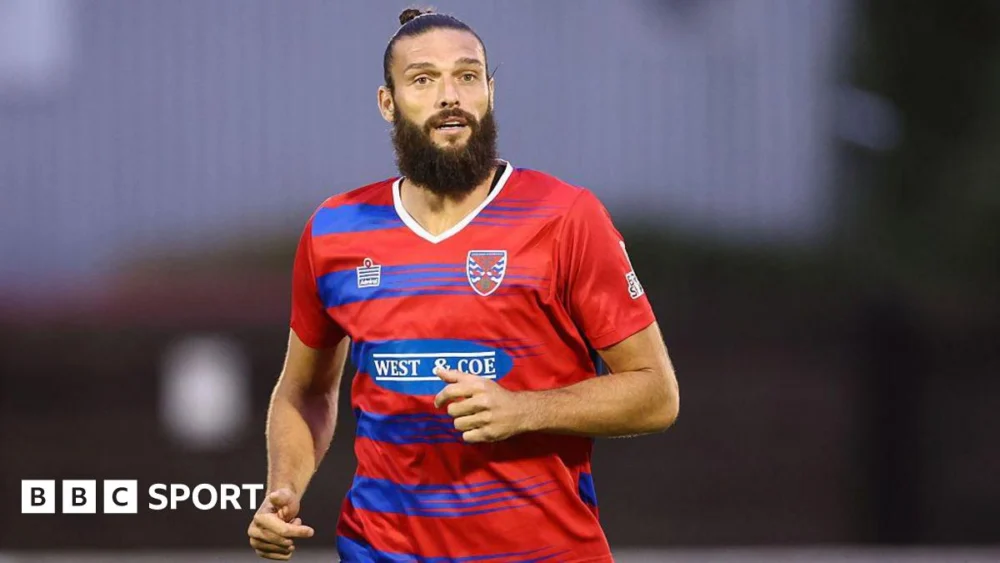
A notable personality in English football, Andy Carroll, whose career has spanned prestigious clubs including Newcastle United and Liverpool, and who earned international caps for England, is set to appear before a magistrates’ court following an accusation of violating a non-molestation order. This development casts a spotlight on the personal conduct of public figures, particularly athletes, and the legal repercussions of contravening protective legal directives.
The charges against the 36-year-old athlete, currently affiliated with Dagenham & Redbridge in the National League South, stem from an alleged incident in March, leading to his subsequent apprehension in April. The upcoming court appearance, scheduled at Chelmsford Magistrates’ Court, marks a significant legal challenge for a player who once commanded a record-breaking transfer fee and represented his nation on the international stage. The specific nature of the alleged breach remains subject to judicial proceedings, but the formal charge itself signals the commencement of a legal process that could have profound implications.
Understanding Non-Molestation Orders: A Legal Overview
To fully appreciate the gravity of the current situation, it is imperative to understand the legal framework surrounding non-molestation orders. These instruments are civil injunctions issued by courts, primarily under the Family Law Act in the United Kingdom, designed to safeguard individuals from various forms of harassment, intimidation, or unwanted contact. Their fundamental purpose is to provide protection to victims of domestic abuse, whether physical, emotional, or psychological, by legally prohibiting the perpetrator from engaging in specific actions.
A non-molestation order typically imposes strict prohibitions on the respondent, preventing them from:
- Direct Communication: This includes making any form of contact, whether in person, by phone, email, text message, social media, or through third parties.
- Proximity Restrictions: Orders frequently stipulate that the respondent must not approach within a certain distance of the applicant’s home, workplace, or any other specified location where the applicant might be present, such as schools attended by children.
- Threatening or Abusive Behavior: The order explicitly forbids any actions that could be interpreted as threatening violence, harassment, or causing distress.
- Inciting Others: It also prevents the respondent from instructing or encouraging others to carry out acts that would violate the order themselves.
These orders are not merely suggestions; they carry significant legal weight. They are granted by a court after careful consideration of evidence presented by the applicant, demonstrating a need for protection. Once issued, a non-molestation order remains in force for a specified period, which can range from a few months to several years, or even indefinitely in severe cases. The process for obtaining such an order typically involves an application to the court, a hearing where evidence is presented, and a judge’s decision based on the balance of probabilities.
The Serious Consequences of Contravention
The breach of a non-molestation order is not merely a civil infraction; it constitutes a criminal offence. This distinction is critical, as it elevates the potential ramifications from a civil penalty to criminal prosecution. The legal system views the violation of such a protective order with extreme seriousness, recognizing that it undermines the court’s authority and jeopardizes the safety and well-being of the protected individual.
Penalties for contravening a non-molestation order are robust and can vary significantly depending on the severity and frequency of the breach. These can range from:
- Fines: Monetary penalties can be imposed, reflecting the court’s condemnation of the breach.
- Community Orders: These may include unpaid work or participation in rehabilitation programs.
- Custodial Sentences: For the most egregious and repeated violations, or where the breach results in significant harm or fear, individuals can face imprisonment for up to five years.
The potential for a prison sentence underscores the stringent nature of these orders and the judiciary’s commitment to upholding the protection they afford. Any individual found guilty of such a breach faces not only legal penalties but also significant damage to their personal reputation and public standing.
Andy Carroll’s Journey: From Record Transfer to League Scrutiny
Andy Carroll’s career trajectory offers a stark illustration of the unpredictable nature of professional football, from the pinnacle of the sport to its lower echelons, now compounded by legal challenges. His early career at Newcastle United saw him emerge as a formidable striker, renowned for his aerial prowess and physical presence. This promising start culminated in a sensational move to Liverpool in January 2011 for an astonishing £35 million, a then-record transfer fee for an English player. The move signaled immense expectations, positioning him as a key figure for both club and country.
During his time at Anfield, and subsequently at West Ham United, Carroll continued to display flashes of his undoubted talent, earning nine caps for the England national team and participating in major international tournaments. However, his career was also frequently punctuated by injuries, which often hampered his ability to maintain consistent form and reach the heights anticipated after his record-breaking transfer.
Following spells back at Newcastle and later with Reading and Derby County, his professional journey led him to Dagenham & Redbridge in the National League South, a significant step down from the Premier League arenas where he once shone. This transition reflects the natural ebb and flow of a long football career, often dictated by fitness, form, and age. Yet, this current legal entanglement introduces an entirely new dimension to his public and professional life, presenting challenges far removed from the football pitch.
Implications for Carroll’s Personal and Professional Future
The legal proceedings facing Andy Carroll carry substantial implications for both his personal life and his ongoing professional football career. Public figures, especially athletes, are often held to a higher standard of conduct, and any legal issues can significantly impact their public image and the perception held by fans, clubs, and potential sponsors.
Personal Reputation: A finding of guilt could severely tarnish Carroll’s personal reputation, affecting his standing within the community and potentially straining personal relationships. The nature of a non-molestation order, designed to protect individuals from harm or harassment, inherently draws public attention to sensitive personal matters, which can be immensely challenging to navigate under public scrutiny.
Professional Career:
- Current Club Affiliation: While Dagenham & Redbridge has not yet issued a public statement, clubs often have codes of conduct that players are expected to adhere to. Depending on the outcome of the court case, the club may need to consider its position, potentially leading to internal disciplinary actions, contract reviews, or even termination, depending on the severity of the findings. The reputation of the club itself can also be indirectly affected by the actions of its high-profile players.
- Future Prospects: A conviction could significantly impede Carroll’s future career prospects within football. Other clubs might be hesitant to sign a player with a history of legal issues, particularly one involving a protective order. Endorsement opportunities, which are often a significant source of income for athletes, would likely diminish or cease entirely.
- Football Associations: While the Football Association (FA) primarily deals with on-field misconduct, egregious off-field behavior, especially that resulting in a criminal conviction, can sometimes lead to broader disciplinary reviews if deemed to bring the game into disrepute.
The Legal Process Ahead: As the case proceeds to Chelmsford Magistrates’ Court, Carroll will be required to enter a plea. Should he plead not guilty, the case would likely move to a trial phase, where evidence would be presented by both the prosecution and the defense. If found guilty or if he pleads guilty, the court will then proceed to sentencing, taking into account all aggravating and mitigating factors. The outcome will shape his immediate future and cast a long shadow over his legacy.
Athlete Conduct and Public Accountability in Modern Society
The case of Andy Carroll is not an isolated incident but rather reflective of a broader societal trend where public figures, particularly athletes, face intense scrutiny regarding their off-field conduct. In an era of pervasive social media and instant news cycles, the actions of high-profile individuals are amplified and subjected to public judgment more than ever before. This heightened level of accountability means that personal legal matters, which for ordinary citizens might remain private, become subjects of widespread public discourse.
Professional athletes are often viewed as role models, especially for younger generations. This perception creates an expectation that their behavior, both on and off the field, should align with certain ethical and legal standards. When these standards are perceived to be breached, it can lead to disillusionment among fans and raise questions about the values upheld by professional sports.
There is also an ongoing discussion within sports organizations about the support systems available to athletes who navigate immense pressure, wealth, and public attention from a young age. While these factors do not excuse illegal behavior, understanding the unique challenges faced by professional athletes is part of a holistic approach to athlete welfare and conduct. However, ultimately, legal accountability applies to all citizens, regardless of their profession or public status.
Concluding Outlook
The upcoming court appearance for Andy Carroll represents a critical juncture in his life, potentially carrying significant consequences that extend far beyond the realm of football. As the legal process unfolds, the principle of presumption of innocence remains paramount until a verdict is reached. However, the very nature of the charge – breaching a non-molestation order – underscores the serious implications for any individual found to have contravened such a protective legal directive.
The outcome of these proceedings will not only determine Andy Carroll’s legal fate but will also serve as another high-profile reminder of the increasing expectation for public figures to adhere to legal mandates and conduct themselves in a manner befitting their platform. For a player who once epitomized English football’s raw power and potential, this legal challenge marks a somber chapter, highlighting the complex interplay between professional renown and personal accountability.



 Aura Kasih
 Safa Marwah
 Ayu Aulia