Lisa Mariana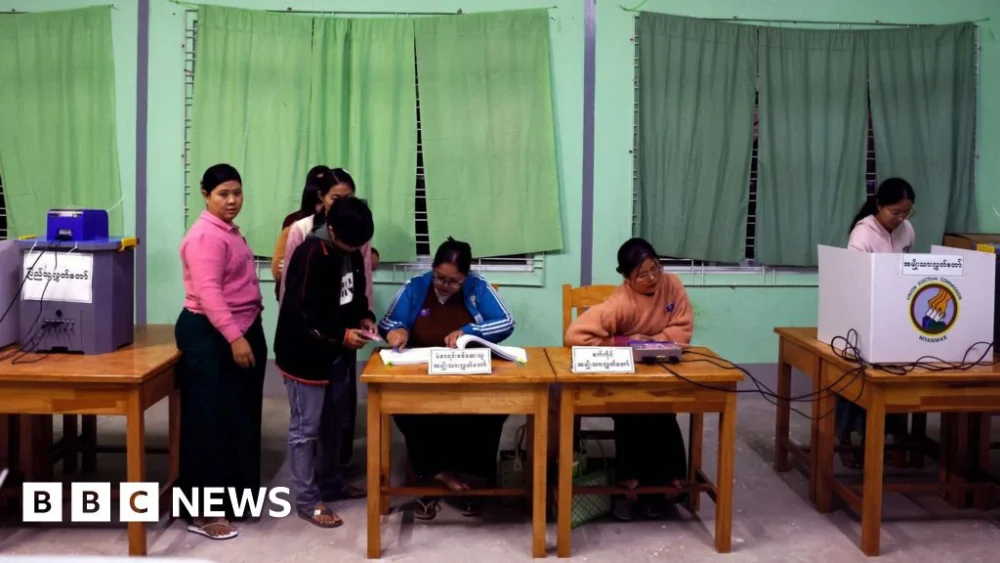
Myanmar’s military junta is proceeding with a phased electoral exercise, widely denounced internationally as a calculated maneuver to legitimize its grip on power amidst a brutal civil war and widespread civilian resistance. This tightly controlled ballot, initiated nearly five years after the Tatmadaw’s 2021 coup d’état, unfolds against a backdrop of dissolved opposition parties, incarcerated political leaders, and vast swathes of the nation engulfed in conflict, rendering genuine democratic participation impossible for an estimated half of the electorate.
The 2021 coup marked a dramatic reversal of Myanmar’s nascent democratic transition, which had seen Aung San Suu Kyi’s National League for Democracy (NLD) achieve landslide victories in both the 2015 and 2020 general elections. The military, citing unsubstantiated claims of widespread electoral fraud, seized control on February 1, 2021, arresting key civilian leaders, including State Counsellor Suu Kyi and President Win Myint. This action immediately triggered widespread peaceful protests, which were met with brutal force by the Tatmadaw, leading to the formation of a nationwide resistance movement, including the National Unity Government (NUG) and numerous People’s Defence Forces (PDFs), often collaborating with long-standing Ethnic Armed Organizations (EAOs). The ensuing conflict has plunged Myanmar into an unprecedented humanitarian and security crisis, fundamentally challenging the junta’s capacity to govern.
Observers suggest that the current electoral initiative represents a desperate attempt by the State Administration Council (SAC), as the junta refers to itself, to project an image of normalcy and constitutional governance. Supported by strategic allies such as China and Russia, who have provided diplomatic cover and crucial military aid, the junta aims to break the costly political and military stalemate it finds itself in. The election is perceived as a critical step in its self-proclaimed "roadmap to democracy," a narrative designed to gradually normalize its rule both domestically and on the international stage, despite the undeniable reality of widespread repression and civil conflict.

The very framework of this election has been meticulously designed to ensure an outcome favorable to the military. Over 40 political parties, most notably the NLD, have been forcibly dissolved under stringent new electoral laws, effectively eliminating any credible opposition. Hundreds of their leaders and members remain arbitrarily detained, facing politically motivated charges and lengthy prison sentences. A new law enacted in July, specifically targeting "disruption or opposition" to the polls, carries draconian penalties, including the death sentence, fostering an environment of intense fear and discouraging any form of dissent or non-participation. Prominent cultural figures, including film director Mike Tee, actor Kyaw Win Htut, and comedian Ohn Daing, were recently handed seven-year jail terms for merely criticizing a state-sponsored film promoting the elections, underscoring the severe crackdown on freedom of expression.
The initiation of polling on a recent Sunday was marred by reports of intense violence across several regions, serving as a stark reminder of the country’s profound instability. In Mandalay, a rocket attack on an uninhabited residence resulted in three injuries, one critically, confirmed by the regional chief minister. Further east, near the Thai border in Myawaddy township, a series of explosions on Saturday night damaged more than ten houses, tragically killing a child and critically injuring three others. These incidents, alongside other unconfirmed reports of casualties from various explosions, highlight the perilous conditions under which this electoral exercise is being conducted, directly contradicting any claims of a secure and legitimate process.
Despite the pervasive violence and repression, a segment of the population participated in the vote. Accounts from voters gathered by the BBC suggested a "disciplined and systematic" experience, a phrase that, in this context, could imply a highly controlled and surveilled environment rather than a free and fair one. Some individuals expressed a sense of relief after casting their ballots, perhaps indicative of a desire to fulfill perceived civic duties or to avoid potential repercussions in a climate of fear. Ma Su ZarChi from Mandalay region articulated a sentiment of having "tried their best for the country," reflecting a complex interplay of hope, obligation, and resignation. First-time voter Ei Pyay Phyo Maung, 22, emphasized the "responsibility of every citizen" to vote, expressing a hope for a president who could address the skyrocketing prices of goods and provide equally for all, particularly the struggling lower classes. These individual aspirations, while genuine, exist within a system designed to circumvent true democratic choice.
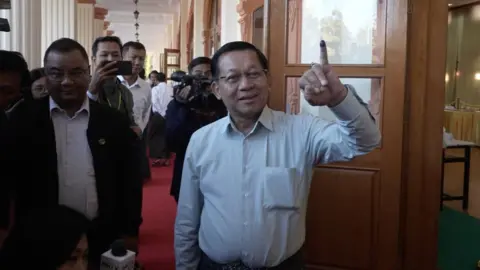
Junta chief Min Aung Hlaing, after casting his vote at a heavily fortified polling station in Nay Pyi Taw, adamantly rejected criticisms of the polls, asserting the military’s commitment to "return [the country] to a multi-party democratic system" and guaranteeing a "free and fair" election. He distanced himself from presidential ambitions, stating his role as a "civil servant" and emphasizing the phased nature of the election process. However, his earlier warning that those who refuse to vote are rejecting "progress toward democracy" underscores the coercive undertones of the entire exercise, implying a duty to participate in a process largely devoid of credible alternatives. The military’s long-standing self-perception as the ultimate guardian of national unity and stability often serves as a justification for its authoritarian interventions, despite widespread public rejection.
The international community’s response has been largely condemnatory, though fragmented. Tom Andrews, the UN Special Rapporteur on the situation of human rights in Myanmar, unequivocally urged the international community to reject the election, characterizing it as "a theatre of the absurd performed at gunpoint." He stressed that "nothing legitimate" could emerge from an election organized by a junta that continues to brutalize civilians, imprison political opponents, and criminalize dissent. Western governments, including the United Kingdom and the European Parliament, have consistently dismissed the vote as a "sham," aligning with human rights organizations and democratic advocates who view it as a cynical attempt to consolidate power. The regional bloc ASEAN, while maintaining a policy of non-interference, has called for a political dialogue to precede any election, highlighting the critical need for a genuine peace process and reconciliation, a call largely ignored by the SAC.
The logistics of holding an election in a country engulfed in civil war present insurmountable challenges. The Tatmadaw currently grapples with armed resistance on multiple fronts, facing not only the civilian People’s Defence Forces but also numerous well-established Ethnic Armed Organizations. While the military suffered significant territorial losses in the initial phases of the conflict, it has clawed back some ground, particularly through relentless airstrikes, heavily reliant on military hardware and intelligence support from China and Russia. This brutal conflict has claimed thousands of lives, displaced millions, crippled the economy, and created a severe humanitarian crisis exacerbated by natural disasters, such as a devastating earthquake in March, and significant cuts in international funding.
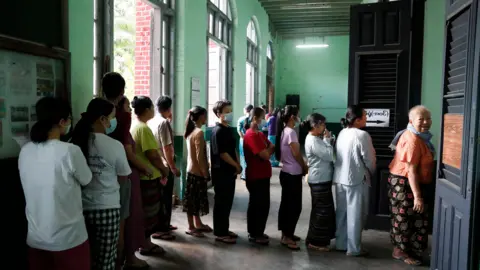
Consequently, the election is being held in a piecemeal fashion. Voting is scheduled to occur in three phases over the coming month, covering only 265 of the country’s 330 townships, with the remaining 65 deemed too unstable for any electoral activity. Even within the designated voting townships, not all constituencies will participate, leading to projections that as much as half of the country will not have the opportunity to vote. This selective approach makes it exceedingly difficult to forecast any meaningful turnout or to gauge the true will of the populace. The fragmented electoral map, where certain areas vote, others have no date set, and significant portions are completely excluded, clearly illustrates the junta’s limited control and the deeply contested nature of its authority.
The electoral landscape is further skewed by the limited number of participating entities. Only six parties, including the military-backed Union Solidarity and Development Party (USDP), are fielding candidates nationwide. Another 51 parties and a smattering of independent candidates are contesting only at state or regional levels. This stark contrast to the vibrant multi-party system that existed prior to the coup underscores the deliberate dismantling of democratic competition. The dissolution of 40 parties, most notably the NLD, and the continued incarceration or exile of their leaders, guarantees that the ballot offers no genuine choice for the majority of the population who overwhelmingly supported democratic governance.
Analysts like Htin Kyaw Aye, a spokesperson for the election-monitoring group Spring Sprouts, suggest that the phased nature of the vote allows the authorities to strategically "adjust tactics" if initial results do not align with their desired outcomes. This flexibility could be exploited to manipulate the overall outcome, further undermining the credibility of the entire process. The sentiment on the ground, particularly in areas heavily affected by the conflict, reflects profound disillusionment. Ral Uk Thang, an 80-year-old resident of western Chin state, expressed the widespread belief that civilians "don’t want the election," lamenting the military’s inability to govern and contrasting it with the "bit of democracy" experienced under Daw Aung San Suu Kyi’s leadership. Such testimonies highlight the deep chasm between the junta’s rhetoric and the lived experience of ordinary Myanmar citizens.
In conclusion, Myanmar’s ongoing election represents a meticulously orchestrated facade rather than a genuine democratic exercise. It is a strategic move by a military regime desperate to consolidate its power and gain a semblance of international legitimacy, despite its brutal suppression of dissent and the ongoing civil war. The systematic dissolution of opposition, imprisonment of leaders, and the widespread violence surrounding the polls render any claim of "free and fair" elections utterly baseless. As the process unfolds, it is highly unlikely to resolve the fundamental political crisis gripping Myanmar. Instead, it risks deepening the divide, intensifying the conflict, and further entrenching an authoritarian rule that continues to inflict immense suffering on its people, while the international community grapples with how to effectively respond to this complex and tragic situation. The future outlook for Myanmar remains fraught with challenges, as the quest for genuine democracy and peace faces an uphill battle against a determined and ruthless military apparatus.

 Aura Kasih
 Safa Marwah
 Ayu Aulia